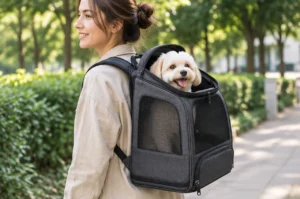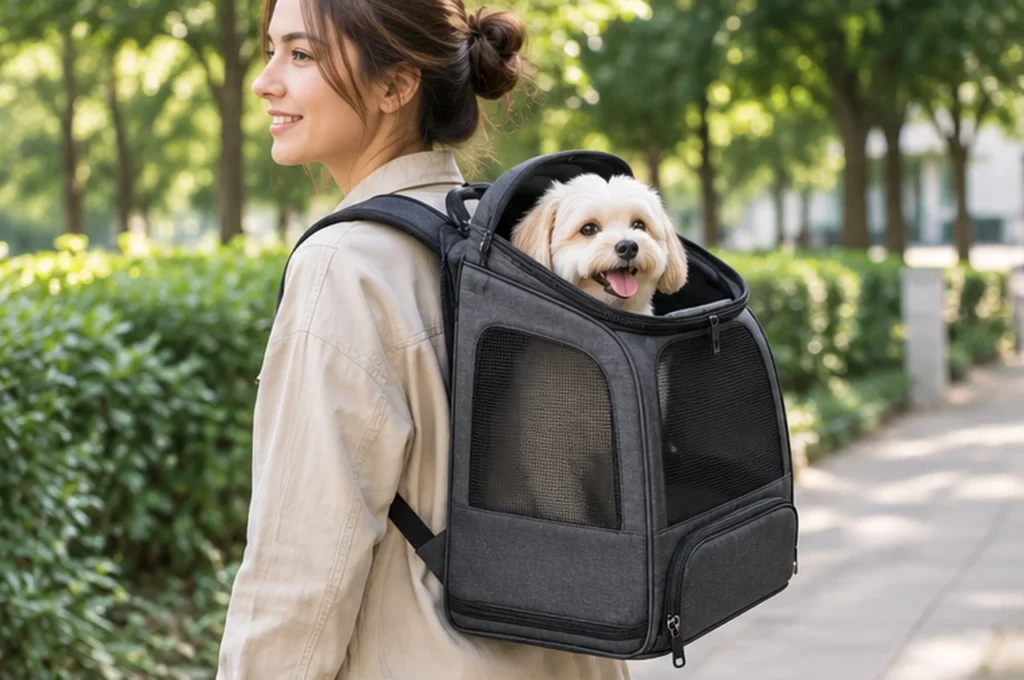
Quick answer: A dog backpack carrier can be a useful way to transport some small dogs, but the word backpack does not guarantee safety. Check the dog’s fit and comfort, ventilation, floor support, closure security, the carrier’s verified load limit, and how the dog behaves inside. A dog that struggles to breathe, cannot settle into a comfortable position, or becomes distressed should not be kept in the carrier.
Dog backpack carriers are convenient for short walks, public transport and situations where a pet needs a break from walking. Yet the best option depends on the individual dog—not just the style of bag. An upright backpack, a structured horizontal carrier and a soft shoulder sling support a dog differently. This guide explains what to check before buying or using a dog carrier backpack, and when a different carrier is the safer choice.
Are Dog Backpack Carriers Safe for Dogs?
They can be appropriate for some dogs when they are well fitted, stable, ventilated and used for suitable trips. They are not automatically suitable for every dog, every journey or every climate. A carrier should not force a dog into a cramped posture or depend on a single thin strap to prevent escape. For longer trips, a carrier that gives the dog more room to reposition may be preferable.
The American Kennel Club’s guidance on choosing a dog carrier stresses choosing by the dog’s size and the intended use rather than assuming one carrier works for everything. A dog carrier backpack is also different from a backpack worn by a dog to carry supplies—weight recommendations for the latter do not apply to carriers holding the dog.
8 Safety Checks Before Using a Dog Backpack
1. Confirm the dog’s size—not just the advertised weight limit
Weigh the dog and measure its body length, chest width and natural sitting or standing height. Compare those dimensions with the carrier’s usable interior space, not only its outside measurements. Observe the dog inside a correctly fitted sample: can it settle naturally without the frame pressing against its neck, head or legs? A dog’s body shape can make a weight-rated carrier unsuitable even when the number on the label looks right.
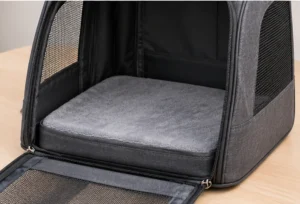
2. Make sure the bottom supports the dog
A firm, even base helps distribute the dog’s weight. A soft pouch that folds sharply under the animal may create an uncomfortable position. Check the bottom insert, side-wall connection and how the base behaves when the person walks, stops and turns. A removable pad is useful for cleaning, but padding is not a substitute for structural support.
3. Check ventilation and heat build-up
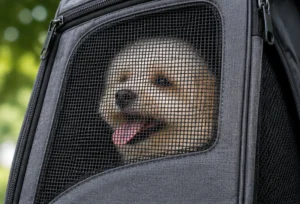
Look for multiple usable mesh areas and an unobstructed breathing zone. A window that looks large in a catalog can become partly blocked by the dog’s body once the carrier is loaded. Mesh alone does not make a bag safe in hot weather. Avoid prolonged use in direct sun, and stop immediately if the dog is overheating, panting unusually, becoming weak or visibly distressed. Seek veterinary assistance when symptoms are concerning.
4. Inspect zippers, openings and escape prevention
Check whether zippers can open accidentally when the dog pushes against the door. Look at slider design, seams around openings and the way the top flap closes. Some carriers include an interior tether, but a tether does not replace a secure enclosure and should be attached only as directed by the carrier manufacturer, typically to a correctly fitted harness rather than a neck collar. Never leave a tethered dog unattended.
5. Check the shoulder straps and how the bag moves
A stable carrier should not swing excessively as the person walks. Adjustable padded shoulder straps and a properly positioned chest strap can help the wearer manage movement. Try the loaded carrier indoors before a trip; watch for tipping, shifting and sudden jolts. The comfort of the person carrying the bag matters because poor balance can also affect the pet.

6. Verify the load rating using actual test evidence
A printed maximum weight is not enough on its own. Ask how the supplier tested the base, handles, seams, buckles and repeated lifting. The load rating should be consistent with the specific materials and construction of the model you are buying. Do not assume that a carrier with a similar appearance has the same verified capacity.
7. Introduce the dog gradually
Start with the carrier on the floor, door open, in a familiar space. Let the dog investigate voluntarily and reward calm behavior. Progress to short periods inside, then a brief indoor carry, and finally a short outdoor outing. Do not rush the process simply because the pet appears small enough to fit.
8. Watch the dog throughout the trip
Look for relaxed posture and normal breathing. Frequent attempts to escape, whining, freezing, excessive drooling, unusual panting or struggling to change position are reasons to stop and reassess. Keep trips short at first and allow opportunities for water, rest and movement appropriate to the animal. Individual medical or mobility concerns call for veterinary advice.
When Is a Dog Backpack a Poor Choice?
A backpack carrier may be unsuitable when a dog is too large for the interior, cannot rest comfortably, becomes distressed, or has a condition that makes the required posture or heat exposure risky. Particular caution is warranted with dogs that have breathing, neck, back, joint or mobility problems. Puppies and senior dogs may need a different level of support; ask a veterinarian about individual limitations.
Also distinguish carrying a dog on a walk from restraining a dog in a vehicle. A wearable backpack is not automatically a crash-tested car restraint. For vehicle travel, use a suitable restraint system supported by evidence for that purpose.
Dog Backpack vs. Sling vs. Soft-Sided Carrier
For a detailed comparison, read our forthcoming guide to dog sling vs. backpack carriers. For measuring the pet and understanding external versus internal dimensions, see the Great Shine Pet Carrier Size Guide.
What Should Pet Brands Check During Product Development?
For private-label projects, appearance is only a starting point. Before approving a pre-production sample, request evidence for the loaded base, mesh strength, zipper behavior, strap attachment, and how the dog fits when the carrier is being worn. Confirm removable pad materials and truthful care instructions. If promoting a numerical weight limit, retain the corresponding method and result rather than relying on the supplier’s catalog wording.
At Great Shine Houseware Ltd., our custom pet carrier manufacturing page outlines available pet backpack, sling and soft-carrier structures, materials and customization options. We can review an OEM/ODM brief covering size, fabric, mesh, closures, branding and packaging. Final specifications, samples and testing requirements are agreed per project.
Frequently Asked Questions
Can a dog stay in a backpack carrier for hours?
There is no universal safe duration. Tolerance depends on the dog, posture, temperature, activity and carrier design. Begin with short periods and take regular breaks. A dog that cannot comfortably reposition should not be kept in that carrier for extended periods.
Are dog backpacks safe for puppies?
Some puppies may tolerate a properly sized carrier, but growing bodies have special support and temperature needs. Introduce carriers gently and seek veterinary guidance when the puppy is very young or has health concerns.
Is a mesh backpack always well ventilated?
No. Ventilation depends on the amount and placement of usable openings, obstruction by the pet’s body, ambient temperature and actual airflow. Check the carrier when occupied.
Can a dog backpack be used on an airplane?
Not automatically. Cabin travel has airline-specific under-seat and containment rules; a backpack designed for walking may not qualify. Check the current airline policy and measure the loaded, assembled carrier before travel. Our airline pet carrier guide explains why “airline approved” requires careful wording.
What is the most important design feature?
No single feature replaces the others. Correct fit, stable support, breathable construction, secure closures and the dog’s comfort must work together.
Final Takeaway
Dog backpack carriers can be practical, but safety should be evaluated with a real dog in a real, correctly fitted carrier—not from a product photo or weight label alone. Choose the bag for the dog and trip, observe the animal’s response, and use a different carrier when the fit or behavior is not right.
Developing your own pet carrier line? Explore Great Shine’s OEM/ODM pet carrier options and share your product brief for a project-specific quotation.