Packing cubes can make a suitcase feel easier to pack, but they do not always create more usable space. Standard packing cubes primarily organize clothes into convenient groups. Compression packing cubes add a second zipper or gusset that can make soft clothing bundles flatter. Whether you can actually fit more into the suitcase depends on your clothes, the cube dimensions, and how efficiently the suitcase was packed before.
If your main goal is finding a shirt quickly, regular cubes may be enough. If your goal is reducing the bulk of sweaters or other compressible garments, compression cubes may help—but they are not a guarantee of extra luggage capacity.
What Does “Saving Space” Actually Mean?
People often use the phrase save space to describe two different benefits.
Better organization means dividing clothing into tidy, easy-to-remove groups. You can find items faster and may reduce awkward gaps if the cube shapes fit your luggage. However, each cube also occupies some space with its fabric, zippers, and seams.
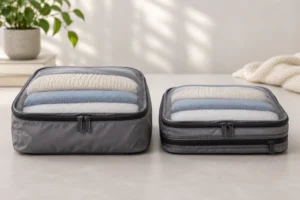
Actual volume reduction means making the same clothing bundle physically smaller, usually by compressing air trapped between soft garments. A zipper-compression cube can do that to some degree. But a flatter cube does not automatically mean the suitcase holds more clothing: its new dimensions still need to fit the luggage layout efficiently.
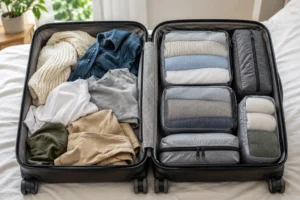
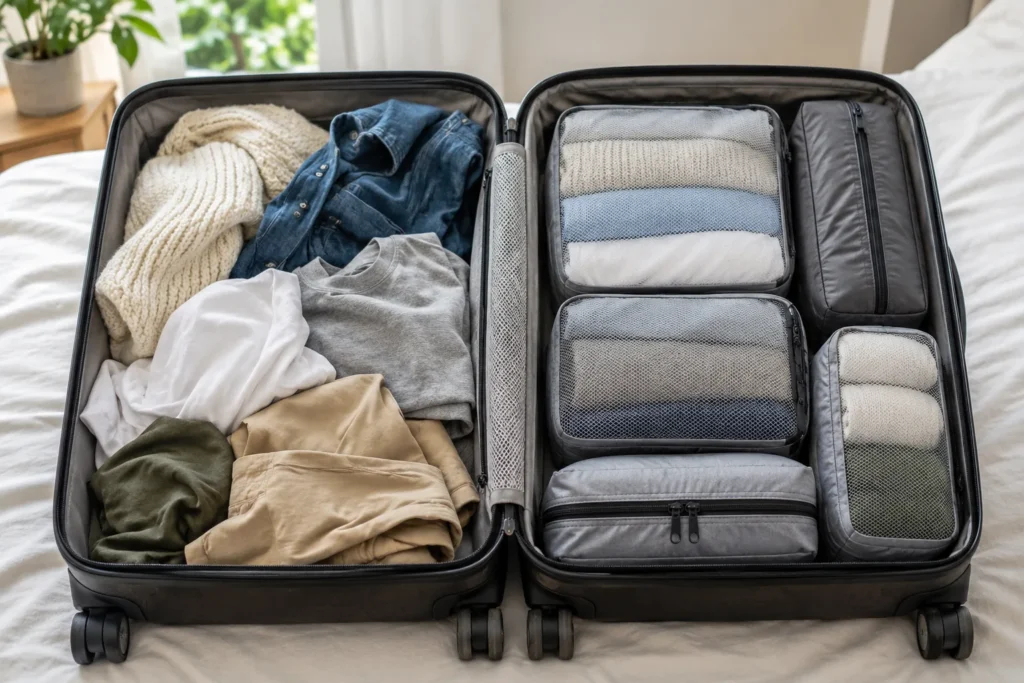
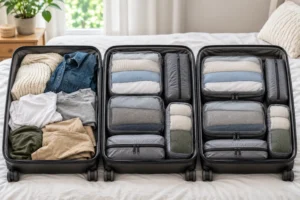
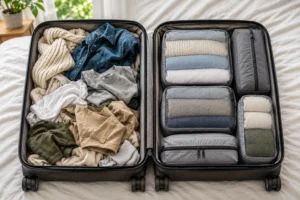
This is why a convincing demonstration should compare the same clothes inside the same suitcase, rather than merely displaying a tall cube beside a flatter one.
Standard Packing Cubes vs Compression Packing Cubes vs No Cubes
A compression cube is not the same thing as a vacuum storage bag. Most zipper-style compression cubes simply squeeze the bundle by closing an expansion panel; they do not create a vacuum seal.
Do Regular Packing Cubes Save Space?
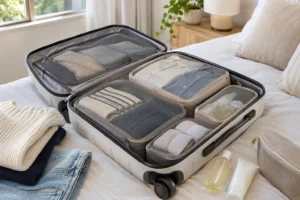
Regular packing cubes can make packing more efficient when loose clothing would otherwise leave unused gaps or spread across the bag. They are especially useful for grouping small, flexible items such as underwear, T-shirts, and sleepwear.
But ordinary cubes do not actively compress their contents. In a suitcase that was already packed neatly with folded clothes, introducing several fabric organizers can use more room rather than less. An oversized cube with a rounded top can also create gaps that a folded shirt would have occupied.
For standard cubes, treat organization as the expected benefit and any extra luggage capacity as a possible bonus, not a promised result.
Do Compression Packing Cubes Actually Make Clothes Smaller?
Compression packing cubes can reduce the packed depth of soft clothing by bringing the top and bottom panels closer together. Typically you pack the cube with its expansion gusset open, close the main zipper, and then close a second zipper around the sides.
The most noticeable reduction is often with soft garments containing plenty of trapped air between layers. Heavy denim, rigid items, and tightly folded cotton have less room to flatten. The cube’s material, pattern, side-gusset design, and how much you fill it also affect the outcome.
What independent testing says
Independent results are mixed, and some are unfavorable to compression cubes. In an August 2026 comparison published by Which?, researchers tried different packing methods across four bags. They reported fitting 129 garments by folding directly versus 118 using compression packing cubes in their test. Their conclusion was that the cubes helped organize belongings but did not maximize clothing capacity under their tested conditions.
That result is one particular experiment, not a universal rule that compression cubes never work. Products, garment choices, suitcase shapes, and packing skill vary. It does show why marketers should avoid promising that compression automatically increases how much every suitcase can hold.
Which Clothes Benefit Most from Compression Cubes?
The best cube is often the one whose shape matches both the clothing and the suitcase—not simply the one that closes to the thinnest profile.
How to Compare Packing Methods Fairly at Home
Want to know whether packing cubes save space for your actual luggage? Use a repeatable comparison rather than relying on a marketing photograph.
Step 1: Use one suitcase and one fixed clothing list
Choose your own carry-on or checked suitcase and lay out a realistic set of clothes. Keep the same garments and accessories for every trial. Avoid switching to lighter or thinner clothes between methods.
Step 2: Try three methods
First, fold the clothes directly into the suitcase. Second, use standard packing cubes. Third, use compression cubes with the same clothing. If you have only one of the cube types, compare that method against folding directly.
Step 3: Record whether the suitcase closes comfortably
Observe whether the zipper closes without pressure, where empty pockets or gaps remain, and whether you can still reach essential items. Do not sit on the case or force the zipper to make one method appear more successful.
Step 4: Check real-world convenience
Time how long it takes to find a specific shirt, repack after removing a garment, and separate clean from used clothes. These results may matter more to a frequent traveler than fitting one additional T-shirt.
Step 5: Repeat before drawing conclusions
Try a different clothing mix or rearrange the cubes. A single layout can favor one method because of its shape. Photographing each step makes your own result easier to evaluate, but avoid attaching broad claims to a one-off home trial.
When Do Packing Cubes Make the Most Sense?
For travelers who unpack at multiple destinations
Packing cubes are like removable compartments. They make it easier to move the contents of a suitcase into drawers or shelves and put them back without reorganizing every item.
For family trips
Grouping clothes by person or color can be more valuable than squeezing out extra space. Each person can access their own clothes without disturbing the rest of the bag.
For carry-on travelers
Compression cubes may be worth trying when you pack soft layers in a limited bag. But confirm the final luggage dimensions and weight. Compressing clothes does not change their weight or the airline’s baggage allowance.
For travelers with wrinkle-prone outfits
Standard cubes or careful folding may be better. Compression can crease structured cotton shirts, linen, and some delicate materials, especially when cubes stay tightly closed for many hours.
Five Common Mistakes That Reduce the Benefit
- Buying cubes before measuring the suitcase interior. A size that fits a spacious case may waste room in a smaller carry-on.
- Assuming all compression designs work equally well. Gusset depth, zipper routing, fabric strength, and panel shape vary.
- Overfilling cubes. Rounded shapes and strained zippers reduce usability and can shorten product life.
- Comparing different clothing loads. A side-by-side picture is not proof of extra capacity unless the inputs are controlled.
- Ignoring convenience. Fitting a little more is not worthwhile if every retrieval requires unpacking the whole suitcase.
Frequently Asked Questions
Do packing cubes really save space in a suitcase?
Sometimes, but not always. Regular cubes mainly organize belongings; compression cubes may reduce the bulk of some soft garments. Neither guarantees that you will fit more items into every suitcase.
Are compression packing cubes better than regular packing cubes?
They are different tools. Compression cubes are useful if reducing the bulk of compressible clothing is a priority. Standard cubes are simpler and can be preferable for easy access, delicate clothing, or travelers who mainly want organization. See our packing cubes vs compression cubes comparison.
Do compression cubes make luggage lighter?
No. They can change the shape and volume of a clothing bundle, but the clothing still weighs the same. The organizer itself adds a small amount of weight.
Do packing cubes cause wrinkles?
They can if clothing is packed too tightly or compressed for extended periods. The risk depends on garment fabric and folding technique. Keep delicate shirts and structured clothes less tightly packed.
Are packing cubes better than vacuum bags for travel?
They solve somewhat different problems. Zip-compression cubes are generally easier to open, close, and repack on the move. Vacuum bags can compress some soft items more aggressively but may be less convenient to refill and may need particular closing or air-removal steps.
Are packing cubes worth buying if they do not save space?
For many travelers, yes—because sorting, retrieval, and repacking can be the more reliable advantages. The value depends on how often you travel and whether you prefer compartmentalized packing.
The Bottom Line
Packing cubes are reliable organization tools, not guaranteed space multipliers. Compression versions can make some soft clothing flatter, but the important test is whether you can close your own suitcase comfortably while keeping items accessible. Match the cube sizes to the luggage, avoid overfilling, and judge the full packing experience rather than a single before-and-after photo.
Creating a packing-cube collection for your brand? Great Shine helps travel brands and wholesale buyers develop custom packing cube sets and custom compression packing cubes, including fabric, zipper, gusset, size, logo, and retail-packaging options. Product specifications and performance claims should be confirmed with representative samples and testing before launch.