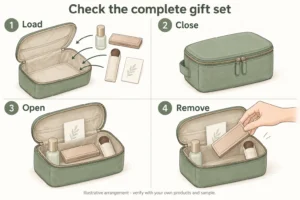
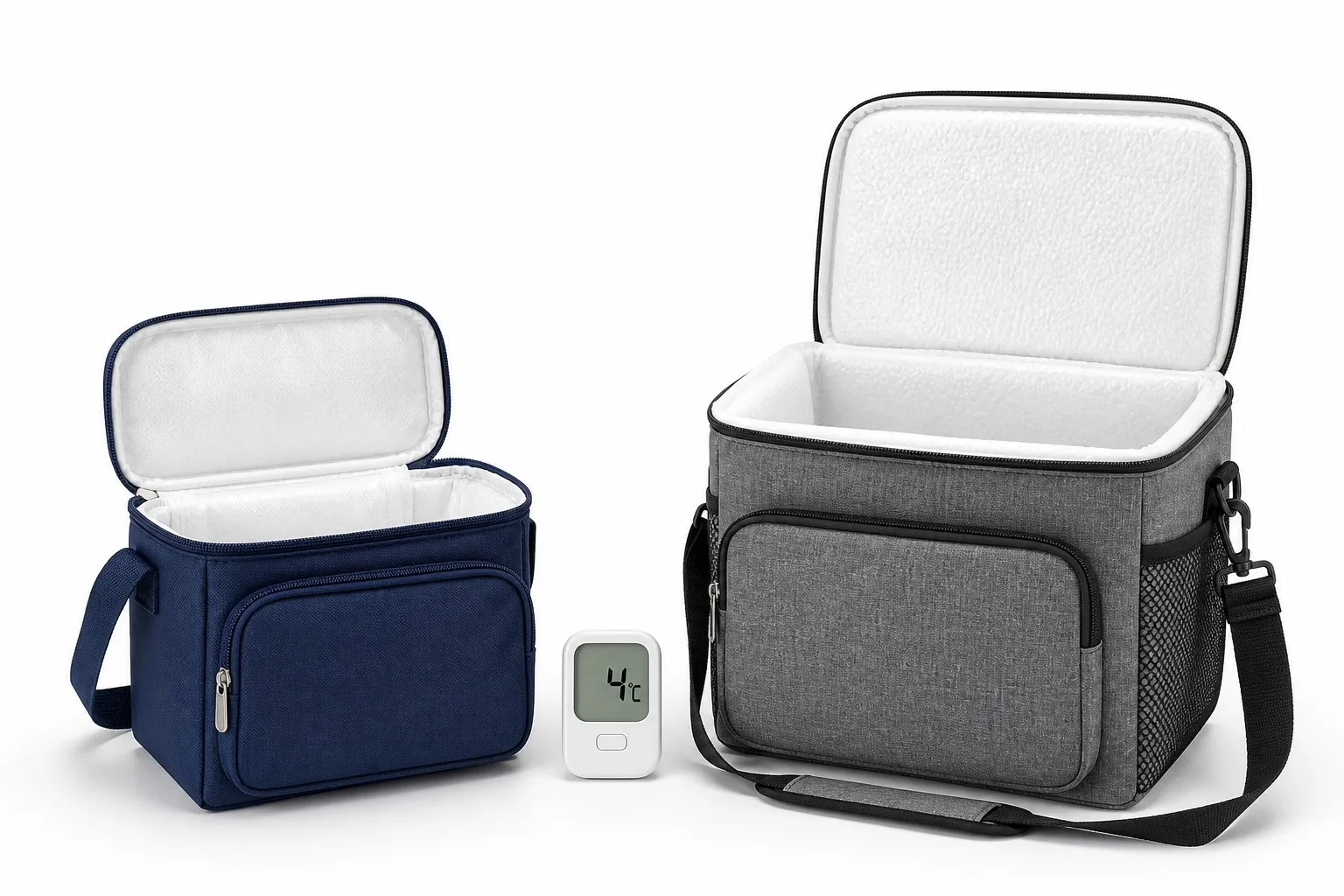
An insulated lunch bag and a lunch cooler bag can describe overlapping products. The name alone does not tell you how much insulation a bag contains or how long it will keep a packed meal cold. Compare the actual construction, usable space, closure and room for ice packs.
A compact design may suit a meal carried to a workplace refrigerator. For a lunch that will stay away from refrigeration, look for a setup that accommodates cold sources around the food and has performance evidence relevant to your intended use. Either label can appear on that design.
Table of Contents
- Are Insulated Lunch Bags and Lunch Cooler Bags the Same?
- What Insulation Materials Are Used?
- How to assess cold-retention claims
- What Outer Fabric Should You Choose?
- Which Type Fits Your Buyer?
- How to pack a cold lunch
- How to clean a lunch bag
- How to Source Insulated Bags From a Factory
- FAQ
Are Insulated Lunch Bags and Lunch Cooler Bags the Same?
The terms can overlap. A product sold as a lunch bag may have the same general construction as one sold as a lunch cooler. Specific models can still differ substantially in size, insulation coverage, closure and liner design.
Compare those features directly. Neither name establishes a fixed foam thickness, price tier or safe holding time. A school lunch containing perishables needs appropriate cold holding just as a lunch taken to work does.
What Insulation Materials Are Used?
Foam insulation sits between the outer shell and inner lining in many soft lunch bags. Polyethylene foam can be supplied in different grades and thicknesses; some constructions combine foam with a reflective laminate.
EPE means expanded polyethylene, so it belongs to the polyethylene foam family. Ask for the actual foam grade, thickness and density rather than treating “PE” and “EPE” as separate performance tiers. NMC’s AIROLEN product declaration, for example, describes expanded polyethylene foam.
XPE identifies cross-linked polyethylene foam. The abbreviation alone does not establish a finished bag’s performance. Compare the specified material and its use across the walls, lid and base, then evaluate the assembled product.
A metallic-looking liner may be part of a laminate that includes foam. Its appearance alone cannot establish a retention time. A wipeable liner also does not prove that stitched seams or the zipper will hold loose meltwater.
How to assess cold-retention claims
A bag can feel cool while its contents are too warm for safe cold holding. USDA packed-lunch guidance recommends keeping perishable cold food at 40°F (4.4°C) or below. A reading of 10–15°C is not evidence of safe cold holding. For hot food, USDA recommends an insulated container that keeps it at 140°F (60°C) or above.
Check what a test measures: air inside the bag, a bottle of water and the food itself are different measurement locations. A stated retention time needs a defined temperature limit and test conditions.
- The complete bag construction and usable dimensions.
- Ambient conditions and the initial temperature of the contents.
- The contents, cold-source quantity and how they are packed.
- Probe location, opening schedule, test duration and repeated results.
A result recorded for four hours cannot establish performance for six hours. Compare products under conditions relevant to the same use, and distinguish a measured result for one sample from a claim covering a whole material category.
What Outer Fabric Should You Choose?
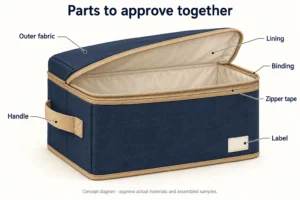
Compare the outer fabric for handling, appearance and care. Polyester, Oxford-style fabrics, canvas and coated constructions are options you may encounter, but a fabric name is not a complete specification.
Check composition, weight, coating and the condition of the seams. Water resistance of the shell does not establish a leakproof bag, and a coated surface is not automatically suitable for direct food contact. Judge thermal performance from the complete construction and relevant testing.
Which Type Fits Your Buyer?
- Check that the usable interior fits the intended meal containers plus cold sources. External dimensions alone may not show whether a wide lunch box or tall bottle fits.
- Check insulation coverage across the base, walls and lid. A thick side panel does not describe the whole bag.
- Look at how completely the closure shuts and whether users can remove lunch without unpacking everything.
- Use sealed ice packs unless the manufacturer allows loose ice. A wipeable surface does not establish watertight seams.
- Consider the weight of the packed bag, handle comfort and access to corners for cleaning.
Brands comparing designs can review Great Shine’s custom insulated lunch bags and prepare a brief with container dimensions, cold-source space, carrying needs and cleaning requirements. Confirm the proposed construction and performance claims for the actual sample.
How to pack a cold lunch
Chill perishable food before packing. USDA recommends at least two cold sources for a packed lunch; place them above and below the perishable items. Keep the bag closed and refrigerate the food when you arrive if a refrigerator is available. If the insulated bag goes into the refrigerator, open it so cold air can reach the contents.
Allow room for the cold sources when choosing the bag. Using ice packs does not establish a universal safe holding time: the packed load, surroundings and time away from refrigeration still matter.
How to clean a lunch bag
Follow the care instructions for the specific bag. Empty it after use, remove crumbs and wipe up spills, including around seams and corners. Where the instructions allow mild detergent, remove the cleaning residue and leave the bag open until it is fully dry before storage.
Machine washing, soaking and tumble drying require explicit approval from the manufacturer. Igloo’s cooler-cleaning guidance is a useful example of care instructions, but the instructions supplied with your own model take priority.
Inspect the liner for tears or peeling. Keep food in suitable closed containers rather than assuming that every bag liner is intended for direct food contact.
How to Source Insulated Bags From a Factory
Specify the intended meal, container dimensions, cold sources and time away from refrigeration before selecting a construction. Then confirm the outer fabric, insulation, liner, closure, carrying method and care instructions.
For any requested performance claim, agree on test conditions and acceptance criteria for the finished sample. Confirm quantity, packaging, pricing and sample terms for that project rather than assuming that a material name determines the commercial terms.
Great Shine’s Insulated Bag Solutions
When discussing a custom lunch bag with Great Shine, send a reference image, intended contents, finished dimensions, quantity and sales market. Include how the bag will be carried, cleaned and used with cold sources. Confirm the proposed sample and supporting product information before approving bulk production.
FAQ
Is a lunch cooler bag always better insulated than a lunch bag?
No. Product names overlap, so compare the actual insulation coverage, closure and test conditions. A name alone does not establish a performance grade.
Which insulation keeps food cold the longest?
There is no universal winner based only on the material name. The thickness and placement of insulation, bag dimensions, closure, load and cold sources all need to be considered in a relevant finished-bag comparison.
Do I still need ice packs in an insulated lunch bag?
Use cold sources when carrying perishable food away from refrigeration. Insulation slows temperature change; it does not actively refrigerate the contents. Follow the packed-lunch guidance above.
Can I use a lunch bag for hot food?
Check the bag and container instructions for the intended temperature. Use a suitable insulated food container and follow the hot-holding guidance above; a generic lunch bag does not establish a safe hot-holding time.
Is PEVA lining automatically food-safe?
A PEVA label alone does not establish food-contact suitability. Confirm whether the finished liner is intended to touch unpackaged food and request supporting information for that material and use. Food type, contact time and temperature matter, as explained in FDA’s food-contact material guidance.
What should I include in a custom lunch bag inquiry?
Include meal-container dimensions, cold-source space, intended carrying conditions, material preferences, quantity and sales market. Ask for the applicable sample, pricing and packaging terms for that specification.
Ready to Source Insulated Bags?
Send a reference image, quantity and intended use when discussing your lunch bag project. Include container sizes and cold-source requirements so the proposed sample can be assessed against the way it will be used.
Contact: grace@g-shine07.com WhatsApp: +86 177 0171 9207 Website: greatshine07.com
Hi, I’m Grace Ji.
If you’re sourcing storage bags and want a straight answer about materials, MOQ or lead times, message me directly.