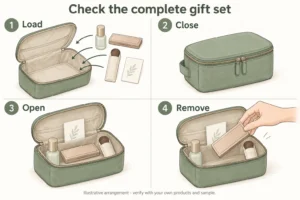
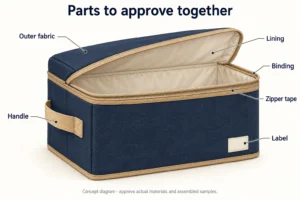
To customize storage bags and organizers with Great Shine, start with the intended use, reference images, size and order quantity. We review the construction, materials and packaging with you, confirm the quotation basis, and develop a sample. Your written approval then connects the final specification to production, inspection and packing.
You can contact us before every detail is settled. Tell us what the product needs to hold, where it will be sold and which decisions you need help making. We can use that information to work through the specification with you.
Quick answer: what happens during a custom project?
The project moves from an initial brief to an agreed specification, quotation, sample, revisions and approval. Before bulk production, we confirm the final configuration, quantity breakdown, packaging and inspection requirements. The agreed bulk lead time starts when we receive the prepayment.
Great Shine can customize materials, size, structure, logo and packaging, and handles design, sampling, production and inspection. The examples below come from a home-storage project that has already been produced. Customer details are omitted, and each configuration is a starting point for discussing your own requirements.
1. Send a brief that explains how the product will be used
Your first message should give us enough information to understand the product and the buying decision. A reference photo can show the style you want, but it may not reveal the support board, interior finish, zipper arrangement or packed size.
Include the following where available:
- Intended contents and use, such as folded bedding on a closet shelf or a box that customers pull out regularly.
- Reference photos, with notes showing the features to keep or change.
- Target assembled dimensions and the space the product must fit.
- Preferred material, color direction and any requirements that are still undecided.
- Quantity by style and color, stating whether you mean individual pieces or complete sets.
- Sales market and channel, including any retailer or marketplace packaging requirements.
- Logo artwork, proposed placement and retail packaging preference.
- Required delivery date and destination, so timing can be discussed against the actual project.
If you have only a photo and a use case, say so. For example, a buyer developing a bedding bag can provide the packed duvet dimensions and the shelf opening before choosing the bag’s final size. Those measurements help define the opening, handles and usable space.
Avoid selecting a material solely because it looks similar in a photograph. If a material or component is uncertain, identify it as a question for the specification review.
2. Turn the brief into a specification that can be quoted
We need to agree on what each dimension and component describes before comparing prices. Record the assembled external length, width and height on a drawing, and distinguish those measurements from internal usable space, folded size and carton size.
Two products made from the same fabric can need different support, openings and packaging. These produced configurations illustrate that difference.
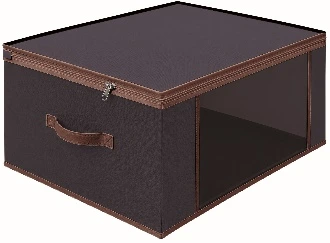
Example A: a lidded fabric storage box
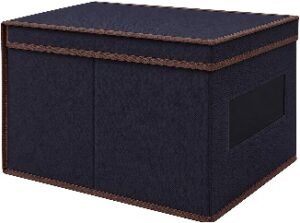
The project included a box measuring 40 × 50 × 25 cm, stated as assembled external length × width × height. Its specification included:
- 80 gsm polypropylene non-woven outer fabric, lining and edge binding.
- 2 mm cardboard support and an attached lid.
- A front clear PVC window.
- A CPP retail bag, hanging hook and printed insert.
For a new version, the review starts with the shelf and the contents. We need to establish whether the lid can open in the intended position and whether the customer can reach the contents. The external dimensions do not establish internal capacity or a carrying-load rating.
The window also needs a defined size and position. “Add a clear window” leaves open whether it shows the stored contents, holds a label, or serves another purpose. Changing the window or support layout can require a revised sample.
Example B: a bedding storage bag
The same home-storage project included a 60 × 42 × 28 cm bedding bag, also measured externally. Its specification used:
- 80 gsm polypropylene non-woven fabric and matching-weight non-woven edge binding.
- A fabric handle on each side.
- A zipper with two sliders and a front clear PVC window.
- A CPP retail bag with a hanging slot and printed insert.
Here, the sample review centers on loading the intended bedding, closing the zipper and using the handles. The fabric weight does not prove that the completed bag will carry a particular load. If your version needs a carrying claim, agree the load, test method and acceptance criteria for that configuration.
The project record is a useful starting point for development. It does not settle the materials, dimensions or performance requirements of a different order.
Keep open decisions visible
Before quotation or sampling, separate confirmed details from open questions. For the box, the structure might be agreed while the logo placement is still undecided. For the bedding bag, the dimensions might be proposed while the intended loaded weight still needs confirmation.
Give each specification a reference and revision date. When you send a change, identify the affected feature so an older drawing or packing instruction is not mistaken for the current version.
3. Match the quotation to the style, quantity and packaging
For the confirmed storage-box and bedding-bag configurations discussed here, the minimum order is 500 pieces per style, with mixed colors allowed within the same style. These terms do not mean that quantities from different styles can automatically be combined to reach one minimum.
List the total for each style, then the proposed quantity of each color. We confirm the color split against the selected configuration. Do not treat a different size, material or structure as another color of the original product without checking its quotation basis.
If the structure, material, branding or packaging changes, ask us to reconfirm the price and order conditions. A quotation for a non-woven box with cardboard support is not a quotation for the same-looking box made with a different fabric and support board.
Distinguish pieces, sets and carton quantities
A piece is one individual product. A set contains the specific assortment agreed for that retail unit. Put both the set composition and the number of complete sets in a set-based inquiry; the word “set” alone leaves the production quantities unclear.
Carton quantity is a separate packing detail. In the produced project, the 40 × 50 × 25 cm lidded box used 12 pieces per carton, while the bedding bag used 24 pieces per carton. These figures describe those packing arrangements. They are neither the minimum order nor a promise for another packaging format.
Confirm the final retail pack and carton plan before using them to compare shipping costs. A larger insert, different folding method or revised retail box can change the packed dimensions even when the assembled product size stays the same.
4. Review the sample and record revisions
Samples are free and are completed in 3-7 days after the sample details are confirmed. Allow separately for delivery to your address; courier costs and delivery timing need confirmation.
Before a revision round, confirm what will change, what evidence you need to review and the resulting schedule. Free samples do not mean that unlimited revisions or all courier shipments are included.
When the sample arrives, review it against the agreed specification and its stated approval purpose. If a material, color or logo is temporary, keep that exception visible until the intended version has been checked.
For the lidded box, check the assembled dimensions, board placement, lid movement, window position and access on the intended shelf. Examine the folded product as well if that is how it will reach the retailer.
For the bedding bag, load the intended bedding, check the opening and zipper path, and review how the handles behave during the agreed handling check. Record the contents and their weight where measured. An empty sample alone cannot show how the filled bag closes or carries.
Across both products, review the material and color references, binding, seams, logo placement and retail pack. Inspect a physical color reference where the decision depends on shade; a screen image is not an agreed color standard by itself.
Make each revision easy to act on
Send a numbered list with a photo or drawing reference for each point. State what you accept, what needs to change and what remains unchecked.
A hypothetical comment such as “Keep the box dimensions and fabric; move the window to the marked position; packaging approval remains open” is more actionable than “Please improve the sample.” It preserves the decisions already made while identifying the remaining work.
Ask for confirmation of how the requested change affects the quotation and schedule. After receiving a revised sample, check the affected function again. For example, changing the bedding bag’s zipper opening should trigger another loading and closure check with the same reference contents.
5. Fix the production reference before bulk work begins
The approved sample and final specification need to describe the same product. Bring the decisions into one current record before production, including any exceptions that still need resolution.
Confirm:
- Final product reference, dimensions, measurement method and agreed tolerances.
- Outer material, lining, binding, support board and relevant component specifications.
- Approved colors, logo files, application method, position and size.
- Total quantities by style and color, with pieces and sets clearly distinguished.
- Retail packaging, inserts, labels, barcode files, carton marks and packing quantities.
- Inspection items, methods and acceptance requirements agreed for the order.
- Sample revision and the person authorized to approve any later change.
The agreed bulk lead time starts when Great Shine receives the prepayment. Confirm the actual duration and payment arrangements in the order documents for your project.
Settle the specification and approval requirements before that stage so the order has a clear basis. If you request a change after the order is underway, confirm its effect on materials, work already completed, price and the delivery schedule in writing.
For a more detailed approval review, use our guide to what to confirm between an approved sample and bulk production.
6. Connect production, inspection and the final pack
Production and inspection need the approved configuration as their reference. Product checks and packaging checks should remain connected: a correctly sewn bag can still be packed with the wrong color allocation, insert or barcode.
For the lidded box example, the agreed checks can include finished dimensions, the specified board and fabric, lid operation, window placement, seam condition and completeness of the retail pack. For the bedding bag, include the agreed loading and closure check, handle attachment and the required retail packing components.
Confirm how these checks will be carried out and what evidence your team needs before shipment. If your retailer requires a particular inspection method, sampling plan or report, provide that requirement while defining the order. Do not assume that an unspecified “quality check” covers every market or channel requirement.
Inspection of the production goods is separate from sample approval. The sample records the product you approved; production inspection checks the goods made for the order against the agreed requirements.
Approve packaging against the packed product
The two example products used CPP retail bags and printed inserts, but their hanging arrangements differed. That is why the packing specification should identify the actual components rather than say only “standard packaging.”
Check the insert against the folded product and retail bag. Confirm artwork, barcode position, quantity per retail unit and carton markings. Record final carton dimensions and weight for the order once the packing arrangement is established.
Shipment and transport timing also need their own confirmation. A production completion date is not the same as arrival at your warehouse.
Start your Great Shine project with this short inquiry brief
Copy the lines below into your inquiry and add the details you know. Write “please recommend” for decisions where you want our input.
- Product and intended use:
- Reference images and features to keep or change:
- Target assembled dimensions and available storage space:
- Intended contents and any handling requirements:
- Preferred material, color and support structure:
- Quantity for each style and color; unit is pieces or complete sets:
- Set composition, if applicable:
- Sales market and channel:
- Logo file, placement and application preference:
- Retail packaging, labels and barcode requirements:
- Required delivery date and destination:
- Details you would like Great Shine to recommend:
If the lidded configuration is a suitable starting point, review our custom storage box and fabric bin options. For products that need a flexible body and zippered opening, see our custom bedding and storage bag options.
Send the brief with the relevant product reference. We can then work through the open decisions with you and establish the specification to quote and sample.
Frequently asked questions
Can I start without a finished drawing?
Yes. Provide reference images, intended use, approximate dimensions and the decisions you need help with. The missing structural and material details still need confirmation before they become part of the quotation and sample specification.
Can different storage products share one 500-piece minimum?
For the confirmed box and bedding-bag configurations in this article, the minimum is 500 pieces per style. Mixed colors are allowed within the same style. A combination of different products or changed configurations requires separate confirmation.
Does the free sample include shipping and every revision?
Samples are free. Courier costs, delivery timing and the arrangements for a requested revision are confirmed separately. Do not assume that every additional sample shipment or an unlimited sequence of changes is included.
Does a reorder need another review?
Identify the earlier approved product and specification revision, then list anything changing. A new size, material, logo application or packing arrangement may need new evidence before it is approved. Confirm what can remain under the previous approval and what needs another check.
Can I use these example specifications for another market?
They can be a starting point for discussion. The intended use, labeling, packaging and applicable product requirements still need review for your order. A produced configuration is not automatic evidence of compliance or suitability for every destination.