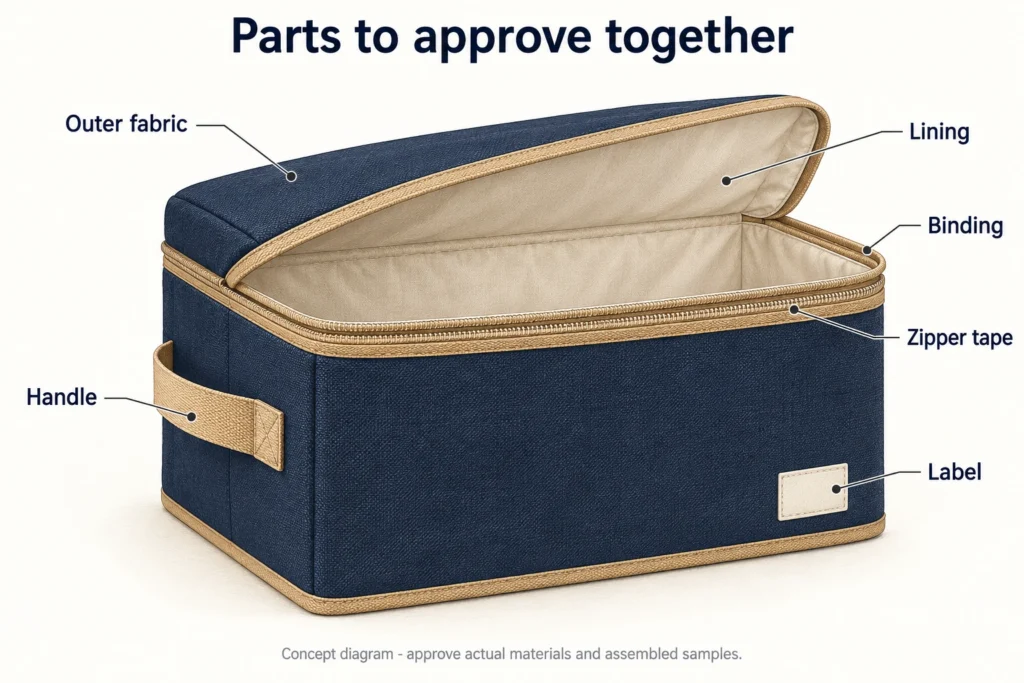
To match colors across a custom storage product collection, agree on the intended relationship between materials, then approve the components and assembled products together. One color code gives the project a reference, but it does not guarantee that non-woven fabric, polyester, binding and zipper tape will look identical. For Great Shine projects, send the color reference with the product list so we can review the combination before sampling.
Why can the same color code look different?
Fiber type, fabric construction and surface finish affect appearance. A matte non-woven panel and a smoother woven handle reflect light differently. A coating can change sheen, while folds and textured surfaces create shadows. These differences need assessment against the agreed appearance; they are not all evidence of a production error.
Lighting matters too. Two materials can appear to match under one light and separate under another, a phenomenon called metamerism. X-Rite explains why this occurs when different materials are combined. Agree on the viewing conditions relevant to your range, including the lighting where customers will see it.
If a shade looks wrong, first check the material identity, reference sample and viewing conditions. Those checks help distinguish a material choice that needs revisiting from a component that differs from its approved reference.
Which parts need a shared color review?
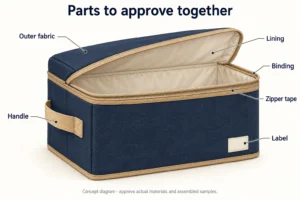
List the outer fabric, lining, binding, handles, zipper tape and labels for each style. Include visible stitching and zipper hardware where they affect the design. The zipper tape is the textile strip beside the teeth; approving its color does not also approve the slider’s finish.
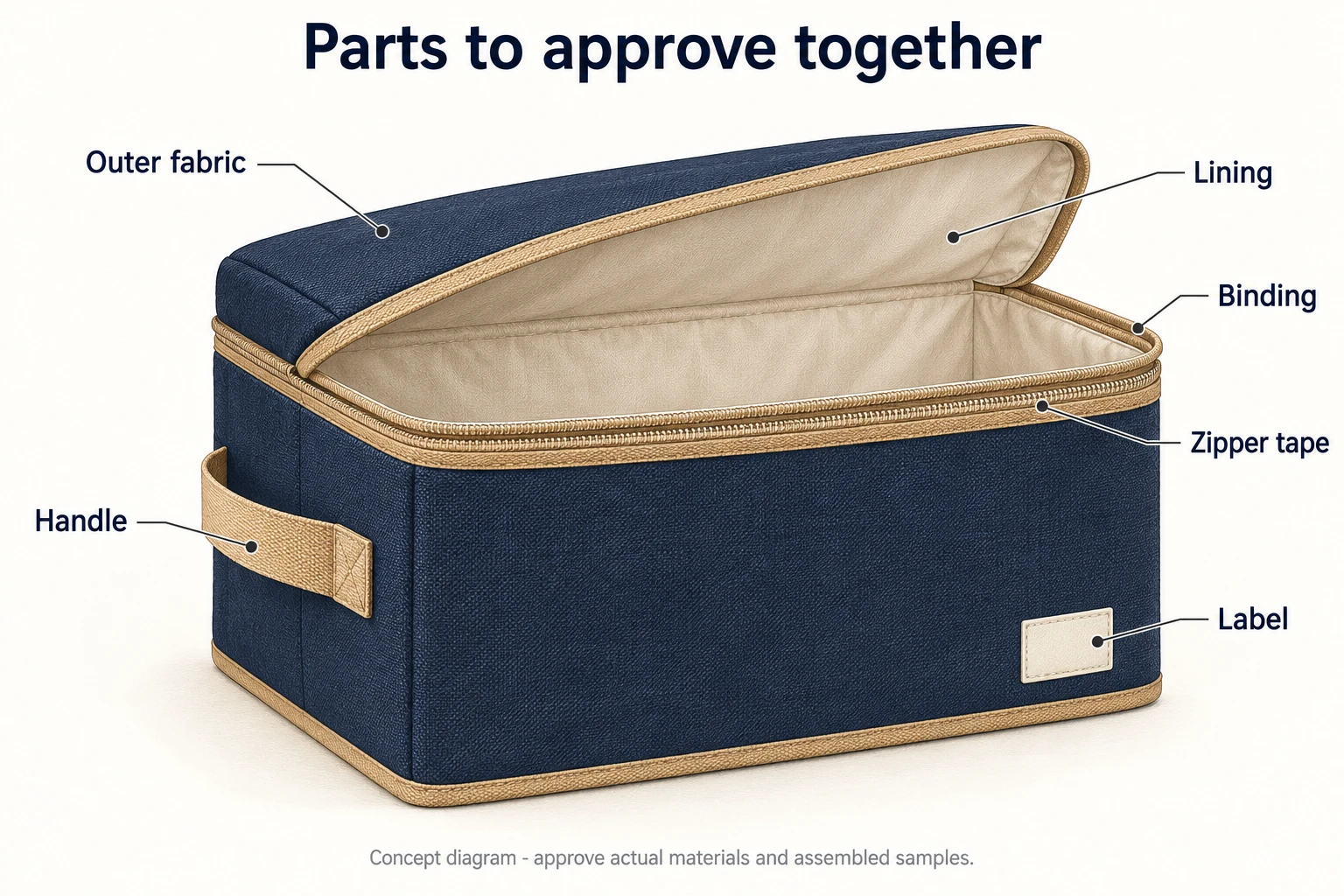
An assembled storage box exposes broad panels and narrow bound edges. A bedding bag adds a zipper route and carrying handles. A garment cover may place a long zipper beside the main fabric. Those proportions affect how prominent a slight difference becomes.
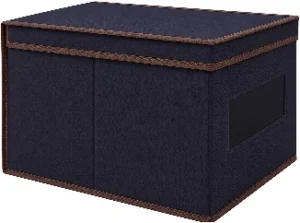
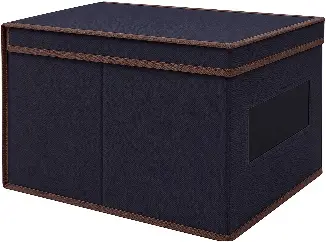
A produced Great Shine lidded-box configuration specifies 80 gsm polypropylene non-woven fabric and separate non-woven binding. Its project drawing makes the body and trim easy to identify. It does not establish an exact color match: that decision requires the actual materials. Keep the component references separate even when both are described as the same color.
Choose the collection’s appearance before requesting samples
Tell us whether close matching, coordinated trim or deliberate contrast matters most. “Everything navy” leaves this decision open. A contrasting handle may be intentional, while a slightly different handle intended to match can look accidental.
Use this decision table to define the sample brief:
| Intended effect | What to specify | What to approve together |
|---|---|---|
| Closest practical match throughout | One master reference, component-specific targets and agreed acceptable variation | All materials under the agreed lighting, followed by the complete range |
| Matching main panels with coordinated trim | Main fabric target plus separate binding, handle and zipper references | Body-to-trim relationship on each assembled style |
| Deliberate contrast | Named color assignments for every visible component | Contrast placement, proportions and consistency across styles |
For coordinated trim, check whether the same trim material is suitable across the products. A binding selected for a box edge may not have the structure needed for a carrying handle. Function and color need separate approval.
Send a physical reference with the material brief
Provide a physical swatch where possible, the complete color code and reference system, and the intended material. A code without its system or suffix can be ambiguous. State whether an existing product, a fabric swatch or a published color standard takes priority if the references disagree.
For each component, identify:
- Product style and component name.
- Material, construction and finish, where already selected.
- Color reference and whether it must match or coordinate.
- Any existing approved sample that should be followed.
Phone photographs help communicate direction and mark the location of a problem. Lighting, exposure, white balance and screens can all change the displayed color. Use photographs to discuss a revision, then approve the physical result through the agreed process.
If your brand uses numerical color tolerances, supply the measurement method and viewing requirements as well. Confirm how they apply to each material; a number without a defined method leaves room for disagreement. Do not assume that every component can be judged using one universal tolerance.
Approve the combination, then the assembled collection
Start with a labeled material arrangement showing the proposed outer fabric beside its binding, handles, zipper tape and label. Record the approved combination for each style. This lets you identify an unsuitable trim before it becomes part of a finished sample.
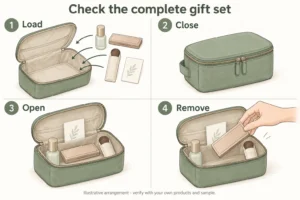
Next, review the assembled products side by side. Open the box lid, unfold the garment cover and place the bedding bag in its normal shape. Look at the broad surfaces and the smaller details from the intended display distance. Also check the lining exposed when each product opens.
Use the same agreed lighting and a neutral background for the comparison. Avoid approving different styles from unrelated photos taken on different days. If one material changes, revisit the parts next to it rather than treating the replacement as an isolated swatch.
Record which component is accepted and identify the reference for any revision. For example, an approval note could say: “Keep the approved outer fabric. Revise only the handle toward the binding reference.” Include the reference number and photograph the affected location. This is a suggested note format, not a reported customer case.
Keep a usable reference for reorders
Retain the approved swatches, material references, component assignments and sample revision for each style. Include the approval date, lighting conditions and any accepted differences. Store physical references away from light and contamination so their condition can be checked before reuse.
For a reorder, identify the previous specification and ask whether any material or component source has changed. Compare the proposed materials against the retained references and review a new assembled sample when the change affects appearance. A previous approval establishes a target; it does not prove that every later batch will be identical.
Questions buyers ask about collection colors
How should we record mixed colors within one style?
Give each colorway a separate component list and quantity. State which outer fabric, trim, zipper and label belong together. A total order quantity alone does not describe that allocation.
Should different materials be approved separately?
Yes. Record each component’s material and color approval, then approve their relationship on the assembled product. Matching names do not replace those decisions.
Can the label follow a different color standard?
It can, if that is part of the design. Record the label background, logo colors and intended relationship to the surrounding fabric separately.
Does a color approval also confirm colorfastness?
No. Appearance approval and resistance to rubbing, washing or other exposure are different questions. Agree any relevant performance requirements and test methods separately.
What should we send Great Shine first?
Send your style list, physical or coded color reference, intended color strategy and quantities by colorway. Include which decisions remain open. Start with our custom storage box options or custom storage bag configurations and identify the products that need to work together.