Non-woven fabric is a textile made by forming fibers into a web and bonding them together without weaving or knitting. The name describes how the fabric is constructed, not one specific fiber or level of quality. In storage boxes, it can form the visible cover, an inner lining, or a layer around a support panel.
Quick answer: A non-woven storage box can be suitable for organizing clothes, accessories, and other household items when its fabric, inserts, seams, and handles match the intended use. Fabric weight alone cannot establish its carrying capacity, washing method, or service life. Buyers should assess the complete box and confirm exactly which components the material description covers.
For a retail buyer, that distinction matters. Two bins can have the same color and nominal fabric weight yet behave differently when lifted, packed flat, or pushed onto a shelf. Understanding the material helps explain those differences before they become customer complaints.
What does non-woven fabric mean?
Non-woven means that fibers have been assembled and bonded into a textile without the interlacing used in weaving or the loops used in knitting. It is a construction category that includes many different products.
The industry association EDANA explains this distinction in its definition of nonwovens. Its definition does not limit the category to polypropylene or disposable applications. This matters when a supplier uses the short description “non-woven” without naming the fiber, construction, or finish.
The construction and the fiber are separate facts
Polypropylene, often abbreviated PP, identifies a polymer. Non-woven identifies a way of forming a fabric. A description such as polypropylene non-woven therefore answers two different questions: what the fibers are made from and how the textile is constructed.
Polyester can also be used in non-woven materials. Comparing “non-woven” with “polyester” without more detail mixes construction with composition. The intended comparison may be between spunbond polypropylene and woven polyester, but that needs to be stated.
In a purchase brief, separate these fields. Ask for the fiber composition first, then the fabric formation and bonding description where relevant. This prevents a supplier from treating two different materials as equivalent because both fit a broad sales label.
A familiar appearance is not a complete specification
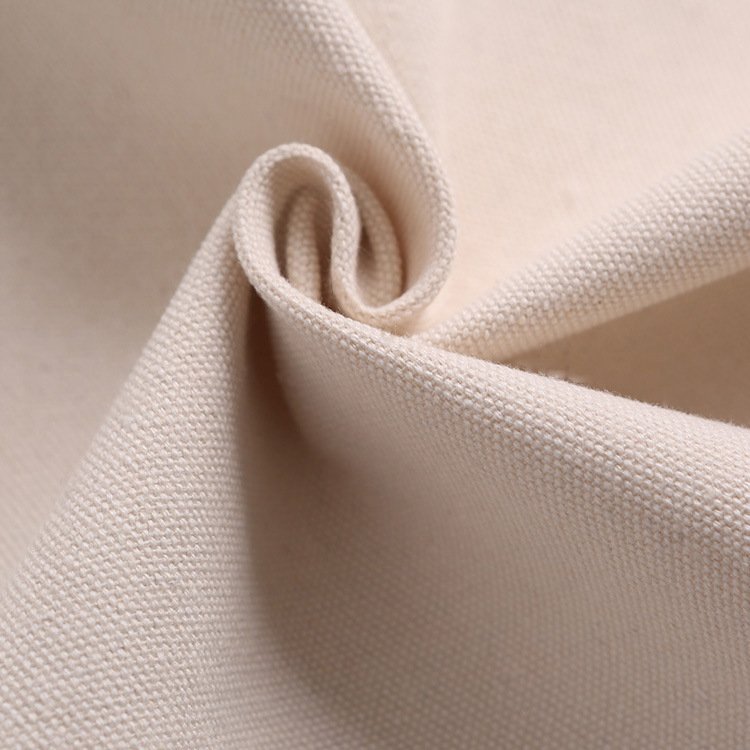
Some storage fabrics have a dotted surface associated with a bonding pattern. Others look more like felt, have a smoother finish, or include a printed or laminated face. Appearance can help identify a sample, but it cannot establish composition or performance.
A dark color can also hide surface irregularities that become visible in a pale version. Review the actual proposed color and finish instead of approving every option from one black swatch.
For products sold online, keep a close-up photograph of the approved material. It gives the merchandising team a useful reference when preparing images, answering questions, or reviewing a later shipment.
How is non-woven fabric made?
Non-woven production generally involves forming a fiber web, bonding that web, and applying any required finishing treatment. The chosen process influences the surface, strength, flexibility, and other properties of the resulting textile.
EDANA’s overview of nonwoven manufacturing describes several web-forming and bonding routes. These include thermal, mechanical, and chemical bonding. The process name is useful background, but a storage buyer still needs specifications and a finished-product sample.
Web formation creates the starting structure
The web is the arrangement of fibers before or during consolidation. Different routes use fibers or filaments in different forms. A supplier’s description should be specific enough to identify what is actually being proposed.
For purchasing purposes, the immediate question is whether the proposed material is consistent across the order. A broad term can conceal changes between samples and production if neither party records the material reference.
Ask the supplier to connect the fabric sample to a material code or agreed description. That reference should follow the sample through quotation, approval, and production documentation, even if the buyer does not need the full manufacturing recipe.
Bonding gives the web usable integrity
Fibers need enough connection to hold together during handling and conversion. The bonding route is part of that structure, but its name alone does not predict how a sewn handle area will perform.
A box places local demands on the fabric. Stitching, corners, and handle attachments can concentrate force in small areas. These locations may behave differently from an untouched swatch pulled by hand.
Inspect the material both before and after conversion. If a seam tears through the fabric, changing the stitch pattern, reinforcement, or panel arrangement may matter as much as choosing a heavier textile.
Finishing changes the surface and use conditions
Printing, coating, or lamination can change the look and feel of a non-woven fabric. It can also alter how the surface responds to wiping, bending, or rubbing against another object.
Ask whether the sample includes all planned treatments. An unprinted swatch cannot demonstrate the rubbing resistance of a printed logo. A laminated face also needs to be reviewed at folds and stitched edges.
If the finished product has different materials on the inside and outside, identify them separately. A description of the outer face should not silently become the care instruction for the entire assembly.
Where is non-woven fabric used in a storage box?
Non-woven fabric often provides the textile surface, while other components create the box’s shape and support. Understanding this division helps buyers trace a complaint to the part that actually needs improvement.
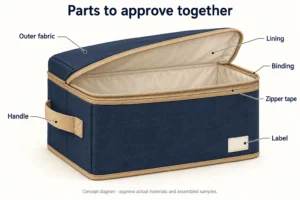
Begin with a simple construction sketch. Label the outer fabric, lining, side supports, base panel, handles, and any lid. Then connect each proposed feature to a component instead of assuming the material name explains the whole product.
Outer cover
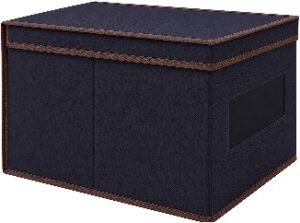
The cover creates much of the visible appearance and receives contact from hands, shelves, and nearby objects. Its color, texture, and finish influence how the product is presented to customers.
Examine the cover where users are likely to touch it. A soft surface on a broad panel may feel different at a tightly bound rim or folded corner. Those areas can determine the customer’s first impression when unpacking the box.
Photographs should show the actual texture at a useful scale. A smooth studio image can make a textured fabric look like a continuous plastic sheet, creating the wrong expectation about cleaning or water resistance.
Inner lining
A lining separates stored items from structural parts and interior seams. It may use the same material as the cover, a different fabric, or a construction without a separate lining.
Ask how the interior corners are finished. Exposed board edges, rough stitching, and loose threads can be more relevant to clothing storage than the appearance of the outside face.
Do not assume that every interior surface has the same composition. A removable base panel might have a different cover from the sidewalls. Its material and care limits belong in the specification too.
Support inserts
Cardboard, polypropylene board, or another insert can help the sides and base hold their shape. The fabric surrounds that structure, but does not replace it.
This is why a heavier cover may fail to solve a sagging base. The underlying issue may be an unsupported span, a thin insert, or a base that shifts away from its intended position.
Ask whether the supports are removable, sewn in, or attached another way. This influences assembly, cleaning, flat packing, and the customer’s ability to restore the box after unpacking.
Handles and rim binding
Handles transfer the weight of the contents into their attachment areas. The load path may pass through fabric, reinforcement, stitching, and a support panel. The weakest connection limits the useful result.
Rim binding helps finish the opening and may influence how comfortably the box is handled. Check the join where the binding ends, especially if the customer is likely to grab the rim instead of using a handle.
Review the expected handling method in the product brief. A bin intended to sit inside a cubby has different demands from a carrier that customers regularly lift across a room.
What does GSM tell a storage buyer?
GSM means grams per square meter. It describes mass per unit area, not the carrying capacity of a storage box. It is useful for identifying and comparing materials only when the rest of the construction is understood.
Write the unit in full at least once in a specification. This helps prevent confusion between fabric area weight, the weight of a complete box, and a supplier’s description of a coated or laminated composite.
Compare like with like
Two materials with the same GSM can differ in fiber type, bonding, finish, and thickness. A comparison becomes more useful when those variables are recorded alongside area weight.
For example, a buyer might compare two candidate covers while keeping the box dimensions, inserts, and handle construction unchanged. This isolates the effect of the cover more clearly than comparing two unrelated finished products.
There is no universal GSM threshold that makes every storage box suitable for retail. The intended contents and handling pattern should drive the choice, followed by evaluation of the assembled design.
Clarify what was weighed
A supplier may report the weight of the base fabric or the total after a finish has been added. Those are different measurements. A coating can increase total weight without adding the same kind of structural benefit as a different textile construction.
Specify which layer the quoted number describes. If a laminate contains a textile and a film, ask whether the components are listed separately or as a combined material.
Keep the approved description consistent across documents. A quotation that uses one basis and a purchase order that uses another can create disagreement even when both parties believe they have supplied the stated weight.
Use a measurement method that suits the decision
A small, irregular offcut is a weak basis for comparing area weight. An agreed sample area and suitable scale provide a more useful result. The calculation is sample mass divided by sample area in square meters.
For illustration, a piece measuring 0.5 meters by 0.5 meters has an area of 0.25 square meters. If it weighs 25 grams, its calculated area weight is 100 grams per square meter. These numbers explain the calculation; they are not a recommended specification.
For acceptance testing, agree on sampling and measurement with the supplier or laboratory. EDANA’s Nonwovens Standard Procedures provide a recognized framework for discussing nonwoven properties and test methods.
How does non-woven fabric differ from woven fabric?
The main difference is construction. Woven fabric has interlaced yarns; non-woven fabric has a bonded fiber structure. Neither label, by itself, determines whether a finished storage product will meet its intended use.
Compare specific non-woven and woven fabrics in the same product design. This makes it easier to judge whether a difference in material affects handle performance, cleaning, or appearance.
Surface and appearance
A woven construction often makes the yarn pattern visible, while a non-woven surface may show a bonding pattern or a less regular fiber texture. Finishes can change both appearances, so inspect the proposed sample.
Consider how the material looks when the box is empty, fully assembled, and partly filled. A beautiful flat swatch may reveal wrinkles or uneven tension around a finished panel.
Match the surface to the sales presentation. A customer purchasing an everyday closet bin may value unobtrusive texture, while a decorative collection may need a more specific finish and color relationship across several products.
Handling and conversion
Sewing or bonding a fabric into a box changes the demands placed on it. The behavior of a cut edge, needle hole, or fold depends on the selected material and construction.
Ask for the same corner and handle details on every comparison sample. Otherwise, a better result may come from improved reinforcement rather than from the textile category itself.
Avoid using a single hand-pull demonstration as proof of product capacity. It does not reproduce the distribution of force when a filled bin is carried or pulled from a shelf.
Cost and suitability
Material cost is only one part of the finished product price. Cutting, sewing, support inserts, packaging, and the number of components also affect a quotation.
A lower fabric price may be useful if it meets the agreed use case. It becomes less useful if the design needs extra reinforcement, produces inconsistent appearance, or does not match the promised care method.
Request comparable quotations with the same dimensions and functional requirements. Record any proposed substitution so that a price comparison does not silently become a comparison of different products.
Are non-woven storage boxes durable?
They can be durable enough for an intended storage routine, but the category does not carry a universal lifespan. The answer depends on the specific fabric and the construction of the complete box.
Describe the routine before asking about durability. A shelf bin that holds scarves and is moved occasionally faces different demands from a large organizer that customers lift while packed with dense objects.
Daily access versus occasional access
Frequent pulling and opening place repeated demands on handles, seams, and corners. Seasonal storage may involve fewer movements, but a box can remain filled for a long period.
Ask how the customer reaches the product. Pulling a bin by one handle from a tight shelf places different forces on it from lifting it evenly with both hands.
Evaluate the likely behavior rather than an ideal demonstration. If the product has a single front handle, its sample review should include the ordinary pulling action that the design invites.
Contents and load distribution
Soft textiles can spread across the base, while small dense objects can concentrate weight. Two boxes with the same total load may therefore behave differently.
Use representative contents for practical checks. A folded blanket does not reproduce the edge pressure created by a stack of hard objects. Similarly, a load placed carefully in the center may not reveal a weak corner.
A product intended for clothing should be described accordingly. Do not use a photograph full of books or tools unless that configuration is within the design’s evaluated scope.
Surface wear and appearance retention
Function and appearance are separate parts of durability. A box can remain intact while its surface becomes scuffed or its printed design changes noticeably.
Define which changes are acceptable for the intended price position and use. A hidden lining may tolerate marks that would be unacceptable on the visible front of a coordinated closet collection.
Keep approved samples under sensible storage conditions and compare them with later production. Photographs help, but physical samples are more useful for judging texture and hand feel.
Is non-woven fabric waterproof or breathable?
Neither property follows automatically from the word non-woven. Fiber composition, bonding, surface treatment, and added layers all influence how a material interacts with air and water.
A fabric may allow air movement while offering limited resistance to droplets. Another may have a continuous film layer that changes both behaviors. The completed box also includes seams and openings that affect protection.
Water repellency is different from a watertight product
Water beading on a swatch does not prove that an assembled box keeps its contents dry. Liquid may enter through seams, the opening, or a damaged area.
Choose wording that matches the evidence. A statement about a wipeable outer surface is narrower than a promise that the whole box is waterproof, and it describes a different benefit.
For ordinary household storage, instructions to store clean, dry items may be more useful than a broad protective claim. Customers still need a suitable storage location and care method.
Breathability does not control the room environment
An air-permeable cover cannot remove moisture from a damp cupboard or dry wet clothing by itself. The surrounding conditions and the contents remain important.
Also consider support panels and lids. A fabric swatch may pass air, while the complete wall includes a solid insert. The product should not borrow a swatch-level property without explaining the construction.
If breathability is central to the product’s positioning, define the property and the relevant test. Otherwise, describe the actual material and ventilation features without promising a result that has not been measured.
Can a non-woven storage box be washed?
The correct care method depends on the whole box, including its inserts, printing, adhesives, and trim. A washable fabric does not make every assembled organizer machine washable.
Before approving instructions, identify what can be removed and what remains permanently enclosed. A care label should give a method that an ordinary customer can follow without damaging hidden parts.
Check the support material first
An enclosed paper-based support can make soaking unsuitable even if the outer fabric tolerates surface cleaning. A plastic insert presents different concerns, but other components may still limit washing.
Ask whether the base panel can be removed completely and whether the side panels contain fixed supports. Customers may remove the obvious base while overlooking inserts inside the walls.
Use clear illustrations if disassembly is required. An instruction such as “remove board before washing” is incomplete when several boards exist and only some are accessible.
Evaluate the proposed cleaning routine
Test the method that will appear on the label. Wiping with a damp cloth, hand washing, and machine washing are different procedures with different demands on the product.
Review the result after drying and reassembly. Look for changes in shape, surface appearance, printing, and fit of removable parts. A box that looks acceptable while wet may distort as it dries.
Do not assign cleaning claims from another product in the same range. Changes in trim, support construction, or decoration can alter what is suitable even when the main fabric remains the same.
How should buyers specify a non-woven storage box?
Specify the intended product and its components together. A useful brief describes where the box will be used, what it will hold, and how customers will handle it before listing material and appearance requirements.
This approach gives a supplier enough context to propose a construction. It also creates a clearer basis for reviewing alternatives when price, packing size, or appearance needs to change.
Start with the storage space
Record the available shelf or cubby dimensions and the clearance needed to insert and remove the box. External dimensions, usable internal space, and folded dimensions answer different questions.
For a fitted collection, check more than one physical shelf. Furniture tolerances, trim, and hinges can reduce the opening even when the nominal compartment size appears suitable.
State whether the dimensions refer to an empty assembled sample or a filled product. Soft walls can bulge, and a handle may extend beyond the main body. These details affect fit without changing the nominal panel measurements.
Describe each textile layer
List the outer fabric and lining separately, including composition, area weight where relevant, color reference, and finish. Attach a reference swatch if appearance is important.
If the supplier proposes a change, ask which field changes and why. “Equivalent material” is too broad when the buyer is trying to maintain a consistent surface across several sizes.
The specification should also identify which areas can vary without affecting the approved product. A hidden reinforcement and a visible front panel may need different levels of appearance control.
Identify the structural parts
Describe the base and side supports by material and construction. Include their dimensions, how they are held in place, and whether the customer removes them during folding.
Ask for a sample that shows the assembly sequence. If a base panel must be pushed firmly into position, check whether the surrounding fabric provides enough clearance without becoming loose after use.
Record the orientation of the parts when it matters. A panel that fits in two directions may behave or look different in each, so the customer instructions should make the intended position clear.
Define appearance and functional acceptance separately
Appearance checks can include color, visible stitching, print position, and the way the box stands when empty. Functional checks concern assembly, access, carrying, and fit.
Separating these categories makes inspection more useful. A sample can pass a color review while still needing a handle change. Conversely, a structurally sound box can be rejected because it does not match the collection’s approved look.
Use descriptions that an inspector can apply. “Premium quality” does not explain whether a small wrinkle, uneven seam, or loose base is acceptable. A reference sample and marked photographs can make those decisions clearer.
What should a sample review include?
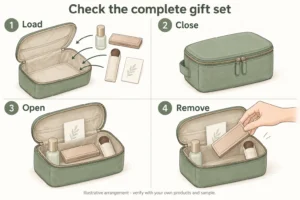
A sample review should follow the customer’s routine from unpacking to storage and handling. It should also include the product’s advertised care method and any assembly or folding steps.
The following checks are practical planning suggestions, not a certified test protocol. Set the actual loads, cycles, conditions, and acceptance limits with the supplier or a suitable laboratory for the intended product.
Unpack and assemble without coaching
Give the sample and its instructions to someone who did not develop it. Observe whether they can identify the base, orient the panels, and form the box without extra explanation.
An assembly problem may come from unclear instructions rather than from the fabric. A part that appears defective may also have been packed in a way that leaves a temporary fold or puts stress on a corner.
Record how the sample was packed and how it recovered after opening. This creates a useful baseline for deciding whether a later complaint concerns design, transit, or customer assembly.
Check the intended filled configuration
Use contents representative of the proposed listing. Measure the filled outline and check whether the box still fits the intended shelf with normal clearance.
Then use the access method shown in the product photography. Pull from the front handle, lift with the intended grips, and remove an item from the top. Watch whether the rim folds inward or the base shifts.
Record observations by location. “Box feels weak” offers little direction; “front handle attachment distorts the upper panel when pulled” identifies a problem that can be discussed and revised.
Review folds and contact areas
Inspect corners, binding, and locations that rub against shelf edges. Repeat the intended folding sequence if flat storage is a selling point.
Look at the interior after handling as well as the exterior. A support edge may wear against the lining before any change becomes visible outside.
If the proposed design includes a lid, evaluate the hinge or fold and the closure alignment. A lid can change the demands on a box that otherwise looks identical to an open version.
Compare production with the approved sample
Approval should connect to a recorded material and construction specification. Keep a reference sample, photographs, and the agreed changes from earlier rounds.
When production arrives, compare the same features that drove approval. A different surface texture, base fit, or handle position deserves review even when the overall product size is unchanged.
Avoid judging an entire shipment from one unusually good or poor piece. Agree on a sampling plan that suits the order and use consistent defect descriptions when reporting findings.
What causes common problems in non-woven storage boxes?
Common complaints can originate in the cover, support insert, joining method, packaging, or the way the product is used. The useful response is to identify the location and action involved before changing the material specification.
For a buyer, this turns a vague return reason into a development question. It also helps distinguish a design mismatch from a production variation or an inaccurate product listing.
The box collapses when partly empty
A collapsible box may depend on an inserted base or a particular panel arrangement to hold its shape. If that support is missing, undersized, or incorrectly positioned, the walls can lean inward.
Check whether the product is intended to stand empty. If it is, evaluate that condition directly. A photograph of a fully packed sample does not prove empty stability.
Possible changes include a different support arrangement, panel fit, or assembly method. Increasing the outer fabric weight without diagnosing the structure may add cost while leaving the complaint unresolved.
A handle tears away
Inspect whether the failure occurred in the handle, thread, attachment seam, or surrounding fabric. Each points toward a different corrective action.
Also check the handling instructions and listing images. A pull tab designed for sliding a bin from a shelf can be mistaken for a carrying handle if the product presentation encourages lifting.
A revision should be tested using the same action that caused the concern. Making the stitching look heavier is not enough if the force still concentrates at the same unsupported edge.
The surface looks different across a set
Color can be affected by the textile, surface treatment, and lighting under which it is judged. Texture differences can make two nominally identical colors appear mismatched.
Compare the assembled products together under agreed lighting. A small swatch approved months earlier may be difficult to compare with a large finished panel in a different room.
Keep production references for both color and texture. If a collection contains several sizes, review them as a group instead of approving each in isolation.
A box develops an unwanted smell
Treat odor as an observation requiring investigation, not proof of a particular chemical or material defect. The source may involve several components, packaging, or storage conditions.
Record when the smell was noticed and whether it changes after unpacking under normal conditions. Ask the supplier to review materials and packing without diagnosing the chemistry from smell alone.
If a safety or substance concern remains, use appropriate product-specific testing and qualified advice. An air-out instruction should not be used to avoid investigating a repeated material concern.
How should a buyer compare prices fairly?
Compare the same functional brief, component scope, and packaging basis. A low unit price is difficult to interpret if one quotation includes supports, labels, and a retail pack while another excludes them.
Request a clear description of the proposed construction beside each price. This makes the tradeoff visible when a supplier offers a lower-cost alternative.
Count the complete set
A listing may contain several boxes, lids, and removable panels. Confirm the number of each component per sellable unit and per shipping carton.
Also distinguish one assembled box from a nested or flat-packed set. Differences in packing arrangement affect handling and the amount of packaging needed to keep the parts together.
Use the same naming convention in the purchase order and artwork. Calling both an individual bin and a three-bin retail pack a “set” invites packing errors.
Review packaging with the product
Flat packing can reduce the space needed for an empty product, but the actual result depends on the insert arrangement and protective packaging. Measure the packed sample rather than assuming a standard percentage saving.
Check whether the printed insert, labels, and instructions remain visible and undamaged after packing. A very tight pack can create creases or make the first assembly unnecessarily difficult.
Use the measured sellable unit and carton dimensions for logistics planning. Do not base freight calculations on the unfolded product dimensions or an unverified supplier estimate.
Evaluate changes in context
If a supplier proposes lighter fabric, ask which requirement it still meets and what changes in the sample. If a stronger insert is proposed, review its effect on folding and packed size.
The right decision may be a different structure rather than a different material grade. A smaller unsupported panel, for example, can change how the product behaves without changing the visible fabric.
Document the final choice so that future orders do not return to an earlier specification. The approved sample should represent the quoted and ordered construction, not an unpriced development version.
How can product information prevent misunderstandings?
Product information should describe the assembled box, its intended contents, its dimensions, and its care method in terms a customer can use. Broad material claims are less useful than a clear description of the complete product.
For non-woven storage boxes, a good listing explains whether the product is open or lidded, which supports are removable, and whether the handles are intended for carrying or pulling. These details also help customer service answer questions consistently.
Show shape and scale honestly
Include an empty assembled view and a view with representative contents. Show the base panel separately if the customer must install it.
A lifestyle photograph should preserve the product’s real proportions. Making a box look taller or deeper can create fit expectations that the dimension image cannot fully correct.
If several sizes share one listing, label the pictured size clearly. Avoid showing the capacity of a larger model beside the dimensions of the smaller one.
Describe material claims precisely
Use “non-woven polypropylene cover” when that is the confirmed construction. If composition has not been established, obtain it before writing a more specific claim.
Environmental statements also need component-level support. A recycled-content claim for the fabric does not automatically cover a virgin-plastic insert, handle, or retail bag.
For recycling information, check the actual local collection route for the assembled product and its separable parts. A material name alone does not establish that customers can place a mixed construction in household recycling.
Keep care and use limits easy to find
Put the care method near the material information and include the same instructions with the product. A statement buried in a long description may not reach the person who later cleans the box.
If the product is intended for dry indoor storage, say so plainly. If a particular use has not been evaluated, avoid demonstrating it in marketing photographs.
The aim is to give customers a useful expectation before purchase. Clear scope can be more persuasive than a long list of claims that the product cannot consistently support.
What would a sensible first order look like?
A sensible first order starts with one defined use case and a manageable range of constructions. The following examples illustrate purchasing decisions; they are not Great Shine customer projects or tested product specifications.
For a closet basics range, a buyer might prioritize shelf fit, coordinated colors, and easy assembly. The sample review would focus on how the box looks beside other sizes, whether the base installs clearly, and how it slides out when partly filled.
For seasonal textile storage, the same buyer might choose a lidded construction and larger dimensions. The review would then include closure alignment, the handling of a bulkier filled product, and whether the support panels remain correctly positioned during packing.
For an online bundle, packing and instructions may become more important. Each part must be easy to identify, and the photographs should explain whether the customer receives assembled boxes or folded pieces with separate supports.
These programs can use related materials while requiring different finished designs. Approving one cover fabric does not approve every box made from it. Keep the customer routine at the center of each size and configuration decision.
Frequently asked questions
Is all non-woven fabric made from polypropylene?
No. Non-woven describes construction, and several fibers can be used. Polypropylene is one possible composition. Ask for the actual fiber content instead of treating a short sales label as a complete material declaration.
Is non-woven fabric the same as felt?
Some felt-like textiles are nonwovens, but the whole category is much broader. Surface feel alone cannot identify the fiber or bonding method. A storage material that looks like felt may have a different construction from another visually similar sample.
Does a heavier non-woven fabric make a stronger box?
It may change performance, but higher area weight does not prove a higher box capacity. Inserts, dimensions, seams, and handle attachment all matter. Compare assembled samples against the same intended use before assigning a strength claim.
Can non-woven storage boxes hold books?
Only use that claim for a design evaluated for the intended book load and handling method. Books can create concentrated weight. A box approved for light clothing should not automatically be marketed for dense items because it has the same external size.
Can a non-woven storage box be reused?
Reuse depends on the design and its condition. Non-woven is not a synonym for disposable. A box intended for repeated household use should be evaluated for that routine and supplied with suitable care and handling information.
Is non-woven fabric biodegradable?
The construction name does not establish biodegradability. Composition, additives, and the conditions of disposal matter. A polypropylene non-woven should not be described as biodegradable simply because it looks or feels like a textile.
Can a supplier print a logo on non-woven fabric?
Printing may be possible, but the method must suit the selected fabric, finish, artwork, and expected handling. Approve a decorated sample and assess its appearance after the proposed folding and cleaning routine before finalizing the claim.
What should I send a supplier before requesting a sample?
Send the intended contents, target dimensions, shelf opening, reference appearance, handling method, and sales packaging needs. Include any required care claims. These details help the supplier propose a relevant construction instead of guessing from a photograph.
Choose the complete construction before approving the material
Non-woven fabric is one component in a storage product. A useful buying decision connects that component to the support panels, joins, handling method, and customer instructions that make the box work.
Start by defining the use, then compare samples against that definition. Keep the approved material and construction details together so that purchasing, merchandising, and inspection teams are working from the same reference.
To explore a product direction, view Great Shine’s custom storage boxes and fabric bins. Bring the intended shelf dimensions, contents, and packaging brief into the discussion, and confirm the selected material specifications for the proposed design.