An insulated lunch bag is a portable bag with layers designed to slow heat transfer between its contents and the surrounding environment. It usually combines an outer shell, an insulating layer, and an inner lining. People use it to carry meals and drinks, often with cold packs for foods that need to stay chilled.
Quick answer: An insulated lunch bag helps limit temperature change, but it does not actively refrigerate food. Its usefulness depends on the complete construction, the packed contents, and how it is used. Buyers should evaluate container fit, room for cold sources, opening access, and cleaning alongside insulation.
How do insulated lunch bags work?
Insulated lunch bags work by slowing heat transfer through the bag’s walls and closure. Heat still moves between warmer and cooler areas, so the contents gradually change temperature.
The same basic principle explains why insulation can help with either a cold load or a warm one. It reduces the rate of change; it does not create a particular temperature.
The US Department of Energy explains resistance to heat flow in its guide to insulation principles. That source concerns buildings, but the general heat-flow principle helps explain the bag. It does not provide performance results for lunch products.
The insulation layer slows the process
An insulating layer creates resistance between the outer environment and the interior. Its material, thickness, and continuity contribute to the finished design.
A thicker-looking bag is not automatically the best performer. Gaps, compressed areas, and the opening can affect how the complete product behaves.
For buyers, the useful question is how the whole bag performs with a defined load. A material sample cannot establish the result for every assembled size and shape.
The closure is part of the thermal design
A wide opening makes loading easier, but it must also close as intended. A zipper, folded top, or flap creates a different access and closure arrangement.
Opening the bag exposes the interior to the surroundings. A customer who reaches for snacks repeatedly uses the bag differently from someone who leaves it closed until lunch.
The product description should match that routine. A test conducted with a closed bag should not be presented as a promise for every pattern of use.
A cold source serves a separate role
Cold packs or other suitable cold sources help maintain a chilled environment. Insulation slows the exchange with the warmer surroundings.
A bag and its cold source therefore work together. Leaving out the cold source changes the arrangement and may make a previously demonstrated result irrelevant.
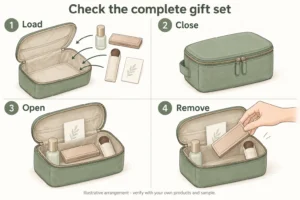
Photograph the recommended cold sources alongside the meal containers. Then show the same items inside the closed bag, with enough space for the closure to work normally.
What are the three main layers?
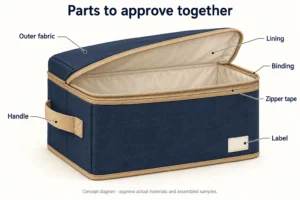
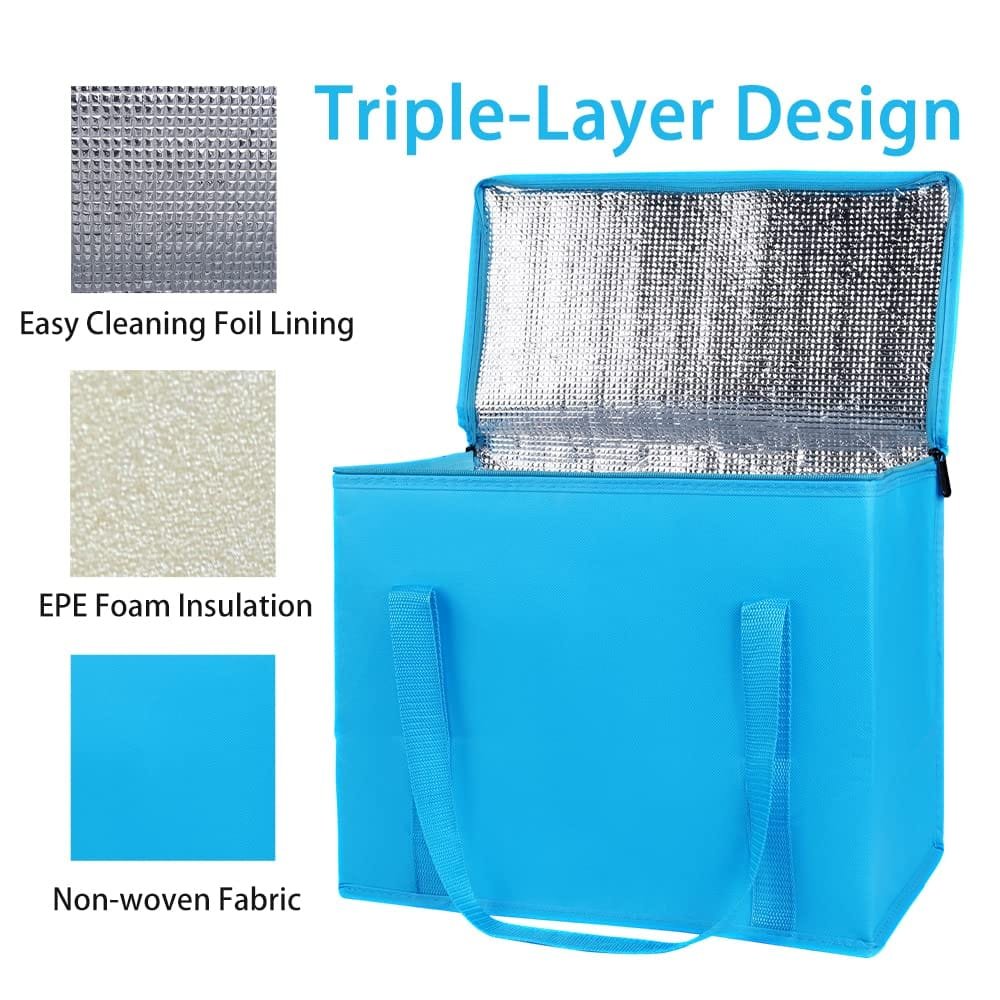
A typical soft insulated lunch bag has an exterior, an insulating middle layer, and a lining. Additional backing, reinforcement, pockets, or trim may also be present.
Each layer does a different job. Treating the bag as one material can lead to inaccurate expectations about cleaning, temperature control, or food contact.
The outer shell handles everyday contact
The shell affects appearance, abrasion exposure, and how the bag feels to carry. It may use a woven textile or another suitable construction.
The outside can also receive spills and dirt during a commute. A surface treatment may influence cleaning, but it does not tell the buyer how the interior should be maintained.
Ask for the shell’s composition and care method. If a recycled-content claim is planned, confirm what part of the shell it covers and what documentation supports it.
The middle layer provides insulation
The insulating layer usually sits between the shell and the lining. It may be difficult to inspect without a cutaway sample or construction description.
Buyers can ask how the layer continues around the base and lid. Changes in thickness or gaps around the opening can matter to the completed design.
Avoid assigning a fixed cooling duration to a foam name or thickness alone. The thermal result also depends on the bag’s geometry, load, and use conditions.
The liner forms the inside surface
The liner is the surface users see when they open the bag. It may be a flexible film, coated textile, or another material selected for the intended use.
PEVA and other liner descriptions identify a material direction, but they do not independently prove food-contact suitability. The selected formulation and conditions of use need appropriate support.
A lining may be easy to wipe while the seams remain difficult to clean. Inspect the shape of the interior, including corners and the area around the zipper.
Seams connect the layers into one product
Seams and edges determine how the layers meet. A liner material that resists water does not make every stitched or joined assembly leakproof.
The base deserves attention because liquid can collect there after a spill or condensation. The opening is another potential limit if the bag tips.
If a listing uses the word leakproof, ask what configuration and conditions were evaluated. A statement about the film by itself cannot answer that question.
How is an insulated lunch bag different from an ordinary tote?
An insulated lunch bag has a thermal construction intended to slow temperature change. An ordinary tote primarily carries items and should not be assumed to provide the same thermal function.
Both can transport a lunch container, but their roles differ when the food needs temperature control. A customer should understand whether they are buying a carrier, an insulated system, or a powered appliance.
Compared with an ordinary lunch tote
A simple tote may be suitable for carrying items that do not need chilling during the planned trip. Its usefulness comes from access and portability.
An insulated version adds material and construction aimed at reducing heat transfer. That can also change the bag’s weight, stiffness, and cleaning needs.
Identify the insulating layer in the product information. Padding can also provide shape or protection, so a padded appearance by itself leaves the intended function unclear.
Compared with a rigid lunch box
A rigid box can protect its shape and may provide a stable surface for packed food. Some rigid products are insulated, while others are only containers.
A soft bag may fit more easily beside other belongings, but it can also compress around the contents. The customer needs to know whether delicate food or containers require additional protection.
Retailers use both lunch box and lunch bag for a range of constructions. State whether the product is soft or rigid and identify any insulating layer.
Compared with a larger cooler bag
A larger cooler bag may serve picnics, shopping trips, or several people’s food. An insulated lunch bag is usually organized around a smaller personal meal load.
The difference is not defined by one universal volume threshold. Shape, opening, carrying method, and intended routine can be more useful distinctions.
Great Shine’s cooler and insulated bag range provides a broader category reference. A personal lunch design should be assessed against its own containers and daily routine rather than borrowing claims from a larger cooler.
Compared with powered cooling
A conventional insulated lunch bag is a passive product. It does not use a compressor or another powered cooling system to maintain a set temperature.
If a product includes electrical heating or cooling, it needs separate instructions and product-specific information. Do not assume a standard soft lunch bag supports that function.
For an introductory listing, one clear sentence can resolve the distinction. Customers should not confuse insulation with refrigeration.
How long do insulated lunch bags keep food cold?
There is no reliable universal number of hours for all insulated lunch bags. The result depends on the starting temperature, cold sources, load, surroundings, and how often the bag opens.
A duration claim needs defined conditions and an endpoint. “Still felt cool” and “remained within a specified temperature limit” are not the same measurement.
Without a relevant test, describe the bag’s intended use and construction. Do not turn a supplier’s estimate into a guaranteed period of safe food storage.
Starting conditions affect the result
A chilled container and a warm container place different demands on the same bag. The temperature of the cold source also matters.
Buyers reviewing a demonstration should ask what the contents were like at the start. A result cannot be interpreted properly if the starting condition is omitted.
Product instructions should explain the recommended preparation. Customers should not have to infer it from a photograph of a packed bag.
The cold-source arrangement matters
The amount, type, and placement of cold sources can affect performance. A test with several frozen packs cannot automatically support a claim for a bag used without them.
USDA recommends an insulated soft-sided bag and at least two cold sources when packing perishable foods for lunch. Its guidance also discusses using a refrigerator at the destination where available. See USDA’s guidance on keeping bag lunches safe.
For a retail product, show the space needed for that arrangement. A capacity image that leaves no room for cold sources can misrepresent practical use.
Ambient conditions change the task
The same bag may face different conditions during an indoor commute, an outdoor event, or time in a parked vehicle. A result from one setting should not be applied to all of them.
Keep the use scene consistent with the evidence. A test carried out in a controlled room does not automatically justify an image suggesting all-day performance in direct sun.
Describe the intended journey before commissioning an evaluation. Include where the bag will wait, how often it will open, and what temperature endpoint the proposed claim needs to address.
The endpoint must be stated
A thermal test should explain what was measured and what result counts as meeting the target. Air temperature inside the bag and food temperature are different measurements.
Sensor placement also affects what a graph represents. A reading beside a cold pack may not describe another part of the load.
A buyer does not need to design a laboratory method alone. The important step is to have a competent testing provider define a method relevant to the intended claim and use.
How should a lunch bag be used with perishable food?
Use an insulated lunch bag as part of a temperature-control routine, with suitable cold sources and food prepared for the intended storage conditions. The bag’s appearance does not establish whether the food has remained safe.
FDA guidance recommends keeping refrigerated foods at 40°F or below and explains why temperature measurement matters. See FDA’s cold-food temperature guidance.
Plan the meal and storage together
Choose containers that close securely and fit the bag alongside the recommended cold sources. A container that barely fits can make the closure difficult to use.
Think about what happens after arrival. Access to a refrigerator changes the routine, while a destination without refrigeration requires a different plan.
The bag’s instructions should support the actual use. A customer carrying a meal for later in the day needs more information than a general statement that the lining is insulated.
Do not use touch as the only check
A lining or cold pack can feel cool while another part of the load has warmed. A general impression does not provide a complete temperature history.
Where safe storage depends on a temperature limit, use appropriate temperature guidance and measurement. Do not rely on a marketing phrase such as fresh all day.
When reviewing a duration claim, look for recorded temperatures and the stated endpoint. A comment that the load felt cool does not provide the same information.
Follow official time and temperature guidance
USDA advises against leaving perishable food at room temperature for more than two hours, or one hour when the temperature is above 90°F. Those limits are not a guaranteed hold time for an insulated bag.
Use the relevant official guidance for the food and conditions. If the temperature-control routine has failed, the presence of insulation does not make the food safe again.
Retail instructions should avoid suggesting that the bag resets food-safety limits. The product helps users follow a routine; it does not replace one.
Keep handling and cleaning practical
Use suitable closed containers for the meal unless the liner is specifically intended and supported for direct food contact. Containers also make packing and serving easier.
After lunch, remove used containers and inspect the bag for leaks or residue. Follow the cleaning instructions for the complete product.
A bag that is difficult to open fully or dry after cleaning may create problems in daily use even if its thermal construction is suitable.
Can an insulated lunch bag keep food hot?
Insulation can slow heat loss from warm contents, but a standard lunch bag does not guarantee safe hot holding. The container, starting conditions, and elapsed time all matter.
For hot foods such as soup, USDA recommends an appropriate insulated container and maintaining hot food at 140°F or above. Follow its bag-lunch guidance for the specific preparation routine.
A lunch bag and a hot-food container have different jobs
A suitable insulated food container directly holds the meal. The outer bag may make that container easier to carry and keep it separate from other belongings.
Do not assume that a soft bag liner is intended for direct contact with hot food. The material and assembled product need support for that use.
The same caution applies to heating the bag itself. Microwave, dishwasher, or oven suitability must come from the actual product instructions.
Separate hot and cold requirements
Putting warm and cold items together changes the thermal conditions for both. An internal divider does not necessarily provide an independent temperature zone.
A dual-compartment design may help organize those items, but performance still depends on the construction and use. Do not describe it as maintaining two controlled temperatures without evidence.
Product demonstrations should keep the intended arrangement clear. The customer needs to know which containers and temperature-control accessories are part of the routine.
Avoid a single hot-and-cold duration promise
A claim that a bag keeps everything hot or cold for the same number of hours hides different conditions. Hot holding and cold holding should be evaluated for their own intended uses.
A material name cannot settle the result. If both functions are advertised, each needs appropriate support and instructions.
For a buyer, a narrower, clearly explained use can be easier to support than a broad thermal claim that covers every meal and journey.
How do you choose the right size?
Choose an insulated lunch bag around the containers and cold sources that will travel together. The bag’s outside dimensions or advertised volume alone cannot show whether that arrangement fits.
Start with the meal routine. A flat food container, a tall bottle, and a reusable cold pack need different spaces, even when their combined volume appears modest.
Measure the actual lunch container
Use the full outside dimensions, including clips, handles, and a raised lid. A container can fit at the base but catch at the opening.
Check how it enters the bag. A wide container may need to tilt through a narrow top, which can be inconvenient when the contents should stay level.
A fit image should use a real container and show the opening. An empty bag photographed from above can conceal this problem.
Reserve room for cold sources
Cold packs occupy space that should be included in the planned layout. Leaving them out of the capacity demonstration creates a misleading picture of practical use.
Their shape matters as well as their volume. A thin pack may sit beside a container, while a thicker one may need its own position.
When comparing bags, use the same intended packing arrangement. Otherwise, a larger-looking interior may appear more useful simply because one demonstration omits necessary accessories.
Allow the closure to work normally
The bag should close without pressing hard on the food container or forcing the zipper around its corners. A strained closure can make daily packing frustrating.
Overfilling may also distort the lid and handles. The product can become awkward to carry even when every item technically fits inside.
Use a comfortably packed sample for product images. Showing a bag at its absolute limit can encourage a routine that the customer will find difficult to repeat.
Compare usable shape, not only liters
A tall narrow bag and a short wide bag can have similar stated volumes while accepting different lunch containers. Interior corners and insulation thickness also reduce usable space.
For retailers, list the measurements that support the intended meal format. A photograph with example containers can add context, provided their sizes are stated accurately.
Avoid claims that a bag holds a certain number of meals without defining the example. Meal size and packaging vary too much for that number to stand alone.
Which design features matter in everyday use?
The most useful features make the bag easier to pack, carry, open, and clean. Each should solve a problem in the intended customer’s routine.
Compare features through the daily routine: opening the bag at a desk, lifting it with another bag in hand, or reaching the liner during cleaning.
Opening width and visibility
A wide opening lets the user see the interior and place containers without squeezing them through a small gap. It can also improve access during cleaning.
However, the opening still needs a practical closure. Check how the lid or top folds when the bag is packed and when it is empty.
A product demonstration should show both loading and closing. The opening’s size is only useful if the rest of the construction supports the same routine.
Handles and shoulder straps
A short handle may suit a bag carried from a car into an office. A shoulder strap may help someone who also carries a work bag or other belongings.
Check the grip, strap adjustment, and balance with representative contents. A bag that hangs at an angle can be inconvenient for containers that should remain upright.
Strap hardware and attachment points are part of the carrying system. Their performance cannot be inferred from the shell fabric alone.
Bottle positions
A bottle may sit inside the insulated area or in an outside pocket. Those positions serve different purposes.
An outside pocket keeps the bottle accessible but does not automatically provide the same temperature control as the main compartment. It can also change the bag’s balance.
If a pocket is advertised for a particular bottle size, verify the fit with that size. Stretch fabric and a visual resemblance are not enough to establish compatibility.
Separate pockets for non-food items
A small pocket can hold utensils or a napkin without taking up container space. Its usefulness depends on whether the user can reach it when the bag is full.
Keep sharp or fragile objects in suitable protection. A thin pocket should not be assumed to protect the bag from every item that fits.
Avoid filling product images with unrelated accessories. A few realistic items can explain the pocket’s purpose without suggesting that all of them are included.
Structure and empty storage
A structured bag may stay open while loading and help preserve its shape. A softer design may fold more compactly when empty.
Neither feature is universally preferable. A commuter with limited cupboard space may value folding, while another user may prefer a stable rectangular form.
Check whether the stated folded arrangement is practical after ordinary use. The packaging configuration used for shipment may require more compression than a customer wants to repeat.
What should buyers know about lunch bag liners?
The liner should be assessed for its intended contact, cleaning method, and construction. The material name is one part of that assessment.
Open the assembled sample and inspect its corners and seams. A flat swatch can show the surface, but it cannot show whether the user can reach every part of the fitted liner.
Direct food contact needs a defined use
A bag carrying closed lunch containers has a different intended contact pattern from a pouch meant to hold unwrapped food. The product description should make the intended use clear.
FDA evaluates food-contact substances in relation to their identity and conditions of use. A general statement that a polymer is used in packaging does not establish suitability for every finished liner. See FDA’s explanation of food-contact material status.
The liner should be selected and documented for the actual application. Avoid turning the phrase food grade into an unsupported promise covering every food, temperature, and cleaning method.
A liner and insulation are different layers
The liner contains the inside surface and may help manage ordinary spills if its construction supports that use. The insulating layer provides the main intended resistance to heat transfer.
A PEVA liner does not by itself establish a cooling duration. A reflective-looking liner also does not tell the buyer the performance of the complete bag.
Keep the layer descriptions separate so customers understand what each does. That makes thermal claims and cleaning instructions easier to assess.
Leak resistance needs the finished construction
Ask whether the relevant claim concerns the film, the base, the seams, or the entire closed bag. These are different scopes.
A liner can resist water through its surface while the zipper allows liquid to escape if the bag tips. A stitched corner may behave differently from a joined liner designed for containment.
The product description should use wording that matches the evidence. A precise statement about the intended use is more helpful than an unrestricted leakproof label.
Odor does not provide a compliance test
A noticeable smell may deserve investigation, but the absence of odor does not prove food-contact suitability. Sensory impressions and regulatory evidence answer different questions.
Buyers can inspect the sample’s odor and appearance as part of quality review. They should still request documentation appropriate to the selected material and market where food-contact claims apply.
Do not use an image of a clean white liner as a substitute for that information. Visual cleanliness cannot establish chemical composition.
How should an insulated lunch bag be cleaned?
Clean the bag using the instructions for its exact construction. A washable outer textile does not establish that the foam, liner, backing, and trim can all be immersed or machine washed.
Empty the bag after use and inspect the interior. Remove any detachable parts only if the design and instructions allow it.
Distinguish wiping from washing
Some products support surface wiping; others allow a defined washing method. Those instructions should be stated clearly.
A customer should not have to guess whether easy clean means a damp cloth, hand washing, or machine washing. Each involves different exposure to water, detergent, and movement.
For brands, confirm the care method using the complete supplied product. A fabric supplier’s care statement may not cover a finished bag containing several materials.
Reach corners and seams
The base corners and folds near the opening can be harder to access than the flat liner. Check them during a sample review.
If the liner can be pulled outward for cleaning, show the supported movement. Do not force a fixed liner beyond its attachment merely to improve a demonstration.
A wide opening can help here. Cleaning access is a useful design benefit that can be shown without an unsupported hygiene claim.
Dry before closing
Let the cleaned parts dry according to the product instructions before storing the bag closed. Areas beneath folds may remain damp after the main surface looks dry.
A removable insert may need separate drying. If the user must take it out, explain how it returns to the bag afterward.
The instructions should remain available after the outer packaging is discarded. A care label or accessible product guide can help customers repeat the process correctly.
Inspect damage that affects use
Look for a damaged liner, an opening seam, or a closure that no longer works as intended. These issues can affect cleaning or carrying.
Follow the seller’s guidance on repair or replacement. Do not promise that a home-applied tape or sealant restores the original food-contact or leak-resistance properties.
For a retailer, replacement parts can be useful if they are actually offered. A removable liner or strap should not be advertised as replaceable without a compatible supply arrangement.
How can a brand evaluate a lunch bag sample?
Evaluate the sample through the intended meal routine and keep that usability review separate from formal thermal or food-contact evidence. Each answers a different question.
A sample can reveal an opening that is too narrow or a strap that feels awkward. Those observations are useful even before a laboratory assessment is complete.
Start with a written packing arrangement
List the containers, drink bottle, cold sources, and accessories that belong in the example. Use the same arrangement when comparing designs.
Record the actual dimensions of the example containers. This helps the supplier understand why a bag fits or fails to fit.
The arrangement should represent the planned customer. A large picnic load is not an appropriate substitute for a commuter’s personal lunch simply because both use insulated bags.
Run a loading and carrying review
Place the items inside, close the bag, and carry it using the intended handles or strap. Observe whether the contents remain in a practical position.
Check access at the destination. A user may need to open the bag on a crowded desk or place it in a small storage space.
Then remove the meal and repack the empty containers. The return journey can expose awkwardness that does not appear in a neatly prepared outbound photograph.
Define thermal evidence separately
If the offer includes a duration claim, ask for the test configuration and result. It should identify the load, starting conditions, cold sources, ambient conditions, opening pattern, and measurement endpoint.
The tested model should correspond to the model being sold. A change in size, closure, or insulation may require the claim to be reviewed.
Do not create a numerical result from an informal sample check. A useful brief tells the testing provider what customer use and claim need assessment.
Keep material documents tied to the sample
Identify the liner and other relevant materials in the approved sample. Where compliance evidence is required, confirm that the documentation refers to the selected formulation and use.
A report for a similar-looking liner may not cover a different color, supplier, or construction. Ask what changes would require further review.
This connection between the physical sample and its records helps keep later production consistent with the product description.
What would a practical daily routine look like?
A realistic routine starts before the bag is closed and ends after it is cleaned. The following examples illustrate design decisions; they are not measured cooling tests.
The same bag may serve one routine well and another poorly, even when both users carry a meal of similar size.
An office commuter with refrigeration available
This user packs suitable closed containers and the recommended cold sources, then carries the bag during the commute. At the destination, refrigeration is available for the meal.
The design priorities may include easy access, an upright carrying position, and a size that fits the available storage. A detachable shoulder strap could matter if the user also carries a laptop bag.
The retailer can show that sequence without claiming the bag maintains a particular temperature for an entire workday. The storage routine includes a refrigerator, so the bag should be described in that context.
A user without refrigeration at the destination
This routine depends more heavily on the complete packed system and the conditions it will face. The bag needs room for the appropriate cold sources alongside the meal.
A buyer should define the intended interval and environment for evaluation. A general photograph of an outdoor lunch does not supply that information.
If no relevant performance evidence exists, avoid an all-day promise. Explain the preparation and use requirements and direct users to appropriate food-temperature guidance.
A household packing different containers each day
One day may require a flat meal box, while another includes several small containers. Adjustable organization can help if it does not reduce useful space or obstruct cold sources.
A broad opening and simple interior may be more practical than several narrow pockets. The best arrangement depends on the actual containers the household uses.
Show both container layouts in the same bag. Keep the supplied components in view so customers can see how the interior accommodates the change.
A retailer choosing between two designs
Suppose two bags have similar outside dimensions, but one has a narrow top and the other opens widely. The wider opening may accept the intended container more easily.
The second bag might also be easier to clean, while the first could offer a preferred carrying shape. These are tradeoffs that customers can understand.
Use them to explain the range. A choice based on daily use is more informative than labeling one option basic and the other premium without showing a functional difference.
Which packing problems are worth solving before launch?
A sample review should look for problems that appear during an ordinary morning routine. These can be more useful design signals than adding another pocket or changing the exterior style.
The examples below are hypothetical. They show how a buyer can describe an issue clearly without turning a usability observation into a thermal test result.
The container fits only when tilted
A meal box may fit inside the bag but require a steep angle to pass through the opening. That can be inconvenient for meals the user wants to keep level.
Try the loading action with the intended container and a safe representative load. Record where it catches: the zipper corners, the lid opening, or the narrower upper section.
The solution may involve the opening shape rather than a larger overall bag. Increasing the outside dimensions without changing the entry can leave the same problem unresolved.
Cold packs block the zipper
A layout can look complete until the recommended cold sources are added. The lid may then press down on the contents or the zipper may be difficult to reach.
Show the entire packing arrangement in the review. If a cold pack needs a particular position, the bag should provide enough space for that position.
Use that complete arrangement in the product image, including the cold packs. Customers should be able to see the space those packs occupy beside the meal.
The bag tips during carrying
A tall bottle in an outside pocket or unevenly placed containers can change the balance. The effect should be assessed with the actual carrying method.
Check whether handle placement, strap length, or a different packing arrangement resolves the issue. Do not assume the shell needs to become stiffer before identifying the cause.
The product instructions can explain a practical loading arrangement if it is easy to follow. They should not demand an elaborate balancing routine that customers are unlikely to repeat.
Cleaning leaves an inaccessible fold
A liner may form a deep fold beneath the opening or at a corner. That area can be difficult to inspect and reach with the permitted cleaning method.
Review whether the pattern or attachment can be adjusted while keeping the rest of the construction appropriate. If the liner is designed to pull outward, demonstrate that action accurately.
After any change, review the affected function again. A wider opening may improve access while changing another part of the design, so the revised sample should become the new reference.
What belongs in a clear insulated lunch bag description?
A clear description explains the intended meal format, layer construction, usable dimensions, and care method. Any thermal claim should include enough context to avoid implying performance under every condition.
The customer should understand what is supplied and what they need to add.
Useful details include:
- Outside dimensions and relevant interior fit information.
- Example container sizes used in photographs.
- Shell, insulation, and liner descriptions.
- The closure and carrying arrangement.
- Whether cold packs or containers are included.
- The supported cleaning method.
- Conditions attached to any verified performance statement.
Keep illustrative food and accessories distinct from package contents. If the product is shown with cold packs, state whether they are supplied.
Great Shine’s cooler and insulated bag category discusses reviewing the selected lining, intended use, and thermal test conditions. Buyers considering custom insulated lunch bags can begin with their actual container layout and daily journey, then use those requirements to define the product.
Frequently asked questions about insulated lunch bags
Is an insulated lunch bag a refrigerator?
No. A conventional insulated bag slows heat transfer but does not actively refrigerate its contents. Appropriate cold sources and a suitable food-storage routine are still needed for perishable food. A powered cooling product is a different category with its own operating instructions.
Does every insulated lunch bag need ice packs?
The requirement depends on the food and routine. Perishable foods that need to remain chilled require appropriate temperature control; USDA’s packed-lunch guidance recommends at least two cold sources. Foods that do not require chilling have different needs. Follow guidance for the actual contents.
Can I put a hot container inside?
Only within the bag’s and container’s intended use. A hot container may expose the liner and surrounding contents to different conditions from a chilled meal. Check the instructions, keep hot and cold requirements separate, and do not assume the bag provides safe hot holding.
Does a PEVA liner make the bag food safe?
The material name alone does not establish suitability for every food-contact use. The formulation, finished construction, contact conditions, and relevant documentation matter. A bag intended to carry closed containers should not automatically be used as a direct-contact pouch for unwrapped food.
Can the bag go in a washing machine?
Only when the complete product’s instructions allow it. The outer textile, foam, liner, and trim may have different limitations. Removable parts may also need separate treatment. Follow the supplied method and let the cleaned components dry before closing the bag for storage.
Why does my lunch container fit but the bag will not close?
The container’s clips, lid, or height may interfere with the closure, or the cold sources may occupy additional space. Check the full packed arrangement rather than the container alone. A slightly larger opening or different interior shape may solve the problem.
Is a thicker bag always better insulated?
Thickness is only one part of the construction. Material choice, continuity, seams, closure, and the packed system also affect performance. Compare evidence for the complete bag under relevant conditions rather than ranking products solely by how padded their sides feel.
What should a buyer request before using a cooling-duration claim?
Request the tested model, load, starting temperatures, cold sources, ambient conditions, opening routine, measurement locations, and endpoint. The claim should stay within the result’s scope. A general estimate or a demonstration that only shows the bag feeling cool is insufficient.