Packing cubes are small fabric bags that divide the inside of a suitcase, backpack, or travel bag into separate sections. Most close with a zipper and hold groups of clothing, such as shirts, underwear, or outfits. They help travelers find an item without unpacking everything around it.
Quick answer: A packing cube works like a removable drawer inside luggage. Standard cubes mainly organize belongings. Compression cubes add a tightening feature that can reduce the bulk of suitable clothing. Neither type makes clothing lighter, and neither guarantees that more items will fit every suitcase. For brands and retailers, the useful question is how a cube makes packing, finding, and repacking clothes easier for the intended traveler.
What does a packing cube look like?
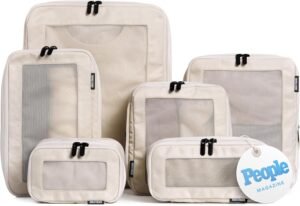
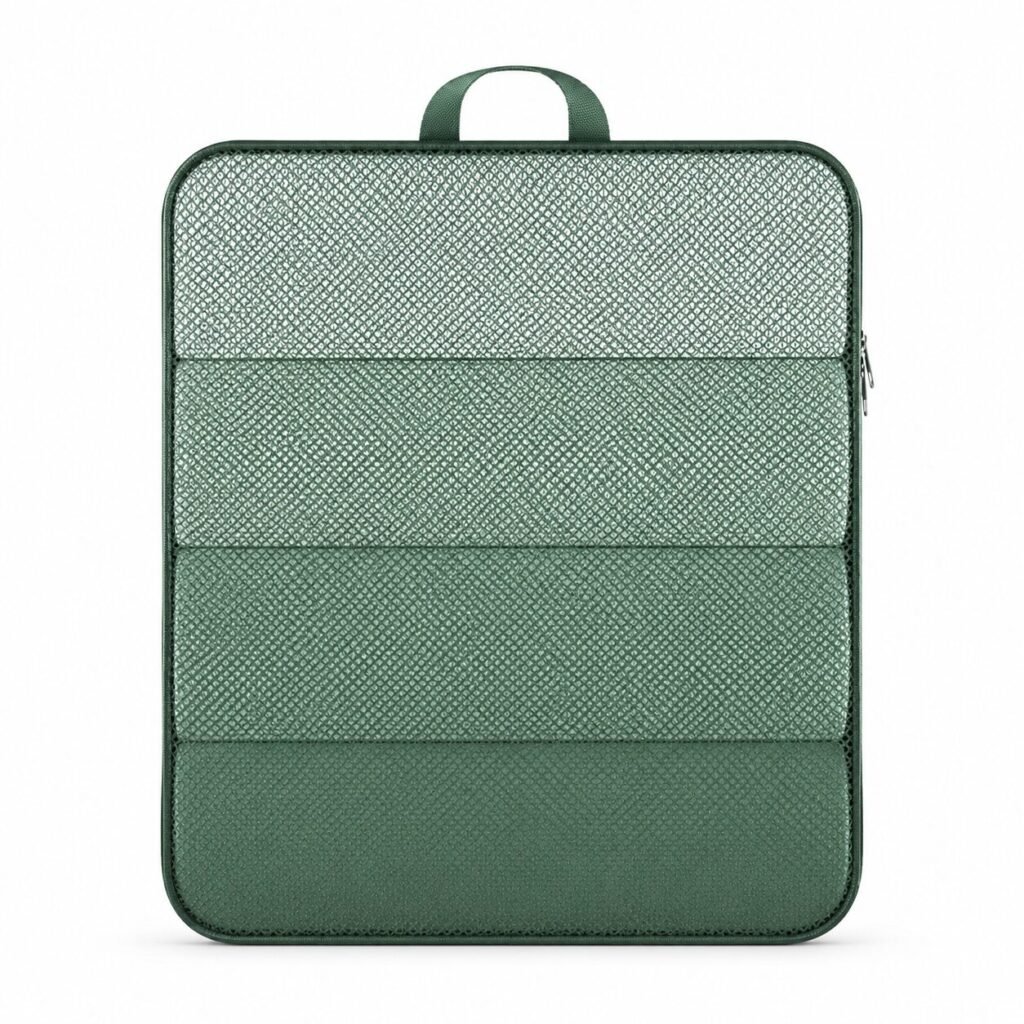
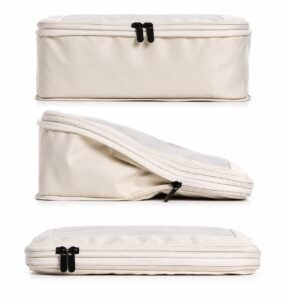
A typical packing cube is a soft rectangular container with a zippered opening. Some models have mesh panels, some use solid fabric, and some combine the two. Despite the name, many are flatter and longer than a geometric cube.
The sides give the contents a loose boundary. The top opens far enough to let the user arrange clothing inside. Once zipped, the cube becomes one unit that can move between a suitcase and a drawer.
There is no universal size system. A small cube from one range may be close to a medium cube from another. Size names are useful within a set, but measurements tell the buyer whether the product fits a particular bag.
The main parts and their jobs
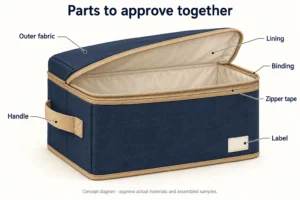
The body holds the clothing together. A lightweight body adds less bulk, while a more structured body may be easier to load when empty. Neither construction is automatically better for every trip.
The opening controls access. A wide opening lets the traveler see most of the contents at once. A smaller opening may suit a pouch, but it can make a tightly packed clothing cube harder to search.
A mesh panel offers a view of what is inside. Solid fabric offers more privacy. A handle helps the user lift the cube out of a bag, provided the handle and its attachment suit the intended load.
Zipper pulls also affect daily use. A pull that is easy to grip can matter when the suitcase is crowded or the traveler is packing quickly. Check whether the zipper moves around corners without catching the lining.
Why the shape matters
Rectangular shapes can group folded clothes into blocks. That can make a suitcase easier to arrange, especially when several cubes sit alongside one another.
However, a suitcase is rarely an empty rectangular box. Wheel housings, handle channels, lining, and curved edges take up space. Soft luggage may also change shape as the user fills its outside pockets.
For this reason, a set should be judged in the luggage it is meant to serve. A photograph of neatly aligned cubes on a table does not show how they fit around a suitcase’s internal features.
How do packing cubes work?
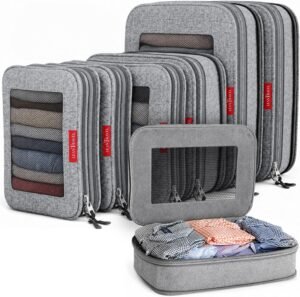
Packing cubes work by keeping related items inside a separate container. The traveler removes one container to reach a category of clothing, then puts it back without rebuilding the rest of the suitcase.
Imagine shirts stacked loose above socks and underwear. Looking for one pair of socks may disturb the shirts. A small cube for underwear and socks keeps those items together even when the larger clothing stack moves.
The same principle applies during a trip. Instead of unpacking every garment, a traveler can put a cube on a shelf and open it there. At the next stop, the group returns to the suitcase in one movement.
They create a location for each group
A useful system gives each cube a clear purpose. One might hold tops, another underwear, and a third the clothes needed after arrival. The purpose can change from trip to trip.
This makes the system easier to remember. “My evening clothes are in the blue cube” is more useful than knowing that several similar bags are packed somewhere in the case.
Retail customers can start with one familiar category, such as underwear. Once that group has a place, they can decide whether separating the rest of their clothing would help.
They keep a packing plan intact
Loose clothing can shift when a bag stands upright, travels in a car, or moves between rooms. A cube keeps its group together even if the whole unit changes position.
This does not mean the contents cannot move inside the cube. A lightly filled cube leaves room for garments to slide. A tightly stuffed cube can press folds into clothing and make access difficult.
Fill the cube until the clothes stay grouped and the zipper still closes easily. A flexible mesh cube and a structured model may reach that point with different amounts of clothing.
They make repacking more predictable
The return journey often starts with less time and fewer clean clothes. A cube system gives the traveler a structure to reuse even when the contents change.
For example, a cube that held clean T-shirts may later hold dry worn clothing. Another can keep the remaining clean items together. The traveler should keep wet or leaking items in a suitable separate container.
That flexibility matters more than preserving the exact arrangement used at departure. A packing cube is useful when the routine still works after several days away.
What are packing cubes designed to help with?
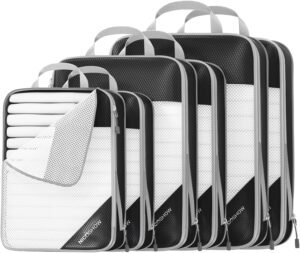
Packing cubes help travelers separate belongings, retrieve them, and move them between places. Their value is easiest to understand through ordinary travel problems.
They do not replace a sensible packing list. A set filled with items the traveler does not need still creates an overpacked bag. The organizer can make that bag tidier without making it easier to carry.
Finding one item without emptying the bag
A traveler may need a fresh shirt before a meeting or a sweater during a transfer. When those items have a known location, the search can stop at the relevant cube.
Mesh, color, and labels offer different ways to identify a group. Check that the chosen cue remains visible when the cube lies inside the suitcase.
This is especially useful when several travelers share luggage. The system can distinguish people as well as clothing types. Each person can keep a separate group without needing a separate suitcase.
Keeping small items together
Socks and underwear can slip into corners or between larger garments. A small cube gives them one place and makes it easier to see what remains clean.
The same approach can work for scarves, sleepwear, or accessories that do not need a protective case. Sharp, fragile, or leak-prone items may require a different kind of organizer.
Retail descriptions should show realistic contents. A photo of a cube holding ordinary clothing explains its role more clearly than a long list of unrelated objects it might technically contain.
Moving between hotels or rooms
Travelers who change accommodation often have to repeat the same packing work. Lifting cubes out and returning them as units can make that routine more manageable.
This depends on the accommodation and personal preference. Some travelers prefer hanging clothes immediately. Others live from an open suitcase and use cubes as dividers throughout the stay.
A good product explanation allows both approaches. It should not suggest that every traveler must unpack in one particular way to use the product correctly.
Separating clothes with different roles
A gym outfit, sleepwear, and work clothes may all be needed at different times. Separating those groups avoids searching through the entire clothing supply.
This also helps when access is limited. A traveler arriving late can place the first night’s clothing near the top of the suitcase. The rest of the bag can remain packed until morning.
The benefit comes from the chosen grouping and position. Buying more cubes alone will not create that convenience if every cube contains a random mixture.
What is the difference between standard and compression packing cubes?
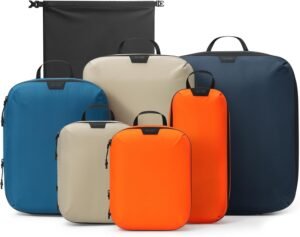
Standard packing cubes group clothing inside a defined space. Compression packing cubes add a mechanism, often a second zipper around an expansion panel, that tightens the filled cube.
Eagle Creek describes this two-stage approach in its own product guidance: first close the filled cube, then use a second zipper to compress the contents. That explains a common design, although products vary. See its packing cube questions and care guidance.
Standard cubes favor easy access
A standard cube can be enough for a traveler who wants a tidy bag and clear categories. There is usually one main opening to manage, which keeps packing straightforward.
It also gives the user a visible limit for each group. Once a cube is comfortably full, the traveler can reconsider extra clothing instead of pushing it into every available gap.
A standard cube may hold garments more closely together than loose packing. That is different from a promise that it will save a fixed amount of space.
Compression cubes add a tightening step
A compression model can reduce the depth of clothing that contains compressible bulk. Results depend on the garments, the amount packed, and the product’s design.
A lightly filled cube has little bulk to remove. Dense clothing may offer less room for compression than soft, airy garments. A cube may also become wider or bulge when its height decreases.
The second zipper should close within the design’s intended range. If the user has to pull hard while forcing the sides together, the cube may be overfilled.
Vacuum bags are a different category
Vacuum storage bags remove air through a valve or another sealing system. A zippered fabric compression cube usually tightens its sides without creating a vacuum.
The distinction matters because buyers may expect the performance shown in vacuum-bag demonstrations. A fabric cube with ordinary seams and zippers should not be described as airtight.
For most beginner product explanations, this distinction needs only a short note. Travelers considering vacuum storage have additional questions about seals, pumps, garment suitability, and repacking that belong in a separate guide.
Choose the mechanism for the task
If the main problem is losing track of clothing, standard cubes may solve it. If bulky suitable clothing is difficult to fit, a compression model may deserve a closer look.
A mixed set can serve both needs, but only if its contents have clear roles. Extra zippers, panels, and accessories should earn their place through use.
Buyers can review standard and compression constructions among Great Shine’s packing cube set options. Compare them using the clothing groups and travel routine the set is intended to support.
Do packing cubes save space?
Packing cubes can improve the way luggage space is used, but they do not guarantee a smaller packed bag. Standard cubes primarily create order; compression models may reduce the bulk of suitable contents.
The result depends on what the traveler packs, how the cubes fit the bag, and how much space the organizers themselves take up. It is possible to gain convenience without gaining extra capacity.
Organization can reduce awkward gaps
Loose items may leave uneven gaps that are difficult to use. A well-sized cube can gather those items into a more manageable shape.
However, poorly matched cube dimensions can create new gaps. A large cube that leaves a narrow strip beside it may be less useful than two smaller cubes that fit the case’s internal layout.
Try the set in the actual bag. A narrow backpack or curved duffel may leave spaces that a set designed around a rectangular suitcase does not use well.
Overfilling can cancel the benefit
A cube stuffed beyond its intended shape can become a rounded bundle. Rounded bundles may fit beside one another less neatly than the product’s flat photographs suggest.
They can also be harder to lift, close, and search. If the user must remove half the contents to find one garment, some of the organizational benefit disappears.
The easiest correction is often to reduce the contents or change the grouping. Adding force to the zipper does not solve a mismatch between load and capacity.
Compression does not reduce weight
Removing air or squeezing clothing into less volume does not remove the clothing’s mass. The organizers also add their own weight to the luggage.
A smaller-looking load may therefore be just as heavy, or heavier if the user fills the space with more items. Travelers still need to check their carrier’s current baggage rules and weigh the packed bag where relevant.
For product sellers, weight and space should remain separate claims. “Helps group clothing” is easier to support than a broad promise about fitting more on every flight.
What should you put in packing cubes?
Put items in a packing cube when keeping them together will make them easier to pack or retrieve. Clothing is the most common use, but the best grouping depends on the trip.
Start with the items the traveler actually plans to take. Choosing the contents first helps avoid buying a large set and then filling every piece simply because it is available.
Everyday clothing
T-shirts, underwear, socks, and casual layers are straightforward starting points. They are easy to sort into categories and usually do not need a rigid protective container.
A cube for tops and a smaller cube for underwear may be enough for a short trip. A longer trip does not always require more cubes if laundry will be available along the way.
The categories should remain broad enough to remember. A separate pouch for every small clothing type can create more opening and closing than it saves.
Outfits for a particular occasion
An outfit-based approach keeps the items for a meeting, activity, or first evening together. This can work well when the traveler needs a complete change quickly.
It may use space less efficiently if each outfit includes a bulky item. The user can keep the smaller pieces together and pack the larger garment separately.
For a product demonstration, show both the packed cube and the clothing that goes into it. This helps viewers understand the system without assuming that every outfit occupies the same volume.
Children’s clothing and shared luggage
A family may assign one color or label to each person. The cube then acts as a personal section inside a shared suitcase.
Another option is to group clothes by day. That can help for a short, planned itinerary, but it may become restrictive if weather or activities change.
Neither method is a universal rule. Buyers can explain both and let customers choose the system that matches how they travel.
Items that need a separate container
Ordinary fabric packing cubes are not substitutes for a leak-resistant toiletry bag, a protective glasses case, or suitable storage for sharp objects.
Wet swimwear and leaking products can affect nearby clothing through mesh, seams, or zippers. A general claim that a cube’s fabric repels water does not establish that the entire product contains a leak.
Keeping these limits clear prevents the product from being asked to do a job it was not designed for. It also makes the useful clothing function easier to explain.
How do you use packing cubes for the first time?
Use packing cubes by choosing a simple grouping system, filling each cube without strain, and arranging the filled units inside the actual travel bag. A first attempt should show whether the system makes items easier to find.
There is no need to copy a detailed packing routine from another traveler. A short, repeatable method is more likely to remain useful during a busy trip.
Step 1: lay out the trip’s clothing
Place the planned clothing together before loading the cubes. Remove duplicates that serve no clear purpose and consider whether washing clothes during the trip will reduce what is needed.
This step matters because an organizer cannot decide what belongs on the packing list. Starting with an excessive list can turn every cube into an overfilled container.
Keep the travel bag nearby. A collection of clothing that fits several cubes may still exceed the bag’s available space once shoes and other essentials are included.
Step 2: choose one main sorting method
Sort by clothing category, person, or occasion. Pick the approach that makes the most common search easy.
For a solo traveler, clothing categories may be enough. For shared luggage, assigning cubes to people may be clearer. For an overnight stop, one arrival cube can keep immediate needs together.
A combination is fine if it remains easy to understand. For example, each traveler might have a main clothing cube while a shared small cube holds sleepwear for the first night.
Step 3: fold or roll to suit the garment
Folding and rolling are both ways to arrange clothes inside a cube. The useful choice depends on the garment’s shape, fabric, and how the user wants to retrieve it.
Flat folds can suit broad, thin garments in a shallow cube. Rolling can make smaller casual items visible side by side. Neither method guarantees fewer wrinkles for every fabric.
Keep bulky seams, waistbands, and collars from building one high mound. Spreading those thicker areas across the cube can help it retain a flatter shape.
Step 4: close the cube without forcing it
Bring the zipper around the opening while keeping fabric away from its path. If clothing catches repeatedly, rearrange the contents or remove an item.
For a compression model, close the main opening before using the tightening mechanism. Follow the product’s instructions because zipper paths and expansion panels differ.
After closing the cube, reopen it and remove one garment. If that disturbs the whole group, loosen the fill or rearrange the contents before packing the suitcase.
Step 5: arrange larger units first
Place the larger filled cubes in the suitcase, then use the remaining space for smaller units and items that do not belong in cubes. Check how the case closes before adding more.
There is no requirement to fill every corner with another organizer. Shoes, a toiletry bag, or a jacket may fit naturally in spaces that a rectangular cube would leave unused.
Keep frequently needed items accessible. A well-organized cube at the bottom of a tightly packed case still requires effort to reach.
Step 6: try one realistic retrieval
Take out the item most likely to be needed during the trip. Then replace it and close the luggage again.
This short check reveals whether the chosen groups and cube positions make sense. If finding one shirt involves opening every cube, adjust the system before departure.
Brands can use this same sequence when demonstrating products. Showing retrieval and repacking gives customers a clearer view of the benefit than showing only a perfectly packed suitcase.
How do you choose the right packing cube size?
Choose a size that fits both the intended contents and the usable interior of the travel bag. The cube’s size label alone cannot answer either question.
Start with the actual interior dimensions, then consider how the filled cube changes shape. A soft cube may expand when loaded, while a structured cube may leave less room for irregular luggage corners.
Measure the usable space
Measure around wheel housings, handles, and lining. Consider the space available on each side of a split suitcase rather than relying only on the suitcase’s outer dimensions.
Also check whether interior straps or a divider panel need room to close. A cube can appear to fit until the luggage’s own closure system adds pressure.
Measurements should use a consistent orientation. Length, width, and height are easy to confuse when a listing presents photographs from different angles.
Match size to the clothing group
Larger cubes can hold broad garments with fewer small folds. Smaller cubes can keep compact items together without leaving them loose inside a large container.
A large cube is not automatically the most efficient choice. It may encourage overpacking or make one category difficult to carry and search.
Explain each size with ordinary contents: a broad group of tops or a compact group of underwear, for example. If two sizes serve no distinct purpose for the customer, both may not be needed.
Look beyond total piece count
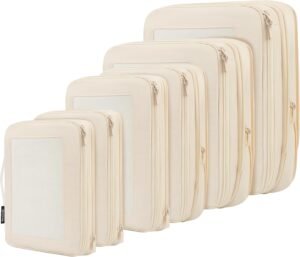
A set may include clothing cubes, shoe bags, laundry pouches, or other accessories. Those pieces do not necessarily perform the same function.
Compare the number and dimensions of the actual clothing cubes. Then decide whether the other pieces help the intended customer or duplicate organizers already owned.
This is especially important when comparing sets at different prices. A larger piece count can be attractive, but customers need to understand what those additional pieces do.
Check fit with a filled sample
An empty cube can collapse into spaces it will not occupy when filled. For a useful fit check, load it with the kind of clothing shown in the planned product presentation.
Close the luggage, stand it upright, and retrieve a selected item. Observe whether the cubes shift into awkward positions or make the case difficult to close.
These are practical evaluation steps, not proof of a universal fit claim. A retailer can use them to decide which luggage examples to show and which dimensions to publish.
Which features make packing cubes easier to use?
Useful features reduce a specific inconvenience, such as searching for contents, handling a filled cube, or opening it in a crowded bag. More features do not always produce a better travel routine.
For buyers building an assortment, the feature description should connect directly to the customer action. “Mesh top for viewing contents” tells the shopper more than a general quality adjective.
Mesh and solid panels
Mesh makes some contents visible and leaves openings in the body of the cube. It can suit travelers who want to identify a clothing group at a glance.
Solid panels provide more privacy and may contain small items more completely, depending on the weave and construction. They also give a different surface for labels or printing.
Neither option automatically prevents odor, keeps clothing dry, or protects it from a liquid spill. Those are separate performance questions that require evidence for the complete product.
Opening shape and zipper access
A wide opening can make loading and unloading straightforward. The user can arrange clothing across the base instead of pushing it through a narrow gap.
Check the opening while the cube is filled. A zipper that moves easily when empty may become harder to operate if the contents pull the corners out of shape.
The position of the pull also matters. Users should be able to find it without turning the cube around repeatedly or disturbing the surrounding luggage.
Handles and identification
A handle offers a convenient grip when lifting a cube from a suitcase or shelf. It should sit where the user naturally reaches and should not be treated as a promise of unlimited carrying strength.
Color differences can identify categories or people. Labels can help when several cubes share a color or when the contents are hidden.
Identification should remain simple. A small readable cue is often enough; large decorative graphics may use space without making the cube easier to recognize in luggage.
Fabric weight and structure
Thin, flexible fabric can be useful for travelers who want organizers that fold away easily. More structured fabric may help the cube stay open while it is being loaded.
The tradeoff is product-specific. The lighter option may need careful handling, while the more structured option may occupy more space when empty.
Ask how the fabric choice affects the finished product’s weight, feel, and use. A fabric name or thread count alone cannot describe seam quality, zipper performance, or long-term durability.
Dividers and extra compartments
An internal divider can separate two groups within one cube. This may help travelers who want fewer separate bags while keeping clean and worn clothing apart.
However, a divider reduces flexibility if its position does not suit the contents. Two small compartments cannot always accept the same garment arrangement as one open space.
Demonstrations should show the divider in use. Customers can then decide whether it solves a problem they have, instead of assuming that another compartment is always an improvement.
Are packing cubes worth it?
Packing cubes are worth considering when the traveler repeatedly searches through loose clothing, shares luggage, or repacks at several stops. Their value is lower when the bag already has suitable compartments or carries only a few items.
The purchase decision should begin with the inconvenience the traveler wants to remove. Space savings may be a secondary benefit, but organization alone can justify the product for some users.
They suit repeated access
A traveler who opens the suitcase several times a day may benefit from separate groups. The same applies to someone moving between work, exercise, and evening activities.
A traveler who unpacks completely at one destination may use cubes mainly during departure and return. That can still be useful, but the routine differs.
Retailers can reflect those differences in product examples. A single claim about the “best travel accessory” is less informative than showing the type of trip the set supports.
They may add little to a minimal bag
Someone carrying one spare outfit and a toiletry bag may not need several cubes. A single small organizer could be enough, or the bag’s built-in pockets may already do the job.
Likewise, clothing that needs to hang may be better handled with a suitable garment solution. A cube is not intended to replace every other travel organizer.
The practical starting point is a small number of useful units. The traveler can add another size after discovering a recurring gap in the system.
Consider the full cost of convenience
Price is one part of the decision. The user also carries the organizer’s weight, opens its zippers, and cleans it after use.
A set earns its place when those extra actions make the overall routine easier. If it creates more sorting than the traveler wants, the system needs simplifying.
For a deeper purchase comparison, Great Shine’s existing guide on whether packing cubes are worth buying explores that adjacent question. This introductory guide focuses on understanding the product and its basic use.
What does a simple packing cube setup look like?
Consider an illustrative short trip with casual clothing, sleepwear, and one outfit needed soon after arrival. This is a planning example, not a capacity claim for a particular set.
The traveler first separates the arrival outfit. Keeping it near the suitcase opening means the other clothing can stay packed when the traveler reaches the hotel late.
The remaining tops go into one cube, while underwear and socks share a smaller unit. Sleepwear can join the arrival group if that makes the first evening easier.
Shoes and toiletries remain in suitable separate organizers. A jacket can travel outside the cubes if its shape fits the remaining space better.
What to change when the arrangement fails
Suppose the suitcase closes easily, but the traveler cannot reach the arrival outfit without lifting both cubes. Move that group closer to the opening. The contents and total capacity can stay the same.
Suppose instead that one large cube leaves an unusable gap around a wheel housing. Try a smaller unit or let a soft item occupy that irregular space. Do not assume that adding another cube is the only solution.
If the suitcase becomes hard to close after adding toiletries, review the full load. A successful fit check includes every essential item, not only the clothing used in the cube demonstration.
What this example tells a retail buyer
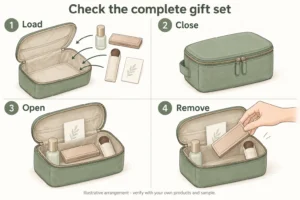
Show the arrival outfit going into its cube, then show where that cube sits in the suitcase. Finally, remove the outfit as the traveler would at the hotel. The sequence demonstrates access as well as packing.
The demonstration should also reveal the limits. Show the actual number of garments and the real suitcase interior, without compressing the display off camera or removing items between images.
A retailer can then describe who may find the arrangement useful. The example explains a routine; it does not promise that every traveler will pack the same wardrobe into the same space.
How should packing cubes be cleaned and stored?
Follow the care instructions for the specific cube. Fabric, coatings, mesh, trim, and printing can respond differently to washing and heat, so a rule for one product should not be applied to every set.
After use, empty the cube and inspect its corners, seams, and zipper path. Removing debris before storage keeps it from remaining inside until the next trip.
Separate spot cleaning from machine washing
A washable fabric does not necessarily make the whole cube machine washable. The zipper, coating, label, or internal structure may have different care needs.
Use only the cleaning method allowed by the product instructions. Where those instructions permit spot cleaning, start with a small area and avoid aggressive rubbing that could damage the surface.
If a seller wants to advertise machine washing, that claim should match the exact finished product and its verified care method. It should not be borrowed from another brand’s guidance.
Let the cube dry before putting it away
Make sure the cube and its contents are dry before closing them for storage. Pay attention to folds and seams where moisture may remain after cleaning.
Store the empty organizer in a clean location that suits its materials. Avoid packing it away with wet shoes, damp clothing, or a leaking toiletry container.
Before storing the set, open each cube once more to check the corners and seams. That is easier to do after cleaning than during a hurried departure.
Check the parts that receive repeated handling
Look at zipper ends, handles, mesh edges, and seams. These areas are used often and can reveal damage before it becomes inconvenient during travel.
A loose thread is not always a structural failure, but a seam that is opening or a handle that is detaching deserves attention. Follow the seller’s repair or replacement guidance.
For retailers, clear care information is part of the product experience. Customers should be able to find it after removing the outer packaging.
How can brands explain packing cubes clearly?
Brands can explain packing cubes by showing what goes inside, how the cube fits luggage, and how the traveler retrieves an item. These demonstrations turn an unfamiliar accessory into an understandable tool.
The explanation should help customers choose an appropriate product. A long list of possible uses can obscure the basic function and create expectations the design cannot meet.
Show a complete use sequence
Start with a realistic clothing group beside the open cube. Show the filled cube, its position in luggage, and one item being removed.
Keep the contents consistent across those images. Changing the clothing quantity between views can make the result look more impressive than the product warrants.
A short sequence can also show the distinction between a standard closure and a compression closure. The viewer should see which zipper closes the opening and which changes the cube’s depth.
Describe the set as supplied
List each piece by function and dimensions. State whether all pieces are clothing cubes or whether the set includes separate pouches and bags.
If several color combinations are available, show which combination the customer will receive. If photographs contain luggage or clothing, make their illustrative role clear.
This avoids a common gap between an attractive lifestyle scene and the actual package. A buyer should understand the contents without reading several scattered captions.
Keep performance claims tied to evidence
Claims about water resistance, seam strength, recycled material, or compression results need support for the product being sold. A material supplier’s description may not cover the finished cube.
When evidence is limited, explain the visible feature and its intended use. A mesh viewing panel, a second zipper, or a carry handle can be described accurately without adding an unsupported guarantee.
Great Shine’s custom packing cube sets page provides a starting point for reviewing set layouts and constructions. Buyers can use the product options to decide which everyday travel problem their assortment should address.
Frequently asked questions about packing cubes
Are packing cubes only for suitcases?
Packing cubes can also work in backpacks, duffels, and other travel bags. Their usefulness depends on the available interior space and access opening. A cube that fits a suitcase may be awkward in a narrow backpack, so compare dimensions and try the filled product in the intended bag.
How many packing cubes does a traveler need?
There is no fixed number. Start with the groups the traveler wants to separate, such as tops, underwear, and arrival clothing. Use only enough cubes to make those groups easy to find. Extra pieces are useful when they have a clear role and fit the luggage.
Do packing cubes prevent wrinkles?
Packing cubes do not guarantee wrinkle-free clothing. Fabric, folding method, compression, and time packed all affect the result. Avoid forcing delicate or structured garments into an overfilled cube. Follow the garment’s care instructions and use another storage method when the clothing needs more support.
Can you pack shoes in a clothing cube?
Shoes may physically fit, but dirt and shape can make a separate shoe bag more practical. Keep footwear away from clean clothing and check whether the organizer can be cleaned as needed. A cube used for shoes should not be assumed suitable for delicate garments without cleaning and inspection.
Do you need compression packing cubes for carry-on travel?
Compression cubes are optional. Standard cubes can provide useful organization in a carry-on bag. Choose compression when the specific clothing and luggage layout benefit from reduced bulk, and remember that compressing clothes does not reduce their weight or change the carrier’s baggage allowance.
Can packing cubes hold dirty laundry?
They can separate dry worn clothing from clean items. Ordinary mesh or fabric cubes do not guarantee odor or moisture containment. Avoid sealing damp clothing away for long periods, and use a suitable separate container when the contents could leak onto other belongings.
Is rolling better than folding inside a cube?
Either method can work. Rolling may make small casual garments easy to see, while folding may suit wider items and shallow cubes. Try the method that keeps the clothing group accessible and lets the zipper close without strain. Do not expect either method to work best for every fabric.
What do packing cubes do for a beginner?
Start with a useful size, an accessible opening, and a clear purpose for each piece. Then consider mesh visibility, handles, or compression if they solve a specific problem. A straightforward set that fits the user’s luggage is easier to adopt than a large assortment with unclear roles.