Quick answer
A useful portable closet layout starts with the clothes you need to store and the space needed to reach them. Measure the room, group garments by hanging length, reserve shelves for suitable folded items, and keep frequently used clothing within comfortable reach. Leave room to open the cover, remove hangers, and clean around the unit.
Allow for the space and weight of any shelves, hanging organizers, or boxes you add. Check the portable closet’s limits before filling them, then test whether you can remove and replace the clothes without disturbing neighboring groups.
Measure usable space around the closet
The closet’s advertised width and depth tell you whether its frame may fit. They do not tell you whether you can use it comfortably in that position.
Measure the floor area where the closet will stand, then check baseboards, skirting, wall projections, and nearby furniture. Look above the footprint for sloping ceilings, shelves, or other obstacles.
Allow for the cover or doors to open. A zippered fabric panel may need space to roll up or fold aside. If the opening sits behind a bed or chair, you may find yourself moving furniture whenever you need clothes.
Stand in front of the proposed position and mimic removing a hanger. Check that your arm and the garment can move without hitting another object. This simple check reveals access problems that a floor measurement misses.
Count clothing by storage method
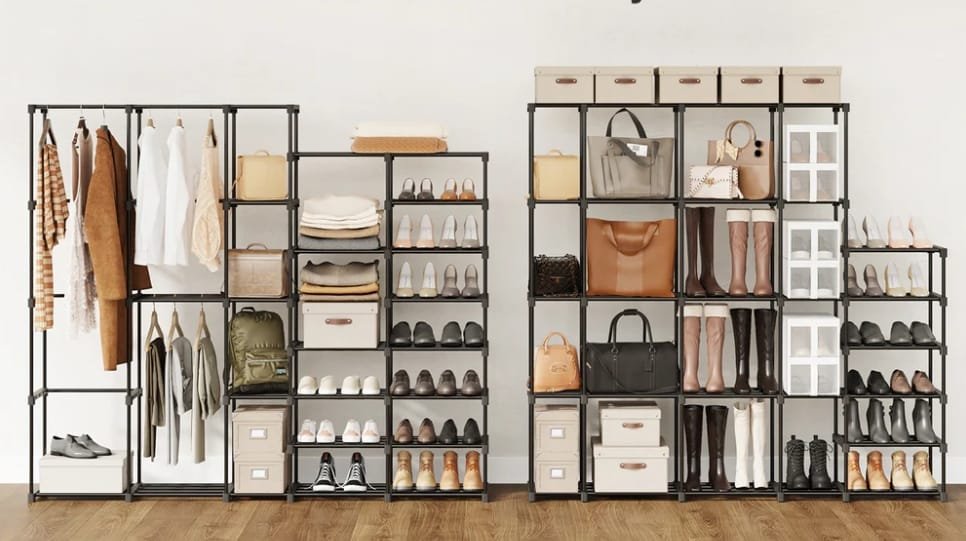
Separate clothing into items that need hanging, items better stored folded, and accessories that need smaller compartments. Then plan around the space each group actually uses.
Do not begin by buying a matching set of bins. Empty containers can look orderly while using room needed for long garments or comfortable hanger spacing.
Try a rough grouping:
- Long hanging items, such as dresses or long coats.
- Shorter hanging items, such as shirts and jackets.
- Folded clothing, including items that may stretch on hangers.
- Small accessories and seasonal belongings.
Use garment care guidance when deciding whether to hang or fold a particular item. A layout should support the clothing, rather than force every piece into the same storage method.
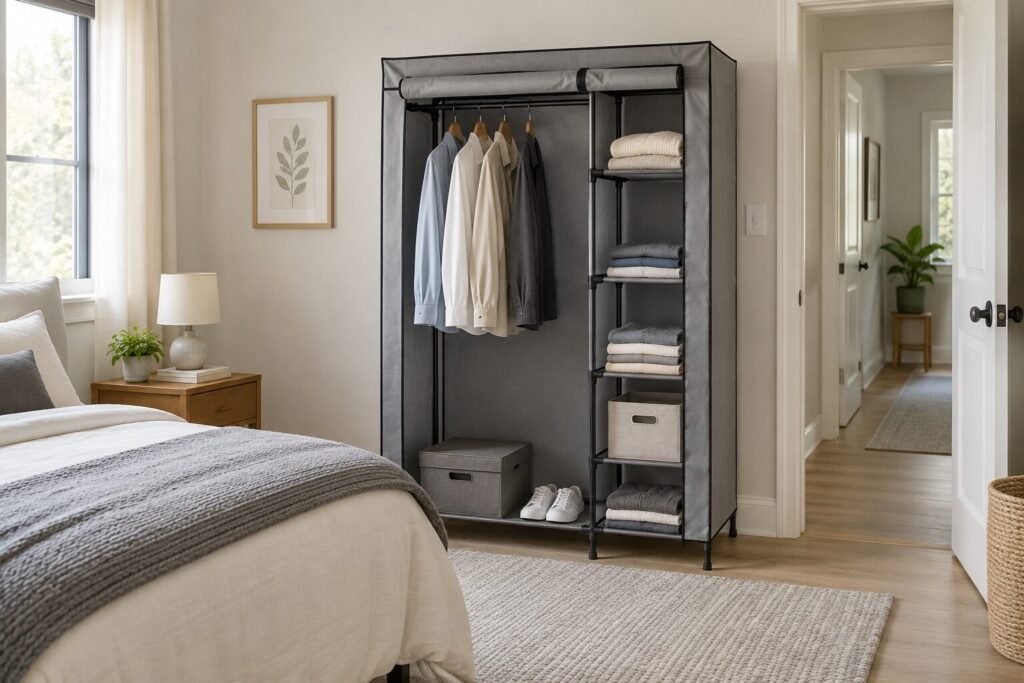
Build the hanging area around garment length
Measure the drop from the top of your usual hanger to the bottom of the garment. Include anything that hangs below the main body, such as a belt or a long sleeve arrangement.
Use that measurement to judge the clearance below the rail. A shelf that appears to fit underneath may press against hems once the closet is loaded.
For mixed clothing, one uninterrupted long-hanging area can be more useful than shelves across the entire width. Place shorter garments where there is genuinely usable space beneath them.
Avoid adding a second rail unless the closet is designed to accept it. A convenient attachment point is not evidence that the frame can support another loaded section.
Leave enough room to move hangers
Closely packed hangers can make every retrieval a struggle. Allow enough space to slide neighboring items aside and remove one garment without pulling several out together.
The number of items that fit depends on their thickness as well as the rail length. Winter coats occupy more space than lightweight shirts. A rail may also reach its weight limit before it appears visually full.
Keep those two limits separate: physical space and supported load. Both must work for the planned arrangement.
Use shelves for groups you can remove easily
Shallow, manageable groups are easier to maintain than tall stacks. Put folded garments together by the way you choose them, such as work tops, sleepwear, or exercise clothing.
Check the usable shelf depth against the folded items. Clothing that hangs over the front can interfere with the cover, while items pushed too far back become difficult to see.
Where a shelf is deep, a suitable removable bin can help you retrieve a group. Check that the bin fits through the opening when full and that its total weight remains within the shelf’s limit.
The bin’s function is access. If you must lift it over another container to reach it, the arrangement may need fewer categories or a different shelf allocation.
Add hanging organizers selectively
A fabric hanging organizer can create small shelves in a rail area. It is useful when you have spare hanging width but need compartments for lightweight folded items.
It also concentrates weight at its attachment point and uses vertical space. Check the organizer’s instructions and the closet’s rail limit before filling it. Do not assume that adding an organizer increases the frame’s capacity.
Measure its width, drop, and filled depth. Compartments can bulge when packed, leaving less room for neighboring hangers or the cover.
Use only the attachment method intended for the products involved. Tying an organizer to a thin cover support or an unapproved crossbar can place load where the closet was not designed to carry it.
Give daily clothing the easiest access
Arrange the closet around your routine. Clothing used most mornings should be visible and reachable without moving seasonal items.
Keep related items near each other if that helps you dress. For example, work shirts may sit beside suitable trousers, while workout clothing stays together on a shelf. Another household may prefer categories shared across several people.
Try putting a load of clean laundry away. If a category needs several other items moved first, give it a more accessible position or reduce the group blocking it.
Avoid assigning everyday clothing to an overhead shelf that requires awkward reaching. Use accessible positions for items you remove often and follow the unit’s guidance on where heavier loads belong.
Plan the bottom area without blocking the frame
The space below hanging clothes may hold suitable boxes or clean shoes, but it is not always a load-bearing shelf. Check whether the item will rest on an actual shelf or directly on the floor.
Do not balance a box on narrow frame members unless the instructions identify them as supports for that purpose. Keep braces, feet, and stabilizing parts unobstructed.
If you use floor-standing containers beneath the rail, leave enough room to remove them without dragging the closet. Handles help only if there is room to grip them.
Keep footwear clean and dry before storing it beside clothing. A cover reduces exposure to ordinary dust when closed, but it does not make dirty or damp shoes suitable for enclosed storage.
Keep the cover and surrounding area usable
A fabric cover should close without being stretched around the contents. Bulging shelves and crowded hangers can pull the cover out of shape or strain its zipper.
Check the completed layout with the cover closed. Open it again and make sure clothing has not snagged in the fastening or pressed against a sharp component.
Place the closet in a suitable dry indoor location, following the manufacturer’s placement requirements. Leave whatever clearance the design requires for access, ventilation, and any specified anchoring.
Do not interpret “freestanding” as “never needs securing.” Follow the specific unit’s safety instructions, including any anti-tip measures. A fabric cover is not a structural brace unless the manufacturer explicitly designs it to serve that role.
Adapt the layout to the room
Different rooms create different access problems. The following examples are planning ideas, not tested arrangements for a particular model.
A bedroom with a narrow walkway
Use the side of the closet you can reach without standing against the bed. Keep daily clothing behind that opening and place occasional items farther away, provided access remains safe.
Check whether a removable bin can come all the way out into the walkway. If it cannot, a smaller container or direct shelf storage may be more practical.
A shared room
Give each person a clear area that matches their belongings. Dividing the closet into equal widths may not work if one person has more hanging clothes and another stores mostly folded items.
Keep labels simple and visible. A shared layout works best when either person can put laundry away without guessing where it belongs.
Seasonal overflow storage
Group off-season items so you can retrieve them without disturbing the current wardrobe. Store only clean, dry clothing and use garment-appropriate storage methods.
Do not turn the portable closet into a place for everything that does not fit elsewhere. If occasional items block everyday access or exceed the load limits, move them to another suitable storage area.
Check the layout after a normal week
Use the closet through a regular laundry cycle before buying more accessories. Notice which items stay on a chair, which stacks collapse, and which containers you avoid opening.
Those are signs of a mismatch between the layout and your routine. A frequently disturbed stack may need a smaller group. An unused upper bin may contain items that deserve a less accessible position elsewhere.
Change one area at a time. If you rearrange every category simultaneously, it becomes harder to tell what improved access.
Also inspect the structure as instructed. Sagging shelves, leaning parts, or loose connections are not problems to hide with another organizer. Unload the affected area and address the underlying issue before continuing use.
Frequently asked questions
Can I double the capacity by adding a hanging organizer?
An organizer changes how space is divided; it does not increase the frame’s load capacity. Its own weight and contents count toward the relevant rail and unit limits. Check both products’ instructions.
Should the portable closet be completely full?
Leave enough room to move clothing and use the closure without force. Visual capacity and weight capacity are different, so a closet that looks partly empty may still have a heavily loaded rail or shelf.
Can storage boxes sit on the top of the cover?
Only if the unit includes a designated load-bearing top shelf and its instructions allow that use. A fabric roof should not be treated as a shelf.
Where should long dresses go?
Use an area with sufficient clear drop below the hanger. Check the dress with its actual hanger and keep the hem clear of shelves, boxes, and the floor where possible.
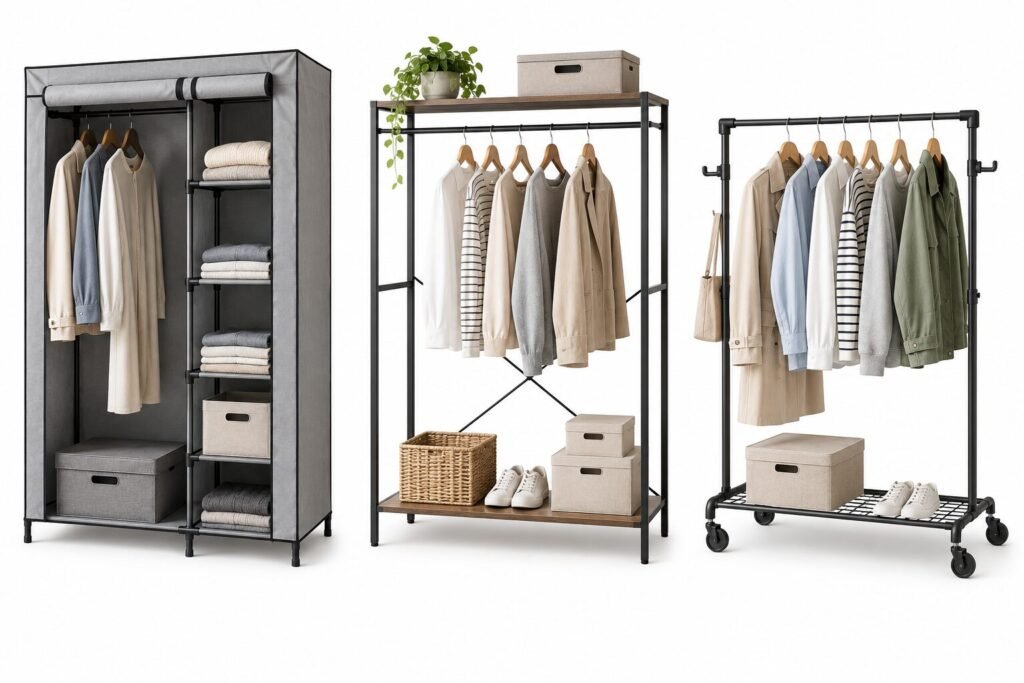
Is a hanging organizer better than a shelf bin?
It depends on which space is available and where the weight can be supported. A hanging organizer uses rail width and capacity; a bin requires a suitable shelf or floor position. Choose the arrangement that makes retrieval easier.
How can I make a shared portable closet easier to maintain?
Assign clear zones based on each person’s clothing and access needs. Keep daily items within reach and use simple labels for shared containers. Revisit the layout when belongings or routines change.
Start with the layout, then choose accessories
Measure your clothing and usable room space before adding shelves, hanging compartments, or bins. A good arrangement leaves the structure within its limits and makes putting clothes away as easy as taking them out.
For examples of accessories that may suit compatible storage systems, view Great Shine’s closet organizers. Confirm the dimensions, attachment method, and load requirements before combining an organizer with your portable closet.