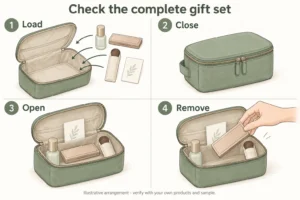
To wash a lunch bag, follow the care instructions for the complete bag, empty every compartment, and clean the lining and exterior using the permitted method. Remove cleaning residue and leave the bag open until it is fully dry. Machine washing or soaking is appropriate only when the manufacturer allows it for that model.
A wipeable lining does not make the whole bag washable. Foam, joined layers, zippers and concealed support pieces can require different treatment from the surface you can see. Check those details before putting an insulated lunch bag into a sink or washing machine.
Can you machine wash an insulated lunch bag?
The product’s care label should answer this. A statement such as “wipe clean” does not authorize a machine cycle, even if the outer fabric resembles clothing that you normally machine wash.
For example, PackIt’s cleaning instructions distinguish cleaning the interior from spot-cleaning the exterior. They require complete air drying with the flap open and state that the bags are not safe for a washing machine, dryer or dishwasher. Those directions apply to PackIt products, not automatically to every lunch bag.
Bentgo gives a different, simpler instruction for its Kids Prints Lunch Bag: wipe clean with a damp cloth. Neither example establishes machine-washability for a Great Shine bag.
If the label is missing, look up the exact model or ask the maker. While you check, empty the bag and remove loose debris. Avoid experimenting with a full wash based only on a material name such as polyester or PEVA.
Check the bag before adding water
Open the main compartment and all pockets. Remove lunch containers, loose wrappers and ice packs, then inspect the empty bag in good light.
| Area to check | What it means for cleaning |
|---|---|
| Care label and instructions | Identify the permitted cleaner, washing method and drying method for the assembled bag. |
| Removable liner or base | Remove it only if designed to come out. Read its own instructions; a removable part is not automatically washable. |
| Lining and inner corners | Look for splits, peeling, exposed layers or residue under folded edges before rubbing the surface. |
| Seams and zipper | Check for trapped food and loose stitching. Avoid pulling a stuck zipper through debris. |
| Padded or rigid areas | Check whether moisture or spilled food appears to have entered a space you cannot reach. |
A tear changes the task. If food has entered an inaccessible layer, cleaning the visible lining may leave the underlying problem unresolved. Photograph the damage and ask about repair or replacement before using the bag again.
How to clean a lunch bag after everyday use
For a wipe-clean bag, set out two soft cloths, clean water and any cleaner allowed by the label. Keep one cloth for cleaning and the other for removing residue. The steps below cover this routine; use a full-washing method only when the bag’s instructions explicitly permit it.
1. Remove crumbs and loose residue
Shake loose crumbs into a bin without sharply folding the insulation. Use a soft, dry cloth to collect particles from the bottom and pockets. Lift out food pieces rather than rubbing them deeper into a seam.
2. Treat visible spills with the permitted cleaner
Use a soft cloth or sponge and the cleaner specified for the bag. If mild soap and water are allowed, apply them with a damp cloth rather than flooding the lining. Test an inconspicuous area first, especially where a cleaner might touch print, colored fabric or trim.
Work on accessible residue with light pressure. Avoid abrasive pads and scraping tools that can mark or puncture a thin lining.
3. Clean corners and the closure area
Fold the cloth so a clean edge reaches the inner corners, binding and areas beside the zipper. Support the lining with your other hand where possible. Do not pull a sewn lining outward as though it were removable.
Remove visible food from around the zipper before operating it. If particles remain trapped or the slider still catches, stop and inspect the area instead of forcing the closure.
4. Clean the exterior separately
Use a clean section of cloth on the outer fabric, handles and pocket openings. Treat a printed panel according to its instructions, and keep moisture away from parts that must remain dry.
5. Remove residue and dry the open bag
Where damp wiping is permitted, use a fresh cloth dampened with clean water to remove soap from the cleaned surfaces. Change the cloth or rinse it as needed so you are not spreading the same residue around.
Wipe away excess moisture, open the lid and pockets, and let air reach the interior. Follow the specified drying method; do not add tumble drying, a radiator or a hair dryer to speed things up unless the instructions allow it. Check corners and removable parts before closing or storing the bag.
What to do about grease, odors and damaged lining
For a fresh greasy spill, lift away food and blot accessible residue before using the approved cleaner. Avoid smearing it over a larger area. If the care instructions include a stain treatment, follow its directions and check the result after drying.
An odor is a reason to inspect the bag, not proof of a particular cause. Check the pockets, seams, underneath removable parts and any damaged lining. Reclean accessible residue as permitted and dry the bag completely before assessing it again.
If an odor persists, mold is visible, or residue appears trapped inside the wall, stop using the bag and contact the maker about the affected construction. Masking the smell does not establish that the bag has been cleaned. Do not mix cleaners or improvise a bleach treatment that the bag’s instructions do not permit.
Which features make daily cleaning easier?
Look for an opening that lets you see and reach the bottom corners. Compare that access with the loaded shape: a wide-looking top can still leave a deep corner behind an internal pocket.
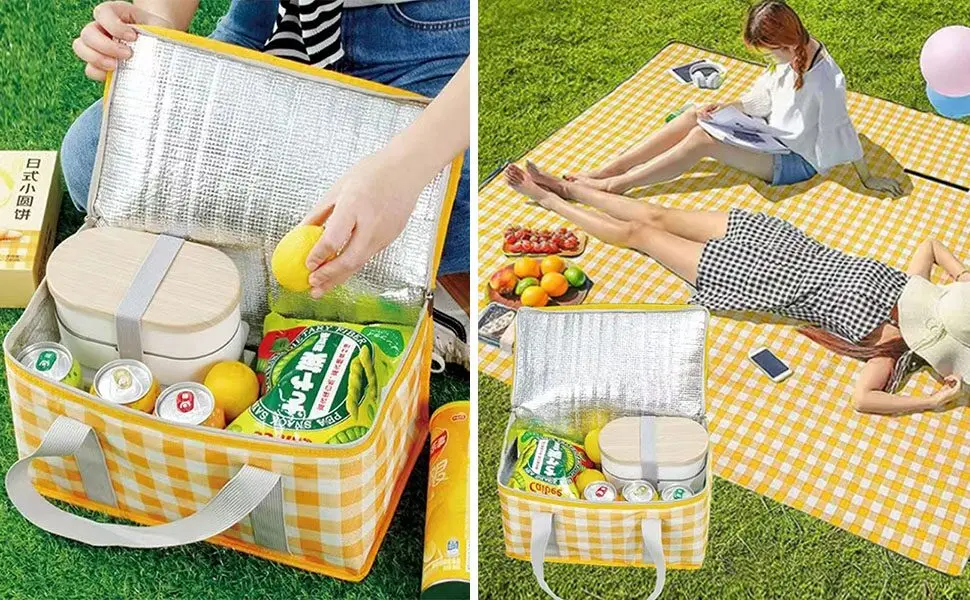
An open Great Shine picnic bag shows the corners and perimeter edge to check for cleaning access. Follow the care instructions for the particular bag; this image illustrates access, not a washing test.
On an empty sample, check whether a soft cloth reaches each corner without pulling the lining. Inspect folds along the zipper and any removable parts. Ask how the bag should be held open while drying. A smooth surface is useful only if the complete area can be reached and cared for as directed.
For a custom design, discuss the opening, lining access and intended care routine when reviewing Great Shine’s custom insulated lunch bags. Our guide to what lunch bags are made of covers material selection separately.
Frequently asked questions
Can I put a lunch bag in the dishwasher?
Only if its manufacturer explicitly permits it. A wipeable liner or a dishwasher-safe lunch container does not establish that the surrounding insulated bag can take that treatment.
How often should I clean it?
Check it after use and remove spills promptly. Follow the maker’s routine-cleaning guidance, with extra attention whenever food or liquid escapes its container.
Does a removable liner make the whole bag washable?
No. Check the liner and outer bag separately. Their care instructions can differ, and the remaining body may still contain layers that should not be immersed.