PEVA commonly refers to poly(ethylene-co-vinyl acetate), a plastic in the ethylene-vinyl acetate family. In household and bag specifications, the name often appears beside flexible films or liners. It identifies a material family, not a complete recipe, performance grade, or food-contact approval.
Quick answer: A PEVA liner can be considered for an insulated bag, but its suitability depends on the actual formulation, construction, and intended use. A bag carrying closed lunch containers creates different contact conditions from a pouch holding unwrapped food. Buyers should connect the material description to the supplied liner and the evidence for that use before making a food-safety claim.
What does PEVA stand for?
PEVA is commonly expanded as polyethylene vinyl acetate. Technical literature also uses the more precise name poly(ethylene-co-vinyl acetate), describing a copolymer made from ethylene and vinyl acetate.
Polysciences uses the abbreviation PEVA in its technical brief on poly(ethylene-co-vinyl acetate). That source explains the polymer identity; it does not establish the formulation or suitability of a particular lunch-bag liner.
For commercial buying, ask the supplier to identify the actual material behind the abbreviation. A familiar name is a starting point for the specification.
A polymer family contains different grades
A grade is a particular material specification within a broader family. Manufacturers can supply materials intended for different processing methods and applications.
The family name does not reveal all of those differences. A liner supplier should be able to connect its description to an identifiable material and finished construction.
This matters when comparing quotations. Two samples described as PEVA may differ in thickness, surface finish, backing, or formulation even if they look similar.
The finished film is more than an acronym
A film may contain additional ingredients or be combined with other layers. The finished liner may also include colorants, print, seams, or bonding materials.
The buyer does not necessarily need confidential processing details. The buyer does need enough information to assess the intended use and connect supporting documents to the supplied product.
If the supplier uses PEVA as a general catalog term, ask for a more specific description in the approved material record. That reduces ambiguity when a later sample or shipment is reviewed.
Material identity and function should be recorded separately
A specification can identify the liner material and then state what it is expected to do. Those are related but different pieces of information.
For example, an inner surface might need to support a particular cleaning routine and remain usable through repeated folding. Food-contact suitability is another question if direct contact is intended.
Keeping those requirements separate helps the buyer assess each one. A material name should not silently stand in for every desired property.
Is PEVA the same as EVA?
PEVA and EVA terminology can overlap because both names are used in connection with ethylene-vinyl acetate materials. The names alone do not establish that two commercial products have identical formulations or properties.
Celanese describes EVA as an ethylene-vinyl acetate copolymer and offers multiple grades in its EVA product information. The existence of different grades is a reason to compare actual specifications.
A buyer searching for PEVA vs EVA should therefore focus on the supplied form and grade, not assume a universal ranking between the abbreviations.
Film and foam are different forms
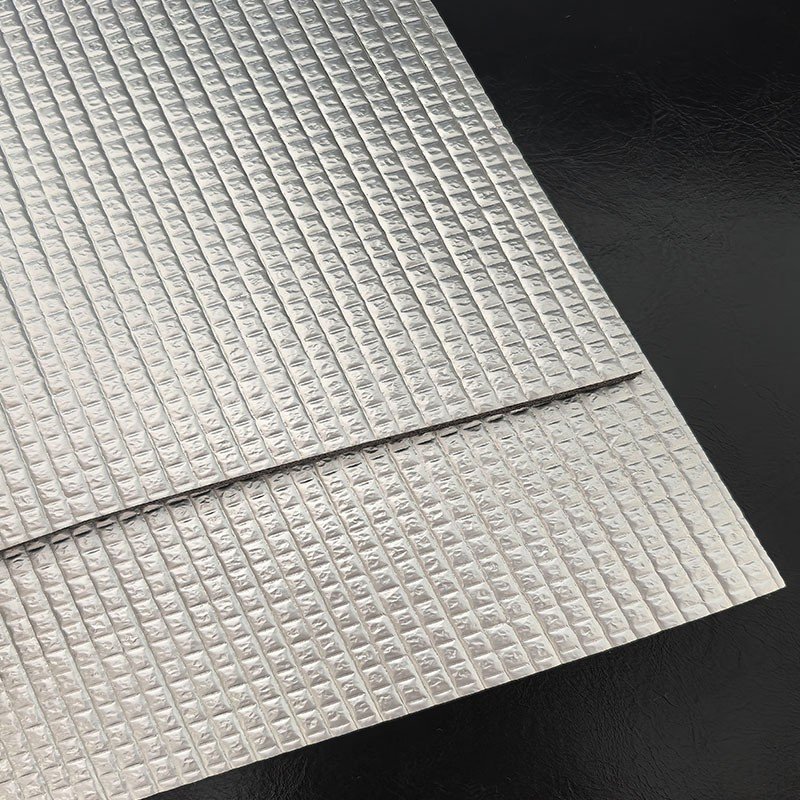
A flexible liner film and a foam layer may both be associated with the EVA family while serving different functions. One can provide an interior surface; another may contribute to cushioning or insulation.
The material’s physical form matters. A thin film should not be assigned the same function as a thicker cellular layer merely because the names are related.
Ask the supplier to identify the component in the bag. A cross-section drawing or cutaway sample can show which layer is being described.
Compare grade with grade
A useful comparison identifies the actual material, thickness, surface treatment, and construction. It then evaluates the property relevant to the product.
Comparing one thick sample with one thin sample and attributing every difference to PEVA versus EVA would be misleading. Several variables have changed at once.
If the purpose is to select a liner, keep the comparison focused on liner requirements. A foam sheet intended for another application is not a direct substitute in the comparison.
Avoid claims based on the letter P
The extra letter does not provide a food-contact rating, an environmental certification, or a guarantee of better performance.
Commercial naming can also vary between suppliers. Confirm the polymer identity and any blending or additional layers where those affect the intended use.
Put the confirmed material description in the product record beside the supplier’s reference. That gives future reviewers more information than the catalog abbreviation alone.
What does PEVA material do inside an insulated bag?
A PEVA liner provides an inner surface within the bag. Depending on its construction, it may help make ordinary cleaning practical and separate the contents from other layers.
The liner should not be confused with the insulating core. Its presence alone cannot establish how long a packed bag will stay cold.
The liner faces the contents
In a lunch bag, the liner may touch the outside of meal containers, bottles, and cold packs. It can also encounter condensation or an accidental spill.
A bag intended to hold unwrapped food has a different use. That direct-contact application should be defined explicitly and supported accordingly.
The product’s instructions and images should tell the same story. Showing loose food against a liner can imply a use that the written specification does not support.
The insulation lies elsewhere in the construction
A bag may combine an outer textile, insulating foam, and an inner film. The thermal performance comes from the complete construction and packed system.
A liner specification can help identify one layer, but it does not describe the whole thermal design. The opening, seams, load, and cold sources also matter.
Assess any cooling-duration claim using the complete packed bag. The liner description identifies one layer, while the duration depends on the evaluated thermal system.
Joins and edges affect practical use
The liner must connect to the rest of the bag. A smooth flat film can become a more complicated surface once it is sewn, joined, folded, and fitted around corners.
Those details affect access during cleaning and may influence liquid containment. Inspect the assembled liner, particularly at the base and opening.
If the supplier describes the material as waterproof, ask whether the claim covers only the film or the finished bag. The difference matters when a customer carries a tipped container or loose ice.
The liner is one component in a mixed-material product
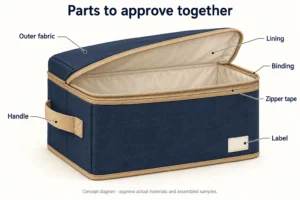
The bag may also contain zippers, webbing, adhesives, printing, reinforcement, and a base insert. Each should be considered where it affects the intended use.
A statement about the liner should identify the liner. It should not make the entire bag appear to have properties that have only been discussed for one component.
For example, a wipeable inner surface does not establish that the outer textile is machine washable. Component-specific information gives users a clearer care routine.
Which properties should buyers evaluate?
Evaluate the properties that affect the intended liner function: handling, thickness, surface condition, join performance, and supported care. Add food-contact evidence where the application requires it.
Write the expected actions into the specification, such as the supported cleaning method and how the liner folds at the opening. The supplier can then assess those requirements against a proposed material.
Thickness and consistency
Thickness is a dimensional property that can be measured. It should be specified with an appropriate tolerance and method if it matters to the design.
A thicker film may change the feel, folding, or processing behavior of the liner. It does not automatically establish a longer service life or better food-contact suitability.
Compare thickness alongside the rest of the construction. A well-matched liner should fit the bag’s shape and intended use without relying on an unsupported thicker-is-better rule.
Flexibility during normal handling
A liner may bend at the opening and corners every time the bag is used. Review those movements on the assembled sample.
Watch the liner at the corners as the bag opens and closes. A flat swatch cannot show whether the installed material forms folds that obstruct the container or cleaning access.
If repeated flexing is part of a performance requirement, define an appropriate evaluation. Do not invent a number of use cycles from a brief hand inspection.
Surface condition and cleaning access
Look for defects that affect the intended contact surface or cleaning routine. The relevant concerns depend on the finished product and its approved appearance.
Record a surface variation separately from a hole, including its location and effect on use. That gives the supplier a specific issue to assess against the approved sample.
Also check areas hidden beneath the rim or near fasteners. Customers use the complete interior, not only the central surface shown in a catalog photograph.
Joins under the intended load
Inspect the liner where it meets the base, walls, and opening. The load and movement at those points may differ.
A seam that looks neat while empty can behave differently around a rigid meal container. Use representative contents during the practical review.
Any strength or leakage claim needs evidence appropriate to the finished configuration. A film data sheet alone cannot establish the result for every seam and closure design.
Is PEVA food safe?
PEVA is not automatically food safe for every application. Food-contact suitability depends on the actual composition, the finished article, and the conditions under which contact occurs.
FDA explains that food-contact materials must be assessed through the status of their relevant components and the specifications and limitations of the applicable authorizations. See FDA’s guidance on determining food-contact material status.
For a buyer, the practical task is to connect the proposed liner to the intended food contact and the supporting evidence. The material acronym cannot do that work.
Define what touches the liner
Does the liner touch unwrapped food, only the outside of closed containers, or both during intended use? Does the product hold dry items, wet food, or an assortment?
These questions help define the application. An accidental spill also raises cleaning questions, but it should not be confused with a planned direct-contact use.
Write the intended contact clearly in the product brief. That lets the supplier and testing provider assess the relevant arrangement.
Define the conditions of contact
Temperature, duration, and the type of food can affect the assessment. A material intended for one condition should not be assumed suitable for a more demanding one.
FDA provides categories of foods and use conditions in its food-contact reference tables. Those categories show why the application needs more detail than simply stating food use.
The buyer should supply the planned use accurately. A report cannot be interpreted properly if the commercial product is later presented for different conditions.
Assess the supplied formulation
A material family can include ingredients or grades selected for different applications. The exact liner may also have a color, print, coating, or other feature relevant to the assessment.
Ask what the documentation covers. A report for one material should not automatically be applied to every similar-looking film.
If a supplier proposes a substitution, review its effect on the approved product record. A replacement described with the same acronym may still require additional evaluation.
Keep the claim within its scope
A supported statement should explain the relevant use and any necessary limits. Broad wording such as safe for all foods at any temperature would need far more than a generic material declaration.
Where the product is designed to carry closed containers, say so. That is useful information for customers choosing how to pack the bag.
Clear scope does not weaken the description. It allows a buyer to understand what has actually been assessed and what the product is intended to do.
What is migration, and why is it relevant?
Migration is the transfer of substances from a food-contact material into food. Food-contact assessment considers that transfer in relation to the intended use.
FDA describes evaluating migration and exposure as part of its review of food-contact substances. See its consumer explanation of food-contact materials.
The term does not mean every detectable transfer is automatically a health risk. The relevant rules, substance, exposure, and conditions determine how a result is assessed.
A migration test needs a defined setup
A report should identify the sample, test conditions, and method. Without that information, a pass statement is difficult to connect to a specific product use.
Buyers should know whether the report concerns the supplied film, a related component, or the assembled article. Those scopes may not be interchangeable.
The appropriate test program should be determined by a qualified provider for the intended market and use. A catalog description is not enough to select every required condition.
Food simulants are testing tools
Tests may use defined substances to represent particular food-contact conditions. Their selection belongs to the applicable method and assessment.
A buyer should not choose a convenient simulant solely to obtain a favorable result. The test needs to address the intended application.
Read the report with the use description beside it. This makes mismatches easier to identify before a claim reaches packaging or a retail listing.
A result has limits
A test result applies to the assessed sample and conditions. It should not be presented as proof that every future version of the product has the same status.
Changes in material source, formulation, color, or construction may need review. The significance of a change should be assessed with the relevant technical support.
The buyer’s role is to maintain a clear connection between the sold product and the evidence. That connection is more useful than a folder of unrelated certificates.
What should US and European buyers check?
US and European buyers should identify the destination rules that apply to the actual material and intended use. A document prepared for one market should not be assumed to cover every other market.
The supplier, importer, and qualified technical advisers need a consistent product description. Without that starting point, even a genuine report can be applied too broadly.
United States: identify the applicable basis
The US framework includes several routes for the lawful use of food-contact substances. The relevant basis depends on the substance and application.
For example, an effective Food Contact Substance Notification can have manufacturer-specific scope. FDA explains that a notification is tied to the identified manufacturer, substance, and conditions. A buyer should not treat another producer’s notification as a universal approval.
Ask the supplier to identify the basis relevant to the selected liner and intended use. The record should make clear which material is supplied and how the claim is supported.
European Union: match the material and documentation
The European Commission describes the general food-contact framework and the specific measures for plastics on its food-contact legislation page.
For plastic materials and articles within its scope, Regulation (EU) No 10/2011 includes composition, migration, and documentation requirements. The regulation has been amended, so buyers should use the applicable current text and check relevant transition provisions with their technical advisers.
A declaration of compliance should relate to the actual material and use. It should not be replaced by a generic statement that the factory exports to Europe.
Europe is not one identical destination rulebook
The European Union framework does not automatically describe every European country’s requirements. A project should identify the actual destination markets.
A product intended for several destinations may need a coordinated documentation review. That is easier when the same material identity and intended-use description appear throughout the records.
Avoid promising worldwide compliance from a single report. State the supported market and scope accurately.
Keep the article and the product evidence separate
General regulatory information can explain what questions a buyer should ask. It does not certify a specific PEVA liner or finished lunch bag.
A product claim needs evidence connected to the supplied configuration. A link to an official regulation cannot substitute for that connection.
During the supplier review, keep the sample, specification, and intended-use description together. They provide a concrete reference for discussing the scope of the evidence.
Which documents are useful, and what does each one show?
Useful records can include a material specification, technical data sheet, relevant compliance declaration, and test report. Each answers a different question.
Do not judge a document only by its title or the presence of a laboratory logo. Read the sample identity, scope, conditions, and result.
A material specification identifies the agreed product
The specification can record the material name, supplier reference, thickness, color, construction, and other agreed characteristics.
It gives the buyer and supplier a common reference. Without it, a later sample may be compared with a remembered appearance rather than a defined material.
The specification should also identify which component it covers. A sheet for the outer fabric does not describe the liner merely because both belong to the same bag.
A technical data sheet describes selected properties
A technical data sheet can help explain a particular grade’s intended processing or typical properties. Its values may describe the supplied material rather than the finished article.
Check whether values are typical or guaranteed and whether the relevant conditions are stated. A number without its method or context may be difficult to use.
Do not convert a resin property into a bag performance claim. A finished liner includes geometry, joins, and contact conditions that a general grade sheet may not address.
A safety data sheet serves a different purpose
A safety data sheet communicates information about a chemical product’s hazards and handling. OSHA explains its structure in guidance on safety data sheets.
An SDS should not be treated as a food-contact certificate. Its presence does not, by itself, show that a finished liner has been assessed for the proposed food use.
It can still be useful within the material record. Read it for its actual purpose and request the separate evidence needed for the intended contact claim.
A declaration needs a product connection
A declaration should identify what it concerns and the basis for the statement. The exact required form and content depend on the applicable framework.
Compare the declared material with the sample and specification. If the description is too broad to identify the supplied liner, ask for clarification.
If a declaration names a different component or a broad product family, ask the supplier to explain how it covers the selected liner. Keep that explanation with the document.
A test report describes an assessed sample
Read the report’s sample description, test conditions, methods, results, and any limitations. Check whether the document is complete.
A front-page pass statement may omit the context needed to interpret it. The report might cover only selected substances or a particular use condition.
Where interpretation requires technical expertise, use a qualified reviewer. A procurement checklist can identify missing information, but it cannot replace specialist assessment of the applicable requirements.
A factory audit answers another question
A factory audit may address systems, working conditions, or other defined topics. It does not automatically establish the food-contact suitability of every material used at that factory.
Keep facility-level records separate from product and material evidence. Both may matter to a sourcing project, but they support different claims.
This prevents a common misunderstanding when a sales presentation places several logos together. The buyer should know what each document actually covers.
How can you connect a report to the liner you will receive?
Connect the report through an identifiable material record and an approved sample. The buyer should be able to follow the description from the document to the physical component.
The process is easier when the supplier uses consistent references across the quotation, specification, sample approval, and production records.
Match the sample description
Compare the material name, reference, color, thickness, and construction where those details are relevant. If the report uses another identifier, ask how the two references relate.
Do not assume a visual match establishes identity. Two white films can look alike while using different formulations or suppliers.
Ask the responsible party to explain the relationship in writing when references differ. Store that explanation with the specification so the next reviewer can follow the same connection.
Check the intended use against the test scope
Place the planned product use beside the report’s conditions. Look for differences in food contact, temperature, duration, and repeated use where applicable.
A mismatch does not always mean the material is unsuitable. It means the available evidence may not answer the intended question and needs review.
Resolve that gap before making the broader claim. Changing the marketing wording can sometimes clarify a product’s real use, while another project may require additional assessment.
Record material changes
Ask how changes in source, formulation, color, printing, or construction will be communicated. The relevance of each change depends on the product and evidence.
A sample approved months earlier should remain a usable reference. If the material changes, the record should show what changed and what review followed.
For a repeat order, compare the new material reference with the approved version. If the reference changes, review the reason and the supporting information before accepting the substitution.
Keep the evidence with the approved version
The final product record should identify which specification and sample the documents support. Avoid a general folder where reports from unrelated projects are mixed together.
A buyer reviewing a claim later should be able to find the relevant version without reconstructing an old email conversation.
The record also helps customer-facing teams answer accurately. They can explain the supported use instead of repeating a broad statement from an outdated sales sheet.
How should PEVA and PVC be compared?
PEVA and PVC are different polymer families. PVC stands for polyvinyl chloride, while PEVA terminology concerns ethylene-vinyl acetate material.
That chemical distinction does not, by itself, decide which finished liner suits a particular use. Both the formulation and the assembled construction need consideration.
A useful PEVA vs PVC comparison states the job first, then compares actual samples and evidence for that job.
Compare the same form and application
A thin liner film should be compared with a material intended to perform the same lining function. Comparing it with a rigid sheet or unrelated coated fabric mixes different product forms.
Keep the intended contact and cleaning routine consistent. Otherwise, a difference in the use conditions may be mistaken for a simple material advantage.
Record the construction of each candidate. Thickness, backing, joining method, and finish can affect how the liner feels and behaves.
Do not turn a PVC-free claim into a safety conclusion
If a product is described as PVC-free, the composition claim should be supported. It still does not establish food-contact suitability, environmental performance, or the absence of every substance a customer might ask about.
The same applies to BPA-free wording. A statement about one substance is not a complete assessment of the material’s intended use.
Describe the verified claim precisely and assess other claims separately. A customer should not be encouraged to infer several unrelated guarantees from one absence statement.
Let practical requirements guide the comparison
The buyer may need a liner that supports a defined cleaning method, joins reliably in the chosen design, and has suitable evidence for the destination market.
Evaluate those requirements directly. Do not assume that a softer feel, lower odor, or familiar name settles every issue.
A comparison can end with different choices for different applications. There is no need to force one material family into a universal winner position.
Can PEVA liners be washed, heated, or frozen?
The permitted treatment depends on the specific material and finished product. The acronym PEVA does not establish a universal cleaning method or operating-temperature range.
Follow the instructions for the liner as supplied. A film inside an assembled bag may face limitations from its seams, backing, or attached components.
Cleaning instructions should be specific
A supported wiping method is different from soaking, machine washing, or dishwasher use. State the actual method clearly.
Inspect whether the liner can be removed or turned outward. A cleaning demonstration should use only movements allowed by the construction.
If a brand intends to advertise a washable liner, evaluate the complete component through the proposed care routine. Do not rely on the outer textile’s care label.
Heating requires separate support
Microwave, boiling-water, and hot-food uses involve conditions that a chilled-lunch application may not cover. They should not be inferred from general food-contact wording.
The product should have explicit instructions for any supported heating use. A bag containing metal fittings or several materials creates additional product-level considerations.
If heating is not an intended function, describe the supported use plainly. Customers should not have to experiment to discover the limit.
Cold exposure also needs context
A liner used with a frozen cold pack may experience different local conditions from one carrying a room-temperature container. Repeated flexing under cold conditions may also be relevant to the design.
Ask for suitability information for the planned arrangement. Do not invent a minimum temperature from a generic polymer name.
A practical sample review can reveal handling concerns, while formal claims may require additional evaluation. Keep those two kinds of evidence distinct.
Care changes should be reviewed
Changing a cleaner, wash method, or drying approach can change what the product experiences. The approved instructions should remain consistent with the evidence.
A customer service team should not recommend an improvised treatment as universally suitable. Refer to the product’s supported care information.
Clear instructions can prevent uncertainty after an ordinary spill. They also help a buyer compare liners on how the complete bag will be maintained.
Is PEVA environmentally friendly or recyclable?
The material name does not establish the environmental performance or disposal route of a finished product. A liner may be combined with foam, fabric, adhesives, and hardware.
Environmental claims should describe a supported benefit and its scope. A material substitution alone is not proof that the whole bag has a lower impact.
The FTC advises businesses to support environmental claims and qualify them appropriately. See its summary of the Green Guides.
Recyclability depends on the actual product and available route
A theoretical ability to process a polymer does not mean a household collection program accepts the finished bag. Mixed materials and local facilities matter.
Do not tell customers to place a lined bag in a recycling stream without an appropriate supported route. The liner and the complete bag may have different disposal questions.
Where a take-back or recycling program exists, describe its actual scope. Avoid implying universal access from a limited arrangement.
Recycled content and recyclability are different claims
A product can contain recycled material without being accepted by a local recycling system. Conversely, a recyclable item need not contain recycled input.
If a recycled-content statement applies only to the outer shell, keep it attached to that component. It should not imply that the PEVA liner has the same content.
Buyers should request the relevant documentation and make the retail wording match it. A photograph of a recycling symbol cannot supply missing composition information.
Reuse depends on product design and care
A reusable bag needs a construction that suits its intended routine. Liner cleaning, seam condition, and the ability to keep using the complete item all matter.
Do not invent a service-life figure or an environmental saving without evidence. A general expectation of repeated use is not a measured impact comparison.
If parts can be replaced, confirm that replacements are available and compatible. Removability alone does not establish an after-sales supply program.
What would a useful PEVA liner review look like?
A useful review starts with a defined product and separates material identity, practical performance, and contact suitability. The following examples are hypothetical buyer scenarios, not Great Shine test results.
Each example shows how a familiar material term can lead to different questions.
A bag designed for closed lunch containers
The customer places a sealed meal box and cold packs inside the bag. The liner mainly contacts their outside surfaces during intended use.
The buyer should record that use, review the liner’s cleaning access, and confirm the documentation relevant to the product and market. Images should show the containers the bag is designed to carry.
There is no reason to photograph loose salad directly on the liner if that is not the supported use. Such an image would change what the customer is encouraged to do.
A pouch intended to hold unwrapped food
This product has planned direct contact. The buyer needs a clear description of the foods, temperature conditions, duration, and repeat-use routine.
The documentation and assessment should address that application. A report supplied for a different household item cannot be assumed sufficient simply because both descriptions say PEVA.
The closure and interior also need practical review. Contact suitability does not establish whether the pouch contains liquid, withstands a wash method, or performs another advertised function.
A repeat order with a different liner color
A buyer approves a sample and later requests another color. The supplier should identify whether the change affects the formulation or other parts of the evidence.
The appropriate review depends on the material and claim. The buyer should not assume either that every color change is irrelevant or that an entire project must always start again.
A documented change process makes the decision specific. It shows what changed, who assessed it, and which records now support the supplied version.
A proposed substitute from another supplier
A substitute may carry the same commercial material name while differing in grade or construction. The original sample remains the reference until the change is reviewed.
Compare the new specification, sample, and relevant documents with the intended use. If the replacement performs differently during cleaning or assembly, that belongs in the decision.
For buyers exploring custom insulated lunch bags, this is a useful way to discuss liner options with a supplier. Great Shine’s cooler and insulated bag product page also frames liner review around the selected material and intended use; it does not provide a blanket approval for every PEVA formulation.
How can a buyer write a clear liner requirement?
A clear requirement describes the product component, its intended use, and the questions the supplier must answer. It gives the project a usable starting point without pretending the assessment is already complete.
The example below is a hypothetical briefing method. It does not describe an approved Great Shine material or a completed compliance review.
Describe the component in ordinary language
Start with the part: an inner liner for a reusable insulated lunch bag. State whether the bag is intended to carry closed containers or to hold food directly.
Then describe the expected handling. The liner may fold at the opening, contact cold packs, and require an agreed cleaning method.
These details help the supplier understand the job before proposing a grade. A request that says only “food-safe PEVA” leaves too many design and use questions unanswered.
Request an identifiable material proposal
Ask the supplier to identify the proposed material and finished construction. Relevant details can include a material reference, thickness, color, backing, and joining method.
Request that the sample and documents use consistent references. If the supplier’s internal code differs from the report description, ask for the relationship to be explained.
The purpose is to make later review possible. The buyer should be able to distinguish the approved proposal from another film offered under the same broad name.
State the evidence questions separately
Ask what supports the intended contact use in the destination market. Also ask what supports any planned leakage, cleaning, or durability claim.
Those questions may require different records. Combining them into one request for a certificate can encourage an answer that covers only part of the intended offer.
If a claim is not supported, revise the claim or obtain the appropriate assessment. Keep unresolved evidence questions out of the finished consumer description.
Agree how changes will be handled
Before approving the sample, identify which proposed substitutions or changes should be brought back for review. The supplier and buyer can then work from the same version.
A useful change record explains the affected component and the reason for the proposed change. It should also state what evidence or sample review supports the revised choice.
Keep the revised record with the repeat order. The commercial product name may stay the same, while the record identifies which material version was approved for supply.
Frequently asked questions about PEVA material
Is PEVA a fabric?
PEVA usually describes a plastic material rather than a woven textile. In bags, it may appear as a film or part of a layered construction. Ask which component the term identifies and whether there is backing or another layer that affects the finished liner.
Is PEVA always different from EVA?
The terminology can overlap within the ethylene-vinyl acetate family. The abbreviations do not establish identical commercial grades, but they also do not justify a universal performance ranking. Compare the actual material identity, form, thickness, and intended application.
Does PEVA mean a liner is food grade?
No. The term alone does not establish the suitability of a specific formulation and finished product for a particular food-contact use. Identify the planned contact conditions and connect the relevant documentation to the supplied material before making the claim.
Is a low-odor liner automatically safer?
Odor is not a substitute for composition and food-contact assessment. A sample’s smell can be part of a quality review, but neither the absence nor presence of odor provides a complete safety conclusion. Use evidence appropriate to the material and intended application.
Can a PEVA-lined bag hold loose ice?
Only if the finished bag is intended and supported for that use. The film, seams, and closure all matter to liquid containment. A general water-resistant material description does not prove that a closed bag will contain meltwater when lifted or tipped.
Does a laboratory report cover every color and size?
Not automatically. The scope depends on the assessed material, product, conditions, and relevance of the proposed change. Ask the responsible technical reviewer how a color, source, thickness, or construction change affects the evidence. Keep the approved product version identifiable.
Is PEVA biodegradable because it is used instead of PVC?
A substitution does not establish biodegradability. Any such claim needs appropriate evidence for the product and disposal conditions. The finished bag may also contain several other materials. Avoid presenting an unsupported environmental benefit as a consequence of the material name.
What should a buyer request first?
Request the material identification and a clear intended-use description. Then obtain the relevant specification, care information, and food-contact evidence where applicable. Connect those records to the actual liner sample before comparing broad claims such as food safe, leakproof, or environmentally friendly.