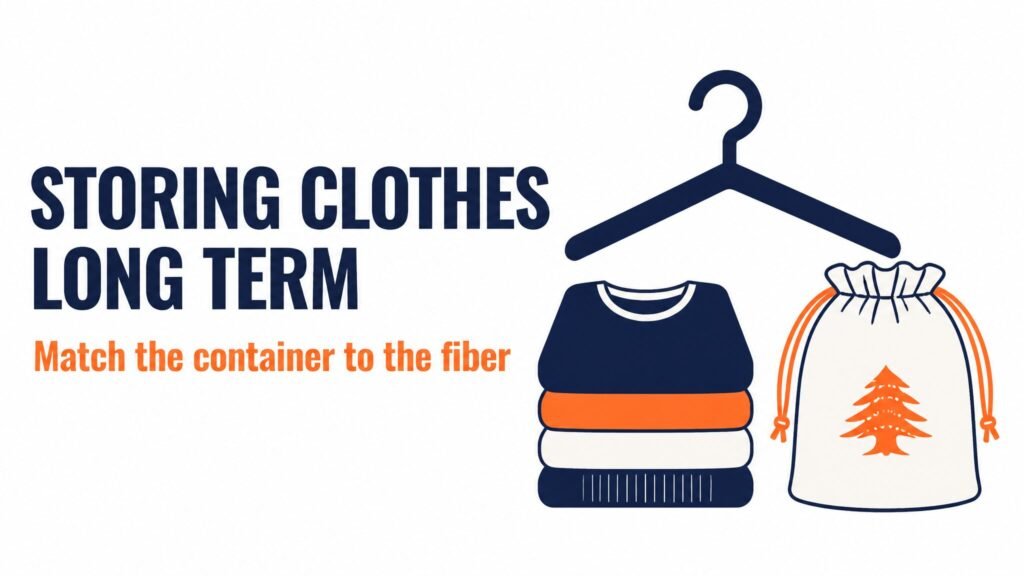
Long-term clothes storage fails the same ways everywhere: moisture, pests, light and the wrong container. The debates online cluster around one question in particular, whether vacuum sealing damages clothes, and the honest answer is that it depends on the fiber. This guide compares the storage materials, separates the real risks from the myths, and lists the checks that keep stored garments and retail stock safe for a season or several years.
Who searches this and why
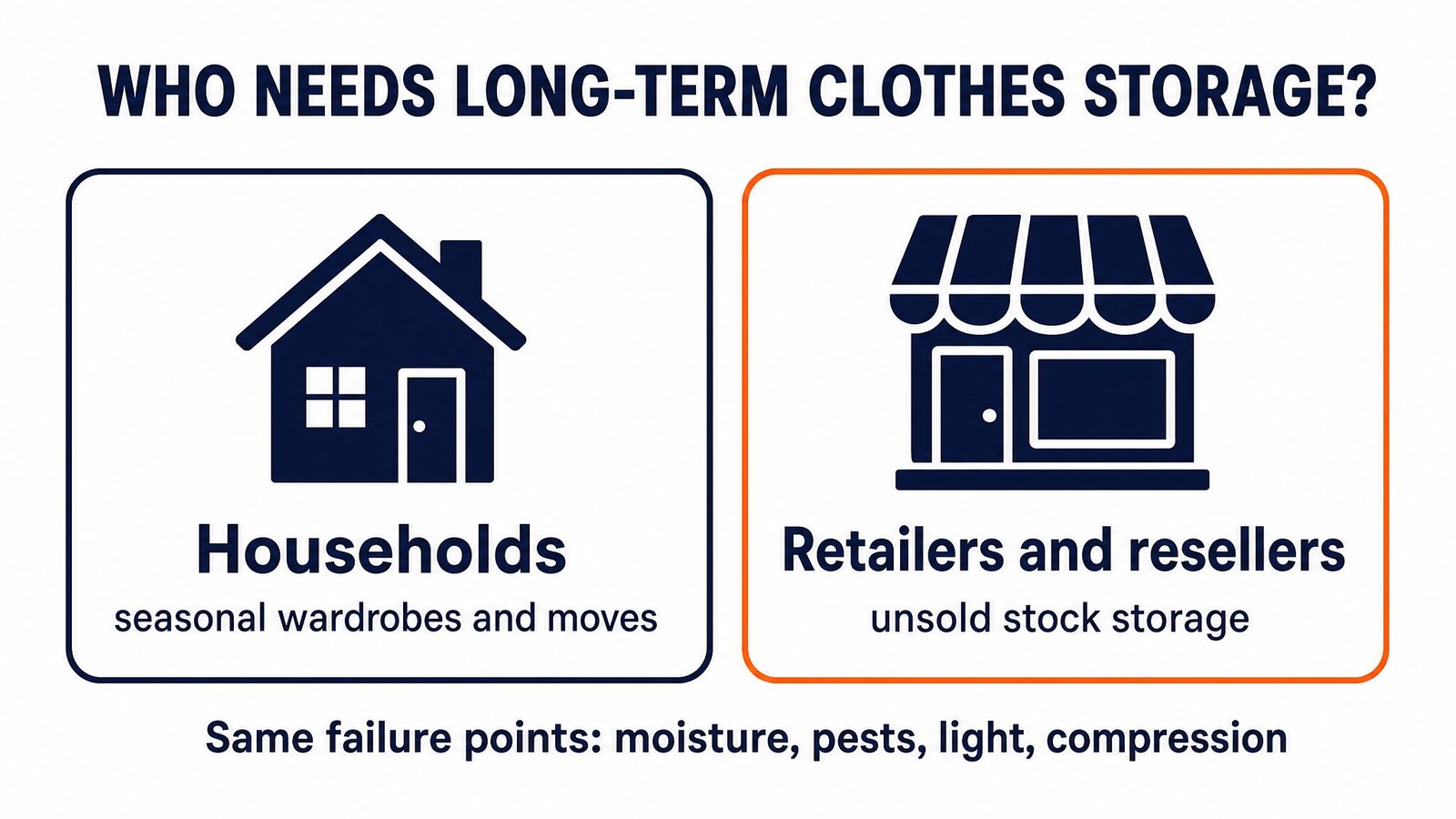
Two groups type this query. Households packing seasonal clothes or moving between homes want their own wardrobes to survive. Retailers, resellers and uniform programs want unsold stock to come out of storage sellable. Both are really asking which container-material combination holds up, and the failure points are identical: mold on natural fibers, crushed pile on synthetics, yellowing whites and insect holes in wool.
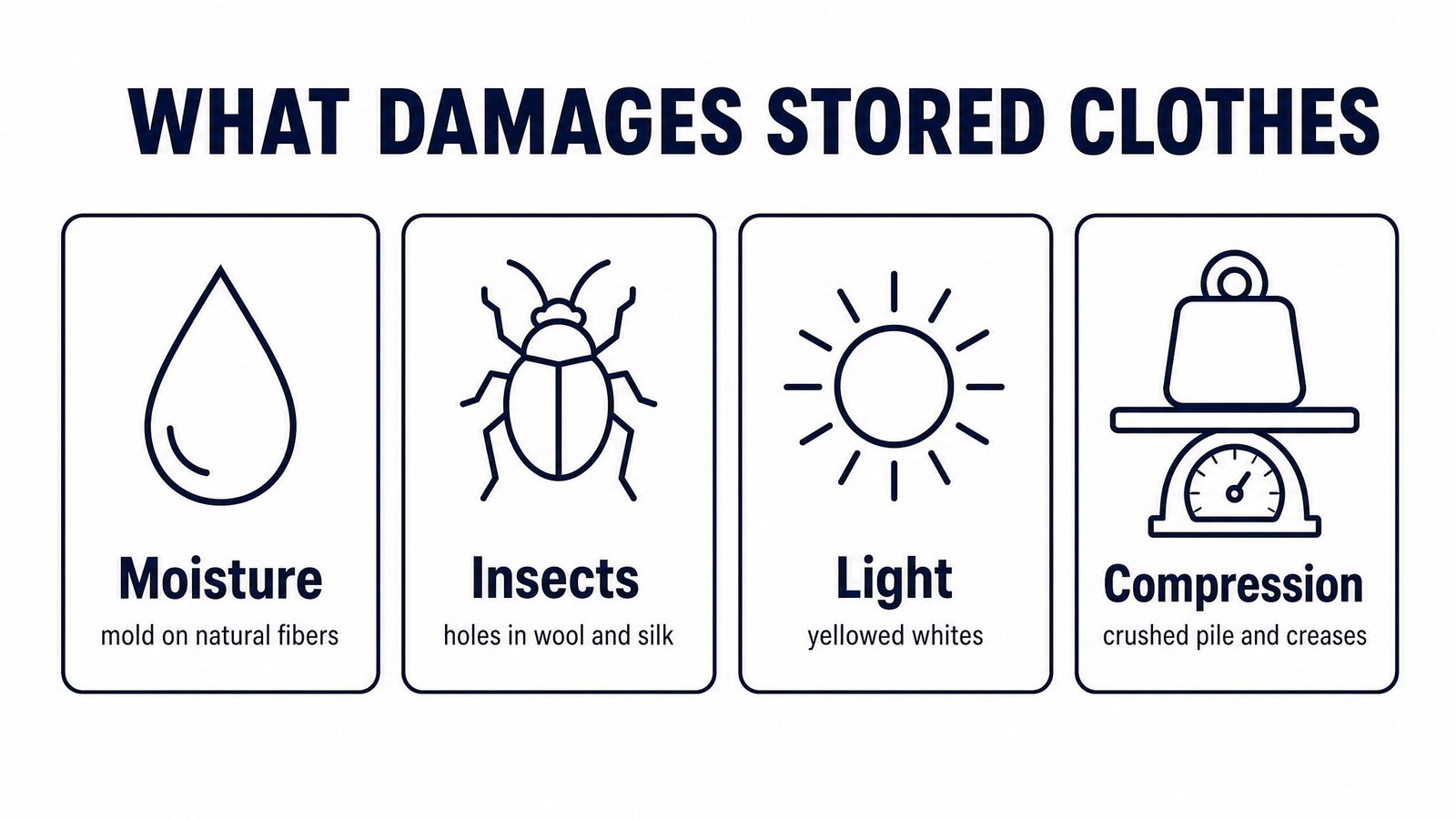
What actually damages stored clothes
| Threat | What it does | Where it hides |
|---|---|---|
| Moisture | Mold and mildew on cotton, linen and leather; odors that outlast washing | Basements, containers sealed while damp, plastic without airflow |
| Insects | Wool, cashmere and silk eaten by moth and carpet beetle larvae | Dark undisturbed drawers and boxes |
| Light | UV yellows whites and fades dyes over months | Near windows, transparent bins in sunlight |
| Compression | Permanent creasing; crushed pile on fleece, down and wool lofts | Vacuum bags on fluffy fibers, overstacked boxes |
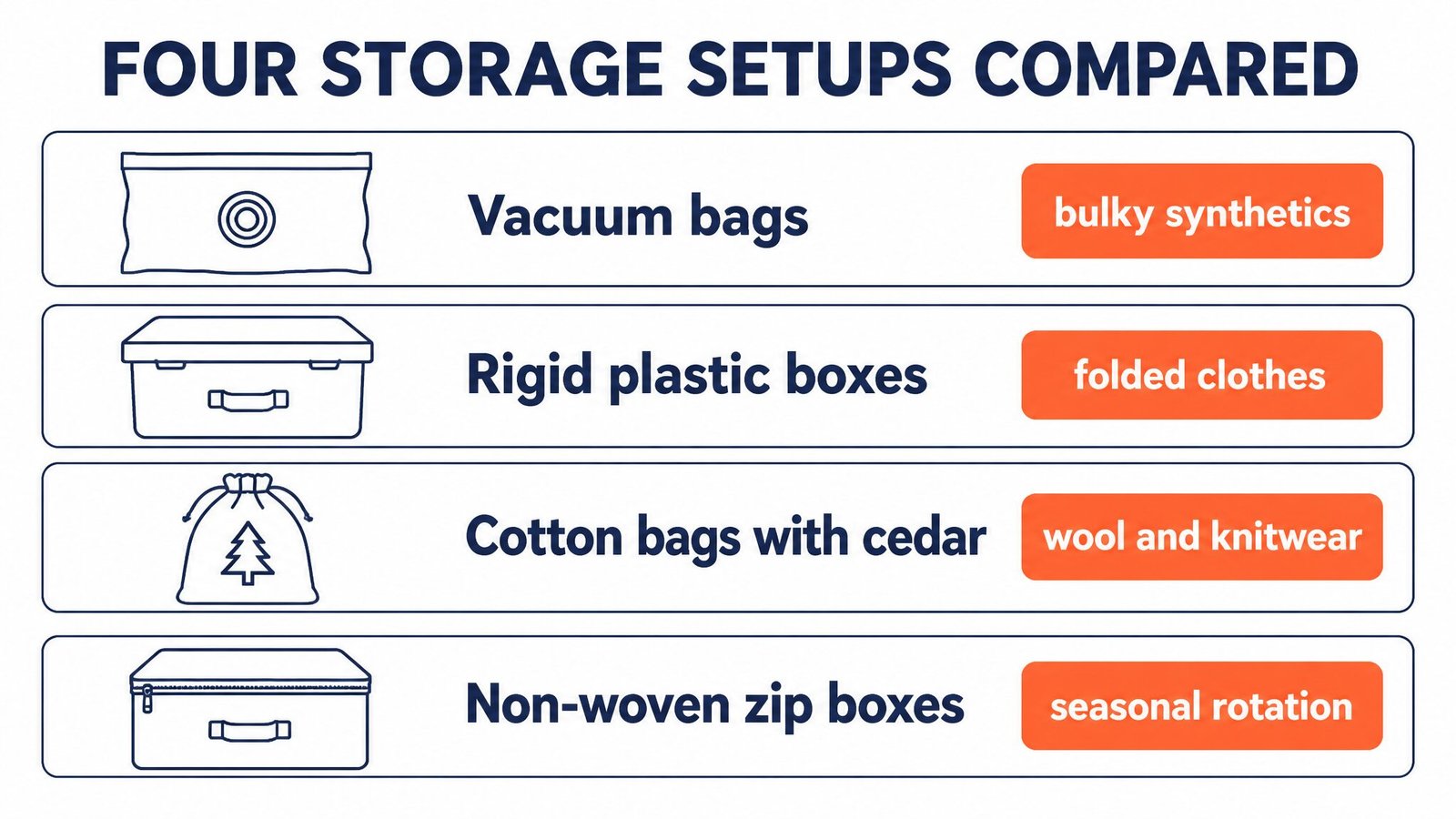
The four main storage setups compared
| Setup | Best for | Weak point |
|---|---|---|
| Vacuum bags | Bulky synthetics: fleece, padding, quilts, synthetic pillows | Crushes natural-fiber loft; seam and valve leaks over years; not for wool, silk, down, leather |
| Rigid plastic boxes | General folded clothes, protectable stacks | Traps any residual damp; transparent versions need light shielding |
| Cotton/canvas bags with cedar | Wool, knitwear, suits, long-term natural fibers | Costs more per liter; cedar needs sanding to refresh oil |
| Non-woven zip boxes | Seasonal rotation under beds, light household use | Not airtight; load limits; not for multi-year archival storage |
The vacuum bag question, answered straight
Sources that handle clothing storage for a living split exactly along fiber lines. Storage operators advise against vacuum packing for long-term storage because compressed natural fibers take permanent creases and lose loft. Retail packing guides treat vacuum sealing as the default for bulky synthetic items because it removes the air that carries moisture. Both are right for their own materials.
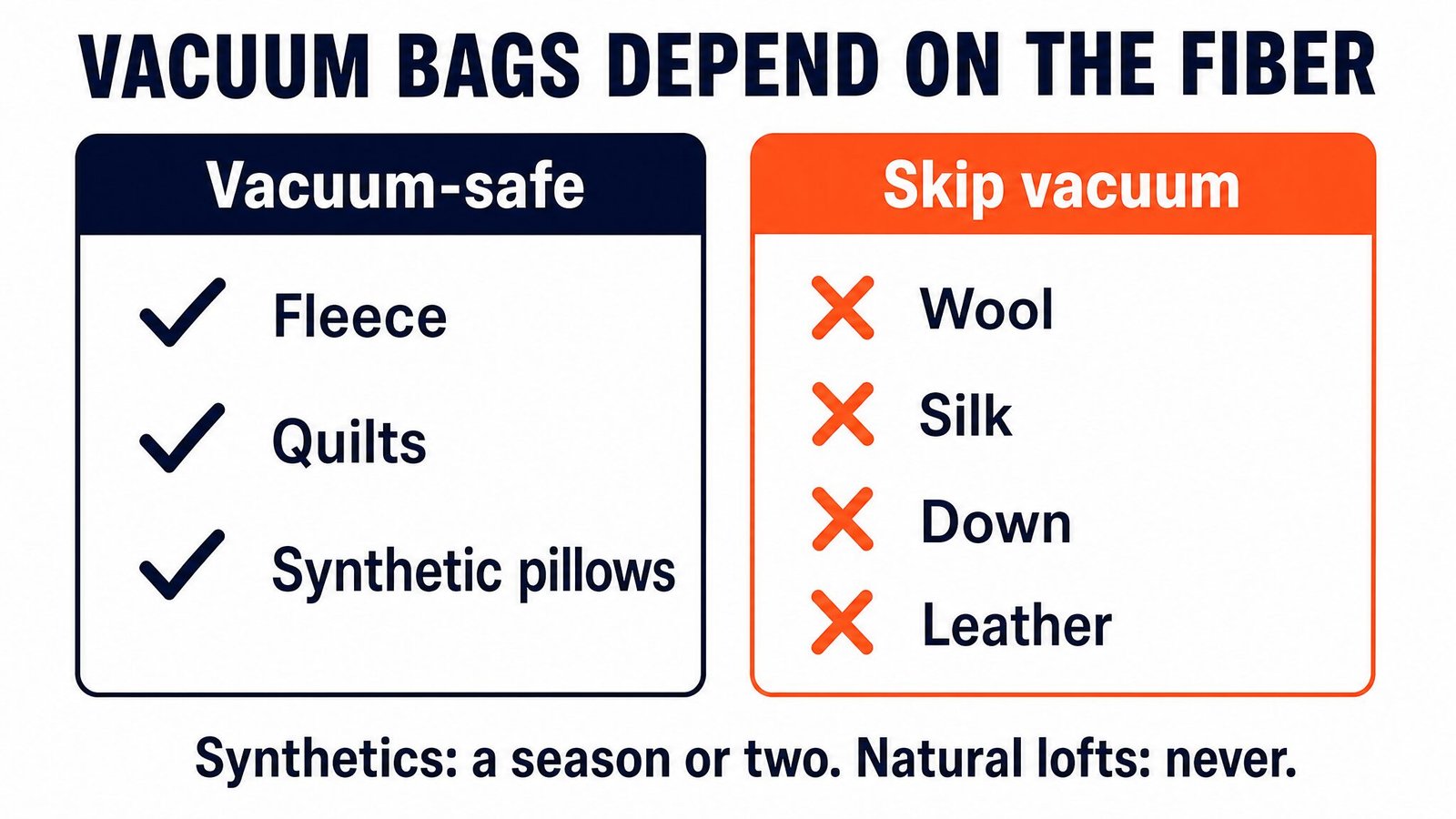
The practical rule: synthetic bulky items can live in vacuum bags for a season or two. Wool, silk, down and anything with structured pile should not. If a product page promises a vacuum bag is safe for every fabric, that claim does not survive contact with a winter coat.
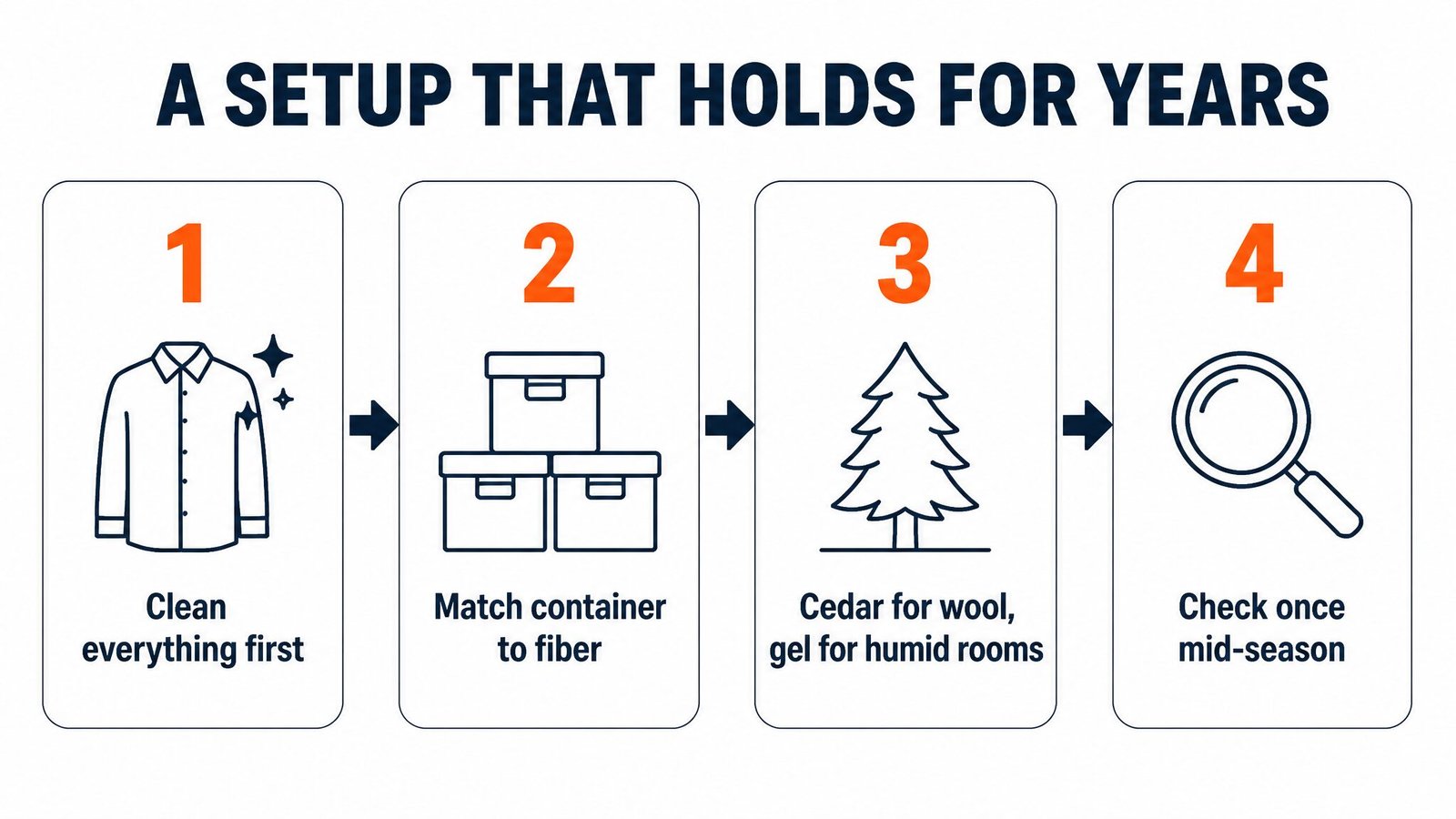
A setup that works for years
Clean everything first, because food residue and skin oils are what insects hunt. Choose containers by fiber, not by convenience. Add cedar for wool, silica gel for sealed boxes in humid rooms, and keep everything off concrete floors and away from windows. Check once mid-season: one look for smells, one for pests, one for loose seams on any vacuum bag. Retail stock follows the same list plus barcode and polybag decisions before it goes back to a shelf.
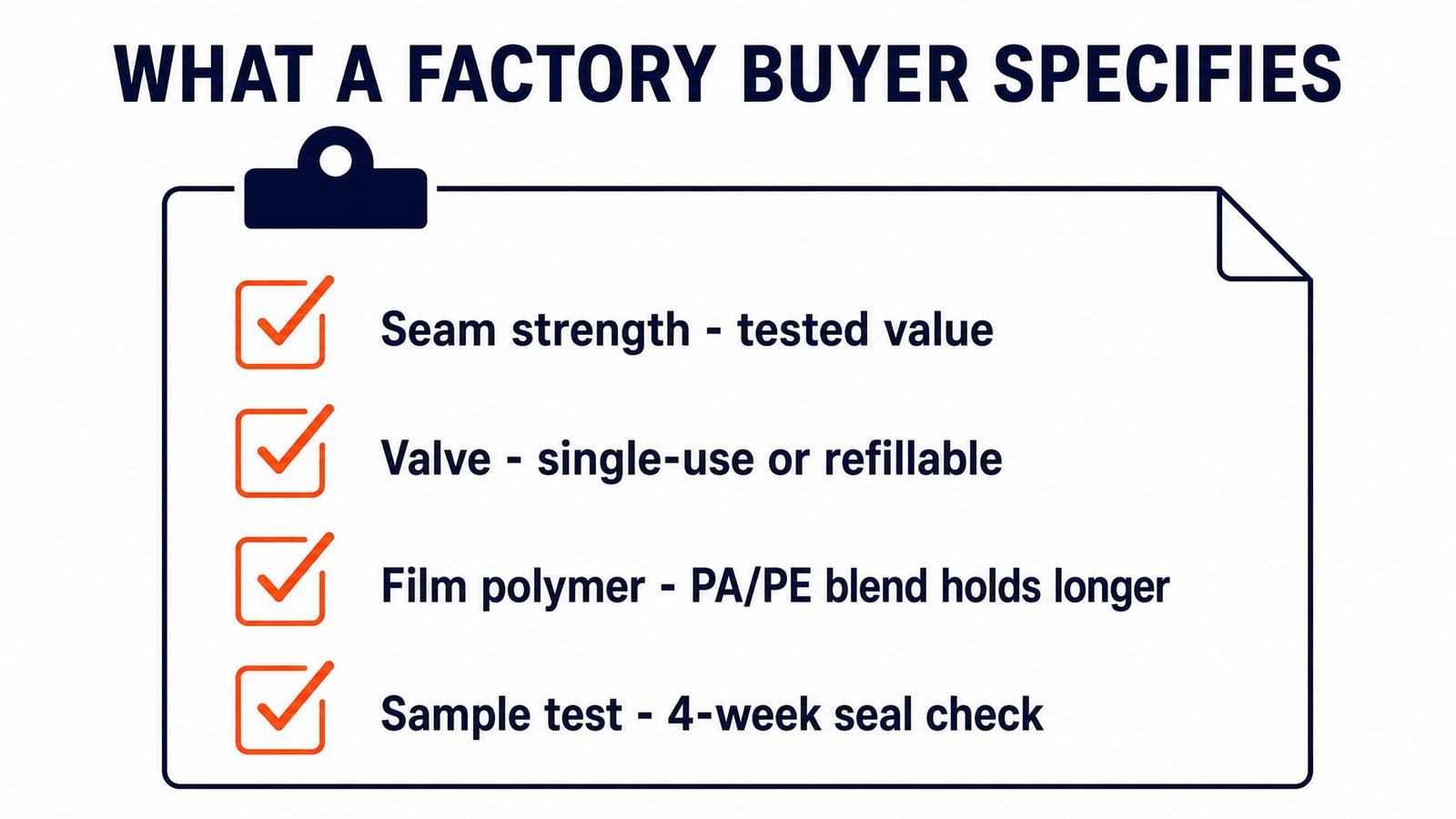
What a factory buyer should specify
Buyers sourcing storage products for resale should ask where the base fabric and zipper come from, what the tested seam strength is, whether the valve is single-use or refillable, and which polymer the bag body uses, because PA/PE blends hold a seal longer than pure PE at the same thickness. Sample testing before bulk means filling a bag, sealing it, and checking the seal weekly for a month, not just pressing it once in a showroom.
Related reading
Benefits of vacuum packing clothes (what compression actually does) · Vacuum storage bags for winter clothes (seasonal rotation setups) · How to organize clothes in storage boxes (box-side of the system) · Can you reuse vacuum storage bags (seal life and valve checks)