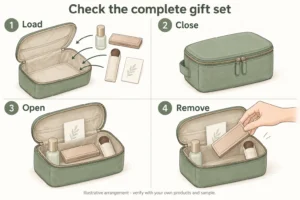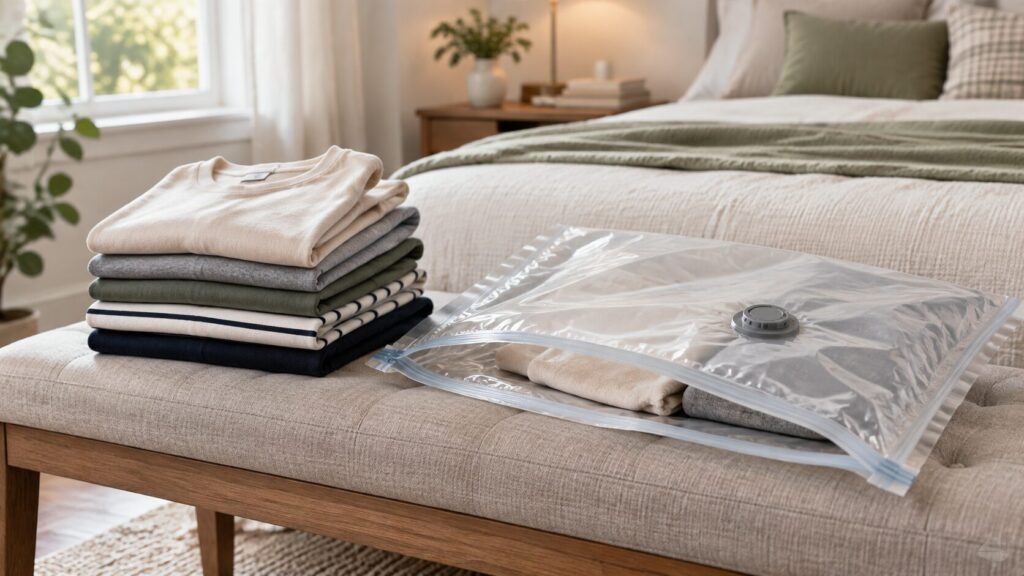
Quick answer: Vacuum storage bags can reduce the space occupied by suitable winter clothing, but the garment’s care instructions come first. Choose a bag that fits the folded load, seals without strain, and produces a package that fits its storage location. Keep down-filled garments and other items that require uncompressed storage outside the compression plan. Clothes must be clean and completely dry before packing.
For Canadian retailers, brands, and importers, garment suitability is a useful starting point for a seasonal range. Customers also need to choose a size and find their clothing again after storage. Compare the bag’s closure and packed shape alongside the instructions that explain those tasks.
When are vacuum storage bags useful for winter clothing?

Vacuum storage bags are useful when suitable garments contain enough trapped air to make compression worthwhile and will stay packed between uses. They are less convenient for clothing that someone needs to retrieve throughout the week.
The bag’s valve and closure allow air to be removed from around the contents. That changes the package’s volume. It does not make the clothing lighter, establish that the fabric tolerates prolonged compression, or turn the package into a rigid storage box.
Start with the seasonal task
A customer putting away ordinary winter layers has a different task from someone storing a tailored wool coat. Another customer may need occasional access to warm clothing during a changeable shoulder season.
Separate these tasks in the product offer. A vacuum pack can be one part of a winter clothes storage system, alongside a covered shelf box or a hanging garment cover.
For a Canadian assortment, decide which customer situation the set addresses. Examples include making space in a compact wardrobe, grouping suitable clothing during a move, or separating out-of-season garments by family member. These are proposed use cases, not evidence that every household needs the same arrangement.
Choose compression where access is infrequent
A sealed load takes time to reopen, unpack, and compress again. A household that repeatedly needs one garment from the same large bag may be better served by smaller groups or a different storage format.
Ask what the customer expects to do when temperatures change. Keeping one accessible group of transitional clothing can avoid opening the main seasonal load for a single sweater.
Show the clothing groups separately in the product photographs so customers can see how each bag fits the seasonal routine.
Recognize the limits of space saving
The amount of reduction depends on the garments, how they are arranged, and the bag system. Dense clothing has less empty space to remove than a loose load of suitable bulky textiles.
A flat package can also become wider or harder to bend after compression. Measure the packed shape in its intended position before assuming it fits a drawer, shelf, or under-bed gap.
Compare the complete package with the customer’s storage space, including the wardrobe opening. Record that fit alongside any measured reduction in volume.
Which winter clothes should stay out of a compression bag?

Keep a garment out when its care guidance calls for loose storage, when its structure could be distorted, or when you cannot establish that compression suits it. Review the garment itself rather than judging only by its fabric name.
A winter wardrobe can include ordinary casual clothing, delicate knits, structured garments, and insulated outerwear. One storage instruction cannot responsibly cover all of them.
Follow the maker’s instructions for insulated jackets
Down jackets deserve particular attention. Rab advises storing its down jackets uncompressed in a cool, dry place in its down jacket care guidance.
Use that as a reason to check the garment maker’s guidance before presenting an insulated coat as suitable for seasonal vacuum storage. A jacket that packs into a pocket for a trip does not automatically have approval for months of compression.
The same question applies to synthetic insulation. Confirm the instructions for the particular item instead of assuming that a different filling makes prolonged compression acceptable.
Give delicate knitwear a separate decision
Woolmark notes that vacuum packing can trap moisture and is not ideal for delicate clothing. Its guide to storing wool clothes also describes cloth bags as an alternative for delicate garments.
For a retail range, this supports offering a separate option for customers who need loose folded storage. It does not support labeling every cotton or non-woven bag as protective enough for every valuable textile.
Avoid demonstrating a tightly compressed load of fine knitwear merely because it produces an attractive before-and-after image. Select demonstration garments whose care guidance suits the intended use.
Keep shape-sensitive details in mind
Check shoulder construction, padding, decorative trims, and rigid accessories before deciding how to pack a garment. Pressure on a structured area can matter even when the surrounding fabric folds easily.
A coat may need a suitable hanger and sufficient space around its shoulders. Clothing with delicate embellishment may need gentler support than a compressed group can provide.
When the answer remains uncertain, use a non-compression option and seek advice from the garment maker or an appropriate textile-care specialist.
Review ordinary garments individually
Casual layers without delicate details may be candidates for a vacuum bag when their care guidance permits it. Check the whole item, including coatings, fasteners, decoration, and any filling.
For a product trial, record what was packed. “Winter clothes” is too broad to explain a result: lightweight base layers and heavily insulated outerwear do not represent the same load.
This detail also improves customer instructions. Examples should help someone make a decision about their own garments rather than suggest that every item in a winter wardrobe can be compressed.
How do you choose the right vacuum bag size?
Choose a size that accepts the folded clothing without crowding the closure and fits the destination after compression. The empty bag’s dimensions provide a starting point, but they do not describe every possible loaded shape.
A useful size range follows recognizable tasks. Customers should be able to tell whether a bag is intended for a small clothing group, a broader seasonal category, or a different textile application.
Measure the folded load first
Arrange the proposed garments as the instructions will show them. Measure the footprint and height of that load before choosing a sample.
Leave the space required by the bag design around the sealing area and valve. If the product has a fill line, the example should respect it. Do not invent a universal clearance distance for bags with different constructions.
Fold protruding sleeves and loose edges inward so they do not enter the seal. Keep hard fasteners from pressing sharply into the film during packing.
Distinguish flat dimensions from loaded dimensions
An empty flat bag may look generous on a dimension drawing. Once filled, part of that material wraps around the thickness of the clothing.
A gusset can change the available depth and the way a package stands or lies. A flat envelope and a shaped bag with similar nominal width and length may therefore hold different arrangements.
Ask for dimensions that describe the selected design clearly. Show the direction of measurement and distinguish the empty product from a demonstrated packed load.
Check the space after compression
Measure the shelf depth, wardrobe opening, or under-bed clearance where the package will go. Include any valve or folded edge that projects from the bag.
Try the compressed sample in that space without forcing it around a sharp corner. A package that fits only when bent heavily may be awkward to retrieve and could place stress on the film or seals.
Also consider what happens if the customer opens the bag in that location. Clothing will need room to expand, and the user needs enough space to spread it out for repacking.
Build smaller groups when they improve access
One large bag may hold several categories, but accessing a single category means opening the whole load. Smaller bags can keep different sizes, owners, or uses separate.
There is a tradeoff. More bags mean more closures to manage and more packaging components. Choose the combination that suits the intended routine.
For example, a proposed family set might separate suitable adult layers from children’s clothing being kept for a later season. The exact pack composition should follow actual garment trials, not an arbitrary preference for the highest bag count.
Explain capacity demonstrations honestly
A statement such as “holds several sweaters” needs context because sweater sizes and thicknesses vary. Show the clothing used, its approximate category, and the arrangement that fits below the closure area.
If a volume claim is important, document how it was measured. Do not calculate usable clothing capacity solely from the outside dimensions of an empty bag.
Repeat the demonstration with the final product version. Changes to gusset depth, valve position, or sealing margins can alter the load that fits comfortably.
Which closure and pump details affect everyday use?

The closure must be easy to align, the valve must work with the intended air-removal method, and the instructions must match the supplied components. These details determine whether customers can complete the process without repeated attempts.
Evaluate the full system. A good-looking film sample tells you little about the experience of closing a filled bag or connecting a household vacuum hose.
Examine the closure along its full length
Look at how the two sides align and how the customer knows they are joined. If a slider is supplied, check whether it is easy to hold and follows the intended path.
Run the demonstration with clothing inside. An empty bag can hide the tension and awkward angles that appear with a realistic load.
Pay attention to the ends of the closure. Customers need clear instructions for completing the seal there, particularly if a small unclosed section is difficult to see.
Match the valve to the removal method
Some products are designed for a vacuum hose, some include a hand pump, and others use a different air-removal method. Describe the selected system precisely.
A hose fitting should be checked with the models or dimensions the supplier claims are compatible. Avoid an unsupported statement that one valve fits every vacuum cleaner.
If a pump is included, assess the attachment and the effort required for the demonstrated clothing load. A compact accessory may be convenient to store but less comfortable to use repeatedly.
Include caps and small parts in the review
Where the valve uses a cap, confirm how it closes and whether the instructions distinguish the cap from the part used during suction. Designs vary, so the illustration must show the actual product.
Decide where any removable slider or pump will be kept between seasons. Losing a component can make a serviceable bag difficult to reuse.
For retail packaging, show what is included in the set and how many of each component the customer receives. Product photographs should not imply that every bag comes with its own pump unless that is the supplied configuration.
Prefer clear operation over extra features
A valve, slider, and pump can each be useful, but every additional component creates another instruction to understand. Choose features that solve a defined problem for the intended user.
For instance, a set aimed at customers without a suitable vacuum cleaner may benefit from a supplied pump. That choice should come from the use case and a practical trial.
Check labels and external pouches on a compressed sample. Confirm their attachment and make sure they remain useful when the bag changes shape.
How to store winter clothes in vacuum storage bags
Prepare and sort the clothing, arrange a suitable load, close the seal carefully, and remove air according to the product instructions. Store the resulting package where it can be inspected and retrieved without damage.
The instructions should be short enough to follow during packing. More detailed care limits can sit nearby, where the customer can read them before deciding which garments to include.
Clean and dry everything before packing
Follow each garment’s care instructions and let it dry completely before placing it in a sealed package. Empty pockets and deal with anything that could mark or catch neighboring clothing.
Thick areas, linings, and seams deserve attention when checking dryness. The outside feeling dry does not establish that every part of a garment is ready for storage.
Prepare the bag as well. It should be clean, dry, and free from visible damage or debris in the closure before a new load goes inside.
Sort by the next time the clothes will be needed
Group garments around retrieval. Clothing likely to be needed during an early cold spell should not be buried in a load intended to stay closed much longer.
For children, size can be more useful than a broad season label. For shared storage, the owner’s name may be the most useful distinction.
Keep a simple record on the outside or with the storage location. Choose the label placement recommended for the bag so it does not interfere with the seal or valve.
Arrange a broad, even load
Fold clothing to spread thickness across the bag as far as the design allows. Avoid one dense lump directly under the valve or near the closure.
Check fasteners and corners before removing air. A hard projection that seems harmless in a loose bag may press more firmly against the film as the load compresses.
Use the intended fill limit. Packing extra items into the sealing area can make operation difficult and undermines any capacity demonstration used in the listing.
Close, remove air, and finish the valve correctly
Follow the supplied sequence, including any final action required at the valve. Do not assume that instructions from another brand describe the same mechanism.
Watch the load while removing air. Stop and adjust it if the bag pulls awkwardly around a hard detail or a garment becomes trapped in an unsuitable position.
Once packed, inspect the closure and the overall shape. The package should be manageable without using the valve or closure as a carrying handle.
Put the package away without forcing it
Support the load while moving it. Compression changes bulk, while the clothing’s weight remains.
Avoid dragging the bag across rough surfaces or forcing it past exposed screws and sharp shelf edges. An outer container can help organize multiple bags when its size and surfaces are suitable.
Place the identification where it remains visible. The next person using the storage area should be able to find the relevant group without opening every bag.
Where should compressed winter clothing be stored?
Use a clean, dry indoor location suited to the clothing and accessible enough for occasional checks. A sealed storage bag should not be treated as a remedy for a damp room or as protection against every possible storage hazard.
Canadian customers may be choosing among a wardrobe, an under-bed space, a basement room, or a separate storage area. The conditions in the specific location matter more than its name.
Check the surroundings before filling the space
Look for signs of leaks, condensation, rough surfaces, and difficult access. Consider whether the package will sit near a heat source or in direct sunlight.
The US Environmental Protection Agency’s guidance on mold and moisture identifies controlling moisture and addressing its source as central to mold prevention. A bag cannot correct a moisture problem in the surrounding room.
Keep product instructions focused on suitable storage conditions. Avoid promising that a material or valve will prevent mildew regardless of how the clothing was prepared or where it is kept.
Use under-bed space selectively
Under-bed storage can work when the package clears the lowest frame components and can be removed without scraping. Measure across the full route, including any center supports.
Compare vacuum packs with under bed storage bags when the customer needs frequent access or the clothing should remain uncompressed. The two formats address different routines.
If a vacuum pack sits inside a fabric under-bed carrier, review the combination with a real load. Make sure the carrier has room for the packed shape and that its handle is suitable for the way the customer will move it.
Keep dense loads within comfortable reach
A large compressed package can still be heavy. Consider where a person will grip it and whether the storage height makes lifting awkward.
Several manageable packages may be preferable to one dense load on a high shelf. Keep the arrangement within the furniture’s stated limits.
Do not show a stack that blocks access to the contents or rests unstable packages on one another. The fact that the bags compress does not establish that the finished arrangement is stable.
Plan a sensible inspection routine
Check stored clothing occasionally and whenever there is a reason to suspect a change in the storage conditions. A leak nearby or visible bag expansion deserves attention.
There is no single inspection interval that suits every garment and location. Product instructions should describe what to look for without inventing a universal maintenance schedule.
Keep enough access to inspect the seal and package. Filling an inaccessible cavity with clothing makes it harder to notice a problem before the next season.
Why do vacuum storage bags sometimes expand again?
A bag that expands may have an incomplete closure, a valve issue, damage, or another path through which air returns. Diagnose the problem systematically instead of assuming that every case has the same cause.
The timing and circumstances matter. Record whether the bag expanded immediately, after being moved, or after sitting in place.
Start with the closure
Check the sealing tracks for trapped fibers, folds, and sections that have not joined. Follow the product instructions to reopen and close the bag if necessary.
Overfilling can pull the opening into an awkward shape. Try the same sample with a correctly sized load before concluding that the closure itself has failed.
For a buying team, observe how easily an unfamiliar user completes this step. Repeated confusion may indicate that the instructions, slider, or closure design need improvement.
Inspect the valve and its connection
Check that each valve component is in the position required by the design. A cap that appears closed may still need a particular action described by the manufacturer.
Look for damage around the point where the valve joins the film. Avoid twisting or pulling the valve while handling the package.
Keep any investigation within the supplier’s instructions. Improvised repairs can change the product and make later comparisons unreliable.
Look for handling damage
Inspect areas that contacted corners, fasteners, or rough surfaces. Also check folds that were bent sharply during packing or retrieval.
A bag that performs well on a smooth tabletop may encounter different conditions inside a crowded wardrobe. Include ordinary moving and placing actions in a practical sample review.
Document where damage appears and what happened before it. That information is more useful for discussing a change with the supplier than a general statement that the bag “does not work.”
Document what the evaluation establishes
One sample holding its shape for a short period is an observation under those conditions. It does not establish how every production unit will perform through a whole season.
Agree the sample count, load, observation period, handling sequence, and acceptance criteria before making a commercial claim. If the claim concerns repeated use, the evaluation needs to include that use.
Report limits clearly. A product listing should not turn a brief demonstration into an unsupported promise of months of airtight storage.
How can buyers evaluate a seasonal vacuum bag range?
Evaluate the bags as a customer would use them, then add the documented checks required by your product specification. Keep the garment load, packing method, and observation conditions consistent when comparing candidates.
The following approach is a proposed review method. It does not describe tests performed by Great Shine or a certification standard.
Define the intended load and location
Write down the garment categories, the number of pieces used in the demonstration, and any relevant care restrictions. Photograph the load before packing.
Record the target shelf or under-bed space separately. This allows the team to assess both the bag’s operation and the usefulness of the finished package.
If one size is meant for several applications, try more than one representative load. A result with thin folded layers may not explain what happens with thicker suitable garments.
Watch a user follow the instructions
Ask someone unfamiliar with the sample to read the supplied instructions and complete the packing process. Avoid coaching every step unless the task cannot continue.
Note where the person pauses, misidentifies a part, or has to repeat an action. Those observations can guide changes to the instruction card or product design.
Then ask the user to explain how they would reopen and reuse the bag later. A product that is easy to demonstrate once may still leave uncertainty about seasonal reuse.
Measure the result consistently
If comparing package dimensions, use the same reference points and the same stage of the process. Measure after following the agreed packing and compression method.
A calculated reduction should state what was compared. A loose pile on a bed and a tightly squared package are not automatically equivalent measurement conditions.
Keep the original photographs and notes with the result. They help the team reproduce the demonstration and understand its limits when creating packaging or retailer content.
Review the complete set
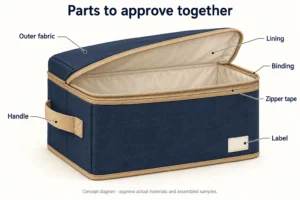
Check every size and included accessory, not just the sample that appears most impressive. Confirm the bag count and the number of pumps, sliders, labels, or storage pouches supplied.
Assess how the customer separates the unused bags and keeps the components together. A multipack should remain understandable after its original retail carton is discarded.
When sizes look similar, make their identification practical. Clear packaging descriptions and appropriate markings can help a customer select the intended bag before unfolding everything.
Check the retail pack before approving the set
Open a sample in the packaging planned for sale and inspect where the bags have been folded. Check whether the valve or sealing components press against another bag and whether the customer can remove the contents without using a sharp tool close to the film.
Identify the parts before unfolding everything. The customer should be able to match each bag size and accessory to the instruction card, including any component shared across the set.
For a wholesale order, keep the retail pack and shipping carton specifications separate. Agree how the packed units are arranged so the approved bag configuration remains identifiable when the shipment reaches the retailer or fulfillment warehouse.
If the pack changes, repeat the unpacking review. A smaller carton or a new fold pattern can change where components contact the film even when the bag itself has not changed.
Recheck changes that affect function
A new valve, film construction, sealing component, or dimension can affect how the system behaves. Review the changed product rather than carrying forward the earlier result without examination.
Keep the approved sample version, artwork version, and packing configuration connected. The bag shown in the instructions should match the bag the customer receives.
This becomes especially useful for repeat orders. If the range changes, the retailer needs to know which descriptions, images, and instructions still apply.
What would a practical Canadian seasonal storage set look like?
A useful set would match defined household tasks, offer a manageable choice of sizes, and explain which garments require another storage method. Its contents should follow the customer brief and sample evaluation.
Choose the set’s sizes around the spaces customers will use. Explain the purpose of each size so they can judge whether the mix suits their clothing.
Example: a compact wardrobe with mixed winter clothing
Consider a hypothetical household with ordinary seasonal layers, delicate knitwear, and insulated jackets. The available space includes one shelf and a shallow area under the bed.
The first step is to separate the garments according to care requirements. Suitable casual layers can be considered for compression, while clothing that needs loose or hanging storage remains outside that group.
Next, divide the compression candidates into useful retrieval groups. One small group might stay accessible for occasional cold weather, while the main out-of-season load occupies the less accessible area.
Measure each packed group and compare it with the shelf and bed clearance. A set of several giant bags could be less useful here than a mix built around smaller loads.
Finally, provide a non-compression option for the remaining garments. This example shows why a seasonal storage collection can include more than one product format without claiming that compression suits everything.
Example: clothing kept for another family member
A customer saving clothing for a younger child needs to identify size and season. Packing all saved clothing into one bag can make it difficult to find the right group later.
Compare smaller size-based groups with a larger mixed load. Review how the label remains visible and whether the customer can remove one group without disturbing the others.
Include the care limits of the actual clothing. The reason for keeping a garment does not change whether it is suitable for compression.
A retailer can communicate this application with a modest, clearly identified load. Avoid implying that all children’s clothing has the same storage requirements.
Apply the examples to the commercial brief
For a Canadian product program, describe the intended customer, the load each bag size should accommodate, and the storage locations shown in the imagery. Give the supplier enough detail to propose a useful configuration.
Great Shine’s storage product range for Canadian brands includes home-storage categories such as vacuum bags and under-bed storage. Use that range as a starting point, then confirm the selected model’s construction, dimensions, accessories, and instructions.
Also identify the sales channel and intended provinces when discussing packaging. Confirm the applicable language, product information, and receiving requirements with the importing or retail team before approving artwork.
What should a vacuum bag listing explain before purchase?
Explain which use the bag serves, how the customer operates it, and what the demonstrated capacity means. Clear limitations are part of helping someone choose the right product.
For brands and Amazon sellers, the listing, instruction insert, and product photographs should describe the same configuration. A mismatch between them can make an otherwise usable set confusing.
Show what comes in the package
List the quantity of each bag size and identify any included pump or accessory. If an image contains clothing or an outer carrier that is not supplied, make that distinction clear.
Show both metric and imperial measurements where they help the intended market. Use consistent orientation so customers know which number describes the bag’s width.
Do not rely on words such as large or jumbo without dimensions. Those names do not provide a dependable comparison between different ranges.
Demonstrate packing without exaggeration
Use a load that respects the fill area and garment-care limits. Show the same clothing before and after compression under consistent conditions.
Avoid manipulating perspective or placing one example closer to the camera to exaggerate the difference. A simple view of the resulting package is often enough to explain the function.
If the marketing team wants a numerical claim, use a documented method and state the relevant conditions. Do not borrow another brand’s reduction percentage for a visually similar bag.
Make compatibility easy to understand
Describe whether the customer needs a vacuum cleaner or can use the supplied pump. Identify any known connection requirements.
Show the actual valve and accessory together. A generic pump photograph can mislead if the supplied connector differs.
Include the reopening method and any care or reuse instructions. Customers buying storage bags for seasonal use need to know what happens at the end of the storage period as well as at the start.
Support each protection claim
A sealed appearance does not establish every possible protective property. Water exposure, puncture resistance, air retention, and insect exclusion are separate questions that need appropriate support if claimed.
Likewise, a film’s material name or thickness cannot establish the performance of a complete bag. The closure, seams, valve, and use conditions also matter.
Describe verified features plainly and retain the garment-care limitations. These details help customers understand what they can expect from the product they are buying.
What happens when winter clothing comes out of storage?
Open the package carefully, inspect the garments, and follow their care instructions before putting them back into regular use. Allow space to handle the clothing without pulling it through a tight opening.
A seasonal product should be easy to use at both ends of the storage cycle. That includes deciding whether the empty bag is ready for another load.
Unpack by category
Read the label before opening and remove the group that is needed. Keep other packages closed if they do not need attention.
Check garments for unexpected moisture, odor, or visible damage. If something seems wrong, investigate the clothing and storage conditions before repacking.
Do not promise that every crease disappears within a fixed time. Different fabrics respond differently, and any care treatment should follow the garment’s instructions.
Inspect the bag before reuse
Look over the film, closure, and valve. A part damaged during storage or opening may affect the next use even when the bag looked satisfactory at first.
Clean and dry the bag only as the manufacturer directs. Avoid assuming it can tolerate a particular chemical, washing method, or heat treatment.
If it remains suitable for reuse, store it and its accessories in a way that avoids unnecessary stress on the closure and valve. Keep the instructions available for the next season.
Use feedback to improve the next order
Ask customers about specific steps: choosing a size, closing the seal, connecting a pump, fitting the package into place, and reopening it. Those answers can help identify an instruction issue or a design change.
Separate verified product faults from unsuitable garment choices or storage conditions. Keep the evidence attached to the individual report.
Use the findings to revise the relevant part of the range. A problem with one accessory does not automatically justify changing every bag size, just as a successful sample does not settle every use case.
Frequently asked questions about vacuum storage bags
Can you put down jackets in vacuum storage bags?
Follow the jacket maker’s instructions. Some makers, including Rab, recommend uncompressed storage for down jackets. A jacket’s ability to pack small during travel does not establish that prolonged vacuum compression is suitable. Choose a loose-storage option when the garment requires it.
Are vacuum storage bags suitable for every sweater?
No single answer covers every sweater. Fine knitwear, decoration, construction, and care requirements affect suitability. Woolmark identifies limits for delicate clothing. Review the garment’s guidance and use a loose folded-storage option when compression is unsuitable or uncertain.
Do vacuum storage bags make clothes lighter?
Removing air reduces bulk, while the clothing’s weight stays essentially the same. A compact load can still be difficult to lift. Consider the full package weight and storage height when deciding how much to put in each bag.
Can vacuum storage bags go inside a storage box?
They can when the packed shape fits without being forced against rough edges or sharp features. Check that the box closes and can be handled as intended. Keep the package identifiable and allow space for the clothing to expand when it is unpacked.
Why does a vacuum bag work once and leak later?
Recheck the closure, valve, and film. Repacking, handling damage, debris, or an incompletely closed section may change the result. Follow the product’s troubleshooting instructions and record what changed before the bag expanded. Do not assume that every leak has the same cause.
How should customers decide between vacuum and ordinary clothes storage bags?
Compare garment suitability, space, and access frequency. Vacuum bags can suit eligible clothing that stays packed, while ordinary clothes storage bags may be more convenient for loose storage or frequent access. Keep items requiring uncompressed storage outside the vacuum load.
Is there a universal safe storage period for vacuum-packed clothes?
There is no single duration appropriate for all garments, bags, and environments. Follow the clothing and storage-product instructions, and inspect when conditions warrant it. Avoid a fixed seasonal guarantee unless the exact claim has adequate supporting evidence.
What should a Canadian retailer request before choosing a set?
Request bag dimensions, construction details, the accessory list, operating instructions, and samples for the proposed clothing loads. Confirm the packaging requirements for the intended channel and sales area. Any performance claim should have supporting evidence tied to the selected product.
Explore storage products for a Canadian seasonal range
Choose the garments and household task first, then compare the bag sizes and operating details that support that use. Keep a separate option for clothing that needs loose or hanging storage.
View Great Shine’s custom storage bags for Canadian brands and retailers to explore the product categories available for a Canadian program. Confirm the model and sample details before building the final assortment, packaging, and customer instructions.