Retail buyers comparing non-woven vs polyester garment bags should compare complete covers at the same size and for the same use. An 80 gsm polypropylene non-woven cover and a 210D polyester cover differ in fabric construction, but the zipper, clear panel, dimensions and packaging also affect the buying decision. Neither fabric description establishes a carrying load, waterproof rating or service life.
Quick answer
Start with the garment and the retail format. Sample the 80 gsm PP non-woven version if your range needs a wardrobe cover with a clear viewing panel. Compare it with the 210D polyester version if you want a woven fabric and the two-slider opening specified in this project. Check garment fit, surface feel, seams and zipper operation on both finished samples.
Great Shine’s May 2026 product handover records provide a useful example: the non-woven covers used a single-slider zipper, while the 210D Oxford polyester covers used two sliders. Their sizes also differed. A quotation comparison must account for those differences before attributing a price difference to fabric alone.
What does each material description mean?
“Non-woven” describes how a fabric is made. “Polyester” describes its fibre material. These terms are not opposites: a non-woven fabric can also be made from polyester. In this comparison, the specified options are polypropylene non-woven fabric and woven polyester Oxford fabric.
EDANA’s definition of nonwovens distinguishes bonded fibrous structures from woven and knitted fabrics. That distinction helps buyers write an unambiguous specification instead of asking for “non-woven or polyester” without identifying the construction.
The numbers describe different things:
- 80 gsm means the fabric has a specified mass of 80 grams per square metre.
- 210D describes yarn linear density. Denier expresses the mass in grams of 9,000 metres of yarn, as explained in CottonWorks’ textile yarn guide.
You cannot compare 80 with 210 as a strength score. The denier number does not specify the finished fabric weight, weave density, coating, seam quality or zipper attachment. Request those details when they matter to the product brief.
Compare the documented garment cover configurations
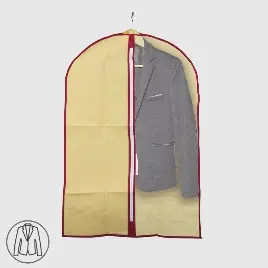
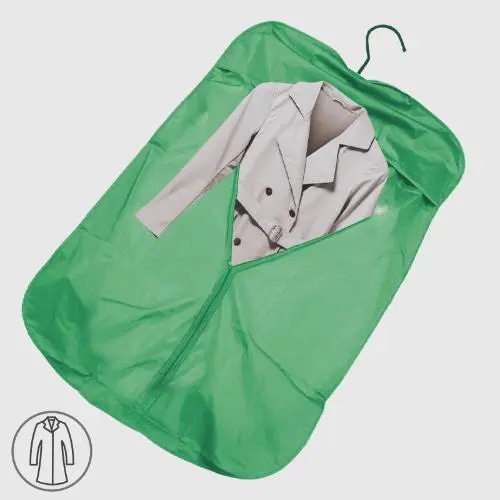
The following are project specifications, not a list of interchangeable stock items. The material composition follows the confirmed product brief; sizes, zipper arrangements and packing details come from the May 2026 handover record.
| Specification | PP non-woven garment cover | Polyester Oxford garment cover |
|---|---|---|
| Body material | 80 gsm PP non-woven | 210D polyester Oxford |
| Listed size options | 60 × 100 cm; 60 × 135 cm | 65 × 100 cm; 65 × 150 cm |
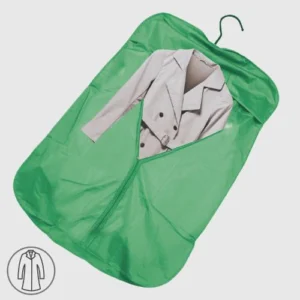
| Clear material | PVC specified with the non-woven body | No clear panel specified in these rows |
| Zipper arrangement | Single slider | Two sliders |
| Individual packaging | CPP bag with hanging slot and printed insert | CPP bag with hanging slot and printed insert |
| Project carton quantity | 24 pieces | 24 pieces |
The listed dimensions identify the reference versions. Confirm width and length on an annotated drawing, including the measurement start and end points. They do not state gusset depth, usable garment volume or the number of garments each cover can hold.
The project also included contrasting binding on the non-woven versions. Colour choices and clear-panel placement should be checked against the selected sample. A reference photograph can show the style without representing the colour of the final order.
Choose around the garment, then test access
A suit cover and a long-dress cover can require different lengths even when they use the same fabric. Place the intended garment on its intended hanger and check shoulder width, hem clearance and the hanger opening.
For a retail range, identify the clothes customers are likely to put inside. A cover sized around a slim jacket can behave differently around a padded winter coat. The package should describe the intended use without implying that every garment of a named category will fit.
Use one consistent fit check for both samples:
- Insert the same garment on the same hanger.
- Close the cover without stretching the body or pushing clothing into the zipper path.
- Check whether the garment hangs freely at the bottom.
- Open the cover and remove the garment without catching its lining or trim.
- Note where extra width, length or gusset depth would change access.
If you want to isolate the effect of material, request samples with matching dimensions and features. Comparing the documented 60 cm wide non-woven version with a 65 cm wide polyester version also compares fit and fabric consumption.
What should buyers check on the zipper and clear panel?
Check the opening on the filled sample. A two-slider zipper allows the opening position to be adjusted from two points, but it does not establish zipper strength or service life. A single-slider zipper can be suitable where the opening gives enough access for the intended garment.
Specify slider count separately from zipper type, size and colour. The project record confirms slider count; it does not provide a tested cycle life or a universal zipper grade for future orders.
On both materials, inspect:
- Whether the slider runs through the full opening without catching the fabric.
- Whether stitching at the zipper ends holds the tape neatly in position.
- Whether the hanger opening leaves rough edges against the hanger or garment.
- Whether the fabric pulls unevenly when the cover is closed around the garment.
For a clear-panel version, check visibility in the intended display position and the seam where the panel meets the fabric. Fold and unpack the sample in the proposed retail format, then inspect the panel for objectionable creases or marks. Agree the appearance standard using a sample or photographs before production.
Which option fits repeated handling?
For repeated opening, folding and customer handling, assess the entire assembly. The material name alone cannot establish how the cover will perform after repeated use.
A buyer can ask for a comparison that includes seam opening, fabric tearing near stitches, zipper function and wear at the hanger opening. Agree the test method, conditions and acceptance criteria with the supplier. Do not turn an informal sample check into a published durability claim.
If the retail brief involves travel, review the carrying structure separately. A wardrobe cover hung from a hanger does not automatically function as a carry bag. Handles, folding points and any attachment used during transport need their own specification and assessment.
Cleaning instructions also belong to the finished product. PVC panels, binding, prints and other components may affect the appropriate care method. Do not label either version machine-washable or waterproof based solely on PP or polyester content.
Compare retail packaging on equal terms
Both documented options used a CPP bag with a hanging slot, a printed insert and 24 pieces per carton. This is a useful common packaging reference, but it does not mean their packed sizes or shipping costs are equal.
The longer cover can require a different fold. A clear panel may need a fold position that avoids a prominent crease. The printed insert must fit the actual retail pack without bending or hiding product information.
Ask for a packed sample and confirm the following before approving artwork:
- Folded product dimensions and finished retail-pack dimensions.
- Hanging-slot position and the product’s presentation on a display hook.
- Insert size, barcode position and product identification.
- Pieces per carton, actual carton dimensions and gross weight.
The handover notes require the final carton dimensions to follow the actual packing result. Use a confirmed packing trial for freight calculations. The 24-piece carton quantity is a project example, separate from the minimum order quantity.
How to request a useful material comparison
Send both suppliers the same garment type, finished dimensions, opening, clear-panel requirement, quantity and retail packaging brief. Ask them to identify each difference in their proposed constructions.
A practical request is:
Please compare an 80 gsm PP non-woven garment cover with a 210D polyester Oxford version for our retail range. Quote both at the same finished dimensions and identify any change to the window, zipper, binding or packaging. Provide samples for garment-fit and opening checks, plus a separate packing specification for each option.
If you prefer the documented configurations, ask for those sizes and slider arrangements explicitly. Their different dimensions should remain visible in the quotation. For MOQ, branding and shipment checks, use the wholesale garment bag specification and QC guide.
Frequently asked questions
Is polyester always better than non-woven for garment bags?
No single material suits every retail brief. Compare the specific fabric, dimensions, seams and opening against the intended garment and handling pattern. A performance claim needs evidence for the finished construction.
Does 210D mean the fabric is waterproof?
No. Denier describes yarn linear density. Waterproof performance would depend on the fabric finish, seams, zipper and test conditions for the finished cover.
Can a non-woven garment bag be reused?
Reuse depends on the cover’s condition and construction. Check the fabric, seams and zipper after use, and follow the product’s care instructions. The 80 gsm specification alone does not establish a reuse count.
Are the listed sizes the usable internal dimensions?
They are the listed product dimensions, not a verified internal capacity. Confirm measurement points and check the actual garment in the sample before approving fit claims.
Can both materials use the same retail packaging?
They can share a packaging concept, as in this project’s CPP bag and printed insert. Each finished size still needs a folding and packing check before the insert and carton dimensions are finalised.
Review the garment cover options
Compare Great Shine’s custom garment storage bag options and send the garment type, chosen dimensions, quantity and packaging brief with your enquiry. Ask for the material and zipper differences to be shown separately so that you can assess the sample and quotation against the same specification.