The decorations looked beautiful in December. Packing them away is a different experience.
The tree will not go back into its original box. A large bag becomes awkward to lift once the branches are inside. The wreath fits into a cupboard, but its bow gets flattened beneath another container. By next Christmas, the stand is missing and the decorations need reshaping before anyone can enjoy them.
For a home and holiday retailer, these situations give Christmas storage products a clear purpose. Customers need a way to pack, move, protect, and find the decorations they want to use again.
Quick answer: Match each frustration to a specific product function. A wide-opening tree bag addresses difficult loading; a suitable rolling design addresses movement across floors; a wreath case with enough depth and appropriate support addresses unwanted compression; and identification pockets help keep stored items organized. Choose the structure around the decoration and the customer’s storage space, then demonstrate it with the actual contents.
Great Shine’s Christmas and holiday storage range includes tree bags, rolling and upright tree storage formats, and wreath bags and containers. These provide starting points for a retail collection built around practical problems. The features below are design choices to evaluate for the selected product, rather than a feature list shared by every model.
“The tree will not fit back into the box.”
After a tree has been assembled and its branches shaped, repacking it can become a struggle. A customer folds the sections, pushes them toward a narrow opening, and discovers that the zipper will only close if someone presses down on the bag.
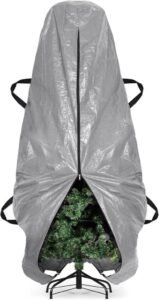
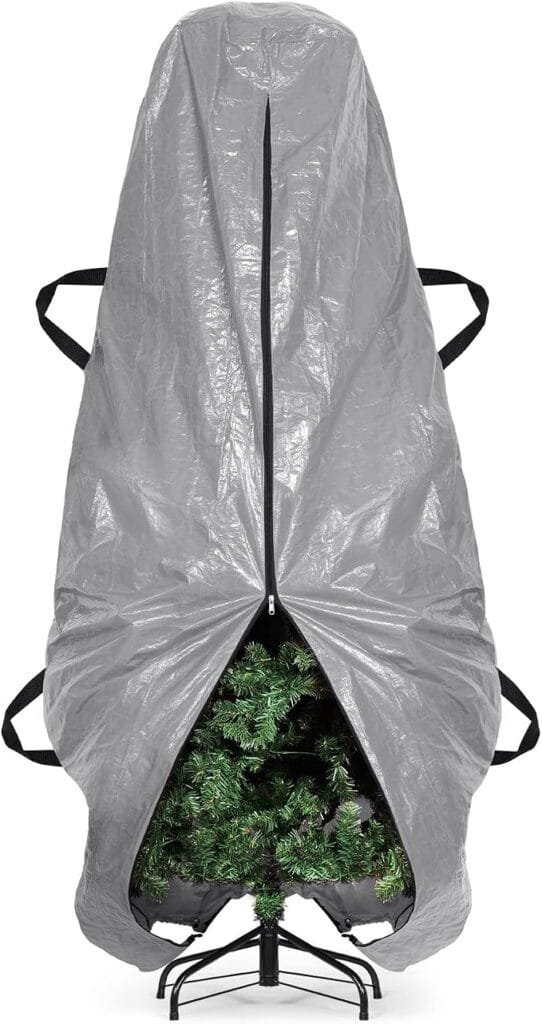
The product opportunity is a tree storage bag that is easy to load in the intended packing arrangement.
Connect the problem to a wide-opening tree bag
A lid that opens across a broad area gives the customer access to position the tree sections. It also makes it easier to see whether a branch or connector is trapped near the closure. The useful selling point is visible access to the contents, not simply the presence of a zipper.
Size the compartment around the dismantled tree. Record the longest section and the combined packed width and height, including the stand if it will be stored inside. Then check the opening as well as the compartment: adequate internal space is of limited help if the customer cannot get the sections through the entrance comfortably.
For retail photography, show the bag open with a compatible dismantled tree beside it, then show the same tree packed inside. Explain whether the stand is included in that arrangement.
This turns a vague capacity promise into something shoppers can understand. An assembled-height label can remain a shopping reference, but it should be supported by dimensions and a demonstrated fit.
“I can pack the tree, but moving it is another job.”
A filled tree bag may need to travel through a hallway, around furniture, and into storage. A customer who bought it for easier cleanup can be disappointed if the handles feel poorly placed or the loaded body drags along the floor.
The product opportunity is a carrying or rolling format matched to the route between packing and storage.
Connect the problem to handles, a supported base, and wheels
For a customer moving the tree along a suitable floor-level route, a rolling tree bag is worth considering. Evaluate the wheels together with the base and pulling handle. The practical question is whether the filled bag can move in its intended position while its body stays clear of the floor.
For customers who need to lift the bag onto a shelf or negotiate stairs, handle placement and manageable packed weight deserve closer attention. A flexible carry bag may suit the space better than a bulkier rolling format. Some trees may be more practical to store in separate bags for their sections.
During sample review, use the intended contents and check each handling position. Look at how the load sits, where the customer grips the bag, and what happens when movement changes from rolling to lifting. Reinforced stitching is a construction detail to inspect; the filled demonstration shows how the whole product behaves.
For retailers, the strongest demonstration follows that journey. Show the bag being moved on the surface it is designed for. Avoid implying that wheels eliminate lifting on every route.
“My wreath fits, but the bow comes out flattened.”
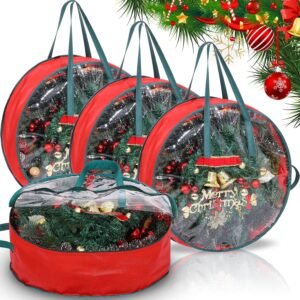
A wreath can fit inside a round bag and still be poorly protected. The outer diameter may be correct while the lid presses down on raised decorations. Another box placed on top can add pressure that a soft cover was never designed to resist.
The product opportunity is a wreath storage bag or case that accommodates both the shape and the depth of the finished decoration.
Connect the problem to usable depth and shape support
Start with the wreath as it will actually be stored. Measure its widest outside dimension and its full front-to-back depth, including the decorations that stay attached. Coverstore’s measurement guide uses this same approach, including retained decorations in the depth measurement.
A soft wreath bag can be suitable when the wreath has its own space and surrounding items will not press against it. For a more elaborate wreath, evaluate a deeper case with support panels or another structure suited to the storage position. Padding and support perform different jobs: a cushioned lining does not establish that the case is suitable for stacking.
For vertical storage, consider a bag specifically designed to support the wreath in that orientation. Check how the wreath frame is held inside and how the loaded bag is suspended. A carry handle alone does not establish suitability for long-term hanging.
Close the sample around the intended wreath, store it in the proposed position, and inspect it after removal. Use the results to decide which configurations the product can reasonably accommodate.
The retail message becomes concrete: show the space around a decorated wreath and explain the intended storage position. That communicates more than an unsupported claim that the bag “protects everything.”
“The decorations are packed, but I cannot find the pieces.”
A tree stand goes into one cupboard, the smaller tree section into another, and several similar-looking wreaths disappear into identical bags. The storage problem returns when it is time to decorate again.
The product opportunity is storage that makes the contents identifiable and keeps related accessories together.
Connect the problem to label pockets and accessory organization
A visible label pocket can identify the room, tree, or wreath inside without opening the main compartment. The label should remain readable in the position in which the bag will normally be stored—on a shelf, on the floor, or upright.
Where the design allows it, an accessory pocket or separate pouch can group the stand fittings and other small components. Keep hard or pointed accessories from pressing directly against foliage or the bag wall, and include their space and weight in the fit review.
For a coordinated tree-and-wreath collection, give each product its own identity. Shared colors can make the range recognizable, while separate labels distinguish the living-room tree from the front-door wreath.
Treat windows and labels as different options. A window shows part of the contents; a written label can name a room or list accessories that are not visible. Choose the option that answers the customer’s actual identification problem.
Retail imagery can demonstrate this with a simple storage arrangement: closed bags, readable labels, and the intended accessories grouped with their decoration. Use the selected product’s real features in the photograph.
“There is no room for another bulky container.”
The most protective-looking storage product may be difficult to use if it will not fit through a cupboard opening or occupy the available shelf. Extra structure also takes up space when the bag is empty and the decorations are on display.
The product opportunity is a storage format that fits the home as well as the decoration.
Connect the problem to flexible, supported, or upright formats
A flexible tree bag can be considered when customers dismantle the tree and want a bag that folds away when empty. A supported wreath case may be more appropriate where preserving a dimensional decoration is the priority. An upright tree system is an option to evaluate when the compatible tree, stored footprint, and available height make it practical.
Be specific about what folds. The fabric body may fold while wheels, base components, or support panels remain separate pieces that still need space. Show the complete empty product in its actual folded configuration.
Likewise, avoid illustrating a soft filled bag as though it were a rigid stackable box. Customers need to see whether it can stand, lie flat, or support anything above it under the intended conditions.
This creates a useful choice within a retail range: easier empty storage for one customer, more shape support for another. The product comparison can explain that trade-off without claiming one format suits every home.
Turn the pain points into a clear product collection
Build each product’s story around the problem it is designed to address. Use this table as an editorial and assortment framework, then confirm the features and demonstrations against the selected samples.
| Customer frustration | Product direction to evaluate | What to demonstrate |
|---|---|---|
| Difficult tree loading | Wide-opening horizontal tree bag | The compatible tree being loaded and the bag closing without forced compression |
| Awkward movement after packing | Rolling bag or carry bag suited to the route | Filled handling, base behavior, and the transition to lifting where needed |
| Flattened wreath details | Wreath case with suitable depth and support | Clearance around retained decorations and the intended storage orientation |
| Missing parts and unidentified bags | Visible labels and suitable accessory storage | Identification while closed and how the included components are organized |
| Limited storage space | Flexible or upright format suited to the available space | Filled dimensions, placement, and the complete empty product when folded |
A tree bag and wreath bag can be sold together when both match the intended customer’s decorations. Keep separate size information for each component. Shoppers should be able to see whether the pair suits them, rather than assuming that a larger tree always comes with a larger wreath.
Frequently asked questions
Will a storage bag make a damp garage suitable for decorations?
The storage environment still matters. Balsam Hill’s artificial greenery guidance recommends cool, dry storage away from direct heat and sunlight. Follow the decoration’s own instructions and keep the contents dry. Do not infer whole-bag waterproof performance from a coated fabric alone.
Can customers leave ornaments and lights attached?
That depends on the decoration and storage format. Follow the manufacturer’s instructions for pre-lit products, protect connectors from strain, and account for retained decorations in the packed dimensions. Show only configurations that have been checked with the selected bag or case.
Can one large tree bag also hold a wreath?
Space alone is not enough. Check whether the tree sections, stand, or other contents can press against the wreath during handling and storage. A dedicated wreath bag or case gives the wreath a separate storage space; packing multiple items together requires a suitable separation and support arrangement.
Discuss the problem your customers need solved
For a Great Shine product brief, start with the customer’s difficult moment: loading the tree, moving the filled bag, preserving a decorated wreath, finding accessories, or fitting everything into a small space.
Then send photos of the decorations, packed tree dimensions and weight, wreath diameter and depth, intended storage position, quantity by product, and packaging needs. Identify which functions matter most so the proposed structure can be reviewed against a clear use case.
Explore Great Shine’s custom holiday storage options and request a proposal around those requirements. A useful product story starts with a problem the customer recognizes—and a product demonstration that shows how the selected design addresses it.