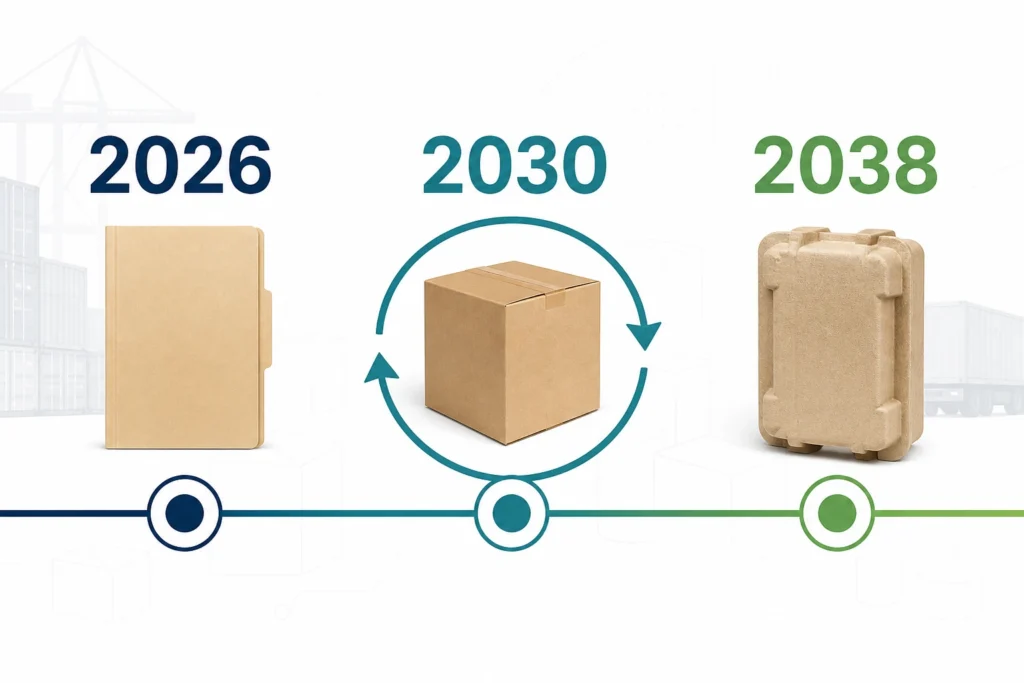
The EU Packaging and Packaging Waste Regulation (PPWR), Regulation (EU) 2025/40, generally applies from **12 August 2026**. An EU importer should not treat it as a distant 2030 recycling target. Before placing imported packaging or a packaged product on the EU market, the importer needs to verify conformity documents, labels, traceability and the manufacturer’s identity. It must also maintain records, protect compliant packaging during storage and transport, and act when non-conformity is found.
For a private-label importer, the practical response is to build one controlled packaging file per SKU, clarify who is the legal manufacturer, collect evidence before shipment, and redesign high-risk packaging formats before the later recyclability, recycled-content and minimisation requirements become operational.
Important: This article is a procurement and documentation guide, not legal advice. Product classification, Member State EPR duties and project-specific evidence should be reviewed by a qualified EU compliance professional.
What changed for European importers when PPWR started applying?
The main change is that packaging compliance now needs to be demonstrated through a traceable product file, not assumed from a supplier’s general statement.
PPWR covers packaging placed on the EU market, whether it is imported as empty packaging or together with a product. Article 18 requires importers to place only conforming packaging on the market. Before doing so, they must check that the manufacturer completed the relevant conformity assessment, prepared the technical documentation and EU declaration of conformity, applied the required labels, and provided its identifying details.
This changes an everyday sourcing conversation. A purchase order line reading “packaging must comply with EU rules” is not enough. The buyer needs to know which packaging version was assessed, what material specification was used, which supplier produced it and which documents relate to the shipment.
What must an importer verify before the goods enter the EU market?
At minimum, verify the economic operator, the packaging specification, the conformity documents, the markings and the link between those records and the actual shipment.
The regulation requires importers to add their name, registered trade name or trademark, postal address and, where available, electronic contact details to the packaging or an accompanying document, subject to the applicable format rules.
How long must PPWR documents be kept?
Importers should maintain the EU declaration and make technical documentation available for five years for single-use packaging and ten years for reusable packaging.
Article 18 also requires requested information and documentation to be supplied to a national authority within ten days. This is why an email archive is a poor compliance system. The file must be searchable by product, packaging revision, supplier and date.
A workable folder structure is:
- Approved packaging specification and drawing.
- Material and component declarations.
- Test reports and assessment records, where applicable.
- EU declaration of conformity.
- Label and artwork approval.
- Purchase order, batch and shipment reference.
- Change-control history and corrective actions.
The important point is version control. If a zipper bag changes from mono-material PE to a laminated structure, or a paper insert receives a coating, the packaging file should be reviewed before the next order.
When does an importer become the manufacturer under PPWR?
An importer may take on manufacturer obligations when it sells packaging under its own name or trademark, or modifies packaging in a way that may affect conformity.
This matters to private-label and marketplace businesses. A brand logo alone is not just an artwork issue; it can change the legal-role analysis. The same applies when the importer changes the packaging structure, replaces a material or combines components after import.
Before placing a private-label order, record the answer to three questions:
- Whose name or trademark appears as the manufacturer?
- Who controls the final packaging specification?
- Who holds and updates the technical documentation?
Do not leave these questions until customs clearance or a marketplace document request.
What should importers do if packaging may be non-compliant?
Stop placement on the market, investigate the affected packaging version and take proportionate corrective action.
PPWR requires an importer that believes packaging is non-conforming to avoid placing it on the market until it is corrected. If the packaging is already available, the importer may need to bring it into conformity, withdraw it or recall it. Where the packaging presents a risk, relevant market-surveillance authorities must be informed.
An internal response record should identify affected SKUs and batches, the suspected requirement, stock locations, sales channels, responsible operators, the containment decision and corrective action. The same record is useful when a supplier changes material, coating, adhesive, printing ink or secondary packaging without approval.

Which PPWR deadlines should importers prepare for after 2026?
Importers should separate immediate market-placement duties from later design targets. Treating every future requirement as already active creates confusion; waiting until 2030 creates redesign risk.
Under the recyclability grades, grade A is at least 95%, grade B at least 80%, and grade C at least 70% recyclable by weight under the applicable methodology. Packaging below 70% is treated as technically non-recyclable for this purpose. From 2038, grade C packaging may no longer be placed on the market.
For recycled plastic, 35% is not a universal rule for every plastic package. It is the headline target for the “other plastic packaging” category; other categories, exclusions and calculation rules apply. Confirm classification before putting a percentage into an RFQ or product claim.
How can importers turn PPWR into a supplier workflow?
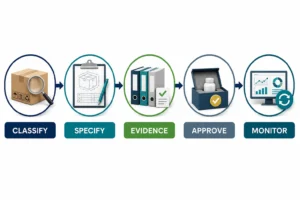
Use a five-gate process: classify, specify, evidence, approve and monitor.
1. Classify the packaging
List sales packaging, grouped packaging, transport packaging and e-commerce packaging separately. Include bags, cartons, labels, inserts, hangtags, tapes and protective filling.
2. Freeze the specification
Record dimensions, weight, material layers, colours, printing, coatings, closures and accessories. Use a revision number on the RFQ, sample approval and purchase order.
3. Collect proportionate evidence
Ask for documents that support the actual requirement. A material declaration may be appropriate for one point; a laboratory report or conformity assessment may be needed for another. Avoid collecting unrelated certificates simply because they look official.
4. Approve the pre-production sample
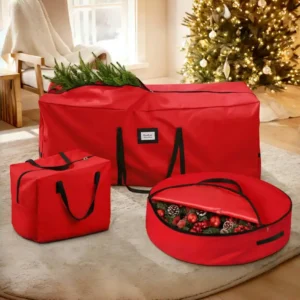
Check the sample against the approved specification and artwork. For custom storage bags, this may include body fabric, window film, zipper, handles, printing, label and retail packing.
5. Control changes and repeat orders
Require written approval before material or structural changes. A repeat order is not automatically identical to the first production run.
Great Shine’s OEM, ODM and private-label manufacturing workflow can support specification development and sample review. The importer remains responsible for confirming the legal requirements and evidence needed for its target market.
What should an importer send in the first RFQ?
A useful RFQ gives the supplier enough information to propose a measurable packaging construction. Include the destination Member States, sales channels, packed-product dimensions, material preference, target packaging weight, artwork, traceability requirements, evidence list and change-approval rules.
This produces a better discussion than asking, “Is this PPWR compliant?” Compliance depends on the finished packaging, its legal category, evidence, labels, market and effective requirements.
FAQ
Does PPWR apply to packaging imported together with a product?
Yes. PPWR applies to packaging placed on the EU market, including packaging containing imported products, subject to the regulation’s scope and specific provisions.
Is a supplier’s PPWR declaration enough for an EU importer?
Not by itself. The importer should verify the conformity assessment, technical documentation, EU declaration, labels, manufacturer details and the connection between those records and the actual packaging version.
Must every plastic package contain 35% recycled content in 2030?
No. PPWR uses different categories, percentages, exclusions and calculation rules. The 35% figure relates to “other plastic packaging” and follows the regulation’s staged timing.
Do EPR registrations replace product-level PPWR documents?
No. Extended producer responsibility registration and product-level conformity documentation address different obligations. Importers may need both, depending on their role and markets.
Can Great Shine certify that a buyer’s packaging is PPWR compliant?
Project-specific compliance should not be inferred from a general supplier statement. Great Shine can discuss materials, construction, samples, specifications and available supporting documents; the EU economic operator should confirm the final legal assessment.
Request a Packaging Review
Preparing a new storage bag, fabric organiser or private-label packaging project for the EU? Send Great Shine the product dimensions, expected order quantity, target market, material preference, logo artwork and document requirements through the contact page. The team can review manufacturability, sampling and packaging options before quotation.
Image Plan
Internal Links
Official Sources
- Regulation (EU) 2025/40 on packaging and packaging waste
- European Commission packaging waste overview
- European Commission PPWR guidance
Author and Review Notes
- Author: Great Shine editorial team
- Technical reviewer:GraceJi
- Experience statement: Add only verified years, projects or case examples before publication.
- Last legal review: 31 August 2026.