Check a storage box against an identified specification and approved reference, then record how you inspected it and what you found. Assemble the box, measure it, examine its support panels and seams, and try the agreed contents and handling method. Finish by checking the folded product and retail packaging. A list of defect names alone will not tell an inspector how to make these decisions.
This checklist focuses on fabric storage boxes and bins with the components relevant to their design. Apply only the checks that match the quoted construction. A molded container or woven basket needs a different inspection plan.
Prepare the inspection reference
Before opening the sample, record its ID, style, color, revision and packing condition. Keep the specification, dimensioned drawing, approved material references, artwork and packaging instructions available during the review.
Identify any prototype substitutions. If the sample uses a temporary fabric or logo, record what it can be approved for and what still needs checking. An approval of the shape should not silently become approval of a different production material.
For repeatable measurements, agree the assembled condition, measurement points, tool and tolerances. Use the same method for the sample and production checks. The fabric storage bin specification checklist can help record these requirements before inspection.
For a range of sizes or constructions, identify the lead sample and record which checks must be repeated for each variation. Do not extend an approval to a larger bin or a different panel layout without confirming the applicable checks.
Assemble and inspect the box before loading it
Unpack the product and check that all required panels and accessories are present. Assemble it according to the intended instructions on a level surface. Note any step that needs force, an unclear instruction or a part that cannot be fitted as shown.
Check that the base sits in the intended position and the support panels do not obstruct the lid, opening or fold lines. Examine the interior as well as the visible exterior. Packaging creases and assembly difficulties should be recorded while the received condition is still clear.
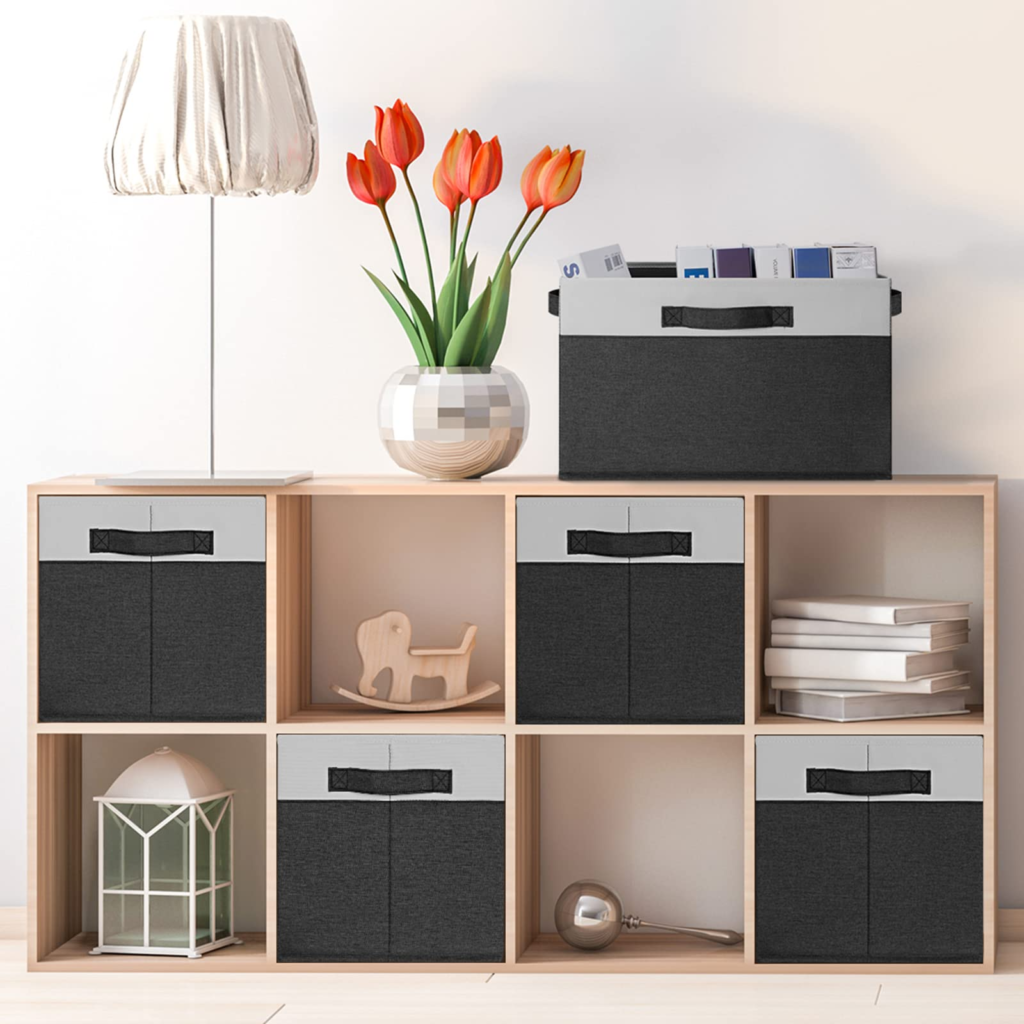
For a produced Great Shine lidded-box configuration, the reference includes 80 gsm polypropylene non-woven fabric, 2 mm cardboard support, a front PVC window and an attached lid. Those details identify what to check on that configuration; they do not establish a load rating or a universal tolerance for every storage box.
The fabric storage bin specification reference (PDF) identifies three produced configurations and their assembled external sizes. Use the selected configuration as a starting reference, then record actual sample measurements and agreed tolerances in the inspection sheet below. The reference itself is not an inspection result.
Use an action-based sample inspection sheet
Record an observation or measurement for each applicable row. “Pass” is meaningful only when it is compared with an agreed requirement. Where a limit is missing, record the observation and request a decision instead of inventing one.
| Inspection item | How to check | Reference to use | Result to record |
|---|---|---|---|
| Assembly and completeness | Count components and assemble using the intended instructions | Component list and assembly instructions | Missing parts, difficult step, photo and sample ID |
| External and usable dimensions | Measure at the agreed points with the box in the specified condition | Drawing, measurement method and tolerances | Actual readings and measurement photos |
| Base and support panels | Seat the base; inspect alignment, exposed edges and interference with folds | Approved construction and panel layout | Gaps, uneven fit or obstruction, with location |
| Fabric, lining and window | Compare identified materials and inspect for visible damage or separation | Material specification and approved references | Material mismatch or defect location; further verification needed |
| Binding and seams | Examine inside and outside edges; check skipped stitches, open seams and loose ends | Approved workmanship criteria and reference sample | Defect type, location and close-up photo |
| Lid or zipper | Open and close through the intended path without forcing it | Approved operation and closure requirements | Catching, misalignment or incomplete closure |
| Handles | Inspect attachment, then perform only the agreed loaded handling check | Handle design, load, method and acceptance criteria | Contents, measured load, method and observed change |
| Folding and recovery | Fold and reopen using the intended packing method | Approved folded format and appearance criteria | Fold interference, panel displacement or lasting distortion |
| Logo, labels and retail pack | Compare artwork and pack components; scan the intended barcode | Approved artwork, barcode file and packing specification | Position, readability, missing items or incorrect code |
Material identity and hidden board thickness may require component records or a separately agreed check. Do not cut an approved reference sample apart without agreeing how it will be retained or replaced.
Check function with the intended contents
Use the agreed contents when checking loading, lid access and handling. Record the contents and their measured weight where relevant. An empty box cannot demonstrate how its walls and handles behave when loaded.
For a shelf product, check insertion, removal and access in the specified opening. A box can meet its external drawing while still being inconvenient to pull out or open in the intended location. Record the shelf conditions separately from the box dimensions.
A brief handling check is not a rated load test. Claims about load, stacking or repeated use need an agreed method and supporting results. Do not assign a carrying capacity from fabric weight, board thickness or a photograph.
Record approval, revisions and unresolved items
For each issue, identify the sample, component and location. Attach the relevant photo or measurement and state the requirement it was compared with. Avoid comments such as “make it stronger” without explaining what needs to change or how the result will be checked.
Separate accepted items, requested revisions and checks that could not be completed. Give the revised sample a new reference and repeat the affected checks. A new lid construction, for example, needs another closure and packing review even if the fabric remains unchanged.
Keep the approval record with the final specification and the retained sample. Confirm who can approve later changes and which version production should follow.
Use the approved reference for shipment inspection
Before inspecting a bulk order, agree the inspection scope, selection method and acceptance criteria. Identify the styles, colors and cartons represented in the inspection. A sample taken from one carton does not by itself establish the condition of the whole shipment.
Use the same measurement and functional methods agreed during sample approval. Compare production units with the final approved reference, not an early prototype. Record the unit or carton identity for each observation so the supplier can locate the affected goods.
Check the color and quantity allocation, retail-pack components, carton marks and actual packing arrangement. For the referenced lidded-box configuration, 12 pieces per carton is an existing packing specification. It applies only when that configuration and packing plan are retained.
Log deviations separately from the disposition decision. The report should show whether goods need rework, replacement, further inspection or buyer review, who authorized the decision and what follow-up evidence is required. Approval of a development sample does not replace inspection of the goods produced for the order.
Keep quotation questions in the purchasing brief
Use our storage box RFQ and quotation comparison guide to agree what is being purchased and which inspection services are included. Use this checklist to examine the actual sample and shipment against those requirements.
For a new design, identify the relevant storage box and fabric bin configuration and send its intended contents, measurement requirements and inspection needs with your brief.
Questions about storage box inspection
Can a photograph confirm board thickness or handle strength?
It can show visible construction and defects, but cannot establish those properties alone. Use the specified component evidence, measurements and agreed handling or testing method.
Should every style use the same checklist?
Use common record fields, then adapt the actions to the construction. Mark irrelevant checks as not applicable and identify additional requirements for lids, dividers or other components.
What if no dimensional tolerance was agreed?
Record the actual measurements and method, then request clarification. Do not turn an invented tolerance into an acceptance decision after the goods have been made.