By Grace Ji, Sales Director at Great Shine · Updated August 2026

For storage bag buyers, odor after unpacking is a product-quality concern worth including in the specification and sample review.
A complaint about odor should be investigated using the actual product and packing conditions, not treated as proof of a particular chemical.
Assess customer complaints against records for the affected batch. Do not assume a complaint proves a ranking penalty, platform restriction or a specific manufacturing cause.
This guide outlines material, process and packing questions to investigate with your supplier before agreeing a storage bag order.
Where the Smell Actually Comes From
Several materials and processes may need investigation. The following four areas are a starting checklist, not a diagnosis of every product.
Review the materials, production, packing, storage and transport conditions together. The source and persistence of an odor cannot be established from a general description alone.
The 4 Odor Sources in Storage Bags
Source 1: PVC Coating and Lamination
Coatings and laminations are one area to review. Ask for the actual coating formulation and documentation instead of assuming every coating contains the same additives.
Appearance or stickiness does not reliably identify a coating. Ask the supplier to document the material and arrange appropriate analysis when needed.
Compare the proposed coating with the existing specification and an approved sample. PU or acrylic should not be described as automatically odor-free or waterproof; evaluate the finished product and any applicable test requirements.
Source 2: Low-Grade Dye Fixatives
Review dyeing and finishing documentation for the selected fabric. Do not infer the chemical formulation or supplier motivation from price alone.
Odor description alone cannot identify formaldehyde or another substance. Use appropriate material documentation and testing for the question being investigated.
If certified material is required, verify the certificate holder, validity, product scope and its applicability to the supplied material. Certification is not an unconditional odor-free guarantee for the finished bag.
Source 3: Adhesive in Lined Bags
For lined or multilayer bags, confirm the adhesive or bonding method, its documentation and the finished construction.
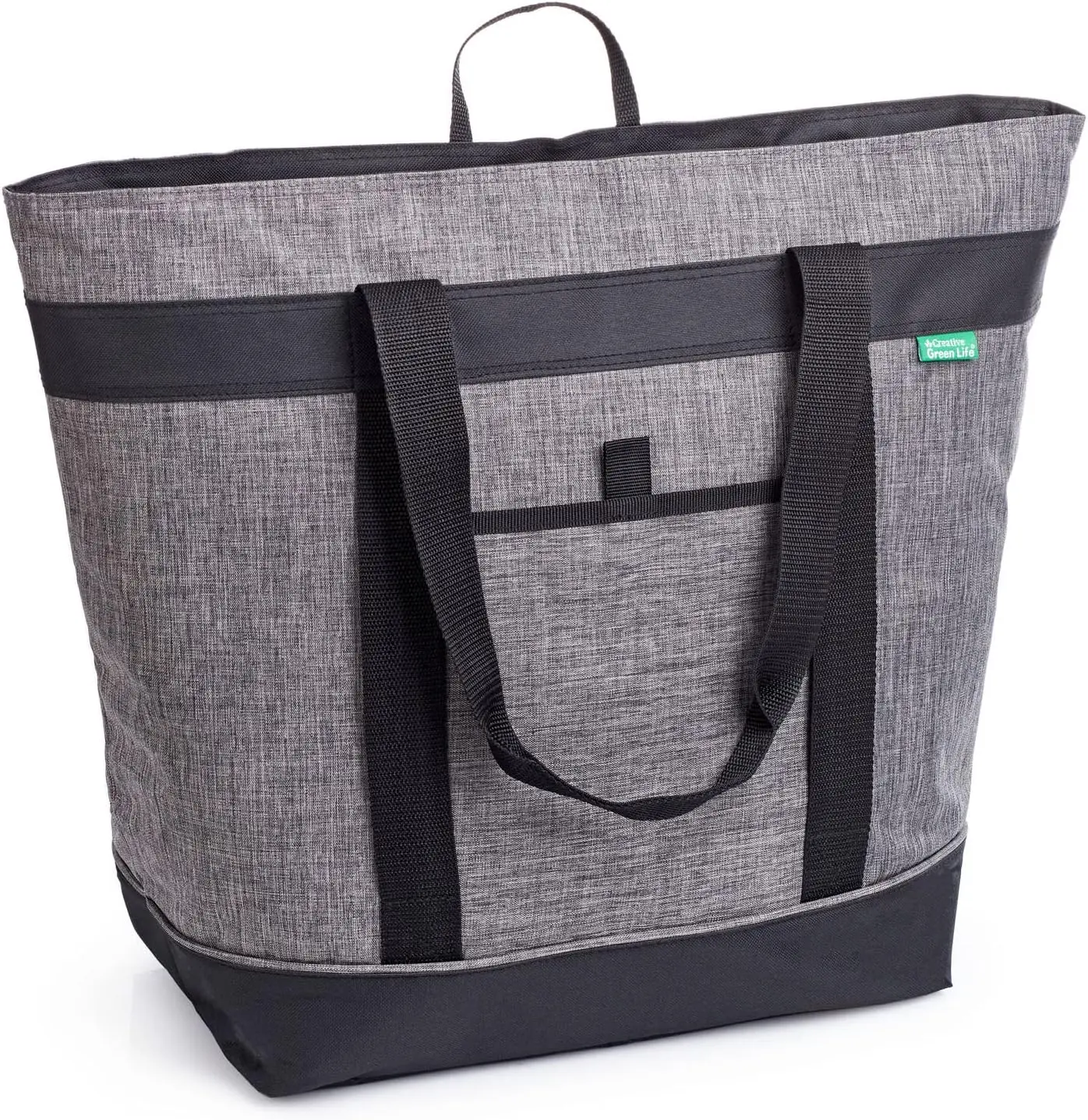
Compare the lining, outer fabric and finished sample under agreed conditions to help investigate the issue; this does not identify a chemical by itself.
Discuss alternative adhesives or bonding methods with the supplier. Do not claim zero VOC or a fixed cost increase without product-specific documentation and quotation.
Source 4: Printing Ink and Logo Application
Review the actual printing system, application and curing requirements. Ink chemistry and process requirements should be confirmed for the selected product.
Inspect the printed sample for the agreed appearance and curing requirements. A smell or rub check alone is not proof of chemical compliance.
Agree the printing method and its documented curing conditions before packing. Do not apply one universal curing time to every ink and fabric.
Why Requirements Need to Be Agreed Before Production
Ask suppliers to explain the proposed specification and how they will verify it, rather than assuming why a factory selected a material.
Obtain a project-specific quotation for any material or process change.
Compare the change in unit cost with the order quantity, required testing and packing work. Generic cost ranges are not a confirmed quotation.
Make odor expectations and acceptance conditions explicit during sampling, alongside other product requirements.
Request the supplier response in the specification and resolve differences before approval.
Clear requirements help a supplier propose options, but do not replace sample approval and verification.
What to Ask Your Supplier
Include these five review points in the supplier questionnaire and agree the applicable requirements:
-
Coating: identify the specified material, proposed alternatives, supporting documentation and the sample review needed.
-
Dyeing and finishing: request the relevant material documentation and verify any claimed certification scope.
-
Bonding: confirm the adhesive or lamination system and evidence relevant to the intended product requirements.
-
Printing: confirm the selected ink system and documented curing conditions before packing.
-
Packing: agree sample conditioning, packing conditions and acceptance checks for the finished product.
For a new storage bag order, include odor expectations, material documentation, sample approval and packing conditions in the specification. Explore our custom storage bags manufacturing program to discuss the product and the evidence required before bulk production.
Material and Process Checks to Confirm
The following checks are proposed specification items, not a claim that a universal odor-free process has been implemented for all orders.
To assess whether a material or process change reduces complaints, compare:
- Order and batch records with a defined comparison period
- Complaint and return records with a documented counting method
- Permission to publish any customer identity and results
The cost example below uses hypothetical figures. Assess actual results using your own order, complaint and return records.
Illustrative Cost Calculation
Hypothetical illustration only: assume 10,000 pieces and a confirmed additional unit cost of $0.31. Actual costs and avoided losses require their own evidence.
Extra production cost = 10,000 x $0.31 = $3,100. If avoided losses were hypothetically $1,241, estimated net benefit would be $1,241 – $3,100 = -$1,859. This example does not demonstrate savings or a platform-ranking benefit.
FAQ
Why do my storage bags smell like chemicals?
Review coatings, finishes, bonding and printing along with packing and storage conditions. The actual source requires product-specific investigation.
How do I get odor-free storage bags from my supplier?
Agree odor expectations, materials, documentation, sample approval and packing conditions with the supplier. Do not rely on a generic material substitution or a fixed unit-cost claim.
Is OEKO-TEX certification worth it for storage bags?
Verify that any certificate is valid and applies to the material supplied. It should not be used as a promise that the complete bag has no odor.
Can the smell go away after airing out?
The effect of airing depends on the product and conditions. Follow the supplier care instructions and investigate persistent concerns; do not promise a universal airing period.
How much does it cost to switch to odor-free materials?
Request a quotation for the specified material and process changes. Calculate the additional cost using the actual quantity and confirmed unit-cost difference; savings require separate supporting evidence.
Grace Ji is Sales Director at Great Shine, a Chinese OEM manufacturer of storage bags, cosmetic bags, packing organizers, and seasonal storage products. Contact her at sales11@g-shine07.com.