Storage bags are the volume category of the storage world: low unit prices, high piece counts and a spec sheet where every line is a choice between three materials. Buyers who know the material ladder and the MOQ mechanics order better and pay less per use. This guide covers the material comparison, the MOQ structure for wholesale runs, and the QC checks specific to sewn soft storage.


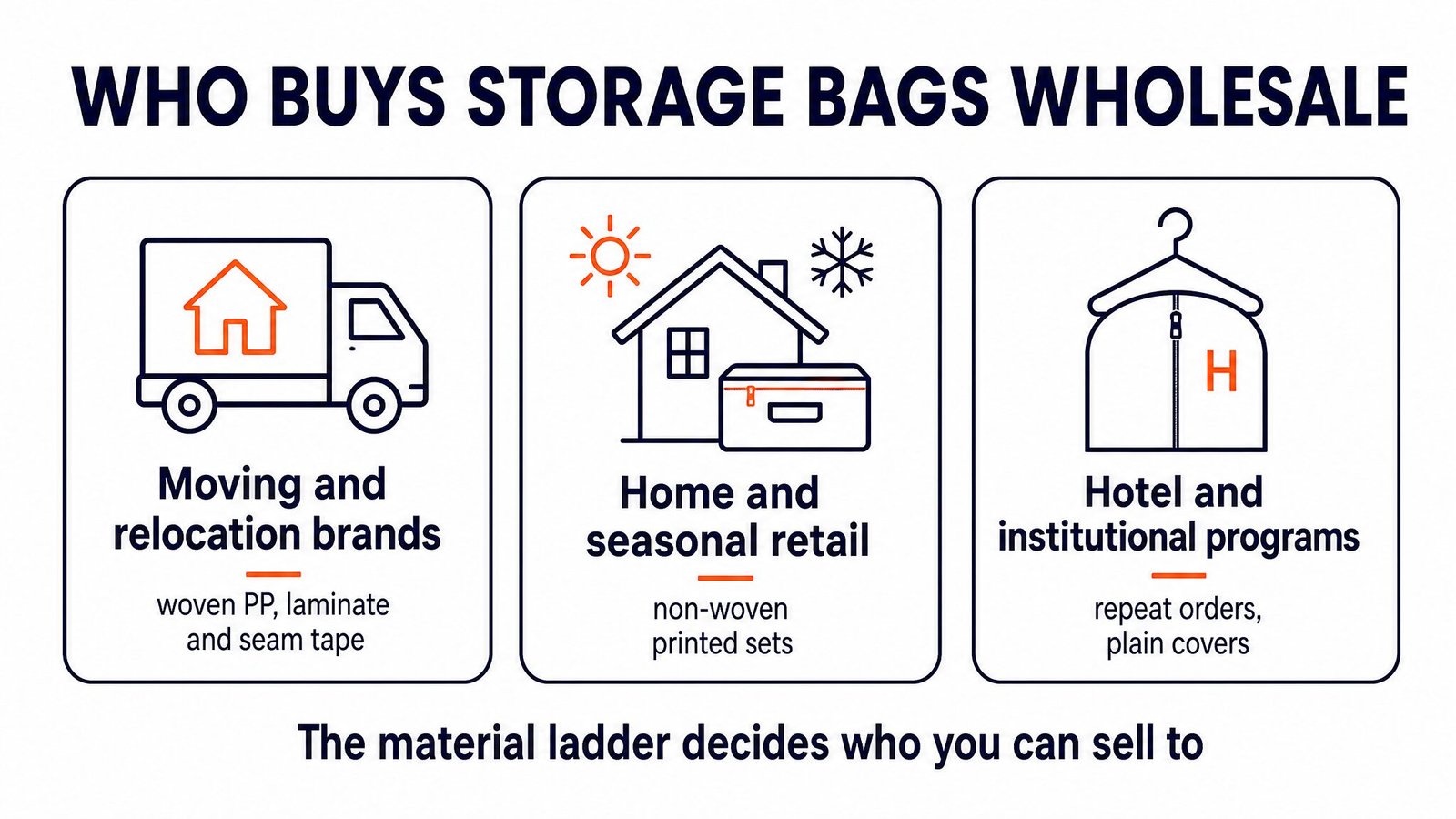
Who buys storage bags wholesale
Home-organizer retail brands building private-label lines, moving-supply distributors, e-commerce sellers bundling storage solutions, and corporate or institutional buyers outfitting uniform and linen programs. Retail brands care about shelf presence and colorways; movers care about load rating; resellers care about compressibility for cheap freight.
The material ladder
| Material | Strengths | Typical products |
|---|---|---|
| Non-woven PP | Cheapest, recyclable positioning, accepts print well | Seasonal storage, under-bed boxes, gift and promo sets |
| Woven PP, laminated | Water-resistant, tear-resistant, load-bearing | Moving bags, bulk storage, industrial covers |
| Polyester Oxford 420D – 600D | Durability, premium look, zippers age well | Quilted storage, closet organizers, retail lines |
| Cotton / canvas blends | Breathable, natural positioning | Garment storage where airflow matters |
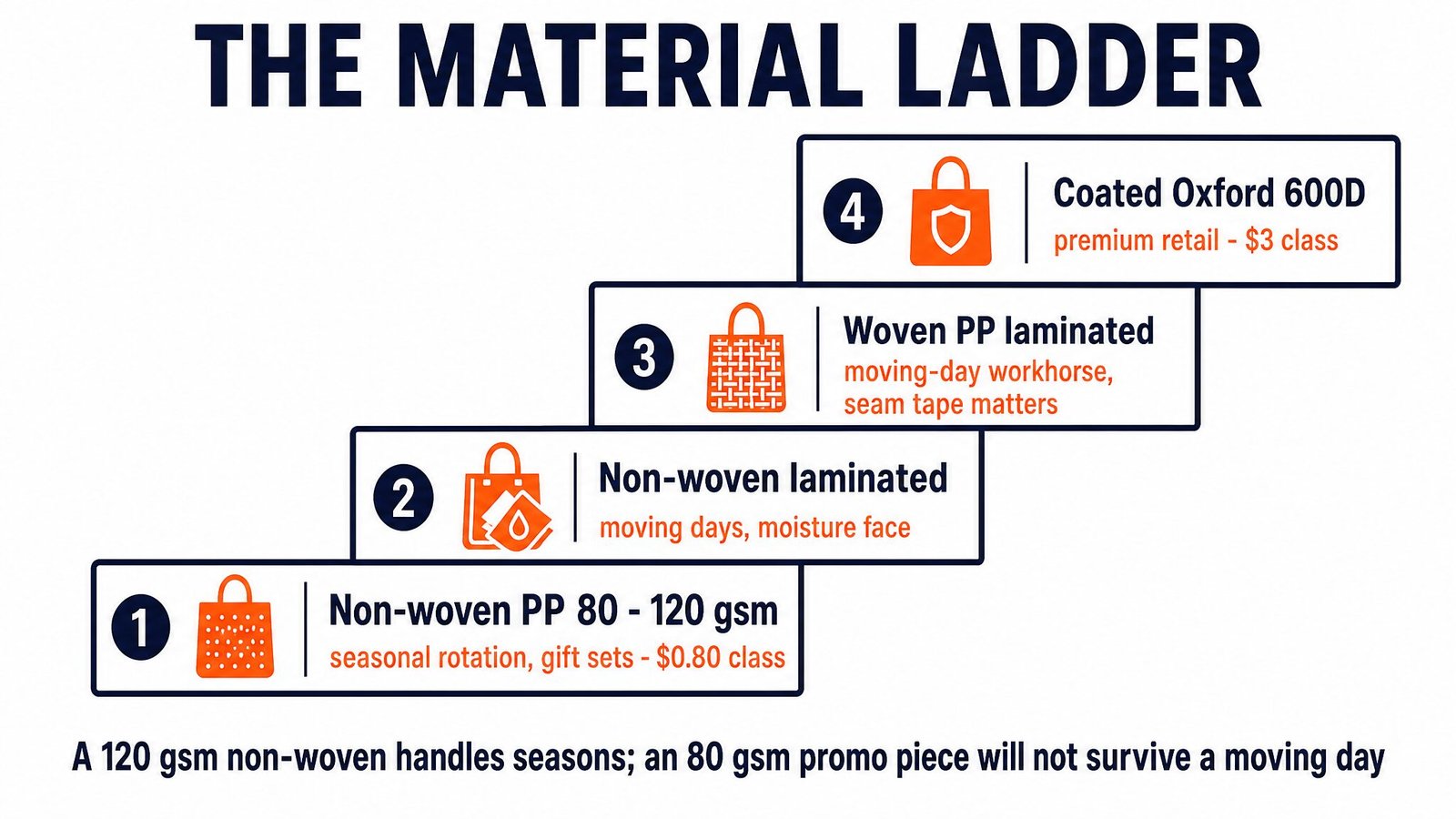
Non-woven is not weaker by definition; gsm is the number that decides. A 120 gsm non-woven handles seasonal rotation, while a 80 gsm promotional piece will not survive a moving day.
MOQ and price structure
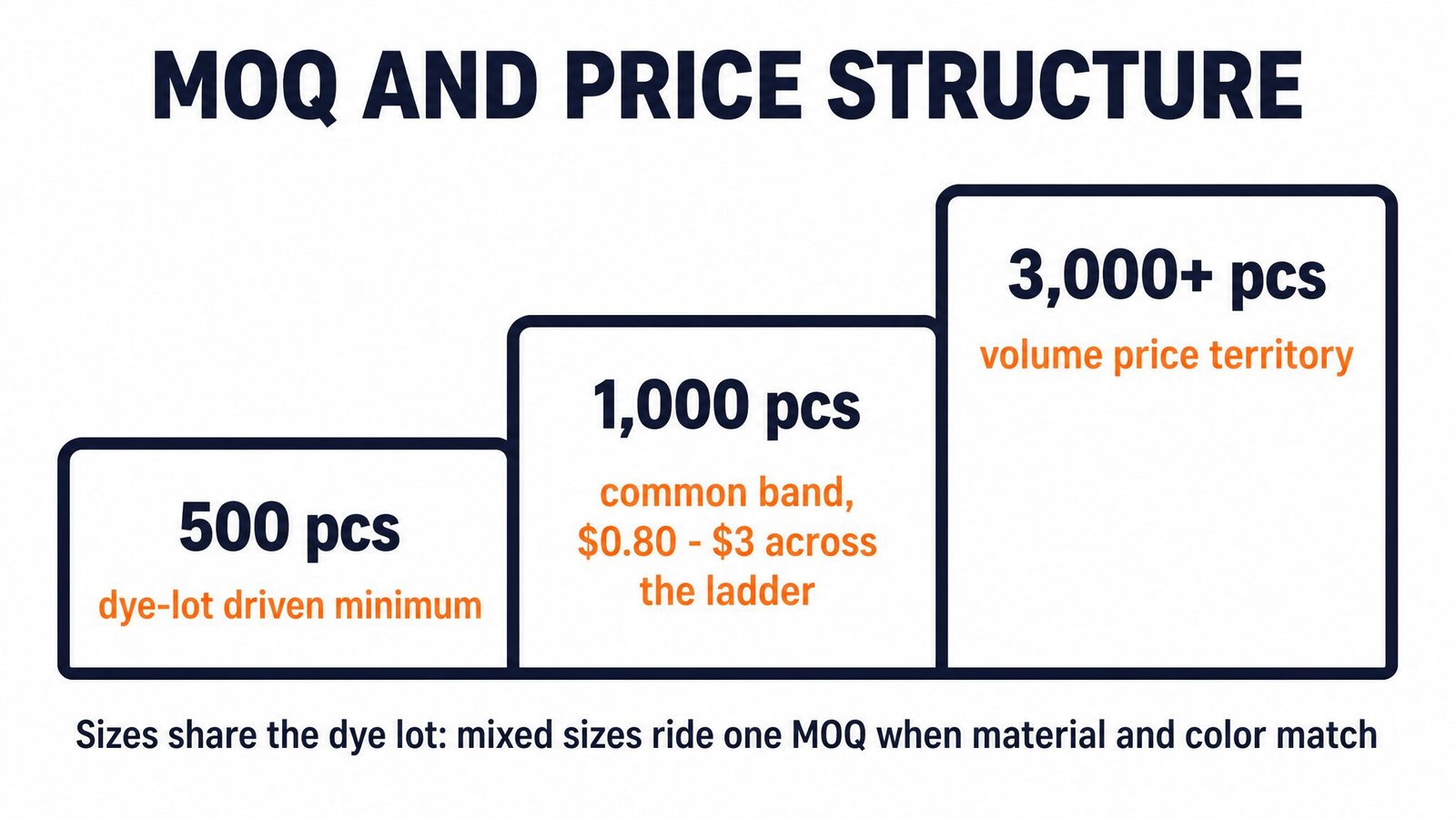
Public B2B listings for custom storage bags cluster at 500 to 1,000 pieces minimum, roughly $0.80 to $3 per unit across the material ladder, with non-woven at the bottom and coated Oxford at the top. Storage is a fabric-MOQ category more than a decoration category: the minimum often follows a dye lot, and mixed colorways share it if the base material is the same. Volume breaks typically arrive at 3,000 and 5,000 pieces, which is where distributor pricing starts.
QC checks for sewn storage
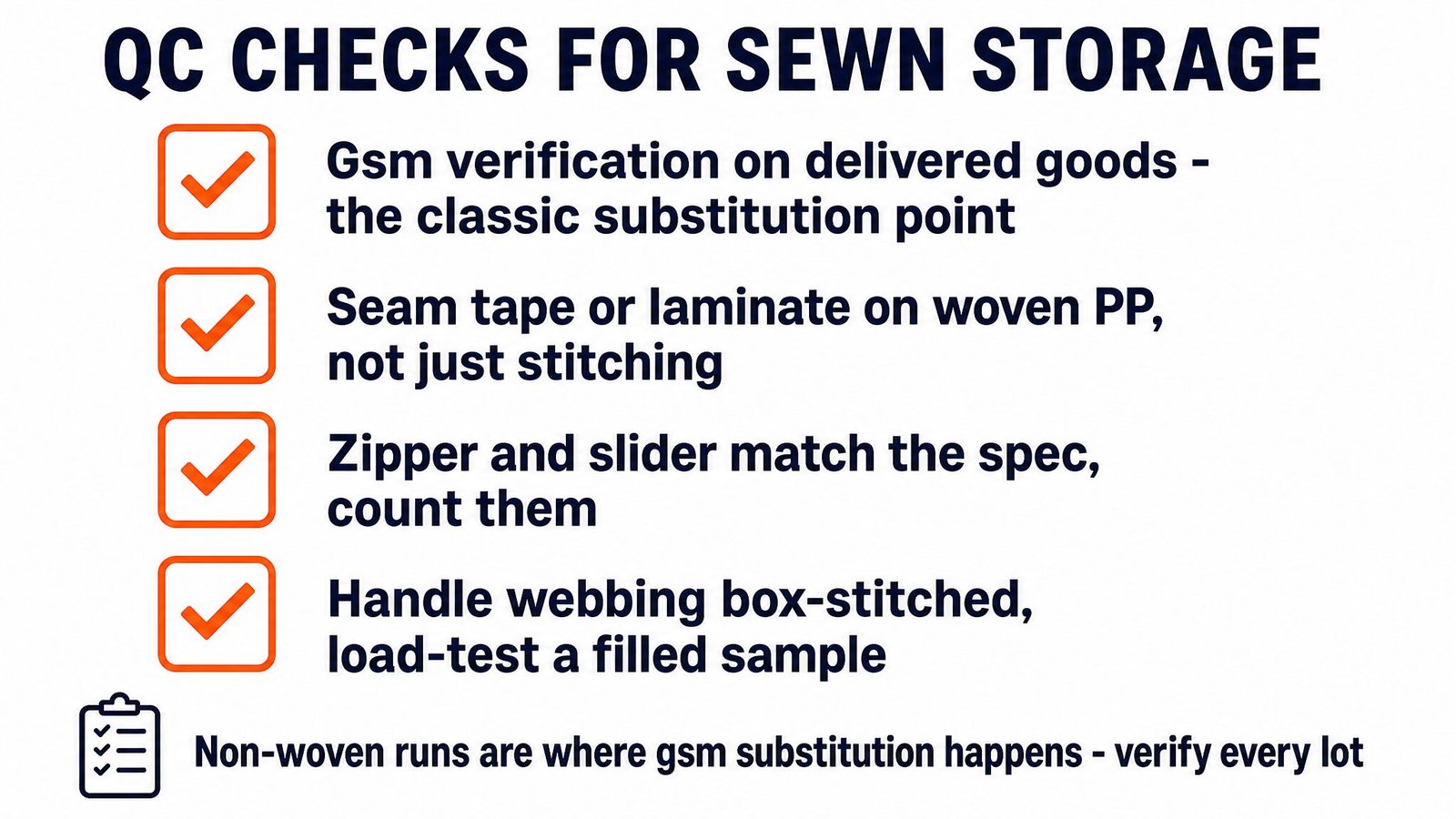
Handle and seam load testing is first, with the bag filled to stated capacity, because handle attachment is the standard field failure. Zipper or closure cycling for anything with a slider. Gsm verification on the fabric actually delivered, since material substitutions between sample and bulk are the most common sourcing complaint in this category. Colorfastness matters for dyed fabrics near clothing. Dimension check against the spec sheet, folded and filled, because sewn storage grows or shrinks with the fabric batch.
Packaging and freight
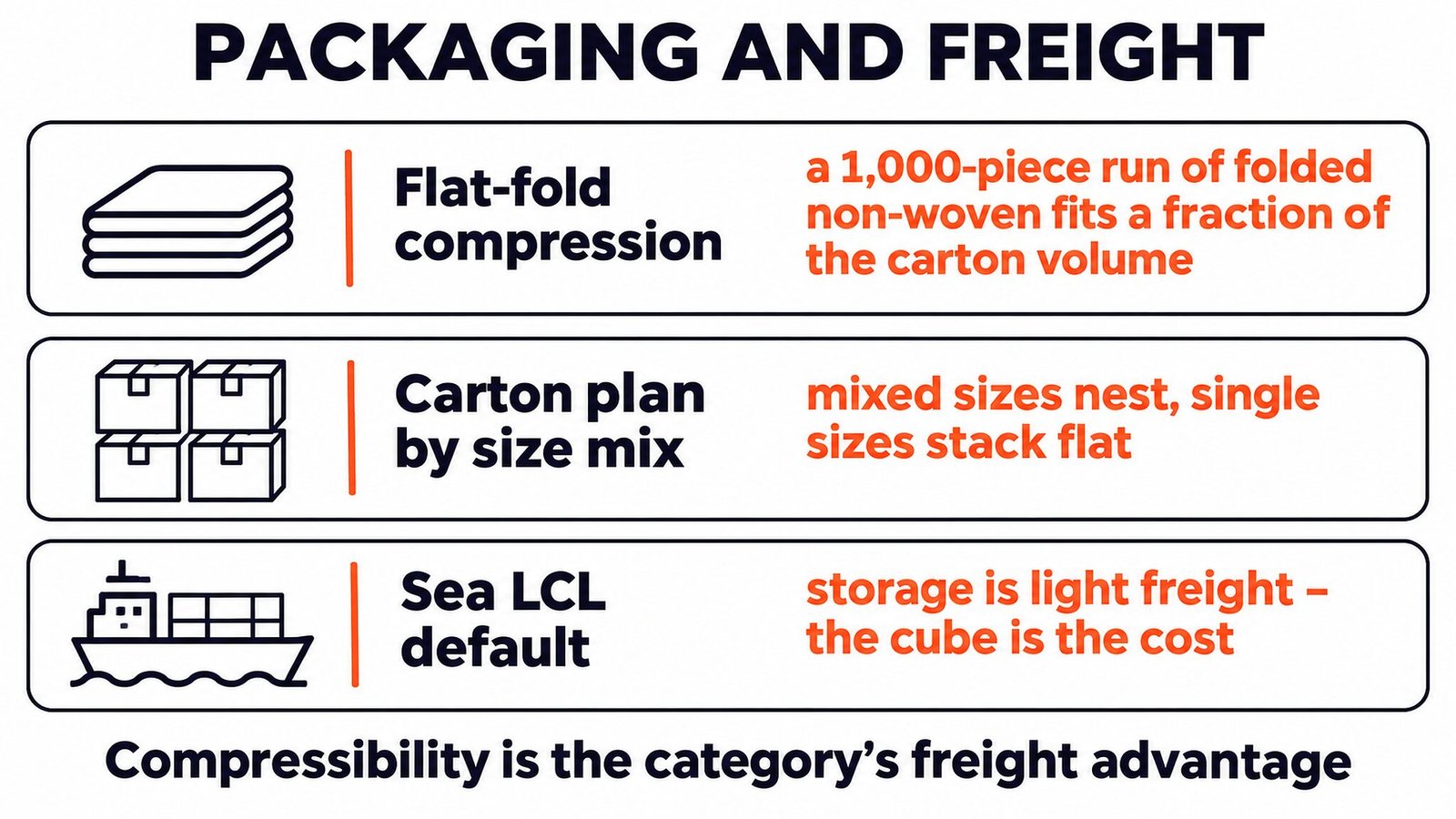
Storage bags compress and that is their freight advantage: a 1,000-piece run of folded non-woven bags fits a fraction of the carton volume the filled bags imply. Confirm polybag-by-dozen vs individual polybags early, and remember that retail lines need header cards or printed bags, which add an artwork cycle to the timeline.
Questions buyers ask
Can we mix sizes in one MOQ?
Usually yes if the material and color are identical, since sizes share the dye lot. Different materials are always separate MOQs.
What gsm do we need for moving-day use?
For woven PP moving bags, look at the laminate and the seam tape rather than gsm alone; for non-woven, 100 gsm is the working floor and 120 gsm is the comfortable spec.
Do storage bags need certificates?
For EU-bound textile products, REACH and AZO-free dye statements are the standard ask; for the US, the fabric flammability rules that apply depend on the product class, and storage bags are generally outside children’s-product rules but not outside general textile compliance.
Related reading
Non-woven vs polyester storage bags (the two main materials head to head) · What is oxford fabric (the top of the ladder) · Moving bags vs cardboard boxes (the use case that tests the material)