A makeup organizer stops working when it does not match the collection it holds. Too few slots and lipsticks pile on top; too many and palettes sit in slots sized for brushes. This guide compares the organizer types by compartment layout, size and material, so you can pick by what your collection actually contains, and includes the checks worth running before buying in volume.


The five organizer types and who each fits
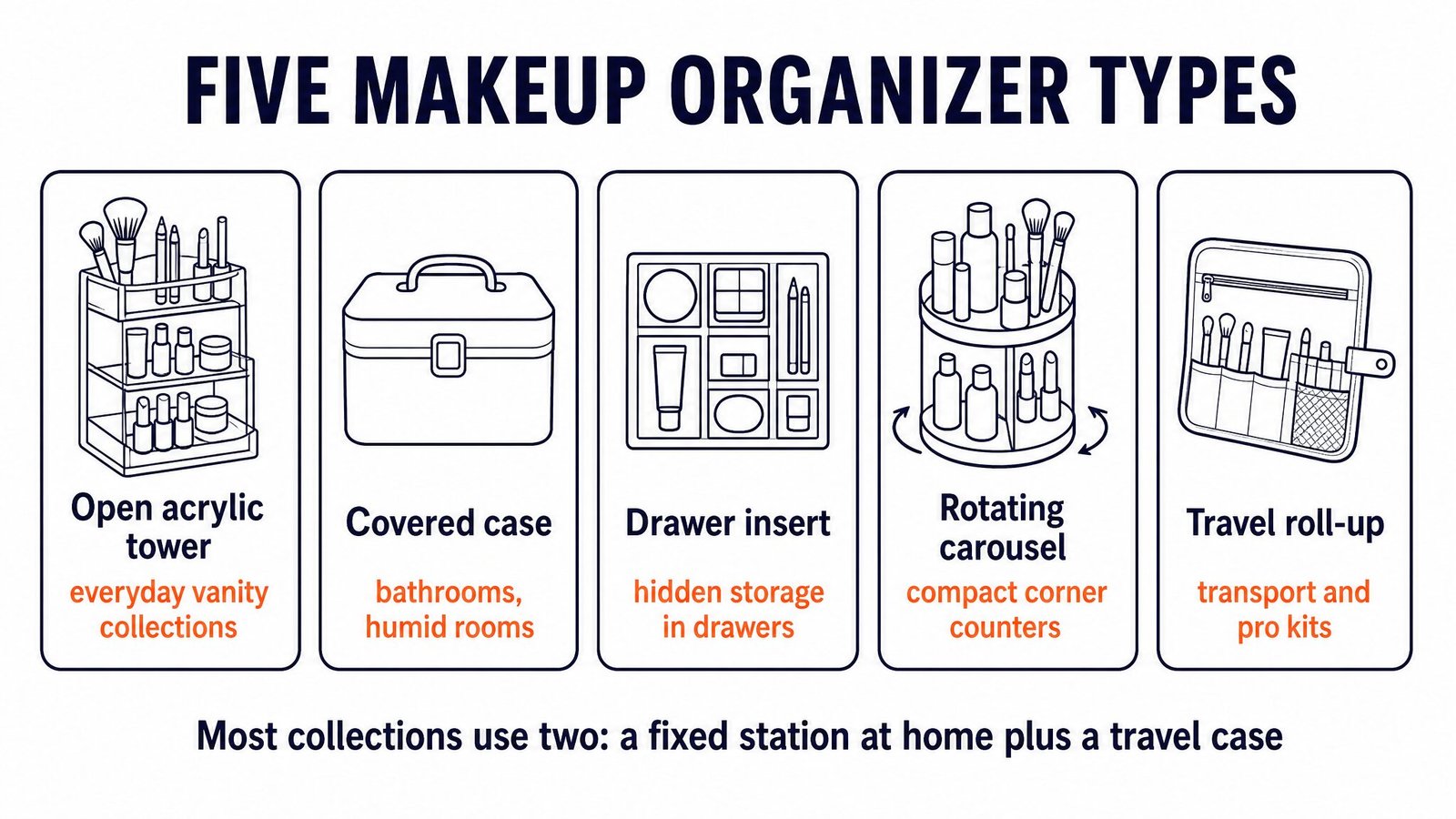
| Type | Best for | Watch out for |
|---|---|---|
| Open acrylic tower | Everyday collections used on a vanity | Dust on open products; needs a weekly wipe |
| Covered or lidded case | Bathroom storage, humid rooms | Harder to grab mid-routine; check hinge quality |
| Drawer insert or tray | Existing drawers, hidden storage | Must match drawer interior dimensions first |
| Rotating carousel | Compact spaces, corner counters | Rotation mechanism and base weight decide stability |
| Travel case or roll-up | Transport, professional kits | Compartment depth limits what fits |
Most collections use two of these together: a fixed station at home plus a travel case. That split is worth deciding before buying anything, because it decides the size budget for each.
Size by collection, in numbers
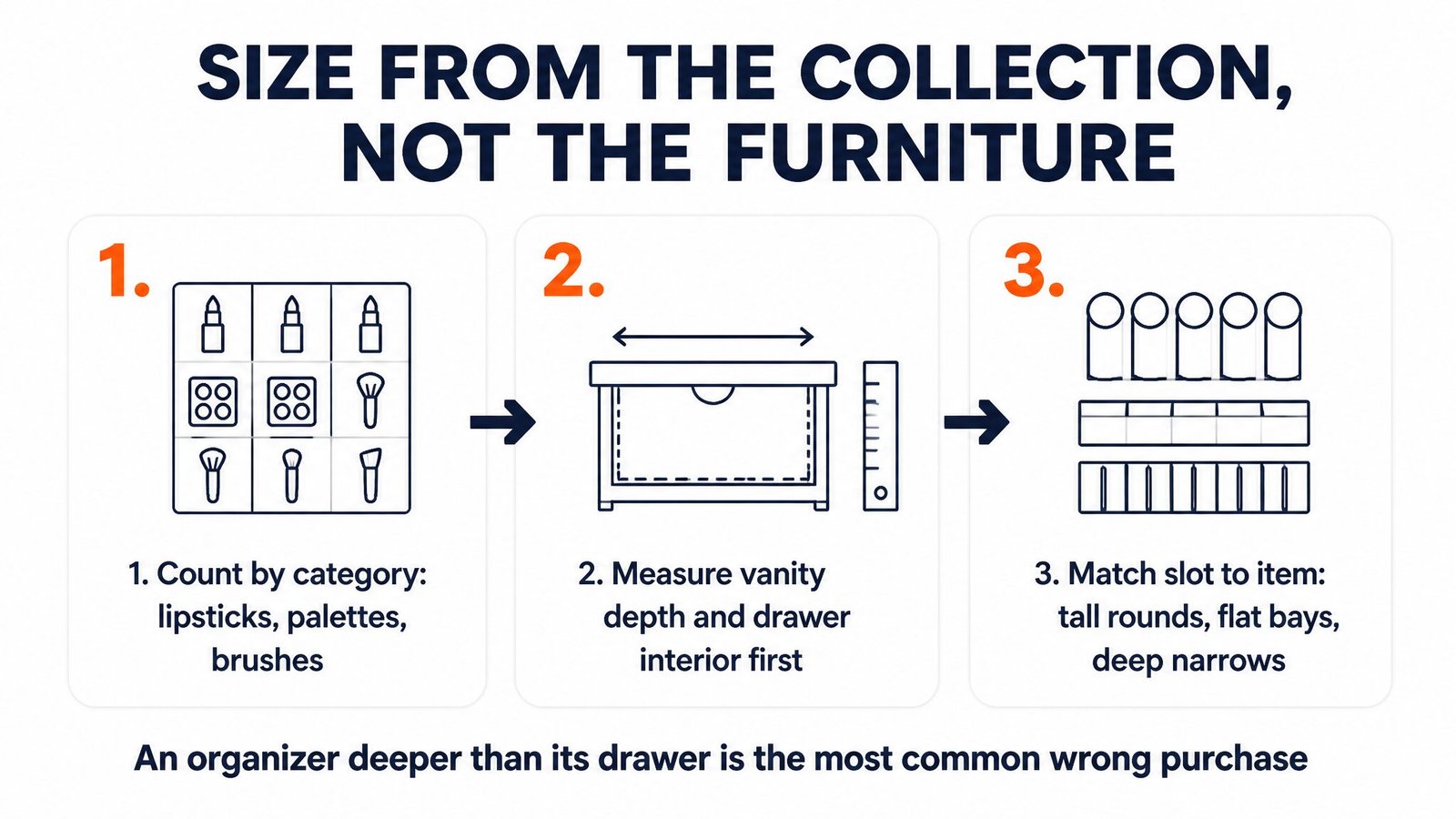
Suppliers and buying guides describe organizer sizing the same way: start from the collection, not the furniture. The working method:
- Count by category: lipsticks, foundations and concealers, palettes, brushes, tools. A 24-slot holder suits roughly a dozen lip products plus tools; tiered designs suit mixed collections where palettes dominate.
- Measure your space first: vanity depth and drawer interior. An organizer deeper than the drawer it is meant for is the single most common wrong purchase.
- Match slot to item: foundations need tall round slots, palettes need flat square bays, brushes need deep narrow ones. A good organizer lists its slot dimensions; a vague one just says “24 slots”.
- Leave growth room: one empty bay per category keeps the system surviving the next purchase.
Materials compared
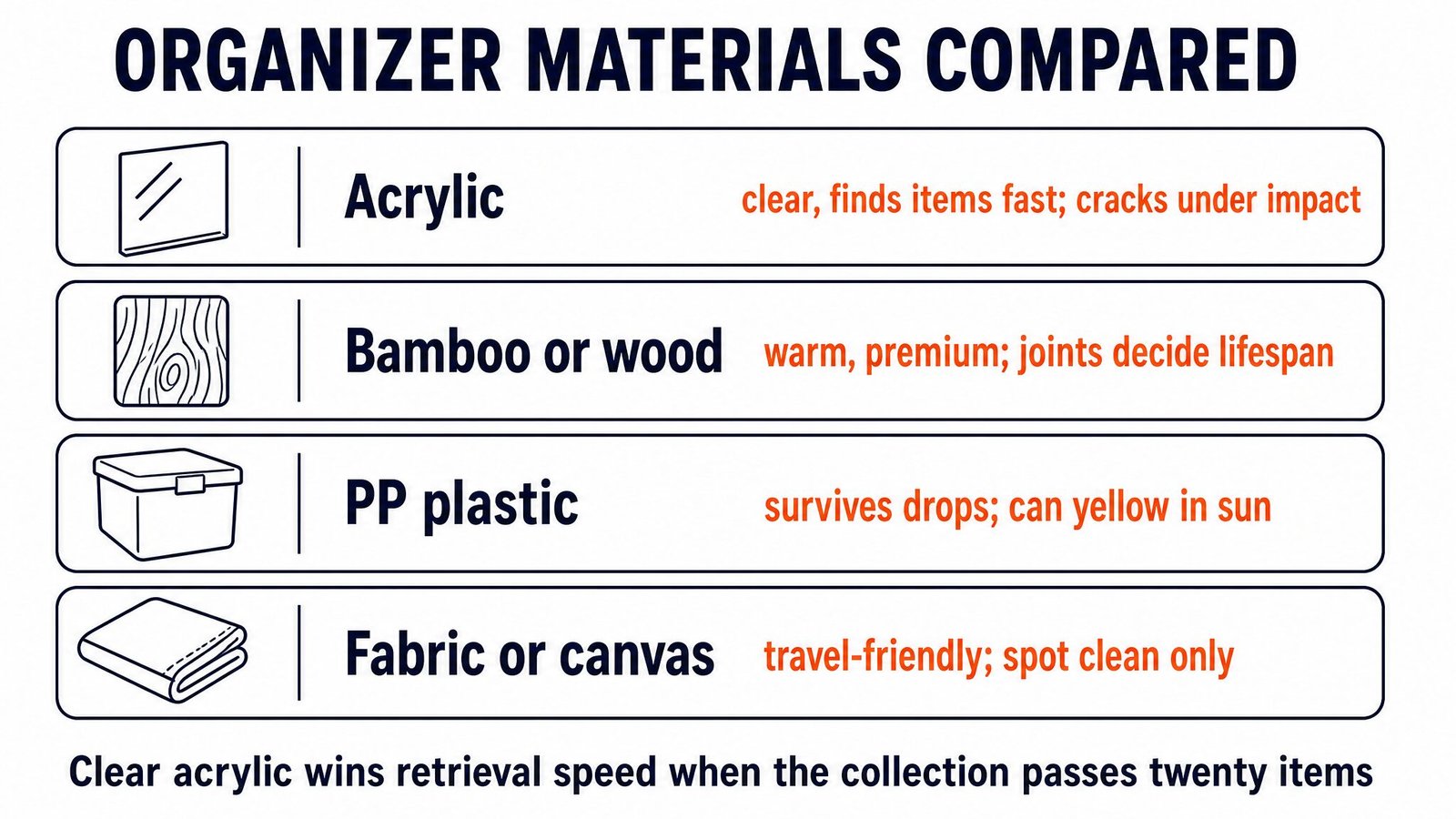
| Material | Look | Durability | Care |
|---|---|---|---|
| Acrylic | Clear, finds items fast | Cracks under impact; scratches with abrasive cleaners | Mild soap and water; no alcohol on tinted panels |
| Bamboo or wood | Warm, premium, drawer-box style | Long-lasting; joints decide the lifespan | Dry wipe; occasional wood conditioner |
| PP plastic | Utility, light colors | Survives drops; can yellow in sun | Wipes clean; top rack themes vary |
| Fabric or canvas | Soft, travel-friendly | Depends on lining and stitching | Spot clean only, usually |
The clear-acrylic advantage is retrieval speed: you see everything from above, which matters when the collection runs past twenty items. Wood and bamboo win in bedrooms and store settings where the organizer is partly decor. Fabric is for transport, not daily digging.
Stability and cleaning checks before you commit
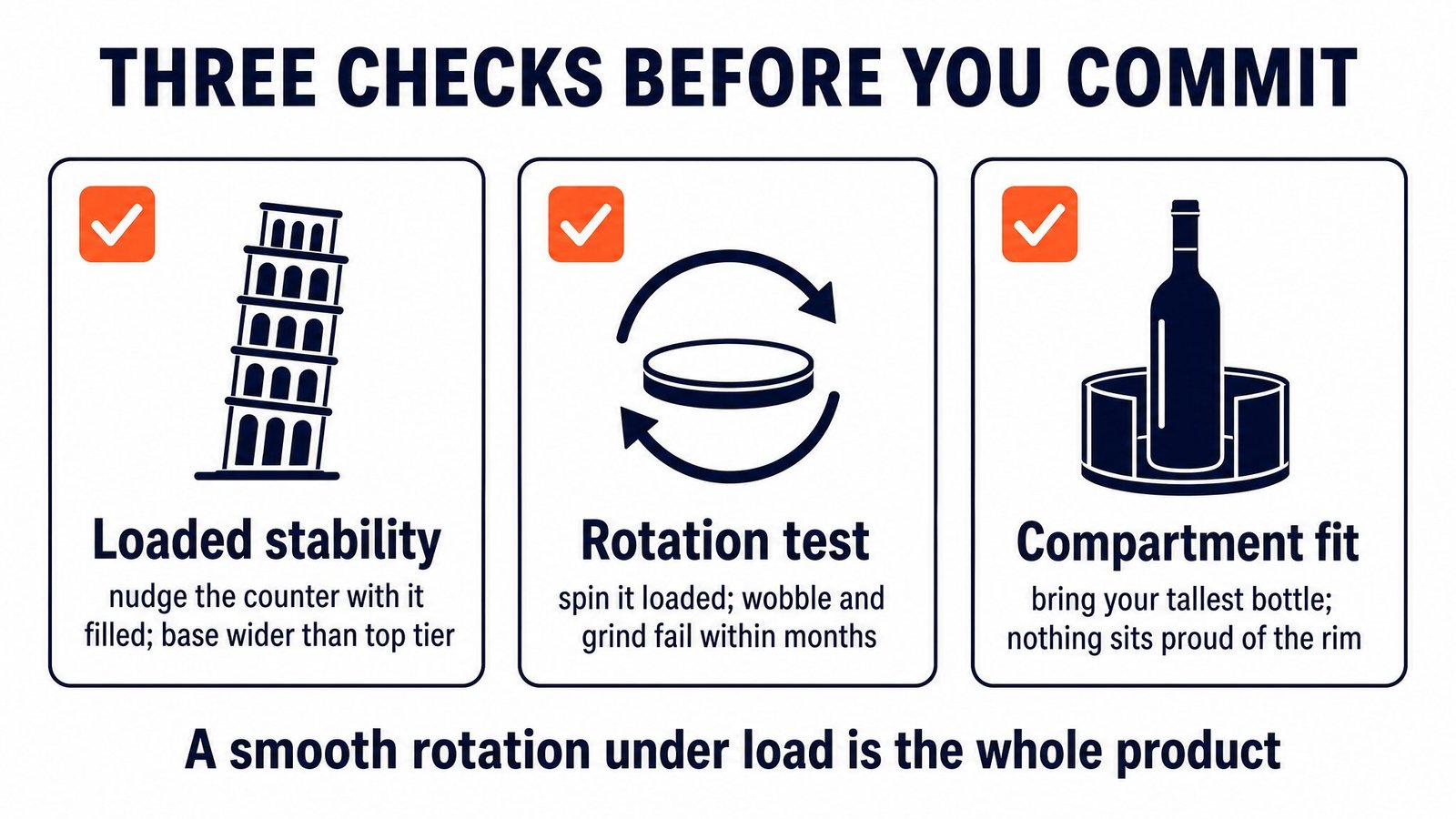
Three checks separate a usable organizer from a frustrating one:
- Loaded stability: fill it and nudge the counter. Tall towers with a narrow base tip when loaded top-heavy; look for weighted bases or a footprint wider than the top tier.
- Rotation test, for carousels: spin it loaded. Cheap carousels wobble, grind or stall within months. A smooth rotation under load is the whole product.
- Compartment fit: bring your tallest foundation bottle. If it sits proud of the rim, dust settles on the cap and the compartment fails at its one job.
For retailers and brands
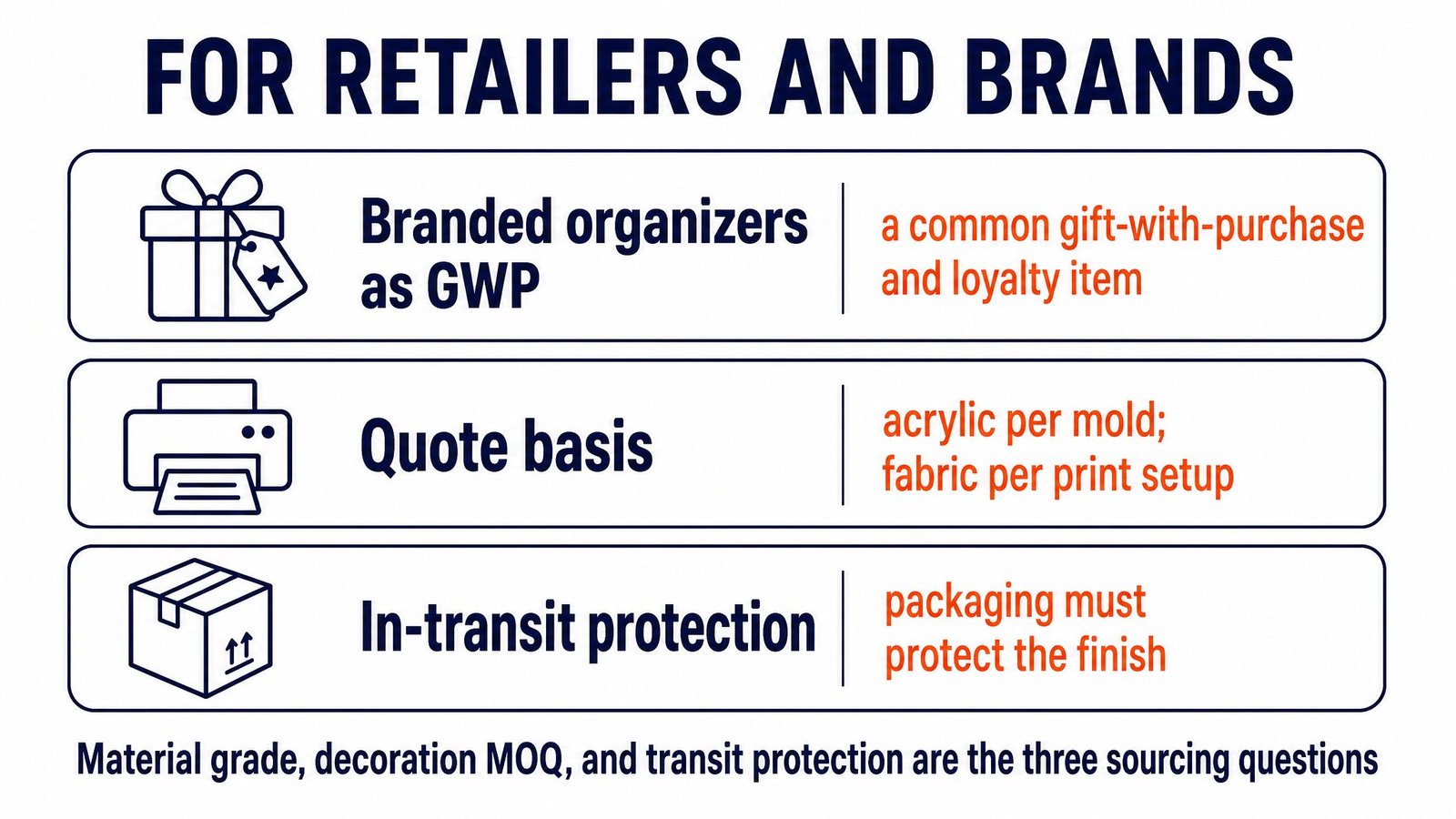
Makeup organizers and cosmetic bags overlap at the brand level: a branded organizer or pouch set is a common gift-with-purchase and loyalty item. When sourcing these in volume, the questions are the same ones in our cosmetic bag guides: material grade and lining, printing or embroidery method and its MOQ, and whether the packaging protects the finish in transit. Acrylic organizer programs are typically quoted per mold; fabric and leatherette programs per print setup.
Related guides: our custom cosmetic bags for gift sets covers branding programs, and the makeup bags program page lists configurations we build.
FAQ
What size makeup organizer do I need?
Size from the collection: count items by category, measure the tallest bottle and the drawer or counter depth, then pick slot counts about 20 percent above your current count.
Are acrylic makeup organizers worth it?
For visibility and daily speed, yes. They scratch if cleaned with abrasives and crack if dropped, so they suit a fixed vanity more than a bag that travels.
Rotating or drawer organizer?
Rotate for corner counters and small surfaces where you work from one seat. Drawers hide clutter and suit shared bathrooms, provided you measure the interior first.
How do you clean a makeup organizer?
Acrylic with mild soap and water, wood with a dry cloth, fabric with spot cleaning. Empty it fully every few weeks; open organizers collect dust at the base of every slot.
Do makeup organizers work for brushes?
Only designs with deep narrow slots or dedicated brush holders. Brushes stood in shallow slots tip, and bristles touch the counter, which defeats the point of drying upright.