Quick answer
Choose a hanging shoe organizer that fits both your shoes and its mounting location. Check the pocket size, filled depth, door or rail compatibility, and stated load limits before installing it. Put clean, dry shoes into suitable pockets, keep the load within the instructions, and make sure the door, cover, or nearby clothing can still move freely.
Plan around your regularly worn shoes. If pockets are too small, the filled panel can bulge and interfere with the door, while the footwear may be pushed out of shape. Leave oversized pairs in another suitable location.
Choose the mounting location first
The two common arrangements are an over-door pocket panel and an organizer that hangs from a closet rail. Their installation requirements are different.
An over-door shoe organizer needs compatible hooks, enough clearance above the door, and room for the filled pockets when the door moves. A rail-hung organizer needs a suitable support and enough clear space beneath and beside it.
Check the maker’s mounting instructions and load limits. Do not substitute a convenient hook, adhesive strip, or thin curtain rod without confirming that it is suitable for the product and load.
Before buying, look at the whole area during normal use. A door may close when the panel is empty but hit a wall, furniture, or clothing once shoes fill the pockets.
Measure the organizer when it is loaded
Flat dimensions do not describe how far filled pockets project. Shoes add depth, and soft panels can bow when their contents are uneven.
Measure the available width, hanging drop, and usable depth. Check where the bottom of the organizer will sit and whether it will contact the floor or catch on objects as the door moves.
For a closet rail, include the organizer’s top attachment in the total drop. Make sure shoes can enter and leave the compartments without brushing neighboring clothing.
For an over-door design, check the door thickness and top clearance against the supplied hooks. A hook that prevents the door from closing correctly is not a suitable fit, even if it appears to hang securely.
Match pockets to footwear
Pocket count is not the same as pair capacity. A large shoe may need its own compartment, while a pocket wide enough for a pair of small slippers may still be too shallow for a bulky trainer.
Use your largest regularly worn shoes to assess the intended fit. Check the opening, depth, and support beneath the shoe rather than only the pocket’s width.
Avoid forcing shoes into a pocket that bends them out of shape. Boots, high heels, or footwear with delicate trim may need a different storage arrangement.
Decide whether pairs will share a pocket or sit next to each other. A visible, consistent arrangement is easier to maintain than fitting each pair wherever a space happens to remain.
Compare clear, mesh, and fabric pockets
Pocket material affects visibility, handling, and cleaning. It does not by itself establish the organizer’s load capacity or durability.

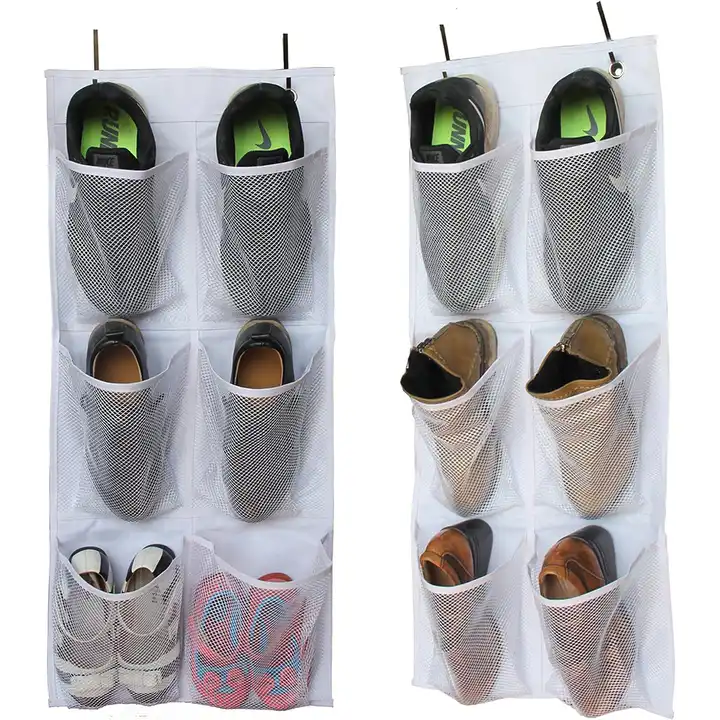
Clear panels make the contents easy to identify. Check how the material bends around the footwear and follow its cleaning instructions to avoid damaging the surface.
Mesh allows you to see much of the shoe and may leave more open area around it. It is still not a drying system or a guarantee against odor. Store footwear only after it is suitably clean and dry.
Opaque fabric can create a quieter visual appearance, but you may need a consistent layout or simple labels to identify the contents. Some designs combine materials to balance visibility and support.
Inspect seams and pocket edges. These areas matter when a shoe is repeatedly pushed in or pulled out. A material description alone cannot tell you how well those connections are made.
Install it before filling it
Set up the empty organizer exactly as directed. Check that hooks, straps, or loops sit in their intended positions and that any specified lower attachments are in place.
For a door-mounted organizer, gently check the full opening and closing movement while empty. Stop if the hooks scrape, jam, or prevent normal operation. Do not force the door to close over an unsuitable fitting.
For a rail-mounted organizer, confirm that the attachment closes correctly and that the supporting rail is suitable. The organizer and all its contents count toward the load on that support.
Avoid adding wall or door fixings unless the design calls for them and the surface permits them. If drilling or fastening is required, follow the product and property requirements rather than improvising from another model’s instructions.
Load the panel gradually
Add shoes a few at a time and check the organizer’s position. Follow any guidance about distributing heavier items and using particular pockets.
Do not concentrate a heavy collection on one side simply because those shoes fit the largest compartments. An uneven load can make a soft panel twist and become harder to use.
After loading, check the mounting points and the clearance again. Close the door gently, if relevant, and make sure the filled pockets do not hit furniture or trap other belongings.
Respect the stated total and pocket limits. Empty pockets do not mean you can exceed the total load by filling the remaining pockets with heavier items.
Arrange shoes around your routine
Put the pairs you use most in the easiest positions to reach. Store occasional footwear where it remains accessible without crowding everyday pairs.
For a shared organizer, assign clear areas. Grouping by person can be more practical than grouping every household shoe by type, especially when people have different schedules.
Check that you can return each pair without squeezing it past other shoes. If a section is awkward to refill, reduce its contents or move the everyday pairs to more accessible pockets.
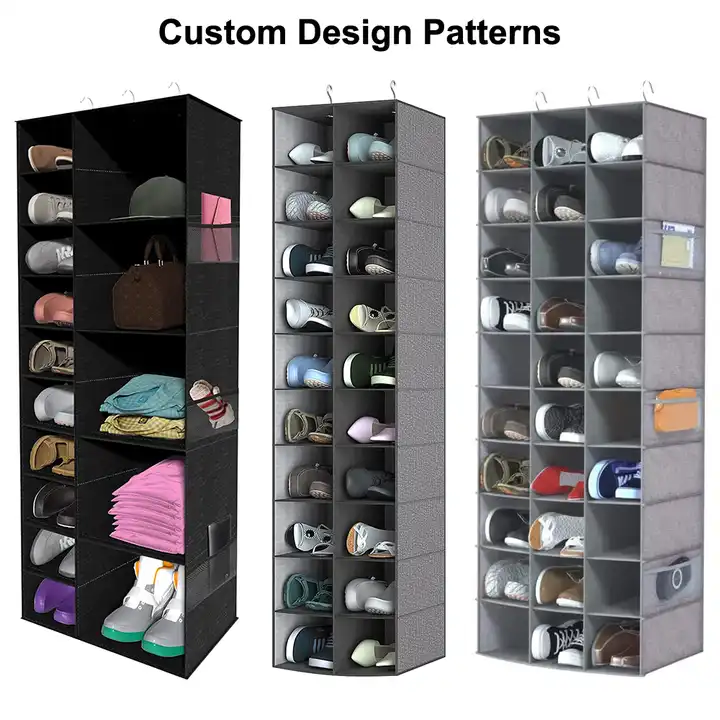
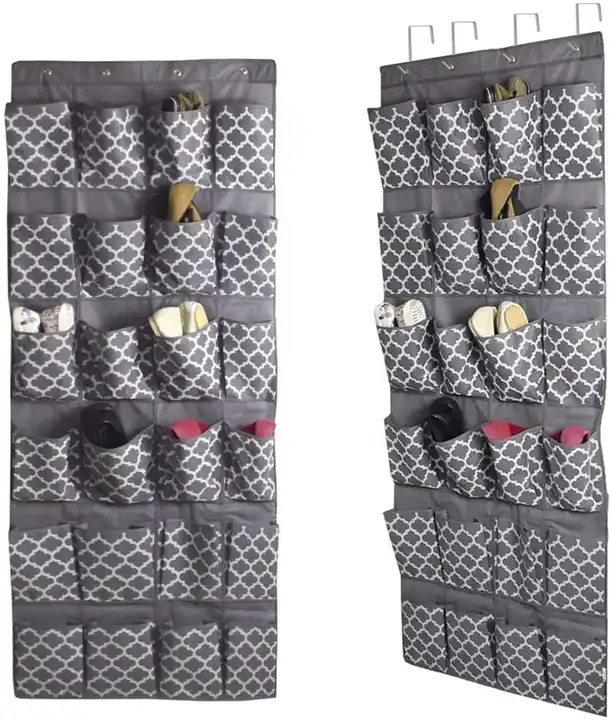
Use another suitable location for shoes that do not fit. A hanging organizer can serve part of the collection without needing to hold every pair you own.
Keep damp and dirty footwear separate
Remove loose dirt and let footwear dry according to its care instructions before storage. Shoes brought in from rain or sport may need a separate temporary place while they dry.
Do not rely on mesh pockets to make wet shoes ready for enclosed storage. Air movement around the organizer depends on the room, neighboring items, and how tightly the pockets are packed.
Keep shoe-care products in an appropriate separate location, following their labels. A pocket panel beside clean clothing is not automatically suitable for liquids or products that could leak or mark fabric.
If a pocket becomes dirty, remove its contents and clean it using the organizer’s care instructions. Return footwear only after the pocket is dry.
Use other items only when the design suits them
Some hanging organizers can also hold lightweight accessories. Scarves, hats, or similar dry items may fit the compartments without changing the mounting requirements.
Check weight, shape, and containment before changing the use. A small object that can fall through mesh needs a suitable container, while a sharp item can damage a fabric pocket.
Do not treat a pocket organizer as a secure cabinet. Items requiring restricted access or special storage need an appropriate location. A high pocket is not a substitute for a secure storage method.
Avoid adding liquids, loose food, or heavy tools just because an online photograph shows them in a similar organizer. The actual product’s construction and instructions determine its appropriate use.
Clean and inspect the organizer
Empty the organizer before cleaning or adjusting its mounting. Check the hooks or straps, top seam, pocket seams, and any lower attachment points.
Follow the care label. Some designs allow washing, while others combine materials that require surface cleaning. Remove components only when the instructions permit it.
Let the organizer dry fully before reloading it. If a seam separates or an attachment bends, reduce use of the affected area and obtain the supplier’s advice or a suitable replacement.
Also inspect the mounting surface. New rubbing marks or a door that becomes difficult to close may indicate that the organizer has shifted or the fit is unsuitable.
Fix the problem before adding more storage
If the panel bulges, review pocket fit and the number of items. A larger shoe may need a separate compartment or another storage format.
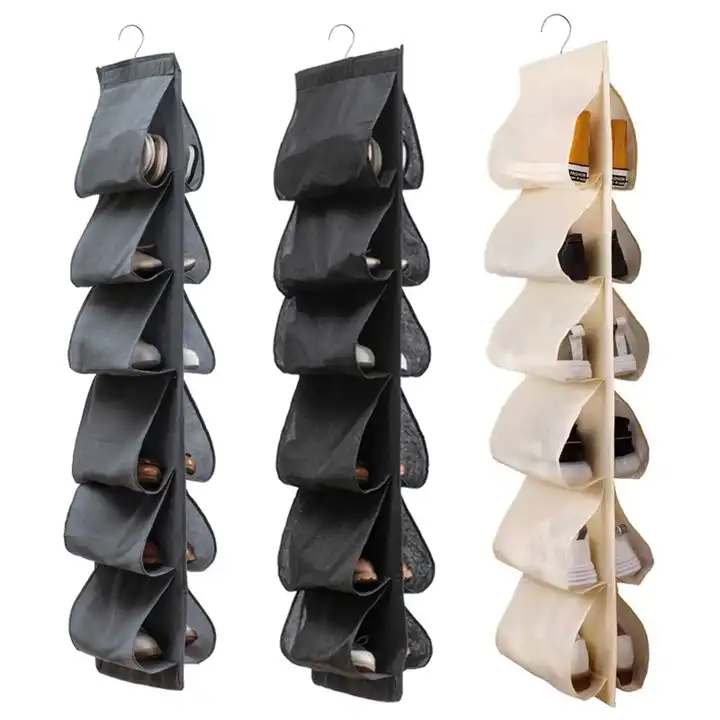
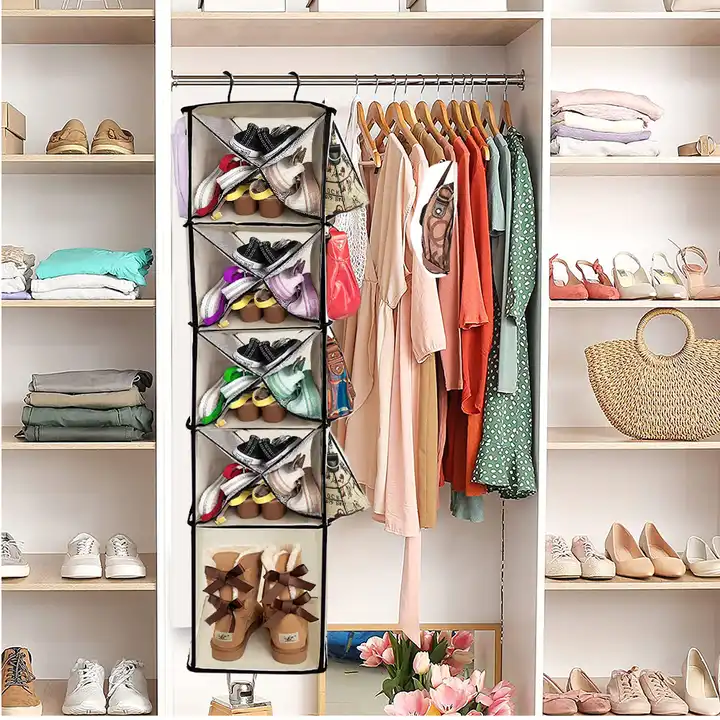
If the organizer swings during use, check the specified attachments and load distribution. Do not add improvised restraints that interfere with the door or damage the surface.
If shoes are hard to see, reorganize by pair or person before buying labels or additional pockets. An overfilled organizer often needs fewer contents rather than more accessories.
If the bottom pockets are inconvenient to reach, reserve them for occasional items only when their use still follows the product’s loading guidance. Keep your daily pairs where you can remove them comfortably.
Frequently asked questions
Does a 24-pocket organizer hold 24 pairs of shoes?
Not necessarily. The number describes compartments, while capacity depends on footwear size and pocket dimensions. Some shoes need individual pockets. Check the stated intended capacity and the fit of your own footwear.
Can an over-door organizer damage a door?
An unsuitable hook, inadequate clearance, movement, or excessive load can create problems. Use compatible fittings, check the door’s operation before and after loading, and follow the maker’s instructions.
Can I hang a shoe organizer inside a portable wardrobe?
Only if the rail, attachment, dimensions, and combined load are suitable. A hanging organizer uses existing rail capacity and space. Do not attach it to an unapproved cover support.
Are mesh pockets better for wet shoes?
Wet shoes should dry according to their care instructions before storage. Mesh may leave more open area, but it does not guarantee sufficient drying or prevent odor and moisture problems.
Where should boots go if they do not fit?
Use storage that supports their shape and dimensions without forcing them into small pockets. A hanging organizer can hold everyday shoes while boots occupy another suitable shelf or floor area.
Can I wash the entire organizer?
Only if the care instructions permit it. Hooks, stiffeners, clear panels, and different fabrics may need separate handling. Follow the specified method and dry it fully before use.
Make each pocket easy to use
Before filling every pocket, check that you can remove your daily pairs and that the door or surrounding clothing still moves freely. Leave room wherever footwear needs more space.
To compare formats, explore Great Shine’s hanging shoe organizers and other shoe storage options. Use the shoes and mounting area you already have to decide which design is appropriate.