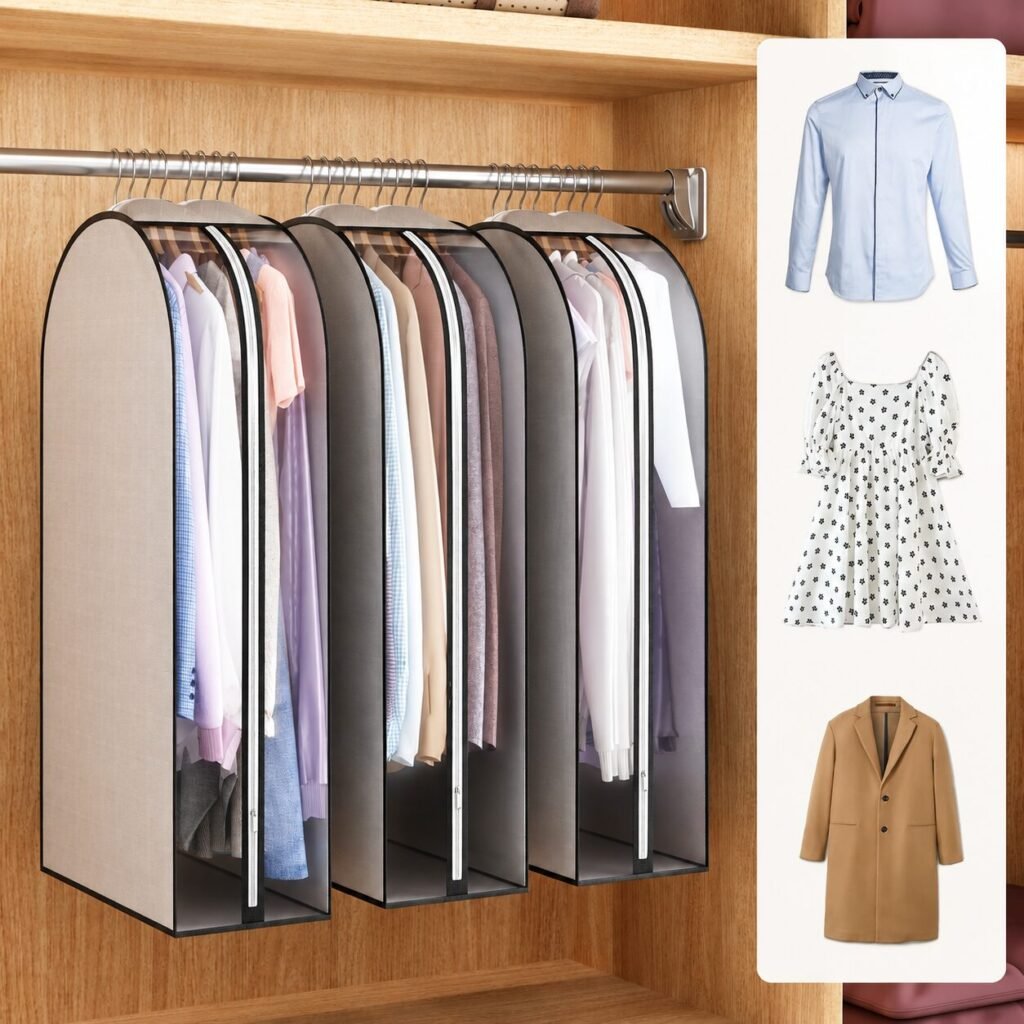
A custom garment bag looks like the simplest product on a quote until the spec questions start. Which material, which length, which printing method, what minimum, what price band. This guide lines up the decisions in the order a factory will ask them, with the standard sizes, material trade-offs and logo options used across the industry, so your first inquiry does not stall on basics.
Who orders custom garment bags
Dry cleaners and hotels ordering suit covers by the thousand, bridal boutiques protecting gowns for years, formalwear retailers shipping dresses to customers, and brands running corporate wardrobe programs. The spec differs by group: cleaners need cheap and breathable, bridal needs full-length and premium, ecommerce needs a bag that ships flat and looks good in an unboxing photo.
Material choice comes first
Four materials cover nearly every custom garment bag program. The table reflects how suppliers themselves describe the trade-offs:
| Material | Breathable | Water resistance | Printability | Typical use |
|---|---|---|---|---|
| Non-woven polypropylene | Yes | No | Excellent, screen print | Dry cleaners, hotels, bulk suit covers |
| PEVA, clear or tinted | Limited | Yes | Header area only | Retail display, visibility of contents |
| Polyester, often coated | Moderate | Yes, from the coating | Excellent, screen or heat transfer | Travel, corporate programs |
| Cotton or cotton blend | Excellent | No | Excellent, print or embroidery | Bridal, luxury, long-term storage |
One distinction decides whole programs: non-woven and cotton let air circulate, so they suit long-term storage. PEVA and coated polyester hold moisture in, which is fine for transport and display but not for a gown sitting in a closet for two years. Fabric coatings and bag waterproofing are separate things; if a program needs weather resistance in transit, that is a coated outer layer plus sealed seams, quoted as its own line.
Size follows the garment, not the closet
Suppliers quote garment bag length as the garment length plus hanger allowance. The standard tiers used across the industry:
| Bag length | Fits | Notes |
|---|---|---|
| 40 – 50 in | Suits, jackets, shirts | The default for dry cleaner and corporate covers |
| 54 in | Long coats, midi dresses | Common suit-cover tier, often 24 in wide |
| 60 in | Long dresses, full-length coats | Standard gown tier |
| 72 in | Wedding gowns, trains, ballgowns | Extra-wide versions around 30 in for volume skirts |
When brands plan a custom size, the working method is to measure the garment packed on its hanger, including the drop below the hem, then add 2 to 4 inches of clearance. Below those numbers the hem compresses against the bag bottom and creases set in transit. The 39 to 63 inch range on retail listings for personalized dress bags shows how the same tiers translate to consumer sizes.
Logo printing: three methods, three MOQs
Custom garment bags earn their name at the printing step. The three standard methods:
- Screen printing: one to four colors, clean lines, the cheapest at volume. The default for cleaner and hotel programs. Works on non-woven and polyester.
- Heat transfer: full color, gradients, detailed artwork. The choice when the logo has shading or photography in it. Polyester and PEVA.
- Foil stamping or embroidery: premium finish, gold or silver foil or stitched logo. Standard on bridal and luxury programs. Embroidery also survives laundering, which print does not always.
Print setup carries its own minimums, separate from the bag MOQ. That is why experienced buyers split the first order: standard bag at the factory’s minimum, full custom printing at reorder, once the program has proven volume.
What a first order actually costs
Factory-direct price bands published by bag suppliers run from roughly $0.45 to $0.75 per unit for non-woven suit covers, $0.60 to $0.90 for PEVA, $0.85 to $1.80 for coated polyester and $1.20 to $2.50 for cotton, with logo printing included at volume. Bridal-length and wide bags sit at the top of each band. These are published reference points for planning, not a quote: fabric weight, zipper vs ribbon closure, window panels and packing method all move the number, and the factory’s number is the one that ships.
Minimums for custom garment bags typically start between 50 and 100 units for basic customization from promotional suppliers, with printing setups from around 300 units and foil or embroidery from 500. Volume breaks then apply at 500, 1,000 and 5,000. If your program sits below those lines, the MOQ negotiation guide covers the standard moves: split fabric across colors, stage the volume, or pay a small-batch premium.
Features worth specifying
- Closure: full-length zipper for travel, ribbon tie or open-top with hooks for storage and cleaner racks.
- Hanger system: reinforced top hole for wire hangers, or an internal hook strap that carries the weight instead of the fabric.
- Window panel: clear PEVA strip for content visibility in retail and wardrobe rooms.
- Gusset: 2 to 4 inch side gusset for multiple garments or volume skirts; flat bags for single suits.
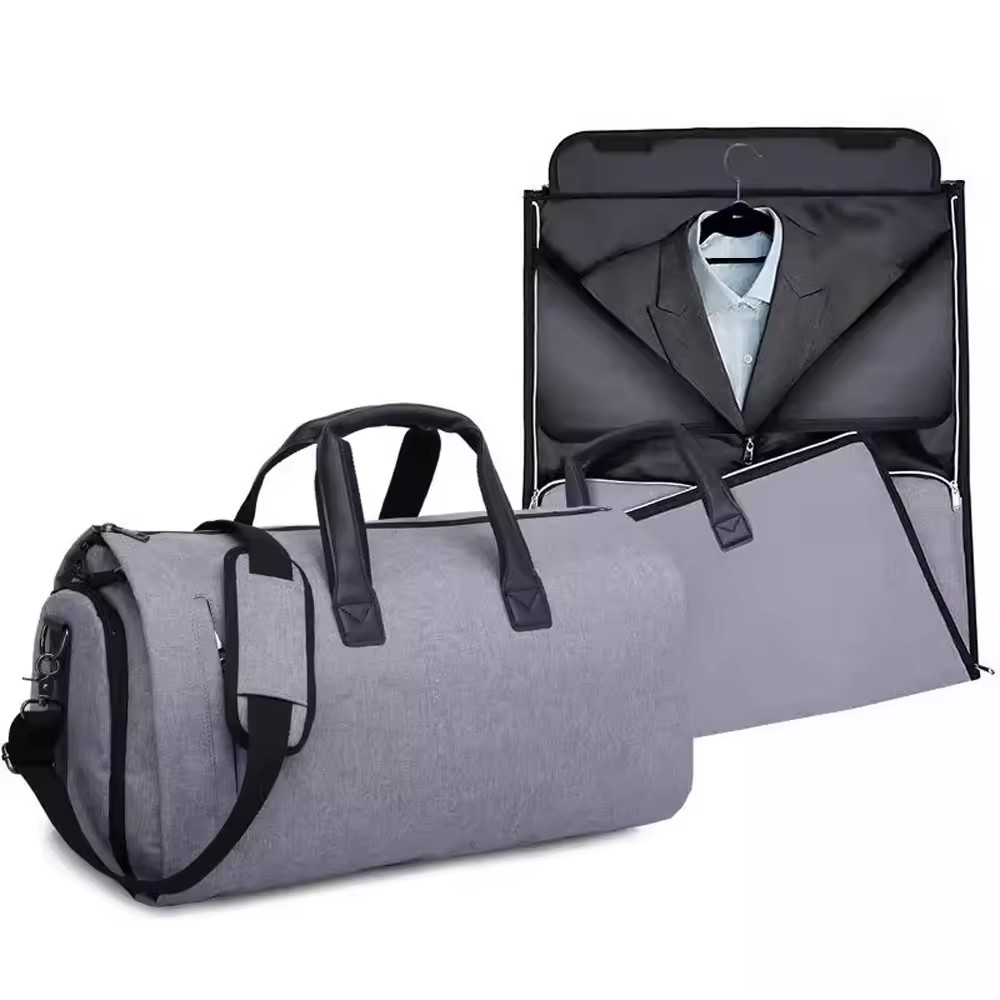
- Fold design: center fold with a second zipper, or tri-fold, for a bag that carries on a plane. Folded travel bags shorten the hanging length, so check the folded dimension against your carry-on limit.
Sampling checks before bulk
Ask for a pre-production sample with your artwork, then run three checks on it. Zip the bag fifty cycles; garment bag zippers carry the full length of the product and are the first failure point. Hang the bag with the heaviest garment it will carry and check where the load lands, fabric or hanger reinforcement. Print a swatch area with your logo and crease it sharply, then rub it damp; a print that cracks at the crease or transfers color when damp will not survive a cleaner’s counter. These are checks you can run yourself on one sample, before committing a season’s volume.
FAQ
What size custom garment bag do I need?
Match the bag length to the garment: 40 to 50 inches for suits, 54 for long coats, 60 for long dresses, 72 for gowns and trains. Measure the garment on its hanger including the hem drop, then add 2 to 4 inches of clearance.
Which material is best for long-term storage?
Breathable materials: non-woven polypropylene or cotton. PEVA and coated polyester trap moisture, which risks yellowing and mildew on garments stored for years.
Can I get garment bags with my logo from 50 units?
Basic customization starts around 50 to 100 units at promotional suppliers, but printing setups usually begin at 300 and premium finishes at 500. Below that, expect a small-batch price premium rather than a refusal.
Screen print or embroidery for a boutique logo?
Screen print for multi-color simplicity at volume, embroidery for a premium feel that survives washing. Bridal and luxury programs lean embroidered; cleaner and hotel programs lean printed.
Do custom sizes cost more?
Custom dimensions usually mean new cutting layouts, so the unit price rises slightly and the MOQ can climb. Custom sizes from most suppliers start at 500-plus units.
Related reading
MOQ meaning (working with minimums) · What is oxford fabric (the coated polyester in travel bags) · Personalized garment bags wholesale (our program)