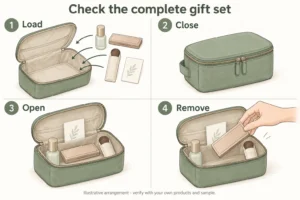
An approved bag sample records what the buyer accepted at a particular stage. Before bulk production, the buyer and supplier still need to confirm which materials, construction details and packaging will be used for the order. Any differences between the sample and the final specification need a written decision.
When comparing an approved sample vs. bulk production, check what the approval covered. A sample accepted for shape may still have temporary fabric, while its retail packaging may never have been reviewed. Settle those details before the relevant production work begins.
Quick answer: what should be confirmed before production?
Confirm the sample ID and specification version, production materials, finished measurements, construction, branding and packaging. Agree on the checks used to judge the order and who can approve later changes. Record unresolved items separately, with a clear limit on what work may proceed.
Sample approval and shipment acceptance serve different purposes. The sample provides a reference for the product you intend to buy. Inspection of production goods provides evidence about the order actually made.
What did the approved sample actually confirm?
Start by reading the sample comments and identifying the purpose of the approval. Suppliers may use terms such as prototype, development sample, pre-production sample or production sample differently. Agree on what each sample represents for your project.
A prototype might confirm the overall shape of a storage bag. A branding sample might confirm a label or print treatment. A pre-production sample should be reviewed against the intended production specification, with any exceptions clearly recorded.
If you approved the bag in stages, bring those decisions together. Do not leave the factory to combine a fabric choice from one email, a size correction from another and an older sample without a current specification.
For example, a buyer may accept the shape of an under-bed storage bag while rejecting its zipper opening. In that situation, the shape is approved and the opening remains unresolved. An email saying only “sample approved” fails to preserve that distinction.
Create one identifiable reference for the order
Give the approved sample a reference that both teams can trace, then connect it to the current specification. Include the product name or SKU, sample revision, approval date and any exceptions.
Keep an agreed physical reference available for comparison. Decide who holds the buyer’s reference, the factory’s reference and any reference needed by an independent inspector. If multiple copies are prepared, verify that they represent the same approved version.
QIMA’s reference sample guidance explains the role of a physical sample in showing inspectors the intended appearance and performance of a product. Confirm the arrangements with the inspection provider you actually appoint; this is not evidence that a supplier uses that provider.
Photos help document details, especially internal seams and labels, but should support the reference rather than replace every physical check. Keep old sample versions clearly marked so they cannot be mistaken for the production standard.
Confirm the materials that will go into production
Ask the supplier to identify any material in the sample that differs from the planned bulk material. An early sample made from available stock can be useful, provided the substitution was disclosed and the final material is reviewed before use.
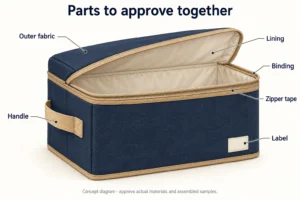
For a fabric storage bag, the material record may include:
- Outer fabric composition, construction and agreed weight or other defining specification.
- Lining, backing or coating, where used.
- Window material and attachment.
- Support panels or removable inserts.
- Zipper, handle webbing and other components.
Use material codes, swatches or agreed descriptions that distinguish the approved selection from alternatives. Words such as “Oxford,” “premium” and “heavy duty” are not complete material specifications.
Color also needs a shared reference and an agreed review method. If the development sample uses a temporary color, approving its shape does not approve a later dye result. Request the appropriate material swatch or production-color sample for review.
For custom bags sold with performance or composition claims, connect the evidence to the actual production configuration. A report for another material or an earlier construction may not support the final product. Ask the relevant testing provider whether a change affects the evidence required.
Agree on measurements and construction checks
Record what will be measured, how it will be measured and what variation is acceptable. A nominal size without a measurement method leaves room for disagreement about the finished product.
For a soft storage bag, distinguish laid-flat measurements from assembled dimensions. State whether the bag is empty, supported or filled when measured. If the product must fit a shelf or under-bed space, include that fit requirement separately.
Ask the supplier to propose realistic tolerances for review. The buyer should accept them only if they still meet the product’s intended use and selling claims. There is no single tolerance suitable for every bag and every measurement.
Handles, openings and seams
Identify the construction details that matter most during use. For a bag that customers carry while full, handle attachment and the surrounding seams deserve specific attention. For a bag used mainly on a shelf, the opening and access may be equally important.
Inspect zipper movement around corners, grip space at the handles and any exposed edges inside the bag. Document the accepted construction with clear photographs and written descriptions where necessary.
If the product has an agreed load or durability requirement, define the evaluation method and acceptance criteria before testing. Pulling a sample handle by hand is not a substitute for evidence supporting a numerical carrying claim.
Approve branding and the complete retail pack
Review the bag with the branding and packaging intended for sale. Confirm logo dimensions and position, label orientation, artwork version and any inserts included with the product.
Check the finished application as well as the artwork file. A correct logo file can still be applied in the wrong position, and a label can be hidden when the bag is folded for sale.
For a set, list each included size and component. Confirm how customers will identify the contents without opening every pack. Keep individual product dimensions, folded dimensions and retail-pack dimensions as separate records.
Shipping cartons also need approval. Record the number of retail units per carton, carton markings and the proposed packing arrangement. If packing measurements inform freight planning, confirm them using the actual packed configuration.
Where labels or packaging must meet destination-market or retailer requirements, provide those requirements and arrange the appropriate review. Sample approval alone does not establish regulatory compliance.
Decide how production will be checked
Agree on checks that address the risks in your order. A sample shows one product; production checks examine whether the materials and manufacturing process are producing goods that meet the specification.
An early check can compare incoming materials and the first units made. QIMA’s initial production check description identifies raw materials and first production items as part of that stage. The timing and scope for your order should be agreed with the supplier and inspector.
A check during production can focus on whether an identified issue is recurring and whether corrective work has been applied. A pre-shipment check can review the completed goods and packing against the agreed requirements. These stages answer different questions, so choose the scope based on product and order risk.
If acceptance sampling is used, agree on the sampling plan and acceptance criteria. ASQ explains that acceptance sampling plans specify sample sizes and acceptance or non-acceptance criteria. They do not mean every unit has been inspected or that an accepted lot contains no defects.
Avoid inserting a generic AQL value into an order without defining the inspection standard, defect categories and applicable plan. An inspection provider can help translate your requirements into a suitable inspection brief.
Require approval for changes after sign-off
Set a clear process for proposed substitutions or revisions. Ask the supplier to describe the change, the reason, affected quantities and any effect on price, timing or performance before using the revised configuration.
Some changes need a revised assembled sample. Others may be reviewed through a component sample, material swatch or artwork proof. The evidence should address what the change could affect. Record which parts of the existing approval remain valid.
For a mixed order, identify the affected SKU and color. Specify whether approval applies to that variant alone or to named variants across the range.
Keep the quotation consistent with the approved specification. If a price discussion led to a different material or construction, the order documents must reflect that choice. Buyers still comparing offers can use the separate guide to why storage bag quotations differ.
A production-release checklist for custom bags
Before authorizing the relevant manufacturing work, confirm that the order record answers these questions:
- Which sample and specification revision apply?
- Which materials and components are approved for bulk use?
- Are all temporary materials and outstanding sample comments resolved?
- What measurement methods and tolerances apply?
- Which branding files and packaging versions are approved?
- What inspection points and acceptance criteria have both parties accepted?
- Who can approve changes, and how will those changes be recorded?
- What remains to be checked before shipment release?
If one item remains open, state the exact restriction. A buyer might authorize sourcing an approved zipper while withholding approval to cut the body fabric. The supplier must confirm whether that staged approach is feasible and how it affects the schedule.
Keep production authorization separate from final shipment release. Each should refer to its own completed checks and any accepted exceptions.
Frequently asked questions
Does approving a sample guarantee identical bulk goods?
An approval provides a reference, but it does not verify every item produced. Written specifications, agreed tolerances and checks of production goods are still needed. Differences should be assessed against those requirements rather than appearance alone.
Can we approve production from photos?
Photos can support decisions on visible details. They are limited for hand feel, fit, hidden construction and performance. Decide which features require physical review, and record any approval made without a physical sample.
Is a pre-production sample always necessary?
The appropriate sample stage depends on the design, changes and evidence already available. A repeat order of an unchanged product may need a different review from a new structure. Confirm what will represent the final production configuration before authorizing work.
What if the supplier needs to substitute a material?
Request the proposed specification and a clear comparison with the approved material. Decide what sample or testing evidence is needed, then record your decision and the affected order quantities. Availability alone does not establish equivalence.
Should packaging be approved separately?
Separate artwork approval is useful, but the packed product should also be reviewed where fit, folding or presentation matters. Keep the packaging version linked to the correct product and order.
What should we do if production goods differ from the sample?
Record the difference against the approved specification, including measurements, photographs and affected quantities. Ask the supplier for containment and correction proposals. Decide the next inspection or shipment step under the agreed order terms before releasing affected goods.
Prepare your order for production review
For a Great Shine project, bring the sample reference and current specification to the discussion alongside the quantity, packaging and destination-market requirements. Use the custom storage bag range to identify the product structure involved.
Then send your sample-approval questions with a list of open decisions. Ask which materials, sample details and inspection points will form the agreed basis for production.