By Grace Ji, Sales Director at Great Shine · Updated July 2026
Catalog and direct mail retail is one of the most misunderstood channels in the storage products industry. In an age when everyone talks about DTC, Amazon, and TikTok Shop, print catalogs are dismissed as dying. The reality tells a different story.
The US catalog industry alone still moves over $200 billion in annual sales. Companies like Hammacher Schlemmer, LTD Commodities, Solutions Catalog, Miles Kimball, Improvements Catalog, Country Door, and Signals continue to build seven-figure storage product businesses through printed pages. In Europe and Japan, catalog and direct mail retail (Otto, Betty Barclay, Cecil, JOY Group in Japan, Belladot in Sweden) drives billions more.
If you’re a catalog buyer sourcing storage products from China, you already know this channel has rules that Amazon FBA and retail chain sourcing don’t. What you might not know is which of those rules matter most, which are outdated, and how to find a supplier who understands them.
I’ve been supplying catalog retailers for 12 years — first as a small factory taking their overflow orders, now as one of the primary sources for storage products across multiple US, UK, German, and Japanese catalogs. What follows is the sourcing playbook I wish someone had given me at the start.
Why Catalog Retail Is Fundamentally Different
Catalog buyers are the most operationally sophisticated procurement teams in retail. Nothing about their world is casual. Print deadlines are hard. Inventory forecasts must be right. Shipping mistakes cost 4x more than in other channels because they’re direct-to-consumer.
The 4 attributes that separate catalog retail from every other channel:
1. Print Deadlines Are Immovable
A catalog goes to press 90–120 days before it hits mailboxes. Once printed, prices, images, and product descriptions cannot change. If your supplier changes the product spec after the catalog prints, you have a very expensive problem.
This means:
- Suppliers cannot substitute materials mid-production
- Colors must match exactly to what was photographed
- Sizes cannot deviate from what’s printed on the page
- Any product change requires reprinting inserts or full recall
2. Inventory Forecasting Is Both Critical and Impossible
You need to buy enough stock to sell through the entire catalog’s mailing cycle (usually 8–16 weeks), but not so much that dead inventory eats your P&L. Storage products in catalogs typically sell in a curve:
- Week 1–2 after mailing: 15–25% of expected volume
- Week 3–6: 40–50% of expected volume (peak)
- Week 7–12: 20–30% of expected volume
- Week 13+: 5–10% (long tail)
Get this wrong on either side and you either miss sales (stockout mid-cycle) or bleed on end-of-cycle liquidation.
3. Direct-to-Consumer Shipping Requirements
Unlike retail chains where products ship in bulk to distribution centers, catalog products go direct to consumers. Every unit needs:
- Individual retail-ready packaging
- Address labels that match your fulfillment system
- Enough padding to survive parcel-level handling
- Return-friendly packaging (consumers must be able to repack for returns)
4. Higher Consumer Expectations, Higher Return Rates
Catalog customers are sophisticated. They took the time to look through a printed catalog, dog-eared a page, called an 800 number, and waited days for delivery. Their expectations of quality are higher than an Amazon impulse purchaser.
Storage products from catalogs typically see 8–15% return rates versus 4–8% for retail chains. Your supplier needs to be building products that survive that scrutiny.
The 7 Requirements Catalog Buyers Should Impose on OEM Suppliers
1. Color Fastness Under Photography Lighting
Here’s a mistake I’ve watched multiple catalog brands make: they approve a sample under office lighting, photograph it under professional studio lighting, and only later discover the color they photographed doesn’t match what they actually receive from bulk production.
What to require:
- Delta-E color matching under D65 daylight standard (not office fluorescent)
- Approval samples shot in the same lighting setup as your catalog photography
- Color reference cards from actual bulk production, not just pre-production sample
- Signed color approval sheet included with every production batch
2. Standing Fabric Inventory
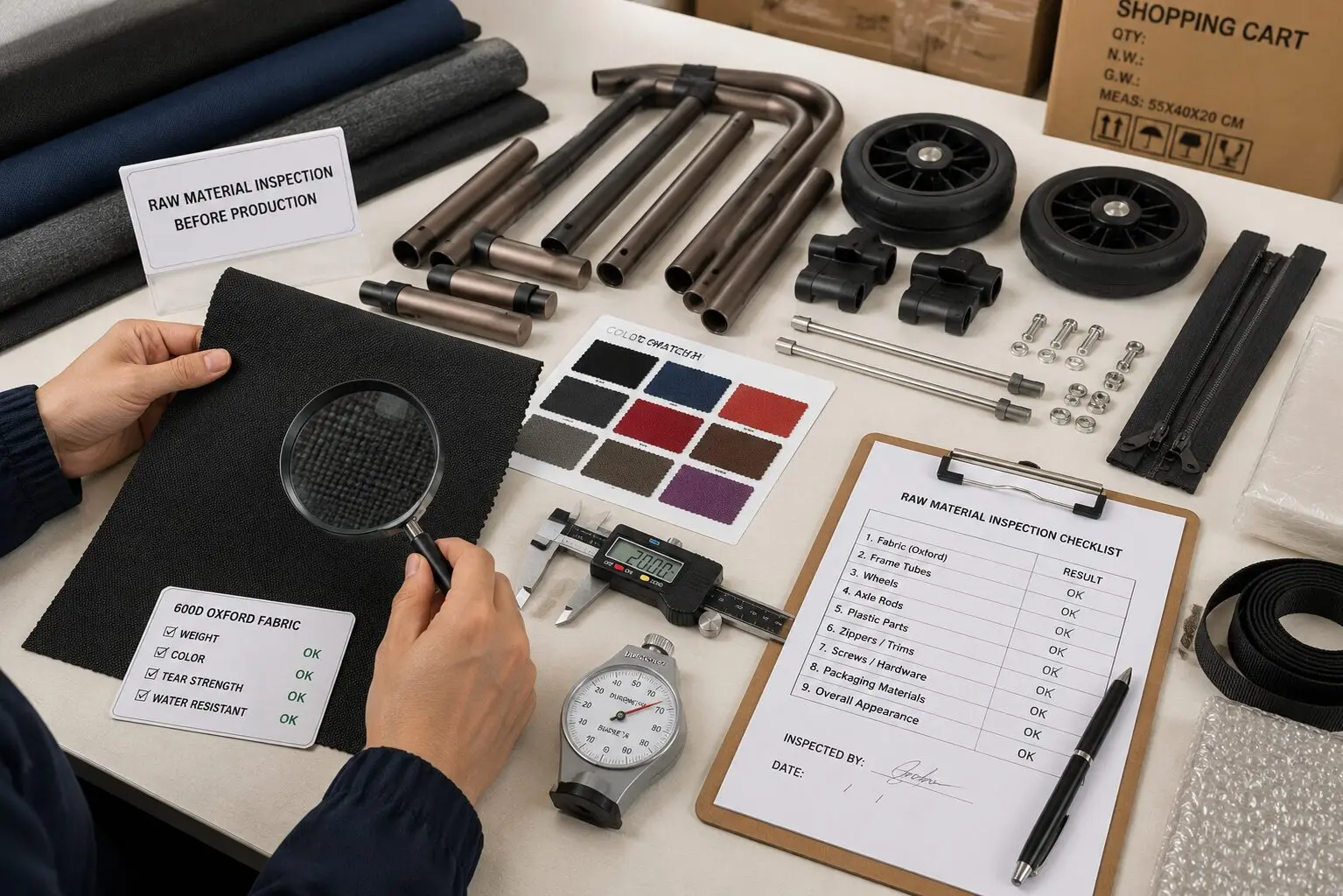
Because catalog reprints happen 2–4 times per year and repeat orders come in at unpredictable moments, you need a supplier who stocks your custom fabric in standing inventory.
What to require:
- Minimum 1,000–2,000 meters of your custom fabric in the supplier’s warehouse at all times
- Written commitment to hold that inventory for 12 months minimum
- Right of first refusal to buy the inventory if you scale down
- Quarterly inventory reports showing available meters
Suppliers who won’t commit to standing inventory can only serve you as a one-time supplier — never as a real catalog partner.
3. Individual Retail Packaging Capability
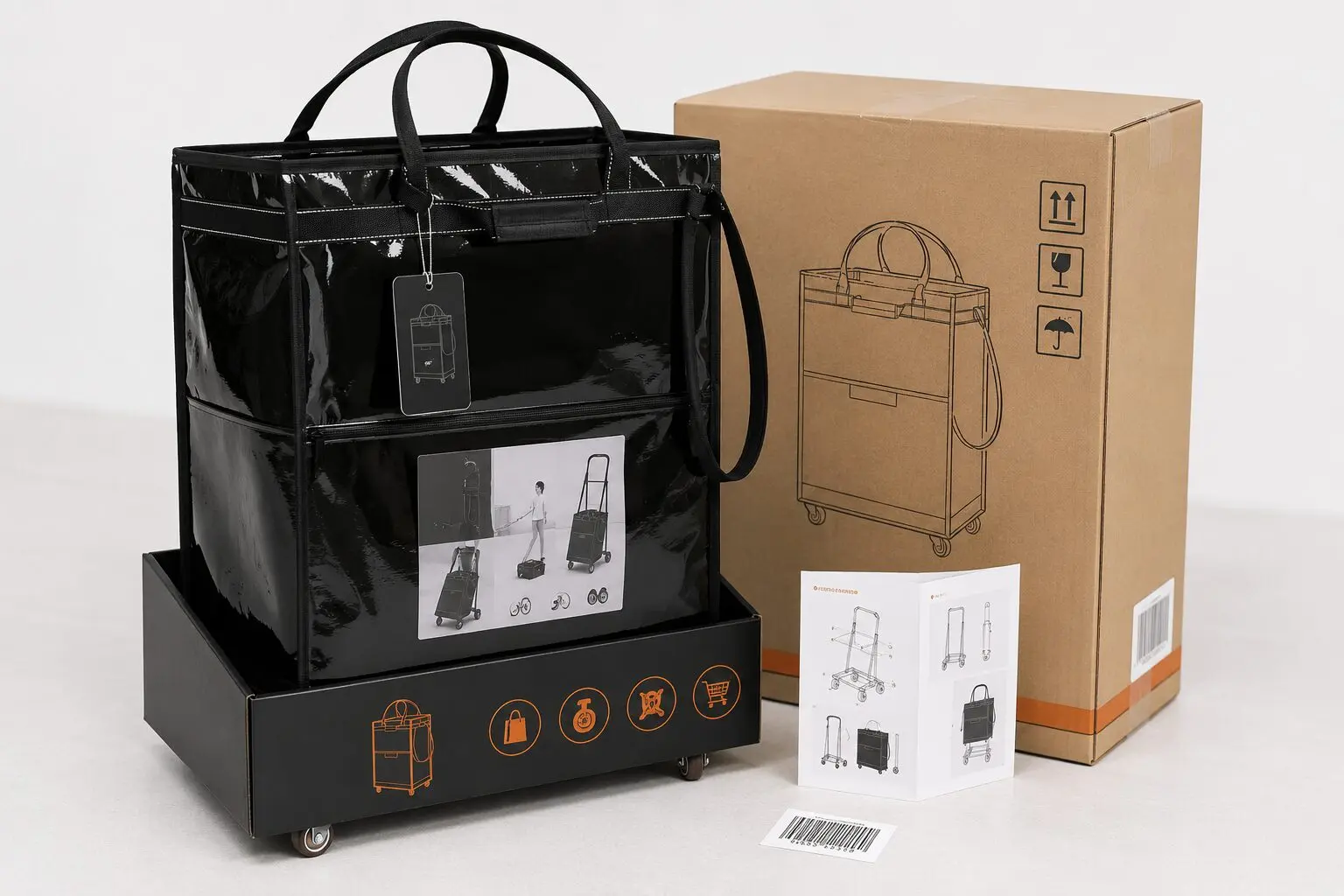
This is where 80% of Chinese factories fall short. Bulk packaging (100 units in a shipper carton) is easy. Individual retail packaging with UPC codes, care instructions, return-friendly design, and branded look is a completely different capability.
What to require:
- In-house packaging design team (not outsourced)
- Print capability for UPC barcodes and product-specific graphics
- Poly bag with tear-strip and product visibility window
- Branded gift-quality box for premium SKUs
- Insert card with brand story, care instructions, and return policy
If your supplier can only do plain poly bag packaging, you’ll spend an extra 8–15% having a repackaging vendor add retail-ready elements at destination. That’s margin you can’t afford to lose.
4. Consumer-Grade Quality Discipline
Catalog products go through 3–5 sets of hands before reaching a consumer: factory QC, freight consolidator, catalog warehouse, catalog fulfillment, parcel carrier, consumer. Every touch is an opportunity for damage.
What to require:
- AQL 1.5 or tighter (not the industry-standard AQL 2.5) for catalog products
- Third-party pre-shipment inspection on every order (SGS, BV, Intertek)
- Random pre-production sample checks during production
- Documented defect trend reporting quarterly
A supplier who agrees to AQL 1.5 for catalog work — knowing it costs them more in rework — is showing you they understand this channel. A supplier who tries to negotiate you down to AQL 2.5 doesn’t.
5. Documented Reorder Speed
Catalog reorders happen at unpredictable moments. A product might sit at 30% of forecast for 4 weeks, then suddenly hit 80% sold-through and need urgent reorder to survive the last month of the mailing cycle.
What to require:
- Contractual emergency reorder time (typically 25–30 days from PO to shipped for repeat SKUs)
- Standing raw material inventory (not just fabric — also zippers, buckles, labels, packaging)
- Pre-approved production line assignment for your SKUs
- Freight booking commitment (many suppliers hedge on freight during peak season)
6. Sample Availability for Multi-Cycle Planning
Catalog planning cycles are 12–18 months out. You need to see next season’s product now.
What to require:
- Suppliers who release forward-looking product concepts monthly or quarterly
- Free samples of new product concepts for evaluation
- Willingness to develop custom products for your catalog with exclusivity windows
- Trend research input (what’s selling in adjacent markets)
7. Long-Term Relationship Orientation
Catalog retail is a compound-interest business. Products that work in Year 1 typically continue in Year 2, Year 3, Year 5. Suppliers who understand this are focused on your lifetime value, not this transaction.
What to require:
- Willingness to sign 24-month supply agreements
- Volume-based pricing tiers with visibility into future price stability
- Contractual right to first-look on new product categories they develop
- Executive-level relationship, not just account manager
The 6 Ways Catalog Suppliers Fail You (Watch For These)
Failure 1: Substituting Materials Silently. Your custom fabric was specified as 600D Oxford with 3-pass PU coating. Production batch 3 arrives with 420D Oxford, no PU coating. When you complain, the supplier says “we made a small improvement to save cost.” They didn’t tell you because they hoped you wouldn’t notice. Your consumers noticed — return rate jumped from 8% to 14% overnight.
Prevention: Physical bulk sample from every production batch, tested before payment release.
Failure 2: Missing Print-Cycle Deadlines. You confirmed the product concept in January for a September mailing. In July, the supplier tells you production is delayed 3 weeks because of “capacity issues.” Your catalog is already at the printer.
Prevention: Weekly production milestone reports starting 45 days before scheduled ship date. Escalation clauses in contract for late delivery.
Failure 3: Selling Your Custom Design to Your Competitor. You developed a proprietary product with your supplier. It became a bestseller. Now you see the same product — same fabric, same construction, minor color change — in your competitor’s catalog at 15% below your retail price.
Prevention: Written exclusivity agreements (18–36 months typical for catalog custom development). Right of first refusal on all new versions.
Failure 4: Documentation Gaps at Customs. Your customer paid for their product on Day 1. Your supplier’s shipment sits at customs for 8 days because REACH declaration was missing. You’re now shipping the customer product 14 days late. They cancel and demand a refund. You just paid for the product plus international freight plus your customer’s refund.
Prevention: Complete documentation package required with every shipment before you release final payment.
Failure 5: Sudden Price Increases. Your supplier held pricing steady for 18 months. Then, right before your next catalog goes to press, they announce a 12% price increase citing “raw material cost changes.” You can’t change the printed catalog price. You have to absorb the increase or find a new supplier fast.
Prevention: Price stability commitments in supply agreements (typically annual renegotiation with defined caps).
Failure 6: Inventory They “Forgot About.” You placed a reorder based on the supplier’s claim that they had 2,000 meters of your fabric in standing inventory. When they went to cut, it turned out they had sold that fabric to another buyer 3 months ago and forgot to update their records. Now you wait 45 days for new fabric to be woven.
Prevention: Quarterly written inventory audits with photos of fabric rolls on the shelf.
How Catalog Retail Supplier Vetting Actually Works
If you’re onboarding a new supplier for catalog work, the vetting process should look nothing like an Amazon FBA supplier vetting.
Amazon FBA vetting (typically):
- Request samples
- Compare prices
- Check certifications
- Place small trial order
- If OK, scale
Catalog vetting (should be):
- Written RFP with 30+ questions covering capacity, quality, documentation, packaging, forecasting
- Video factory tour with 6–8 specific things to verify
- Reference checks with 3+ existing catalog buyers they serve
- Physical sample of similar catalog work they’ve done
- Test order at 20% of planned volume to observe operational behavior
- Contract negotiation covering exclusivity, price stability, inventory, quality
- Full production order with third-party inspection
This process takes 3–4 months. It’s slower than Amazon vetting. But it prevents the disasters that will cost you multiples of that time and money down the road.
Getting Started: A Practical Roadmap for New Catalog Buyers
If you’re starting a storage product line in a catalog for the first time, or you’re moving from a legacy supplier who’s stopped meeting your standards, here’s the practical roadmap:
Month 1 — Draft your product concept brief. Include target retail price, catalog placement, expected annual volume, key selling points, and photography spec.
Month 2 — Solicit RFPs from 4–6 pre-vetted suppliers. Use the vetting criteria above to score them.
Month 3 — Video factory tours and reference checks with your top 2–3.
Month 4 — First-round samples from top 2 suppliers. Test in your photography studio, your fulfillment center, and with your customer service team.
Month 5 — Contract negotiation with your preferred supplier. Cover exclusivity, price stability, inventory, quality, and shipping obligations.
Month 6 — Place trial production order at 20% of planned volume. Observe operational behavior.
Month 7–8 — First full production run. Third-party inspection required. Approve packaging graphics for catalog use.
Month 9–10 — Catalog goes to print. Full inventory on hand at your fulfillment center 2 weeks before mailing.
Month 11–14 — Mailing cycle. Track sell-through weekly. Reorder as needed.
Month 15+ — Season review. Renew or renegotiate for next cycle.
Why This Matters for Catalog Retail Specifically
Every retail channel has its own rhythms and pain points. But catalog retail is uniquely unforgiving of supplier mistakes because:
- Sunk marketing cost — you’ve already paid to print and mail
- Fixed price — you can’t reprice mid-cycle if margins compress
- Consumer trust — catalog customers are loyal but unforgiving of quality issues
- Long tail — a failed product hurts brand perception for years
The good news: get supplier selection right, and catalog retail is one of the most predictable, profitable channels in the industry. The reorder rhythms are stable. The pricing is protected. The customer relationships compound.
The bad news: get it wrong, and every element of your P&L suffers simultaneously.
If you’re evaluating storage product suppliers for your catalog or direct mail program, and you’d like a candid conversation about what proper catalog-grade capacity looks like — including our current standing fabric inventory, exclusivity agreements, and packaging capabilities — book a call with Great Shine. We’ve supplied storage products to catalog brands across US, UK, Germany, and Japan for 12+ years. We understand the pace, the standards, and the stakes.
Direct mail retail isn’t dying. The suppliers who can’t serve it properly are. Choose a supplier who understands what your channel actually requires — and your storage product line becomes a compounding, decade-long revenue stream.
Grace Ji is Sales Director at Great Shine, a Chinese OEM manufacturer of storage bags, cosmetic bags, packing organizers, and seasonal storage products serving catalog and direct mail retailers across 20+ countries. BSCI / ISO 9001 / SEDEX certified. Standing inventory of 200+ fabric SKUs. Contact her at sales11@g-shine07.com for a catalog-specific capacity conversation.