Illustrative image; confirm actual model specifications with the supplier.
The best rolling tote bag for your needs should make everyday carrying easier—not create a new problem with wobbling wheels, awkward handles or a bag that is difficult to store. The right choice depends on where you shop, what you carry and how you plan to move the bag. A compact rolling tote may be convenient on smooth floors, while a traditional two-wheel trolley or framed cart may be more suitable for uneven pavements and heavier grocery loads.
Quick answer: A soft-sided rolling tote with swivel wheels is a useful starting point for everyday shopping on smooth floors and compact home storage. A two-wheel trolley can be more practical for uneven pavements, while a framed cart can suit bigger loads. The best choice depends on your route, realistic load, available storage space and whether you need to lift the bag. Compare these five formats first, then use the nine selection criteria below. This is a construction-based buying guide, not a ranking of products we have independently tested.
1. First, Choose the Right Type of Wheeled Shopping Bag
Illustrative image; confirm actual model specifications with the supplier.
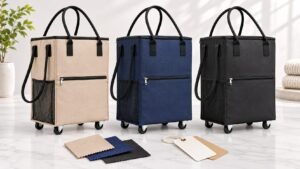
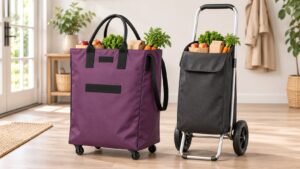
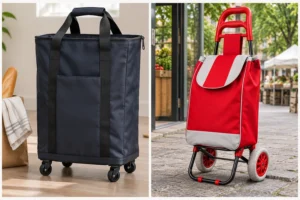
Five common formats appear under searches for the best rolling tote bag or best shopping bag on wheels. The last three are trolley and cart alternatives rather than soft rolling totes.
A foldable rolling tote bag is an appealing option when buyers value a soft-sided appearance, a compact storage profile and multiple ways to carry the product. But do not mistake a small caster-wheel tote for a dedicated stair-climbing or all-terrain cart.
For examples of how brands differentiate soft totes and carts, see HULKEN’s rolling tote range and NBC Select’s guide to rolling totes and carts. These public references are not Great Shine product endorsements or test results.
2. Check Wheel Size, Mounting and Surface Compatibility
Illustrative image; confirm actual model specifications with the supplier.
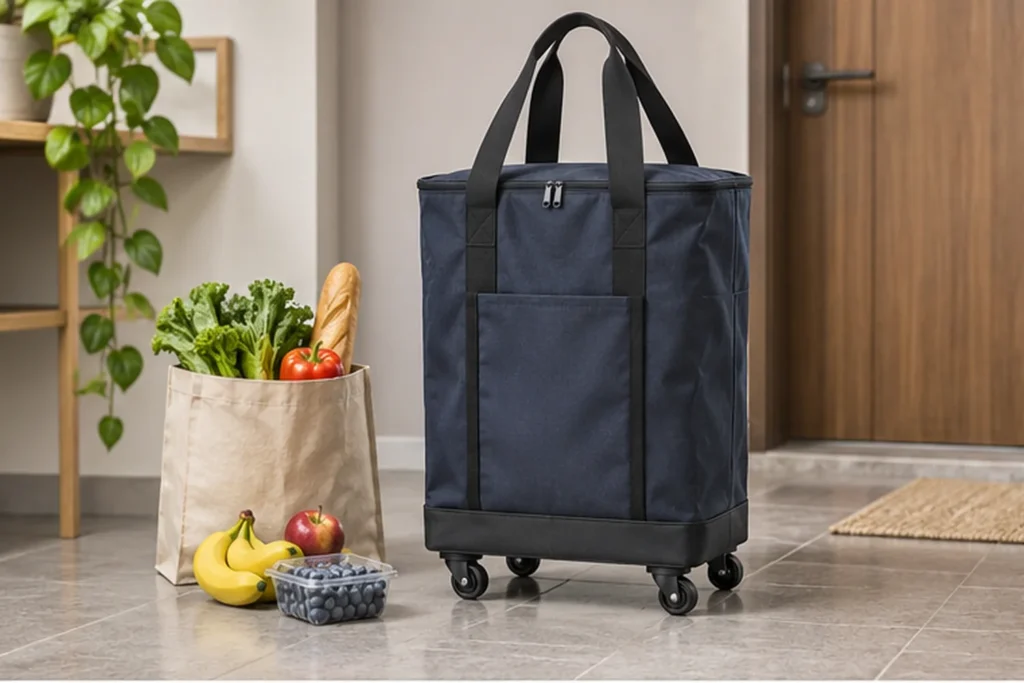
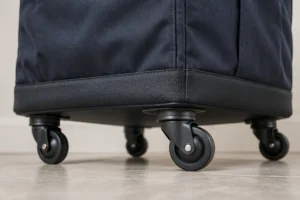
Wheel performance involves more than whether a product rolls in a promotional video. Look at wheel diameter, tread material, axle mounting, swivel behavior and the position of wheels under the loaded base.
Small caster wheels can maneuver well on smooth tile and finished concrete. Larger wheels usually cope better with pavement joints and surface irregularities. They are not equivalent to a stair-climbing mechanism; never pull a loaded tote up stairs unless the manufacturer has designed and tested it for that use.
Practical check: Ask to see the bag loaded with a realistic shopping weight, rolled forward, turned, stopped and moved across a threshold. The wheels should stay aligned and rotate without rubbing against the fabric or base.
3. Look Beyond Advertised Capacity
Capacity in liters describes the available bag volume; maximum load in kilograms or pounds describes a different performance requirement. A large bag does not necessarily have a high load rating.
Before comparing two models, establish whether the stated load applies to rolling, hand carrying or static placement. A responsible manufacturer should define the test conditions and confirm that the base, wheel mounting, seams and handles are appropriate for the intended use.
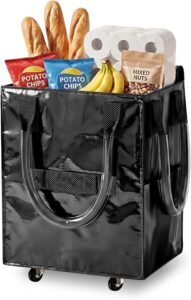
For grocery shopping, keep dense items near the bottom, avoid overfilling the upper section and distribute weight across the base. Test zipper clearance with the intended fill level instead of forcing a bulging bag closed.
4. Measure Both Open and Folded Dimensions
Illustrative image; confirm actual model specifications with the supplier.
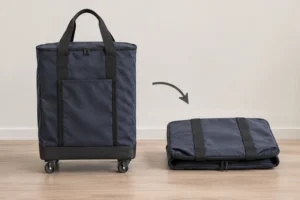
A shopping bag may look compact in a photo but still be difficult to store in a closet or car trunk. Compare the bag’s open length, width and height with its folded dimensions. If a telescopic handle is included, check its retracted and extended lengths as well.
For brand owners, a smaller folded package can also influence retail shelf space, parcel dimensions and shipping costs. However, folding must not damage support boards, create permanent creases in coated fabric or place unusual pressure on the wheel mounts.
5. Choose a Comfortable Handle System
Illustrative image; confirm actual model specifications with the supplier.
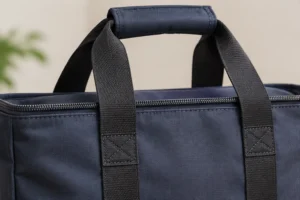
A practical rolling tote should be comfortable when pulled or pushed according to its intended design. Some models include fabric carry handles as well as a telescopic pull handle; others are designed primarily for hand pulling.
Check grip clearance, handle height, the connection to the base and whether the carry handles have reinforced attachment points. The handle should not twist, catch on the opening or interfere with wheel operation when the bag is full.
A handle that works for a short demonstration may feel different on a longer shopping trip. Where possible, test with users of different heights and typical carrying loads.
6. Evaluate the Base Before the Outer Fabric
The bottom construction is one of the most important—and least visible—differences between rolling tote bags. A base board must help distribute the load and maintain the bag’s shape while supporting secure wheel attachment.
PP-based boards, hollow-core PP panels and other stiffening constructions can behave differently in terms of rigidity, weight, moisture response and noise. None is automatically the best choice. The appropriate design depends on dimensions, wheel layout, expected load and folding requirements.
Check whether the bottom panel can shift, sag or contact the wheels during movement. For a foldable model, confirm whether the bottom board is fixed, removable or hinged and that the user can fold the product as intended.
7. Match Fabric and Pockets to Real Use
Coated woven materials can help a tote resist light splashes and make the exterior easier to wipe down, but water-resistant does not automatically mean waterproof. Seams, zippers and the top opening remain potential entry points for water.
Useful details include a secure top closure, reinforced corners, an accessible side pocket and fabric that retains its shape after repeated use. An insulated compartment is an optional feature found on certain designs—not a standard feature of every shopping bag on wheels. If you need insulation, evaluate its actual construction and test protocol separately.
8. Pay Attention to Wheel Noise and Stability
The sound of a rolling bag depends on wheel material, bearings or bushings, wheel mounting, load, floor finish and how the base transfers vibration. A soft tread may reduce some noise on hard floors, but no wheel should be described as completely silent without a controlled test.
An unstable or noisy bag may also be caused by uneven loading, a misaligned wheel or contact between the bag fabric and wheel assembly. Compare products under the same load and on the same surface rather than relying on different promotional videos.
9. Check Cleaning, Storage and After-Sales Practicality
An easy-care exterior is helpful after grocery runs. Follow the actual fabric and construction care instructions: many coated or reinforced rolling totes are better spot-cleaned with a damp cloth than machine-washed. Allow the bag to dry fully before folding and storing it.
Ask whether wheels, handles or base panels can be serviced or replaced. For a reusable product, repairability and consistent spare-part specifications may matter as much as the initial purchase price.
Quick Shopping Bag on Wheels Checklist
For Brands and Retailers: How to Turn Product Selection into a Sourcing Brief
A consumer may choose a rolling tote based on the way it feels and looks. A wholesale buyer also needs consistent manufacturing specifications. OEM/ODM decisions can involve bag dimensions, available colors, fabrics, wheel configuration, base board, handles, logo placement and retail packaging.
For a retail or e-commerce range, start with a defined customer profile rather than a list of attractive features. A compact urban model, a larger household model and a reinforced model for heavier goods can address different needs, provided each is independently validated. Review similar customer complaints about wheel noise, base sagging, torn handles and confusing folding instructions, then translate them into measurable sample requirements.
Great Shine Houseware Ltd. supports fabric bag and organizer development for brand and wholesale programs. For a rolling tote project, share your desired size, reference photos, target quantity, market and performance expectations so the proposed construction can be assessed before sampling.
Explore our Shopping Bags & Trolley Carts product program or contact Great Shine about your custom rolling tote. For a broader category overview, see our rolling shopping cart sourcing guide.
Frequently Asked Questions
Are rolling tote bags suitable for stairs?
Not automatically. Most soft-sided totes with multiple small caster wheels are intended for comparatively smooth surfaces. A dedicated stair-climbing cart uses a different wheel and frame construction. Check the manufacturer’s tested intended use.
Do shopping bags on wheels have to be waterproof?
No. A coated fabric can resist everyday splashes, but waterproof performance depends on the complete bag construction, including seams and closures. Check product-specific claims.
Are foldable rolling tote bags good for groceries?
They can be convenient for groceries on suitable surfaces, particularly when compact storage is a priority. Match bag size, load rating and wheel construction to the actual trip.
What is the difference between a rolling tote and a shopping trolley?
A soft rolling tote typically combines a fabric bag with a low wheel-bearing base. A shopping trolley commonly uses a higher frame and two larger wheels. They behave differently on uneven ground and when folded.
Final Takeaway
The best shopping bag on wheels is the one that fits the intended route, load and storage space. Compare the wheel system and base construction first, then check the handle, fabric, folding design and packaging. For brands, ask for product-specific demonstrations and verified specifications before finalizing a wholesale order.