To organize clothes in storage boxes, start with clean, fully dry garments and sort them into groups you will use together. Fold everyday clothes so you can see each item, separate small pieces with dividers, and label the side of the box that faces you. Choose a container you can open and lift comfortably in its intended space.
A box of winter sweaters needs a different arrangement from a bin of T-shirts you open every morning. Decide how often you will need the clothes before choosing the box or packing it tightly.
1. Sort and prepare clothes before packing
Empty the shelf or drawer you are reorganizing and work with one group of clothes at a time. Set aside anything that needs cleaning or repair, along with pieces you plan to donate or sell. Otherwise, those items take up space and become another sorting job later.
Choose one main sorting rule for each box:
- For everyday clothes, group by use, such as work tops, exercise clothes or sleepwear.
- For seasonal storage, separate the clothes you are putting away from anything you might still need during a change in weather.
- For children’s hand-me-downs, group by size and add the season to the label. A box marked only “kids’ clothes” is hard to search later.
Follow each garment’s care label when cleaning it and let everything dry fully before packing. Check pockets, remove forgotten tissues and keep shoes in a separate container. The box itself should also be clean, dry and free of rough edges that could catch the fabric.
2. Choose a box that fits the space and the clothes
Measure the opening the box must pass through, as well as the space where it will sit. Check the usable height under a shelf or bed, the depth available, and room for your hand to reach the handle. A lid needs clearance too, unless you will pull the box out before opening it.
Use the outside dimensions to check whether a box fits your furniture. Use the inside dimensions to plan your folds. Thick walls, a fitted lid and internal dividers can reduce the usable space. Before buying a full set, try one box with the clothes you intend to store.
Fabric boxes for frequently used clothes
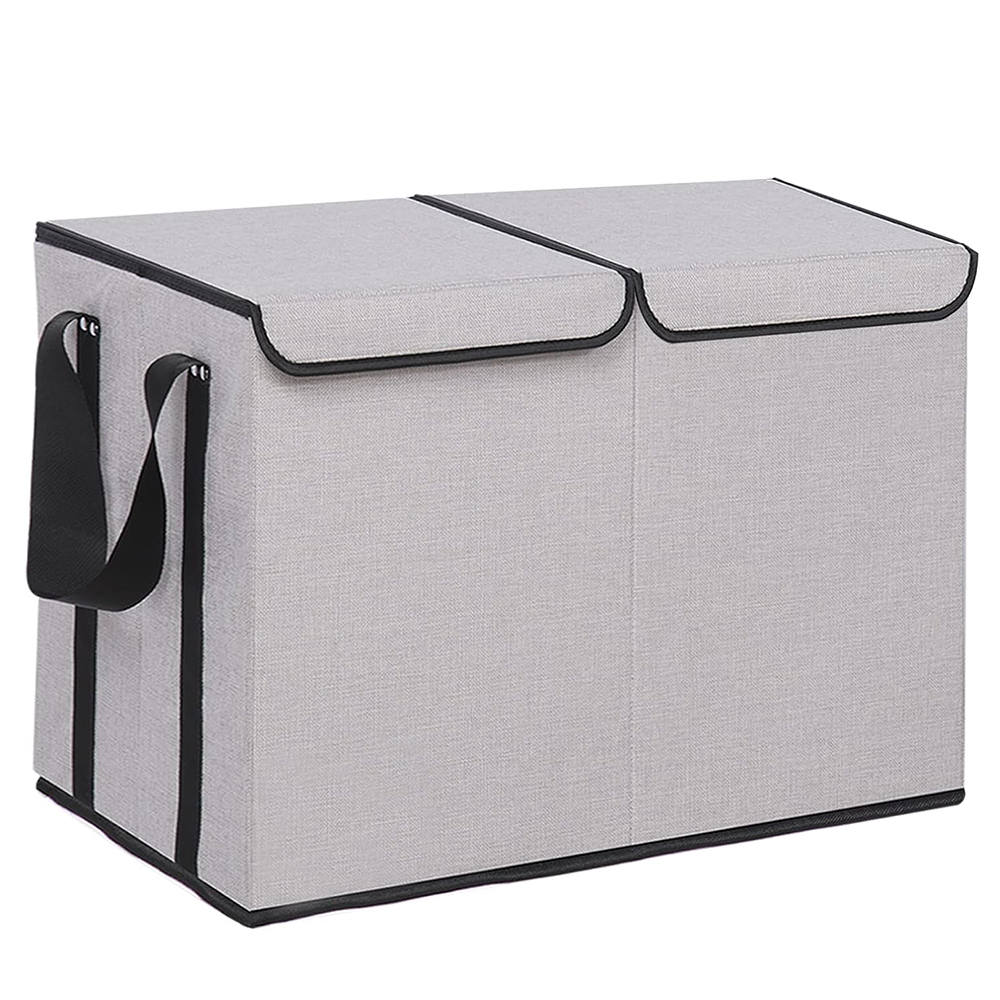
An open fabric bin is easy to reach into on a closet shelf. A lidded fabric box can cover clothes between uses, while a collapsible design takes up less room when empty. Look at the base and side supports, especially if you will lift the box when it is full. A fabric cover alone does not establish how much weight the box can carry or whether it can be stacked.
Rigid plastic boxes for enclosed storage
A rigid box with a fitted lid is an option for clothes you access less often. Check the closure and the manufacturer’s stacking instructions. A lid does not automatically make a box watertight, and sealing a container will not dry damp clothes inside it. Keep the finished box somewhere you can inspect it.
Cardboard boxes for temporary use
A clean, sturdy cardboard box can be useful for moving ordinary clothes or keeping them together temporarily in a dry room. Avoid boxes with food residue, odors, soft corners or water stains. Ordinary shipping cardboard is a different choice from an archival storage box: for valuable or sentimental textiles, the Canadian Conservation Institute identifies acid-free cardboard and polyethylene containers as suitable storage materials in its textile care guidance.
These existing Great Shine products show several fabric storage formats, including open bins, lidded boxes and drawer organizers. Check the individual product details before choosing a size or structure.
3. Fold clothes so you can remove one item at a time
For everyday T-shirts, file folding makes the top edge of each item visible when you look into the box. Try the fold with one garment before packing the whole row:
- Lay the T-shirt flat and fold the sleeves and sides inward to make a rectangle.
- Fold the rectangle to a height that fits below the rim of the box.
- Stand it on its folded edge, supported by the side of the box or a divider.
- Add the other shirts, leaving enough room to slide one out without lifting the row.
If the clothes slump over when you remove an item, shorten the row with a divider or use a smaller compartment. If you have to force a shirt back into place, move some items to another box.
Fold bulky sweaters loosely and avoid pressing them under heavy jeans. For fragile, heavily decorated or valuable garments, tight file folding may be unsuitable. The Canadian Conservation Institute’s flat-storage guidance recommends supporting the textile and minimizing folds; where folds are necessary, suitable padding can reduce stress at the crease.
Put socks and underwear in small compartments or separate pouches. Keep frequently used pieces together, and give accessories with buckles or fasteners their own space so they do not catch on nearby clothing. Leave the lid easy to close without pressing down on the contents.
4. Label the visible side and plan how to reach each box
Write the category on the side that faces out from the shelf. Add the owner or size when several people share the storage area. A useful label might read “Winter knitwear | Alex | packed September” or “Children’s summer clothes | size 6”. Update it when the contents change.
A clear window helps you see what is near the front, but a label can identify the whole box. For a larger collection, give each box a simple number and keep a short contents list on your phone. Take a photo before closing a seasonal box if that is easier than writing every item down.
Arrange boxes around access:
- Keep everyday clothes where you can reach them without moving other containers.
- Put heavier boxes lower down, where you can handle them comfortably.
- Use harder-to-reach spaces for items you rarely need, and keep their labels visible.
For boxes under a bed, check the space needed to pull them out, including nearby furniture and bed legs. Our under-bed storage guide covers measuring and access in more detail.
5. Keep the storage area dry and inspect the contents
Choose a dry indoor location away from leaks, direct sunlight and heat sources. Avoid putting clothes away in a damp basement simply because the box has a lid. The Canadian Conservation Institute recommends clean, dry textiles, a suitable storage environment and regular checks for signs of insect activity in its basic care advice.
Open a stored box during seasonal changes and after a leak or noticeable change in the room’s conditions. Look for dampness, condensation, musty odors or signs of pests. If something is wrong, inspect the clothes and the storage area before repacking. Replacing the box alone will not fix a damp room.
Before putting each box away, check that:
- The clothes and the inside of the box are completely dry.
- You can remove an item without pulling out the whole stack or row.
- The lid closes freely, and the base supports the contents.
- You can lift or slide the filled box without straining its handles.
- The label is readable from the position where the box will be stored.
Frequently asked questions
Should you roll or fold clothes in storage boxes?
File folding works well when you want to see everyday tops in a shallow box. Rolling is another option for small, flexible items if the rolls stay in place. Try a few garments and check whether they are easy to remove. Neither method guarantees wrinkle-free clothes; avoid forcing delicate items into tight folds or rolls.
What size box should you use for clothes?
Choose the size from your shelf measurements and a trial load of clothing. A large box filled with denim can be awkward to move, even when it fits the space. Several smaller boxes may be easier to handle and sort. Check the manufacturer’s load guidance where available.
Can you stack fabric storage boxes?
Only stack them as allowed by the product’s construction and stated instructions. Soft sides and a fabric lid do not provide the same support as a rigid frame. If the maker does not specify stacking suitability, place the boxes separately on shelves.
How long can clothes stay in a storage box?
There is no single storage period that suits every garment and environment. Follow the garment’s care guidance, keep the storage area suitable, and inspect the clothes periodically. Valuable or historic pieces may need advice from a textile conservator and materials intended for preservation.
Choosing storage boxes for a retail range
If you are sourcing boxes for a home-storage range, start with the clothes and shelf sizes your customers need to organize. Ask the supplier to confirm usable dimensions, base and side support, handle attachment, lid access and care instructions. Evaluate a finished sample with a representative load, including how easily a customer can lift it and remove clothes.
Explore Great Shine’s custom fabric storage boxes and bins and share your target dimensions and preferred structure. Confirm any load or stacking claims for the agreed design, along with labels and order-specific packing details, before placing an order.