The best compression packing cubes for travel are the ones that fit your luggage, hold the clothes you actually pack, and close without excessive force. A second zipper can reduce the depth of a suitable load, but the result depends on the garments, cube construction, and space available inside the bag.
Quick answer: Measure your luggage interior, choose a few useful cube sizes, and check the main and compression zippers with a realistic clothing load. Look for a shape you can pack around and an opening that makes items easy to reach. Compression changes volume, not clothing weight, and no set is the best choice for every trip.
Start with the luggage you already use
Measure the usable interior rather than relying only on the luggage’s advertised outside dimensions. Handles, wheel housings, curved corners, and internal compartments can interrupt a rectangular packing space.
Think about access as well as fit. A cube that sits neatly at the bottom of a backpack may be inconvenient if you need to remove everything above it to reach a shirt.
For a suitcase, consider how the two sides close together. A cube that bulges when compressed may occupy more of the closing space than its empty shape suggests.
Compare filled dimensions where possible
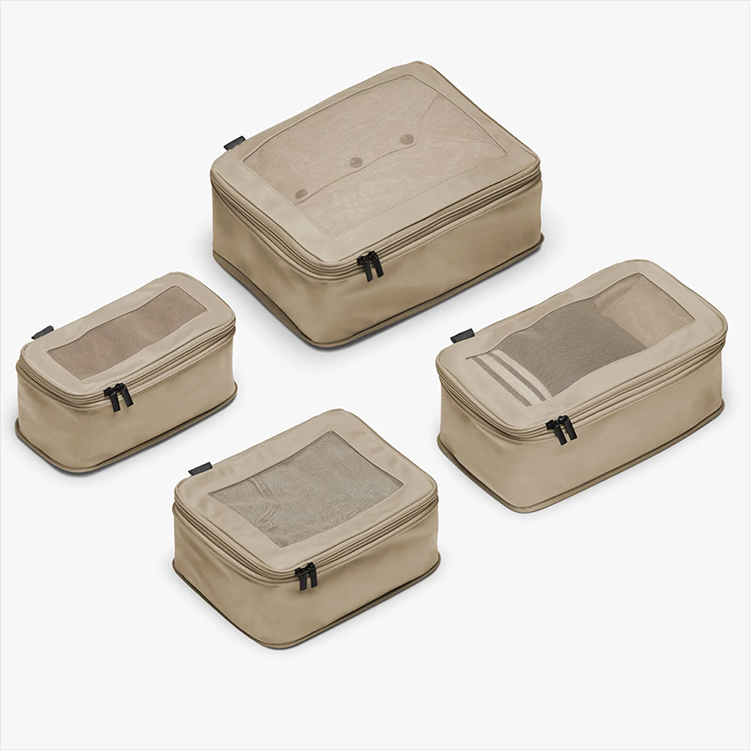
An empty cube can flatten or bend into a gap that it will not occupy when packed. Check dimensions and photographs that explain the product in its working form.
A paper layout can help plan the footprint of several cubes. Follow it with a real packed trial, because paper cannot show bulging corners or the height created by waistbands and seams.
Decide which clothing needs compression
Soft clothing with compressible air spaces can behave differently from dense denim, structured garments, or bulky hardware. Group items by how they pack rather than expecting the same reduction from every fabric.
Avoid forcing clothing that needs shape preservation into a tightly compressed compartment. A garment bag or another suitable arrangement may be more appropriate for that item.
Pack clean, dry clothing. Compression is not a drying process, and a mesh panel does not make a tightly filled cube suitable for storing wet garments.
Choose useful groups
A cube for tops and another for underwear may suit a short trip. A separate arrival outfit may help when you reach accommodation late and do not want to unpack everything.
Keep the grouping simple enough to remember. Too many small compartments can create extra opening and closing without helping you find what you need.
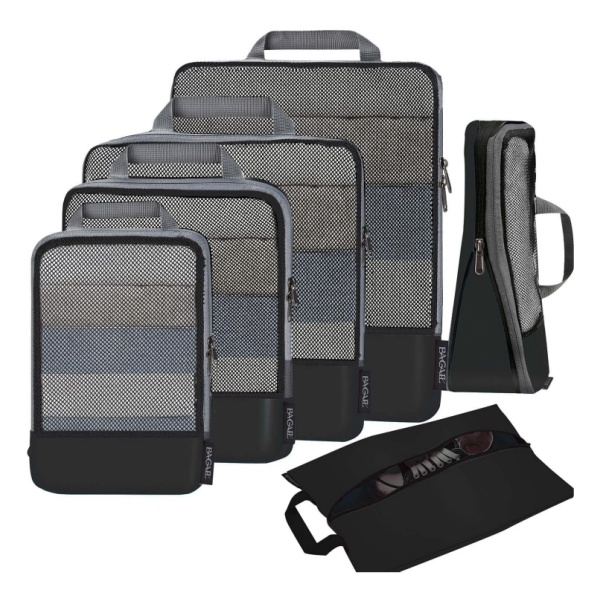
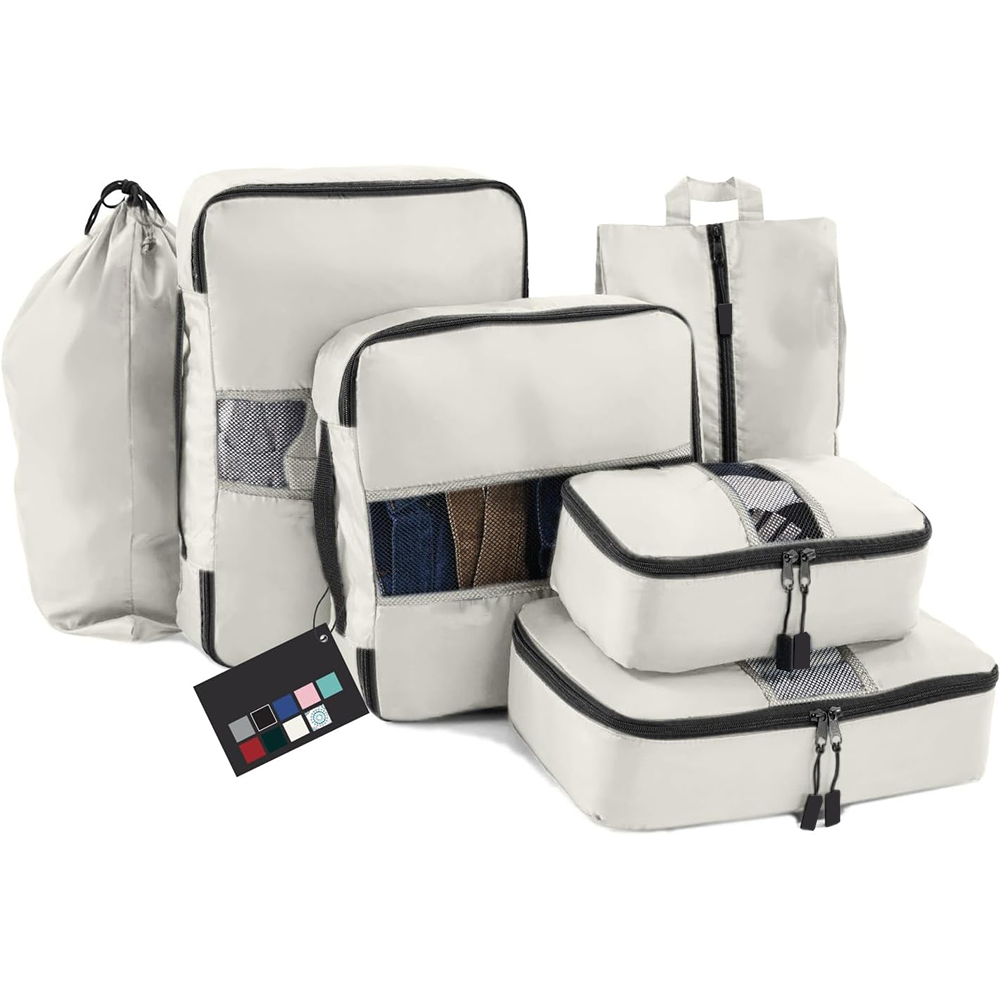
A set’s piece count can include shoe bags or laundry pouches as well as clothing cubes. Compare the function of each included piece before treating a larger number as better value.
Understand how the compression mechanism works
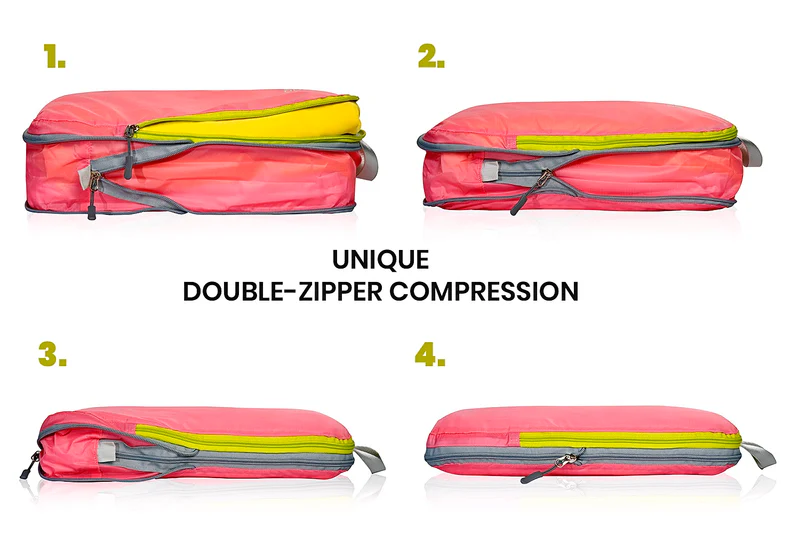
Many compression cubes use a main opening zipper and a second zipper around a gusset. The main zipper contains the clothes; the compression zipper reduces the available depth after the load is arranged.
Follow the manufacturer’s sequence. Spread the contents evenly and keep fabric away from the zipper path before beginning compression.
If the second zipper needs strong pulling, reduce or rearrange the load. Forcing it can place pressure on the slider, seams, and corners without creating a useful packed shape.
Look for controlled shape after closing
A compressed cube should fit the space you planned for it. A thick mound in the middle or distorted edges can make the cube harder to pack even if part of it becomes thinner.
Inspect the relationship between the panels and the zipper path. An attractive fabric or familiar zipper brand does not establish how the complete assembly behaves.
Try removing and replacing an item as part of the trial. A product that works only when packed once with great care may be less convenient during a trip with frequent changes of accommodation.
Compare zippers, seams, and panel construction
Look at the places where compression creates concentrated pressure, especially corners and changes of direction. Check for smooth zipper movement and fabric that stays clear of the slider.
Check those details with the cube packed. A reinforced seam or a named zipper component tells you something about construction, while the loaded check shows whether the panels, corners, and closure work together.
Main opening
A broad opening can make packing and identifying contents easier. A narrower opening may suit a particular pouch shape but require more handling to reach items at the bottom.
Consider where the cube will be opened: inside a suitcase, on a hotel shelf, or while partly inside a backpack. The opening should support that routine.
Mesh and solid panels
Mesh can show the contents, while a solid panel may provide more visual coverage. Neither choice establishes that the cube controls odors or keeps clothing dry.
A mesh area can also behave differently from the surrounding fabric under compression. Check the filled product for distortion and follow its stated load and care guidance.
Handles and tabs
A small tab may help operate a zipper without being intended as a loaded carrying handle. Use the points identified by the manufacturer.
If you plan to lift packed cubes repeatedly, consider the grip and attachment method. Keep the cube within its intended use instead of treating any sewn loop as a load-rated handle.
Keep weight and packing volume separate
Compression can make clothes occupy a different shape or less volume, but it does not remove their weight. Adding more clothing into the space freed may make the luggage heavier.
Weigh the complete packed bag, including cubes, toiletries, electronics, and other contents. A successful clothing fit is only part of the final packing check.
Airline allowances vary by airline, cabin class, and aircraft type, as IATA explains. Check the carrier’s current allowance for your booking rather than relying on a cube or bag being described as carry-on friendly. IATA passenger baggage guidance
Use a realistic packing trial
Pack the clothing you expect to take, then add every other essential item to the luggage. Close the bag normally and check whether the contents are accessible in the order you will need them.
Compare the arrangement with a simpler setup if you are unsure. Standard packing cubes may provide enough organization when compression adds little benefit for your wardrobe.
Treat this as a personal fit check. It does not establish a percentage saving for every traveler or support a claim that all luggage will hold more.
Check the return journey
Clothes may be less neatly arranged after use, and clean and worn items may need separating. Consider where those groups will go without overfilling the cubes.
A spare lightweight laundry pouch can be useful if it has a clear purpose. It should not be relied on to dry damp clothing or provide odor-proof containment unless specifically designed and supported for that function.
Leave room for changes
A trip may involve an extra layer, a purchase, or different packing after laundry. A layout with no usable flexibility can become frustrating after the first day.
Leave some cubes partly filled if that makes the luggage easier to close and repack. After laundry or a change of clothes, you should be able to restore the arrangement without starting over.
Match the set to the travel routine
For frequent hotel changes, prioritize quick access and repacking. A few identifiable groups may help more than a large set with overlapping sizes.
For a backpack, compare cube shapes with the opening and internal curve. A long rectangle may fit the total volume but block access through the top.
For a suitcase shared by two people, grouping by person can be useful. Keep the arrangement clear enough that one traveler can remove their items without unpacking the other’s supply.
When compression may add little value
A wardrobe dominated by dense or structured pieces may not become much smaller. If the packed bag already fits comfortably, standard cubes may meet the organization goal with less zipper handling.
Compare how much the second zipper helps with your actual clothing. If standard cubes already fit and keep the groups easy to reach, they may be sufficient for the trip.
Check care and replacement information
Follow the care label for the complete cube. Coatings, mesh, stiffeners, and trim can affect cleaning, so do not assume every fabric organizer is machine washable.
Clean and dry it before long storage. Inspect zippers and seams after a trip, especially if the cube was difficult to close or repeatedly overfilled.
If a set offers replacement pieces, check whether they match the dimensions and construction you need. A similarly named cube may have changed between versions.
Frequently asked questions
Do compression packing cubes save space?
They can reduce the depth of suitable clothing loads, but the result varies. Garment bulk, folding, cube shape, and luggage geometry all matter. Test the actual arrangement instead of relying on a universal percentage claim.
Do they reduce luggage weight?
No. The clothing remains the same weight, and the cubes add their own weight. If compression encourages you to pack more, the final bag can become heavier. Check the complete loaded luggage against the applicable allowance.
Can compression cubes replace vacuum bags?
A zipper-compression cube and a vacuum bag use different mechanisms. Choose according to the clothing, space, access, and packing routine. Do not assume they produce the same compression or suit the same garments.
How many cubes should I buy?
Start with the groups you need to separate and the available luggage space. A few useful sizes can be enough. Extra pieces help only when they have distinct roles and fit the packed arrangement.
Are mesh cubes better than solid cubes?
Mesh can improve visibility, while solid panels may offer more coverage. Compare the complete construction, access, and care needs. Neither material choice alone proves superior compression or odor control.
Should the compression zipper be hard to close?
Do not force it. Rearrange or reduce the contents and check for trapped fabric, following the product instructions. Difficulty closing is a reason to review the load, not a signal to pull harder.
Compare structures against your packing plan
Great Shine’s compression packing cube options show several construction directions. Use your luggage measurements and representative clothing to identify a suitable form, then review the details for that specific design.