Ornaments break in storage for the same reasons every year: no divider between pieces, crush weight from stacking, moisture in the attic, and a box that gets dropped because it has no handle. The fix is a storage system matched to what you actually own, whether that is glass heirlooms, cheap baubles, or oversize pieces.


This guide compares the ornament storage formats sold in volume, lists the specs that separate a protective case from a decorative one, and covers what B2B buyers specify when ordering ornament storage in bulk. For the rest of the Christmas line, see the tree storage bag sizes guide and the wreath storage standards.
Who needs which ornament storage
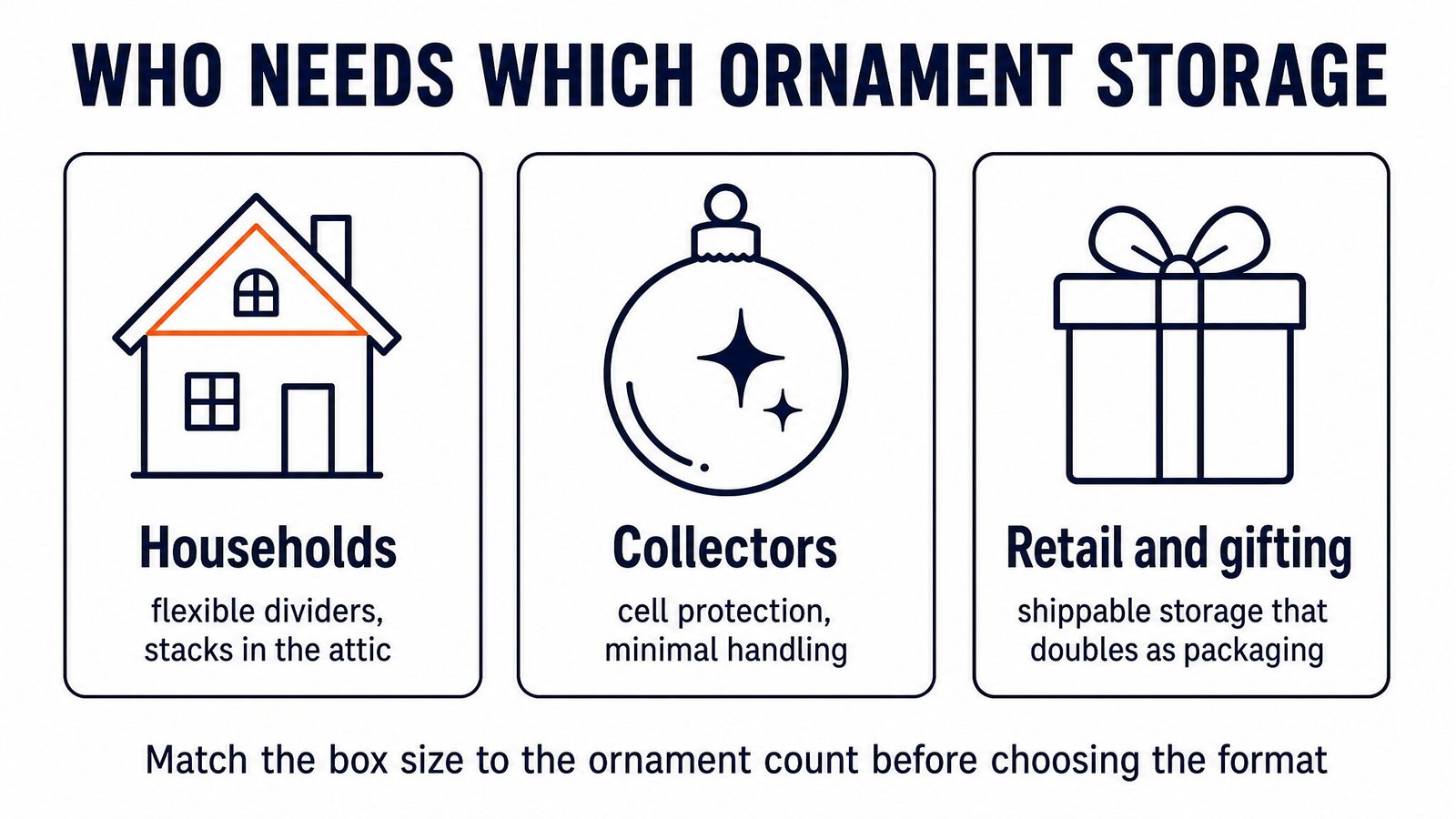
Households with mixed ornaments want flexible dividers and a box that stacks in the attic. Collectors with glass heirlooms want cell-shaped protection and minimal handling. Retail and gift businesses want shippable, presentable storage that doubles as packaging.
The common failure is buying a container too big for the collection: half-empty boxes crush inward when stacked, and loose ornaments slide and collide. Match the box size to the ornament count first, then choose the format.
The four storage formats compared
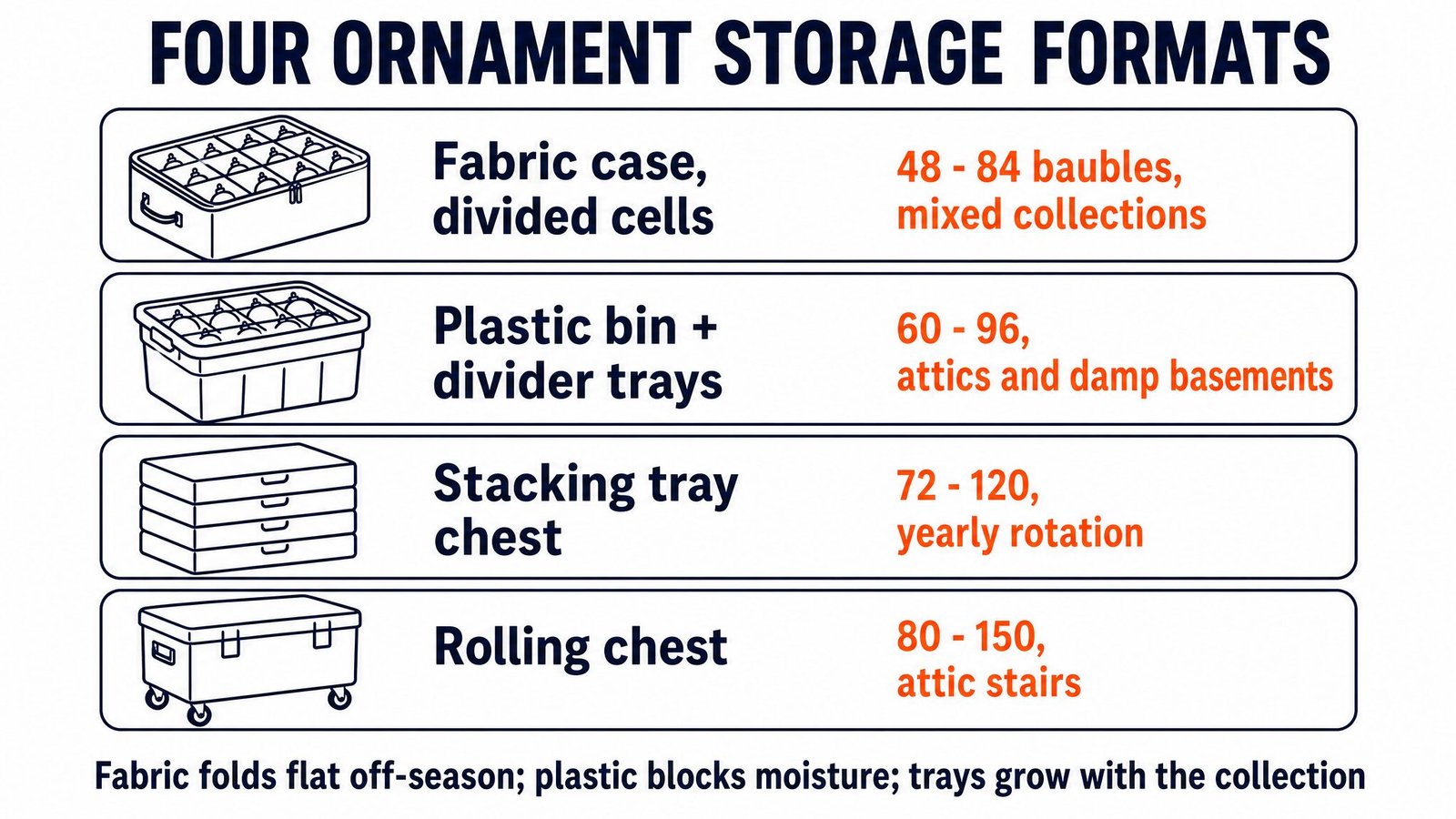
| Format | Typical capacity | Best for | Watch-outs |
|---|---|---|---|
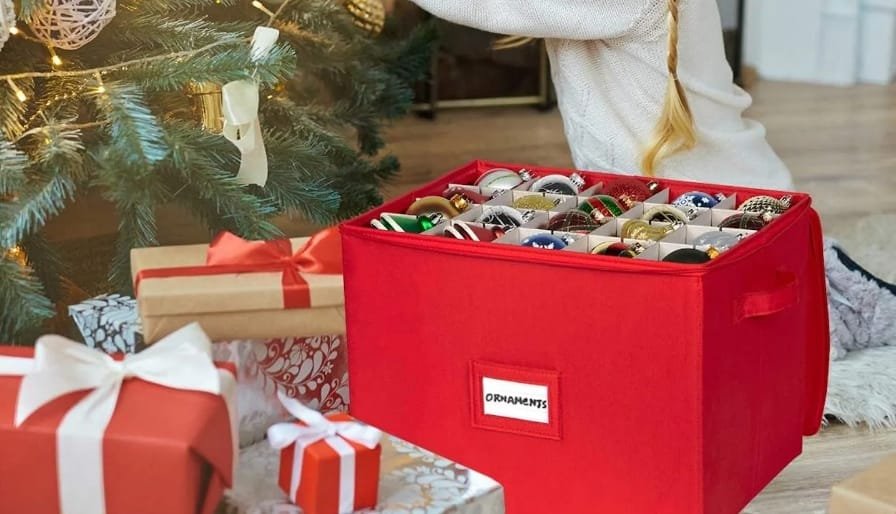
| Fabric case with divided cells | 48 – 84 baubles | Mixed household collections | Padding density at cell floor; zipper quality on wrap styles |
| Plastic bin with divider trays | 60 – 96 baubles | Attics and damp basements | Divider rigidity; lid seal against dust and moisture |
| Stacking tray chest | 2 – 4 trays, 72 – 120 total | Large collections, yearly rotation | Tray alignment; handle strength when fully loaded |
| Rolling chest | 80 – 150 baubles | Heavy loads, attic stairs | Wheel and axle rating; telescoping handle locks |
Fabric cases lead household sales because they fold flat in the off-season. Plastic bins win where moisture is the enemy. Tray chests suit collections that grow every year, and rolling chests pay for themselves the first time a full box has to climb attic stairs.
The specs that decide if ornaments survive
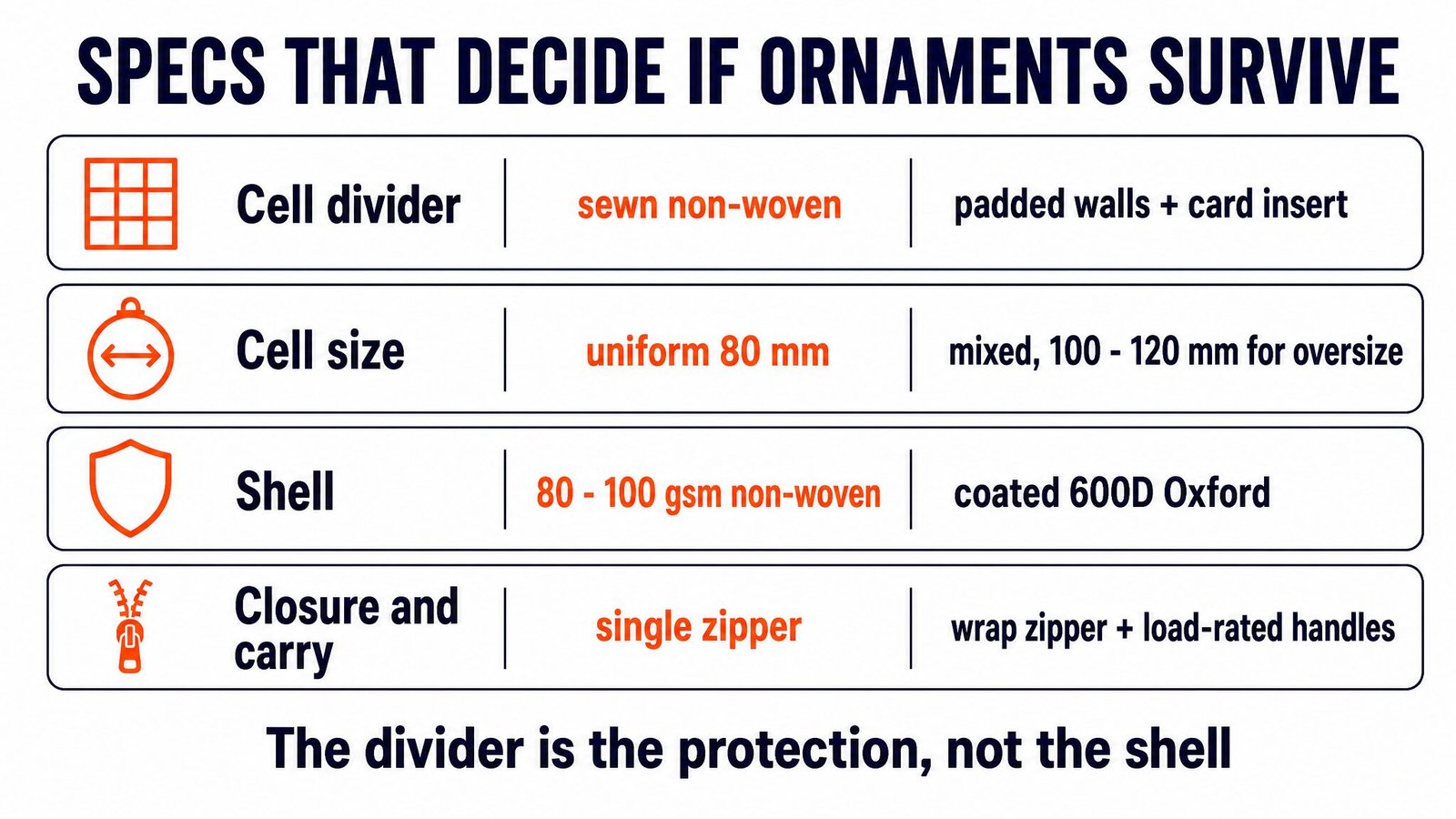
| Spec | Entry level | Protective level |
|---|---|---|
| Cell divider material | Single-layer non-woven, sewn | Padded walls, card insert, bottom reinforcement |
| Cell size | Uniform 80 mm cells | Mixed sizes incl. 100 – 120 mm for oversize baubles |
| Shell material | 80 – 100 gsm non-woven | Coated 600D Oxford, wipe-clean face |
| Closure | Single zipper, no flap | Full-wrap zipper + flap with velcro or snaps |
| Carry | None or loop handles | Box-stitched webbing handles, load-rated |
| Stacking | Soft, collapses | Reinforced walls or rigid frame insert |
The divider is the protection, not the shell. A coated Oxford case with flimsy unpadded cells protects less than a plain fabric case with rigid padded dividers. When comparing products, open the spec sheet and read the cell construction first.
Storing glass and heirloom ornaments
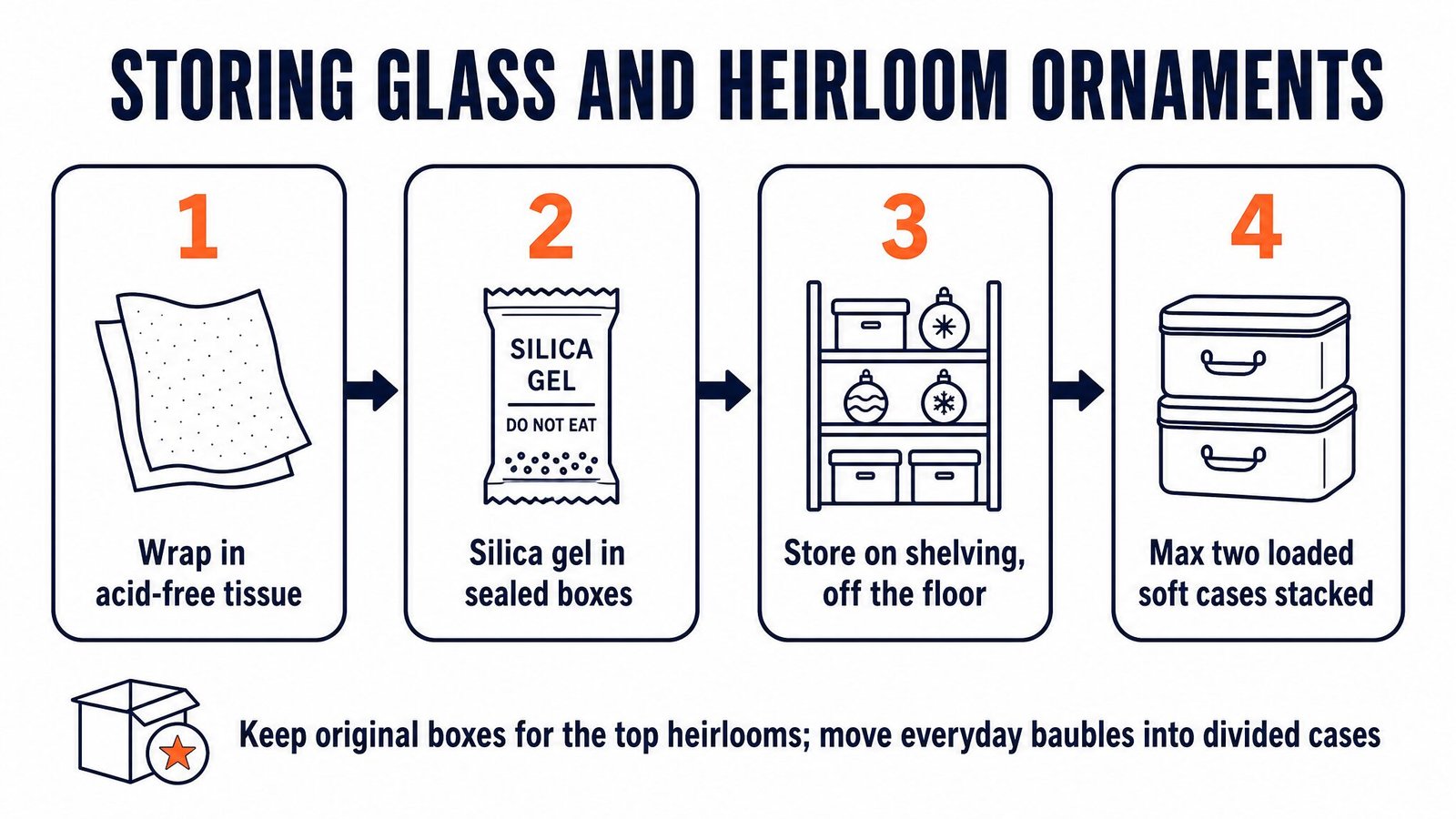
Wrap each piece in acid-free tissue before it enters a cell, because the tissue keeps paint from rubbing against the divider walls. Silica gel packets in sealed containers control the trapped moisture that fogs and flakes old finishes. Store boxes off the floor on a shelf, away from attic temperature swings, and never stack more than two loaded soft cases.
Original retail boxes protect well but waste space and attract dust. The compromise most collectors use: keep original boxes for the top heirloom layer, move the everyday baubles into divided cases.
What B2B buyers specify
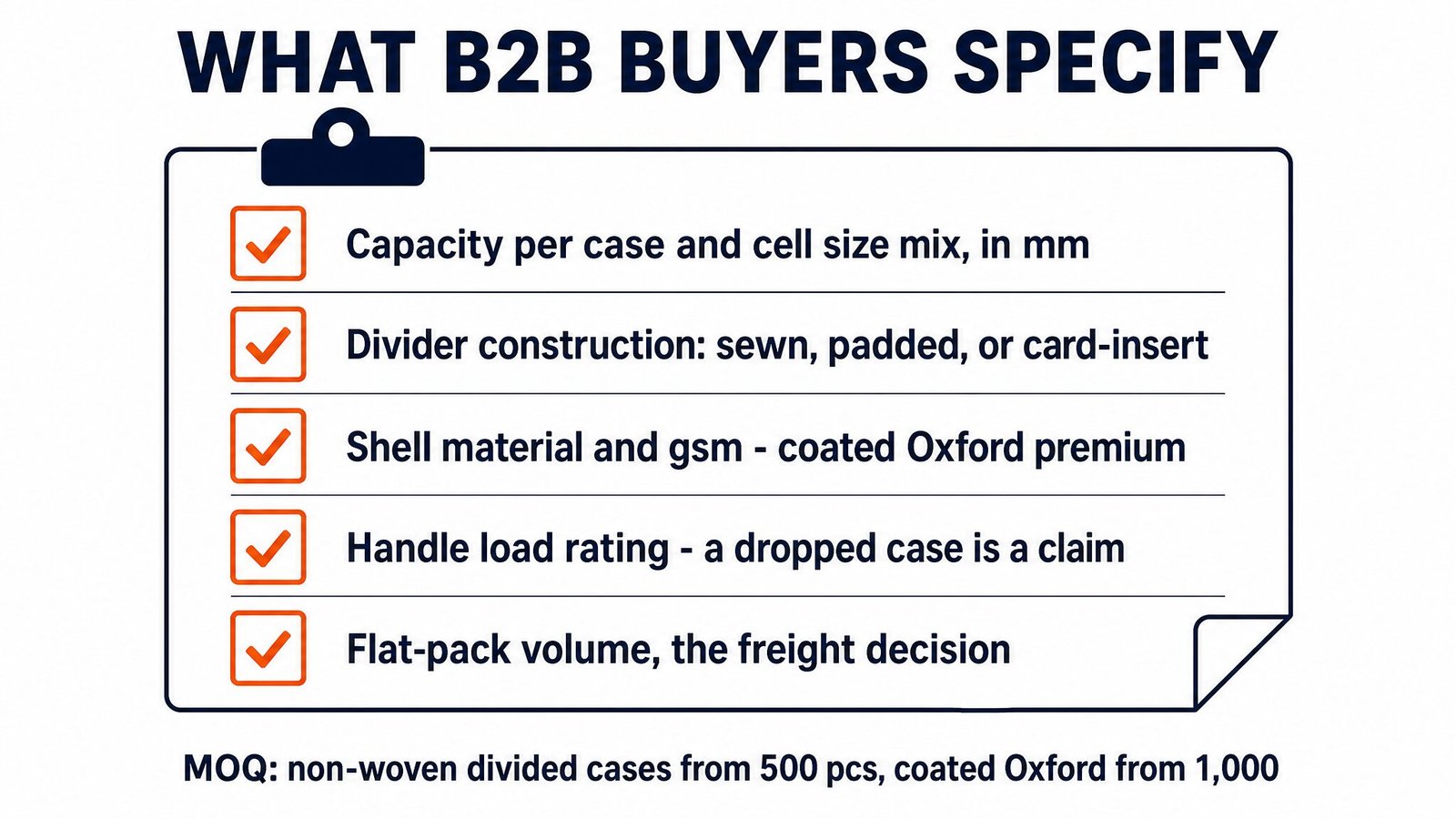
Ornament storage is a seasonal category where the sourcing window closes early. Buyers placing Q4 programs typically confirm these lines before quoting:
- Capacity per case and cell size mix, stated in mm, not “large” or “small”
- Divider construction: sewn, padded, or card-insert, and who supplies the card
- Shell material and gsm, with coated Oxford as the premium tier
- Handle load rating and stitching type, because a dropped case is a claim
- Flat-pack shipping volume, the freight decision for seasonal volume
- MOQ band: non-woven divided cases run from 500 pieces, coated Oxford from 1,000
Decoration is a separate line as always: a printed panel or woven label runs from the bag MOQ, while full custom colors follow the fabric dye lot.
Questions buyers ask
What is the best way to store Christmas ornaments?
Divided cells sized to the ornaments, padding at the cell floor, tissue for glass, and a container that stacks without crushing. The format matters less than the divider quality and the stacking discipline.
Do ornament storage boxes prevent moisture damage?
Plastic bins with sealing lids block moisture best. Fabric cases breathe, which prevents trapped humidity but will not protect against a damp basement floor – store fabric cases on shelving, add silica gel for sealed styles.
Can I store ornaments without dividers?
Only if every piece is individually wrapped in tissue or bubble wrap and the box is not stacked. Without dividers, movement in transit does the damage that storage would have prevented.
What size cells do oversize ornaments need?
Standard baubles fit 80 mm cells. Oversize pieces need 100 to 120 mm cells or adjustable dividers, the formats covered in the large ornament storage guide.
When should retailers order ornament storage for Q4?
Production and sea freight for a Q4 shelf date are typically confirmed by June or July. Orders placed after that window ship by air or miss the season.
Related reading
Christmas tree storage bag sizes (the tree side of the same season) · How to store Christmas wreaths (wreath formats and protection) · Box or bag for Christmas storage (the container decision)