Organize under-bed storage by measuring the actual opening, choosing contents that suit the conditions, and keeping each container accessible from the side where you will remove it. Group belongings by use and label the visible edge so you can find them without unpacking several bags.
Quick answer: Try one clean, dry container with the belongings you plan to store. Pull it fully out and put it back, checking the frame, supports, and nearby furniture for obstructions. Once that works, divide the remaining space into groups you can reach in the same way.
Measure the opening and the space behind it
The gap at the side of the bed may be lower than the area under the mattress. A rail, center support, or leg can also interrupt the space you expect a long container to occupy.
Measure from the floor to the lowest obstruction along the removal path. Include the height of wheels, lids, handles, and any bulge created by the packed contents.
Then measure the usable width and depth around the supports. Plan separate areas if a center leg divides the space; do not expect a long bag to pass through an obstruction.
Check the floor and the approach
A thick rug can reduce clearance and change how a wheeled container moves. A bedside table may leave enough room to see a bag but not enough room to pull it out.
Consider the full removal distance. You may need space beside the bed to open a lid or unzip a long top, especially if the container cannot be opened while partly underneath.
Use a paper footprint or an empty suitable box to explore the layout before buying several containers. Follow that with a filled trial, because soft storage changes shape under load.
Choose what belongs under the bed
Under-bed storage is useful for belongings that can remain clean, dry, and protected in the conditions available. Seasonal clothing, spare bedding, and suitable shoes are common candidates, but the choice should reflect access frequency and the item’s care needs.
Keep frequently used belongings near a reachable side. Items needed rarely can occupy a farther section, provided you still have a clear way to retrieve them.
Sort belongings before buying containers. Each group should have a clear purpose, such as spare bedding for one bed or winter clothing for one household member.
Group by the reason you will open the container

A bedding set can stay together because its pieces are usually needed at the same time. A seasonal clothing group can be divided by person or garment type if that makes changeover easier.
Keep groups small enough to handle. One enormous mixed bag may use the footprint efficiently while making it difficult to find anything inside.
For shoes, decide whether the container needs separate compartments. A shoe organizer and a soft bedding bag solve different containment problems even when they fit the same gap.
Compare soft bags, rigid bins, and wheeled containers
Soft bags can be convenient for flexible textiles and may fold away when empty. Their filled height can vary, so avoid choosing one that fits only when pressed flat.
Rigid bins offer a defined shape, but the lid, rim, and handles can occupy additional space. Check whether the lid can be opened in the available position or whether the whole container must come out.
Wheels can help movement on suitable floors, but add height and may behave differently on carpet. They do not reduce the lifting weight if you need to carry the container elsewhere.
Inspect the pulling arrangement
Look for handles intended for the way you will move the container. A small zipper tab is not a substitute for a carrying or pulling handle.
Check whether pulling brings the bag against a rough rail or corner. Repeated snagging is a reason to change the layout or container, not to pull harder.
For large loads, follow the stated use and weight limits. A wide container may hold a lot of bedding volume without being intended for dense objects such as books.
Prepare items before storing them
Put clothing and bedding away clean and fully dry, following their care instructions. A closed storage bag does not remove moisture left in the contents.
Fold textiles so they fit without forcing the closure. Leave the zipper path clear of fabric and avoid pressing bulky seams into the lid or bed frame.
Clean and dry shoes before placing them in suitable storage. Keep them separate from clean bedding if dirt from soles or surface treatments could transfer.
Check the storage location
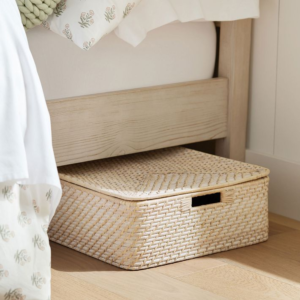
Inspect the floor and nearby surfaces before adding containers. If the area is damp or there is an unresolved leak, address the location rather than expecting the organizer to compensate.
A covered bag can limit ordinary dust exposure depending on its construction, but it is not automatically airtight, waterproof, or pest-proof. Choose claims that match the actual product.
Leave access for cleaning and follow any ventilation requirements for the bed or room. Filling every available gap is not necessary for the storage to be useful.
Use vacuum bags selectively
A vacuum storage bag can reduce the volume of suitable textiles, but it should be used according to both the bag and garment instructions. Some items need a different storage method to preserve their structure or care requirements.
Consider access. A bag that must be resealed and evacuated whenever you remove one item can be inconvenient for everyday clothing.
The compressed package also needs protection from sharp surfaces and a suitable place to rest. Do not force it under a low rail or assume that the film can tolerate repeated dragging.
If a vacuum bag expands, inspect the closure, valve, seams, and condition of the film according to its instructions. Compression does not eliminate the need to check fit and retrieve the package safely.
Arrange containers by retrieval order
Place the most frequently opened groups along the side you can reach. Put labels on that facing edge, not only on a lid hidden beneath the bed.
If the bed is accessible from both sides, assign each side a clear role. One can hold daily or seasonal clothing while the other holds spare linens, for example.
Adjust those groups around the bed’s supports and the side with room to pull each container out.
Avoid trapping one container behind another
Two small containers placed end to end may be difficult to use if the rear one has no reachable handle. Check whether removing the front container gives enough access to the second.
If it does not, use a different orientation or a container designed for the full depth. Do not attach an improvised pulling strap to a part that was not intended to carry that force.
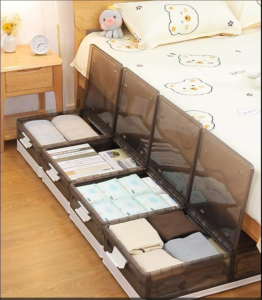
Leave an opening area
Decide where you will put a container while opening it. A narrow walkway may require a smaller bag that can be handled comfortably beside the bed.
If you must lift a heavy bin onto the bed every time, reconsider its contents or size. The storage should be manageable throughout the retrieval process.
Label for the next person opening it
Use labels that describe contents clearly: a bedding size, household member, season, or purpose. Choose the distinction that will help someone make a selection without opening the bag.
Update the label when the contents change. A clear window can help identify colors or broad groups, but may not reveal a sheet size or the full contents of a packed bag.
For several similar containers, keep a short list of what belongs in each. Avoid an elaborate inventory system unless it serves a real need.
Make cleaning and seasonal changes manageable
Plan to remove the containers when cleaning the area or changing seasonal contents. Use that opportunity to inspect handles, closures, the floor, and any contact points under the frame.
Clean the container according to its own instructions. Fabric bags can contain inserts or coatings that restrict washing, while rigid bins may have different care requirements.
Dry the container before refilling it. Store unused soft bags in the folded form intended by the manufacturer, keeping any removable inserts together.
If a group is repeatedly difficult to retrieve, move it nearer the edge or give it a smaller container. Maintaining the layout should not require rebuilding the whole system every time.
What if there is not enough clearance?
Choose a lower container or use another storage area. A bag that scrapes the frame when empty will usually become more difficult once filled.
Do not modify or raise the bed simply because a container is too tall. Any riser or other change needs to be compatible with the bed and supported by the relevant manufacturer instructions, including the complete loaded use of the bed.
For beds with built-in drawers or lifting mechanisms, follow their intended storage arrangement. Keep contents clear of moving parts and access points.
Frequently asked questions
Are bags or boxes better for under-bed storage?
Soft bags can suit flexible textiles, while rigid boxes provide a defined shape. Compare filled height, opening access, handles, floor conditions, and care requirements. Neither format is best for every bed.
Can I store everyday clothing under the bed?
Yes, if the container is easy to reach and open. Put daily items near the accessible edge and avoid a process that requires unpacking several groups. Less accessible space is usually more suitable for occasional items.
Do under-bed bags keep everything dust-free?
A closure can reduce exposure, but protection depends on the construction and condition of the bag. Avoid assuming airtight or complete dust-proof performance without support for that claim. Continue cleaning the surrounding area.
Can I put heavy items in a bedding bag?
Check the intended contents and load limits. A large volume does not establish that handles or seams can carry dense objects. Use a container designed for the weight and handling involved.
Are wheels helpful on carpet?
That depends on the wheels, load, and carpet. Wheels also add height. Check the filled container on the intended floor where possible and ensure it can move without becoming trapped beneath the frame.
How do I stop containers becoming forgotten clutter?
Give each group a clear purpose, label the visible edge, and review contents during seasonal changes or cleaning. If a container no longer has a useful role, decide what to keep before returning it to storage.
Choose the container after measuring the bed
Great Shine’s storage bag range includes under-bed and bedding storage directions. Compare the filled shape, opening, and intended handling with your measurements before selecting a particular construction.