Quick answer
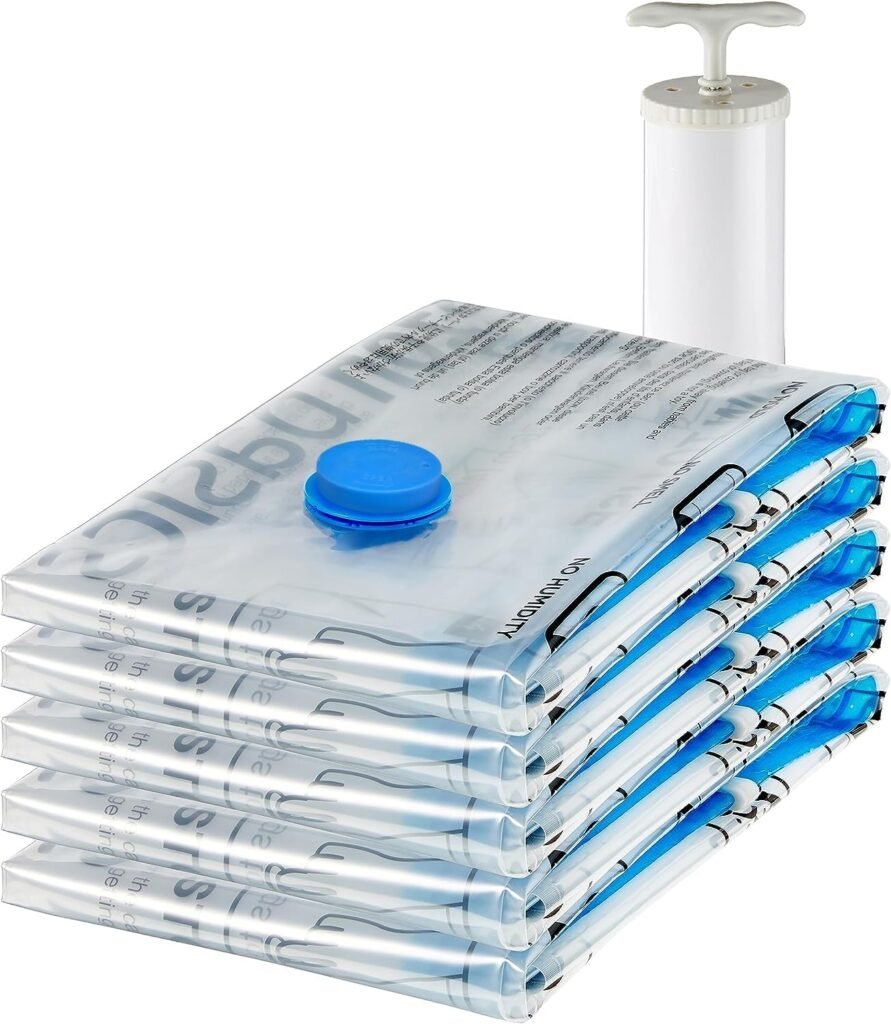
Yes, you can reuse vacuum storage bags for clothes when the bags are designed for repeated use and their film, seams, zipper seal, and valve remain in good condition. Empty and inspect the bag before refilling it, follow its cleaning instructions, and check that it holds compression after resealing. Replace a damaged bag or one that continues to let air back in after you correct the closure.
Check the bag each time you open it, using the manufacturer’s limits where provided. There is no single reuse count for all designs. Also check the clothes: a bag that can be reused may still be unsuitable for compressing a particular garment.
What makes a vacuum storage bag reusable?
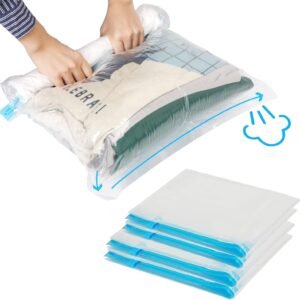
A reusable vacuum storage bag has an opening you can reseal and a way to remove air again. Before packing another load, check the film and seams as well as those moving parts.
Some manufacturers explicitly identify their products as reusable. Packmate’s FAQ, for example, confirms repeated use for its vacuum and roll bags. That supports the intended use of those products; it does not establish a lifespan for every storage bag.
Check the packaging or instructions for your own model. Do not assume that a sealed bag used to deliver a garment can be opened and reused in the same way as a purpose-made vacuum storage bag.
For the next storage cycle, make three decisions:
- Reuse it if the bag is clean, dry, intact, and closes correctly.
- Inspect and reseal it if the closure has trapped fibers or the bag has lost compression without obvious damage.
- Replace it if essential parts are damaged or it repeatedly fails to stay compressed after correct sealing.
Inspect the empty bag before refilling it
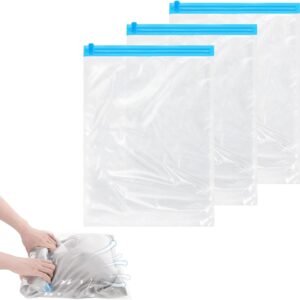
Open the bag using the method in its instructions and remove the contents gently. Lay it on a clean surface with enough light to inspect both sides.
Check the corners and the areas that were pressed against clothing hardware. Small tears or trapped fibers can be difficult to see while the contents are still inside.
Check the film and seams
Look for punctures, tears, split seams, or an area that has become visibly damaged. Pay attention to places that contacted a zipper pull, shelf edge, or another hard object.
An ordinary fold line is not the same as a hole. Examine a suspect area without stretching or pulling it apart. If you cannot tell whether a damaged section remains sound, ask the supplier before relying on it for another storage period.
Check the full zipper track
Remove loose fibers or debris using the permitted cleaning method. Look along the whole closure, including the ends where it can be difficult to see whether the tracks meet.
Check the slider if the design uses one. Its job is to help close the tracks; its presence does not prove that every section has sealed. Follow the instructions for confirming closure.
Check the valve and surrounding film
Inspect the valve housing, its connection to the bag, and any cap. Look for cracks, loose or missing parts, and damage around the attachment.
Valve designs differ. Do not remove an internal disc, foam piece, or seal because it looks like loose packaging. Easylife’s instructions for its vacuum storage bag set specifically warn that removing its foam valve component causes reinflation. Use the diagram for your own bag when identifying parts.
Clean the bag only as its care instructions allow
“Reusable” does not mean machine washable. The cleaning method must suit the complete bag, including its closure and valve.
If it held clean, dry clothing and remains clean, check whether the instructions call for anything beyond inspection before reuse. If cleaning is needed, follow the specified method instead of automatically soaking the bag or adding detergent.
For example, the Vacwel care guide permits wiping its bags clean by hand and drying them afterward, but rules out machine washing. This is product-specific guidance, so check your own brand’s instructions before applying it.
Allow the interior, folds, and closure to dry fully before packing. Avoid using heat to speed the process unless the instructions permit it. If the bag has contamination you cannot remove using the approved method, choose a replacement for clothing storage.
Check whether the next load suits compression
A bag may be ready for reuse while the next garment needs another storage method. Check care instructions for delicate, structured, decorated, or filled items before compressing them.
Consider what the item needs to retain its shape. A formal jacket, a garment with fragile trim, and an ordinary folded T-shirt should not automatically receive the same treatment.
Filled products deserve particular attention. Sea to Summit’s storage guidance recommends storing its sleeping bags uncompressed for the long term to protect the loft of their insulation. It illustrates why permission to compress an item for transport does not necessarily mean prolonged compressed storage is suitable.
Keep any review schedule specific to the bag and its contents. A routine interval suggested for one product should not become a rule that every garment can remain compressed for that long.
Repack without putting pressure on the closure
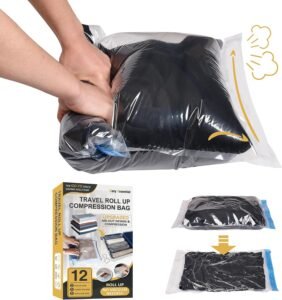
Choose a load that fits while leaving the required clearance at the opening. Use the bag’s marked fill line or specified gap rather than a measurement taken from a different product.
Fold suitable, clean, fully dry clothes into manageable groups. Keep protruding hardware from pressing against the film and remove hard items left in pockets. If a garment cannot be positioned without creating a sharp contact point, use another storage arrangement.
Follow the bag’s closing and air-removal sequence. Use a compatible pump or vacuum attachment, and finish with the valve and cap in the positions specified by the manufacturer.
Support the bag while handling it. Avoid pulling on the valve or treating the zipper edge as a loaded carrying handle. A compact package still contains the full weight of the clothing.
Group clothes by the occasion when you will need them. Keeping one person’s winter clothes together, for example, lets you retrieve that group without opening a bag of spare bedding.
What if the bag fills with air again?
Start with the closure and load, then inspect the valve and film if the problem continues. Keep the bag somewhere you can reach it while checking, so you do not have to unpack a shelf each time.
Start with the zipper and loading
Check whether clothing or fibers are trapped in the seal, and whether the contents crowd the closure. Open and rearrange the load if needed, then close the full track according to the instructions.
A closure that needs strong pulling to meet is a reason to reduce the contents or choose a larger bag. Forcing the opening closed can leave you with an awkward load even if it initially compresses.
Check the valve without dismantling it
Confirm that the required parts are present and correctly positioned. Follow the manufacturer’s method for seating or closing the valve, rather than tightening every visible part or removing an unfamiliar component.
If the pump cannot remove air, check the pump’s connection and compatibility as well. A poor connection during air removal and a bag that expands after storage are different problems.
Recheck the bag after correcting the problem
Remove air again using the approved method, then observe the bag as the instructions recommend. A photo of its shape can help you notice whether it expands, but it cannot measure leak performance or predict how long the seal will last.
If the bag repeatedly expands after you have corrected loading and closure issues, stop relying on it for vacuum storage. Ask the supplier about an appropriate replacement part, repair, or replacement bag.
When should you replace a used vacuum bag?
Stop using a bag for vacuum storage when an essential part is damaged or it continues to reinflate after correct sealing. Even a small puncture deserves attention if it prevents the bag from holding compression.
Reasons to stop using it for vacuum storage include:
- A puncture, split seam, or torn area that has no supported repair.
- Zipper tracks that remain damaged or will not close properly.
- A cracked valve or an essential component that cannot be replaced correctly.
- Repeated reinflation after the closure and loading have been corrected.
- Dirt, residue, or an odor that remains after the permitted cleaning process.
Before discarding a recently purchased bag, check the seller’s support and warranty process. Keep the product reference and describe the problem clearly, including whether it happens before pumping, immediately afterward, or later in storage.
Do not assume household tape restores the original seal or intended protection. If the manufacturer provides a repair method, follow its scope and recheck the bag before trusting it with clothes.
Store the bag so you can reuse it again
Place a filled bag where it will not scrape against rough surfaces or become trapped beneath other items. Leave enough room to remove it without dragging it by the closure.
Use a storage location suitable for both the bag and the garments. A sealed bag should not be expected to compensate for an unresolved leak, unsuitable heat, or damp clothing packed inside it.
If an outer box helps you handle the package, check that its edges will not damage the film. Make sure the bag fits without being forced into a shape that strains the closure or valve.
When the bag is empty, clean and dry it as needed, then fold or roll it in the way its instructions allow. Keep the slider and other removable parts together. Store the bag away from sharp objects, and keep plastic bags out of children’s reach.
Frequently asked questions
How many times can you reuse vacuum storage bags?
There is no universal number. Check the maker’s stated limits and inspect the bag each time. A reusable label does not mean a damaged bag should remain in service, and an intact bag does not need replacing solely because it has been opened before.
Do you need to wash the bag after every use?
Follow its care instructions and assess its condition. A bag that held clean, dry clothing may not need washing. When cleaning is necessary, use the approved method and let it dry completely before refilling it.
Does a missing slider mean the bag is unusable?
That depends on the closure. Some makers provide replacement sliders or instructions for closing the tracks without one. Ask about your specific design; do not assume that a slider from another bag will fit correctly.
Can you repair a small hole with tape?
Tape is not proof of a lasting repair. Use a repair method supported by the manufacturer, if one is available, and follow its limitations. Replace the bag when you cannot restore dependable compression.
Do clothes need washing after you open the bag?
Opening a bag alone does not determine whether clothes need washing. Check their condition and care requirements. If items are damp, stained, or have an unusual odor, address that before wearing or storing them again; do not just reseal them.
Can a reusable vacuum bag still wrinkle clothes?
Yes. Reusability describes the bag, not a wrinkle-free result. Fabric, folding, compression, and storage time affect how garments emerge. Use another method for items whose shape or finish should not be compressed.
Choose the next bag around the same checks
If you need a replacement, compare its usable size, closure, valve, compatible air-removal method, and care instructions. Look for a design that suits the clothes you store and the way you open and repack them.
Explore Great Shine’s vacuum storage bag options to compare formats. Before choosing a model, confirm how it should be reopened, cleaned, and checked for another use.