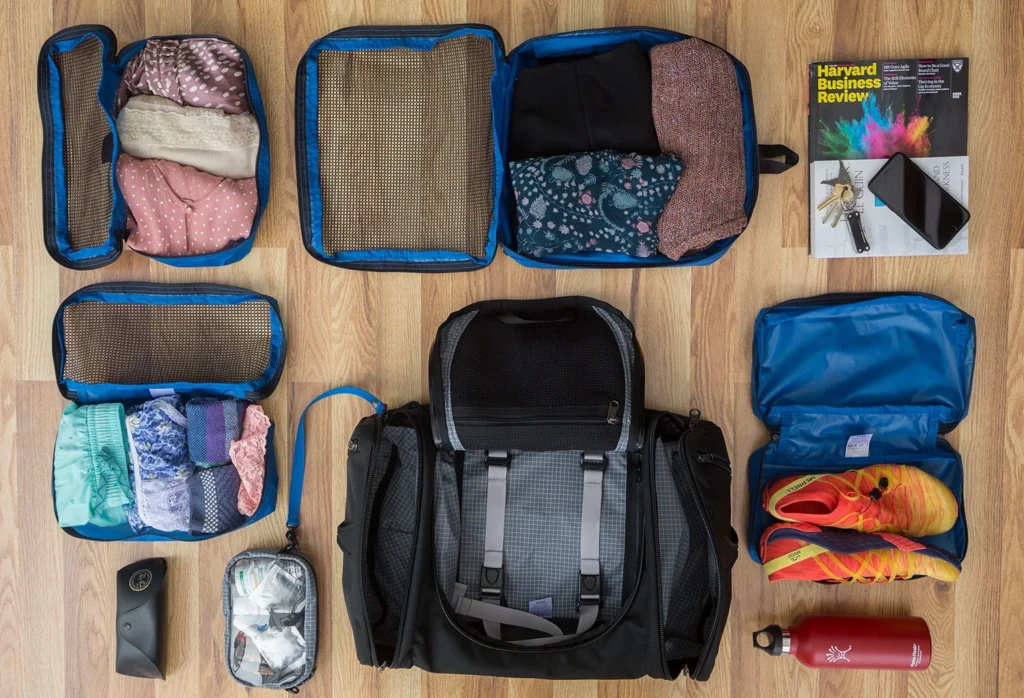
Quick answer
Choose a travel bag by looking at what you must carry, how far you must carry it, and where the packed bag must fit. A backpack suits routes with stairs and frequent walking. A wheeled case can reduce carrying on smooth surfaces. A duffel provides a wide opening and flexible packing, but its contents still have to be lifted. Check the specific bag’s dimensions, empty weight, carrying features, and closures before deciding.
A short work trip with a laptop and formal clothing may need a different layout from a longer trip with access to laundry. Use those contents and the route to judge the bag, alongside the number of nights away.
Start with the parts of the journey you cannot avoid
Picture the most awkward transfer on your route. That might be a station staircase, a long walk over paving stones, a crowded bus, or lifting luggage into a car. A bag that works for that moment is more useful than one that only looks convenient in a hotel room.
Write down which parts of the trip involve carrying, rolling, lifting, and waiting. Then consider what your hands need to do. A phone, travel document, mobility aid, or another person’s hand may make a shoulder strap or backpack more useful than two short handles.
Keep personal comfort in the decision. The same packed load can feel manageable to one traveler and unsuitable to another. Existing discomfort or limited grip strength should guide the carrying method and load you choose.
A mostly smooth route
If the journey runs from a car to an airport and then to a hotel, wheels may carry the load for much of the trip. You still need to lift the bag at certain points. Check the lifting handles as carefully as the pull handle.
Look at whether the wheels and handle housings occupy space inside the bag. A suitcase with a generous outer size may have less usable packing room than its appearance suggests.
A route with steps and uneven ground
Wheels cannot remove the need to carry luggage up steps. A backpack may be easier to manage when repeated lifting would interrupt the journey, provided its loaded size and fit suit you.
For a duffel, check how the bag hangs against your body. A long bag can swing or catch on narrow passages. A detachable shoulder strap is useful only when its attachment points, adjustment range, and padding work with the intended load.
Decide what needs its own space
Make a packing list before choosing compartments. Separate items that need quick access from items that can stay packed until arrival.
Clothing often tolerates a simple main compartment. A laptop, medication, travel documents, or fragile items may need more deliberate placement. Follow any special handling guidance for the items you carry rather than assuming a bag pocket provides adequate protection.
Start with these groups:
- Main clothing and sleepwear.
- Shoes and other items that can mark clean fabric.
- Toiletries that need containment if a bottle leaks.
- Items needed during the journey.
- Work equipment or fragile belongings.
The list shows whether you need separate compartments or a simple bag with a few removable organizers. Too many built-in pockets can make the interior harder to use if their shapes do not match your belongings.
Compare backpacks, duffels, and wheeled luggage
A backpack, duffel, and wheeled case handle the same load differently. Compare how you would lift, carry, and open each one at the difficult points on your route.
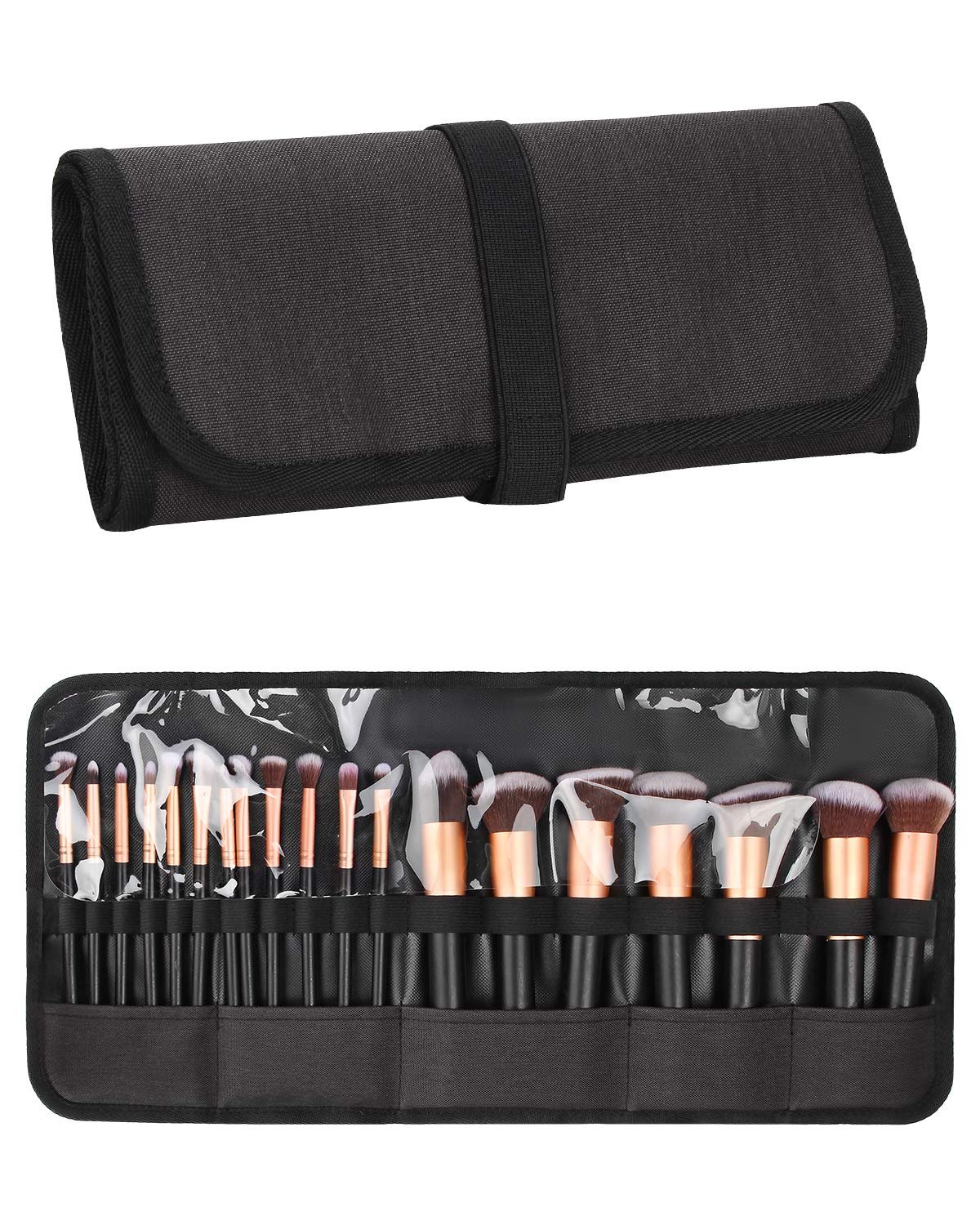
Travel backpacks
A backpack keeps your hands available and carries the bag close to your body. Its comfort depends on fit, the position of the load, and the length of time you wear it.
Check whether the shoulder straps adjust enough for you and whether the back panel feels comfortable when the bag is packed. A waist belt or chest strap is not proof of a comfortable design. It has to sit and adjust correctly for the person using it.
A full-opening backpack can make clothing easier to reach. A top-loading design may require you to remove several items to reach the bottom. Neither design is automatically better; the difference matters when you unpack only part of the bag at each stop.
Duffel bags
A duffel often has a broad opening that accommodates soft clothing and awkwardly shaped items. Soft sides may also make it easier to store the empty bag.
The tradeoff is load movement. Without enough structure or internal organization, items can settle toward the bottom and make the bag uncomfortable to carry. A shoulder strap does not eliminate the weight on your body.
Look for handles that remain comfortable when the bag is full. If the main handles join together, check whether you can still open the bag without repeatedly undoing an awkward wrap.
Wheeled luggage
Wheeled luggage is useful when much of the route allows rolling. Check how the bag behaves when loaded and whether the handle reaches a comfortable height.
Wheel position changes maneuvering and packing space. Rather than choosing only by wheel count, consider the surfaces you expect and whether you need to pull the bag behind you or move it beside you.
The exterior can be rigid or soft. A rigid shell changes how the bag opens and fits into tight spaces; a soft exterior can offer outside pockets. Neither construction means the contents are protected from every impact or water exposure.
Match the packed dimensions to transport limits
Use the rules for your booked service when choosing luggage size. Airline cabin allowances vary, so a general label such as “carry-on size” is not enough. IATA’s baggage guidance notes that allowances can depend on the airline, cabin class, and aircraft.
Check the carrier’s current dimensions and weight limits, including the rules for a personal item. If your journey uses more than one carrier, check every relevant segment.
Measure the bag as it will travel. Wheels, handles, bulging pockets, and an expanded compartment can affect the outside dimensions. A soft bag that fits when empty may not fit when tightly packed.
Keep access needs separate from allowance claims. A front pocket might be convenient at a station, but that convenience does not make the bag eligible for an airline category.
Look at empty weight before adding features
The bag’s own weight uses part of the load you must carry. Compare empty weights alongside construction and carrying comfort.
Extra pockets, wheels, a rigid frame, and thick padding can be useful, but each should serve a purpose. A heavier bag may be worthwhile if its structure solves a real handling problem. It is less useful when the extra components add weight without helping your route.
Avoid judging capacity from liters alone. Two bags with the same stated volume can pack differently because of their shape, internal dividers, and opening. Use the items on your list to judge usable space.

Leave enough room to close the bag without forcing the zipper. A bag that depends on maximum pressure to close will be frustrating when you repack in a hurry.
Check closures and carrying points
A zipper, handle, or strap deserves a closer look because it experiences repeated handling. Examine how the parts connect to the body of the bag.
Move the zipper around corners and through any section where fabric bunches. Check whether you can hold the fabric clear while opening and closing it. A large pull tab can be easier to grip, but its size alone says little about the zipper’s durability.
For handles and straps, look at the attachment area and any visible reinforcement. These observations help you compare construction; they do not establish a tested load rating. Use the maker’s stated limits and instructions where available.
If a strap is removable, check that the hooks close securely and that the strap cannot twist into an uncomfortable position. Try adjusting it with the bag packed to the intended load.
Choose organization that helps you retrieve things
An organized bag lets you remove the item you need without disturbing everything else. It does not need a separate pouch for every object.
Place travel essentials in a compartment you can reach while the bag is in its normal carrying position. Store items needed only at the destination deeper inside. Keep belongings that can leak or mark fabric in suitable separate containment.
Packing cubes can group clothing by person, outfit, or category. Check their filled dimensions against the usable interior. A cube that presses against the bag’s corners may waste space even if its nominal capacity sounds suitable.
If you will live out of the bag, choose organizers that open in the available room. A small hotel shelf may be easier to use with two narrow pouches than one large cube.
Understand the limits of material descriptions
Words such as nylon, polyester, canvas, or coated fabric describe part of a bag’s construction. They do not tell you the whole bag’s resistance to wear, water, or repeated loading.
Consider the fabric together with seams, lining, zippers, base, and reinforcement. A fabric panel that resists a splash does not make an unsealed zipper waterproof.
If wet weather is likely, look for specific care and water-protection information. Keep sensitive belongings in suitable additional protection when needed. Do not assume a general travel bag can safely be submerged or left outside in heavy rain.
Cleaning instructions also matter. Some bags allow only surface cleaning because a coating, backing, frame, or padding may be damaged by soaking or machine washing.
Try a realistic load before committing
If the seller’s return conditions allow an indoor trial, pack the bag with the things you expect to take. Keep labels and packaging as required by those conditions.
Carry or roll it in a safe indoor space. Check whether the handles are comfortable, whether the bag tips when opened, and whether the contents stay organized. Try taking out the item you are most likely to need during transit.
For a backpack, adjust the straps before judging the fit. For a duffel, compare carrying it by hand and with the shoulder strap. For wheeled luggage, check both rolling and lifting, since your journey may require each.
The trial can reveal a poor match even when the specifications look suitable. It is a personal fit check, not a durability test or proof of how the bag will perform on every trip.
Common buying mistakes
Buying a larger bag to avoid packing decisions can create a heavier load and make handling harder. Choose room for the belongings you need, with enough flexibility for ordinary repacking.
Another mistake is choosing a bag only for one feature. A separate shoe compartment is useful only if it fits your shoes without taking too much room from clothing. A laptop pocket should match your device and the protection it needs.
Finally, consider where the empty bag will live. A bag that works during travel may still be inconvenient if it cannot fit into your storage space at home.
Frequently asked questions
Is a backpack or duffel better for a weekend trip?
The route matters more than the number of nights. A backpack can suit longer walks and stairs. A duffel can work well when you mainly lift the bag between a car and your accommodation. Compare both with your expected load.
Can a soft travel bag exceed its listed size when packed?
Yes. Soft sides and outside pockets can bulge. Check the fully packed outer dimensions against the transport provider’s current rules rather than relying only on the empty dimensions.
Do more pockets make a travel bag better?
Only when the pockets fit your belongings and access needs. Unused dividers can consume space or make bulky items harder to pack. A simple interior with removable organizers may be more flexible.
Does a water-resistant bag protect a laptop in heavy rain?
That claim alone is not enough. Protection depends on the whole construction, including openings and seams, and the conditions of exposure. Follow the bag’s stated limitations and use suitable additional protection for sensitive equipment.
Should shoes go at the bottom of a travel bag?
They should be contained and positioned so they do not mark clothing or create uncomfortable pressure. The best location depends on the bag’s shape, balance, and access. Clean and dry shoes before packing them for storage or travel.
Can I machine wash a travel bag?
Only if its care instructions allow it. Padding, coatings, frames, and trims may need surface cleaning. Empty the bag, follow the specified method, and let it dry fully before storing it.
Choose the bag around your journey
Before choosing, check the bag with your expected load and measure its packed size. Make sure you can reach your travel essentials and store the empty bag at home.
For examples of duffel bags and removable travel organizers, explore Great Shine’s travel bags and organizers. Check each product’s configuration and dimensions against the way you plan to travel.