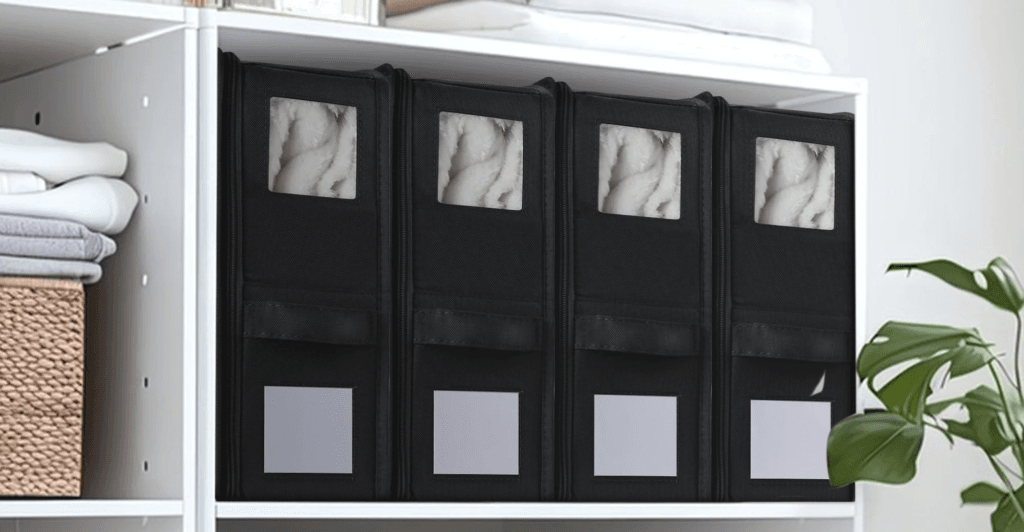
Quick answer
Bed sheet organizer wholesale costs depend on the product you are specifying: its usable size, shell material, structural inserts, closure, labeling, packaging, and order quantity. To compare suppliers fairly, send the same specification and ask each one to separate the unit price from development, packing, and delivery charges.
Start with a representative folded bedding set. A low-priced organizer that cannot hold the intended sheets comfortably creates a fit problem before it reaches the customer. Confirm the approved sample, packing arrangement, and inspection requirements before comparing the final cost per sellable unit.
Define what you mean by a bed sheet organizer
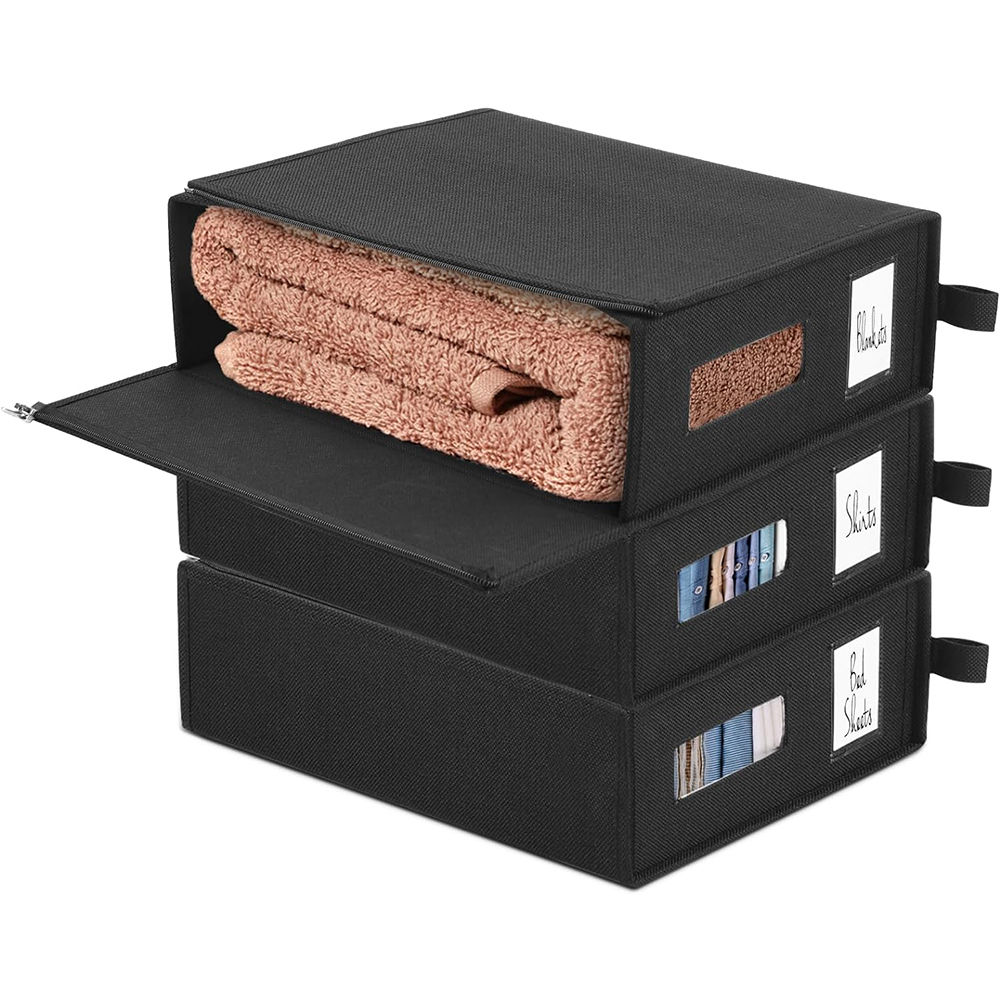
The term can describe several different products. A zippered fabric storage bag, a structured folding case, and a wrap-style organizer may all be sold for bedding, but they use different components and production steps.
Give suppliers a clear product description rather than only a category name. Include a reference drawing or a sample you are authorized to use, then explain which features are essential and which may change.
At minimum, define the intended contents and method of use. Will the customer store one complete sheet set, several pillowcases, or a folded duvet cover? Will the organizer sit horizontally on a shelf, stand upright, or be carried by a handle?
These decisions affect construction and cost. A handle intended only for pulling an organizer forward has a different job from one used to carry a full load.
Use a bedding set to establish fit
Size names such as queen or king do not define the packed volume of a bedding set. Fabric weight, fitted-sheet depth, included pieces, and folding method all influence the space required.
Prepare a representative set and fold it in the way the intended customer is likely to use. Include the pillowcases and other pieces advertised as part of the set.
Measure the folded bundle, then allow usable room for loading and closure. Do not send only external organizer dimensions and assume the interior will match. Linings, boards, seams, and folds can reduce the usable space.
Ask the supplier to confirm fit with the agreed bundle or equivalent documented contents. A product photograph with an unspecified blanket inside does not establish that your sheet set will fit.
Clarify the measurement method
State whether dimensions describe the empty product, the assembled shape, or the loaded organizer. For a soft bag, specify how it should be supported or filled during measurement.
Agree tolerances for the measurements that matter. A minor difference in an unused outer flap may be less important than a smaller opening that prevents the bedding bundle from entering.
Treat those tolerances as a specification to confirm with the supplier. Do not assume a universal tolerance applies to every material and construction.
Understand the main product cost drivers
Ask each supplier to list the proposed components beside the price. You can then see whether two offers use the same shell fabric, inserts, and closure before comparing their cost.
Shell fabric and lining
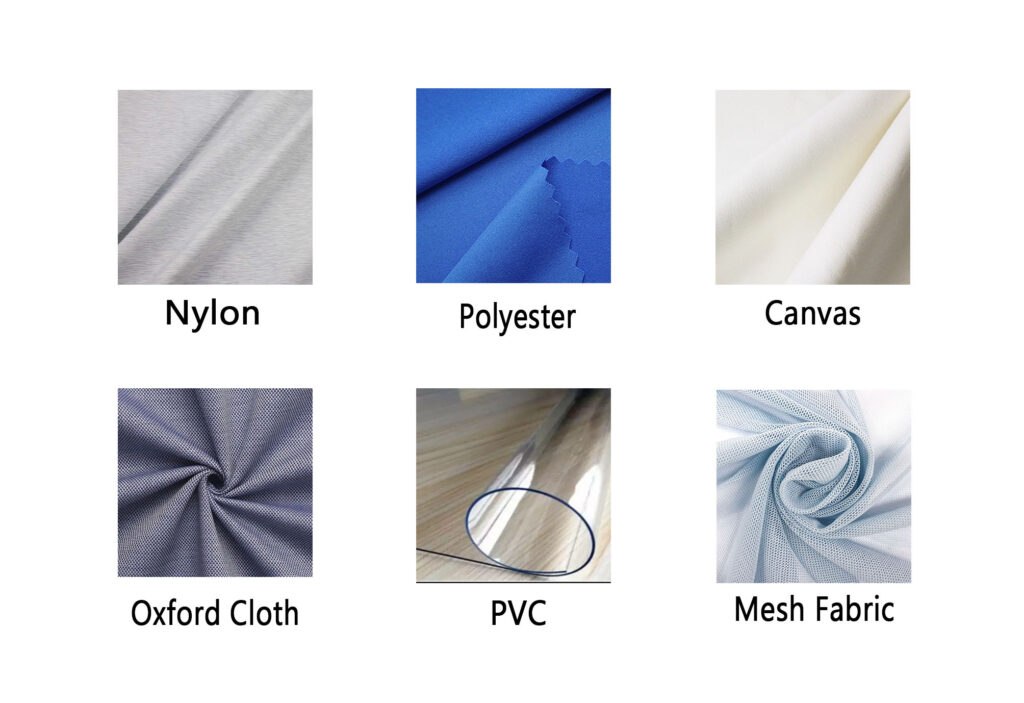
Identify the material, relevant weight or thickness, finish, color, and any backing or lining. If exact material specifications are not available yet, ask for clearly labeled alternatives and samples.
A fabric can be selected for appearance, cleanability, structure, or another practical requirement. Choose the properties needed for the product rather than treating a higher fabric weight as automatic proof of better quality.
Large clear windows, printed areas, and additional lining panels can add material and handling steps. Decide whether they help the customer identify the bedding or merely complicate production.
Rigid inserts and support panels
Structured organizers may use inserts in the base, sides, or lid. Specify their material, dimensions, and placement because those components affect shape, folding, weight, and cleaning limitations.
Ask whether the panels are removable and how they are enclosed. A loose insert, a sewn-in panel, and a fully enclosed board can create different assembly and care requirements.
Do not accept an unexplained substitution simply because both materials are described as “rigid.” Confirm the intended performance and review a sample of any proposed change.
Closures and handles
A zipper running around several sides uses a different construction from a short opening or a wrap closure. The opening should make loading practical without forcing the customer to compress the bedding excessively.
Handles require a clear intended use. Specify their placement and ask how attachment strength will be evaluated for the agreed load and handling method.
Additional handles may improve access from different shelf orientations, but they also add components and sewing. Keep them where they serve an actual use.
Labels, printing, and identification
A label window or writable identification area can help distinguish sets. Decide whether the customer needs to identify bed size, room, contents, or another category.
For branded products, provide artwork, placement, size, color requirements, and the chosen labeling method. A quote for a simple sewn label should not be compared as though it includes a large multi-color print.
Ask whether artwork preparation, setup, or sample changes are included. Confirm how repeat orders will handle the approved artwork and color reference.
Compare quantity by the actual order mix
Order quantity may influence pricing, but the total number of units is only part of the picture. Several sizes, colors, and packaging versions can create a more complex order than the same number of identical products.
Ask suppliers to quote the exact mix you intend to buy. Identify the quantity for each size and color, and state whether packaging changes between versions.
If you request price breaks, keep the specification constant across quantities. Otherwise, a lower price at a larger quantity may hide a material or packing change.
Confirm minimum quantities separately for the finished product, custom fabric, printing, and packaging where relevant. A supplier may be able to produce a small sewing run while a custom component requires a larger purchase.
Separate development costs from production costs
Sample development can involve pattern work, material sourcing, printing setup, and revisions. Ask which charges are one-time costs and which recur on later orders.
Clarify what the sample price includes. A stock sample that demonstrates construction is different from a sample made to your dimensions, material, and branding requirements.
Agree how revisions will be handled. If the initial brief changes after sampling begins, confirm the effect on cost and schedule before treating the revised sample as part of the original offer.
Keep records of the approved version. A dated specification, photographs, and an identified reference sample help the buyer and supplier discuss the same product during production.
Include retail and shipping packaging
Packaging can affect both product presentation and transport cost. Ask for the individual pack and master carton details that correspond to the quoted product configuration.
For a folding organizer, confirm the packed shape rather than assuming it ships completely flat. Inserts, stiff trims, and bundled accessories may limit how small the pack can become.
Request the number of units per carton, carton dimensions, and gross weight. Treat preliminary figures as estimates until the approved product and packaging can be measured.
For retail or marketplace sales, specify required labels and instructions. Confirm the latest requirements with the actual selling channel rather than relying on a supplier’s general claim that its packaging is suitable for every platform.
Calculate the delivered cost on one consistent basis
A quoted unit price is not always the delivered cost. List the charges included in each offer and identify those that you will pay separately.
Your comparison may need to include:
- Product cost for the confirmed order mix.
- Development and setup charges allocated to the order.
- Individual and master carton packaging.
- Inspection or testing that you have agreed to purchase.
- Freight, insurance where arranged, and destination handling.
- Applicable import charges and onward delivery.
Have the responsible logistics or customs professional confirm the treatment of destination charges for your shipment. Do not use an assumed duty percentage or an old freight quote as a current fact.
A practical calculation is total included order cost divided by the number of sellable units expected from that order. Define the basis carefully and avoid assuming zero loss, zero damage, or a fixed return rate without evidence.
Use the same currency, delivery scope, and quote validity date when comparing suppliers. If one offer ends at a different delivery point, compare the remaining transport costs separately.
Use sample approval to confirm the intended fit
An attractive empty sample can still fail the customer’s basic task. Load the agreed bedding set and work through the actions the product is meant to support.
Check whether the set enters without excessive force, the closure works without catching fabric, and the organizer can be removed from the intended shelf. If a handle is intended for carrying, evaluate that use under agreed conditions.
Review the assembled shape, panel placement, visible workmanship, and ease of reading the label. Also check the folded shipping arrangement and the instructions required to restore the product to its usable form.
Record where and how a sample fails the intended task. For example, “the fitted sheet catches at the rear corner of the opening” identifies a problem the supplier can investigate. Agree whether the next step is a design revision or correction of a manufacturing defect.
Set inspection criteria before the order
Agree what will be checked before shipment and how results will be recorded. The criteria should follow the approved specification rather than a generic promise of strict quality control.
Relevant checks may include dimensions, component identity, appearance, label accuracy, closure operation, and agreed functional evaluations. Define any destructive or repeated-use tests separately, including the method and sample quantity.
If you need a formal sampling plan or third-party inspection, agree it with a qualified provider. Do not describe a visual check of one sample as proof that an entire production lot meets every requirement.
Confirm how nonconforming goods will be handled before production starts. Clear responsibilities make a quote more useful than a vague assurance that problems will be solved later.
Reduce cost without removing the product’s purpose
Review decorative trims and other optional features first. Keeping the usable dimensions protects the fit already established with your bedding reference, while removing an unnecessary trim may reduce cost without changing that fit.
Standardizing materials across a small range can simplify sourcing. Reducing packaging variation may also make the order easier to manage. Ask suppliers to explain the savings for each change rather than bundling several changes into one unexplained lower price.
Keep a record of what the lower-cost version gives up. A smaller label window, different insert, or shorter zipper may be acceptable, but the buyer should make that decision knowingly.
Recheck fit after cost changes. Seemingly small alterations can affect how easily a full set enters or how the product sits on a shelf.

Frequently asked questions
What is the normal wholesale price of a bed sheet organizer?
A useful price requires a defined size, construction, quantity, packaging, and delivery basis. Broad online ranges may refer to different products. Request comparable quotes for one specification before setting a purchasing budget.
Why can two organizers with the same dimensions cost differently?
Their fabrics, panels, closures, handles, branding, workmanship requirements, and packaging may differ. External dimensions also do not guarantee the same usable interior or opening size.
Does a larger order always lower the total cost?
It may lower the unit price, but it also increases the quantity purchased and stored. Compare the full order commitment, inventory needs, and confirmed cost changes rather than focusing only on the price per unit.
Should I approve a stock sample for a custom order?
A stock sample can help assess general construction. It should not replace confirmation of your custom dimensions, materials, fit, branding, and packaging when those features differ.
Can one organizer size fit every bedding set?
That depends on the included pieces, fabric bulk, and folding method. Test representative sets and describe the intended fit clearly. A bed-size label alone is not enough to establish packed volume.
Which details should I send with an initial quote request?
Send the intended contents, usable size, construction preferences, quantity by version, branding, packaging needs, destination, and required delivery scope. Identify unresolved choices so suppliers can quote alternatives clearly.
Request a quote that can be checked
Prepare one specification and one bedding reference, then use them for every supplier discussion. Compare the approved construction and delivery scope before negotiating a lower number.
For related product formats, view Great Shine’s storage bags, including bedding storage bags. Share the folded-set measurements and intended handling method when asking which construction may suit your project.