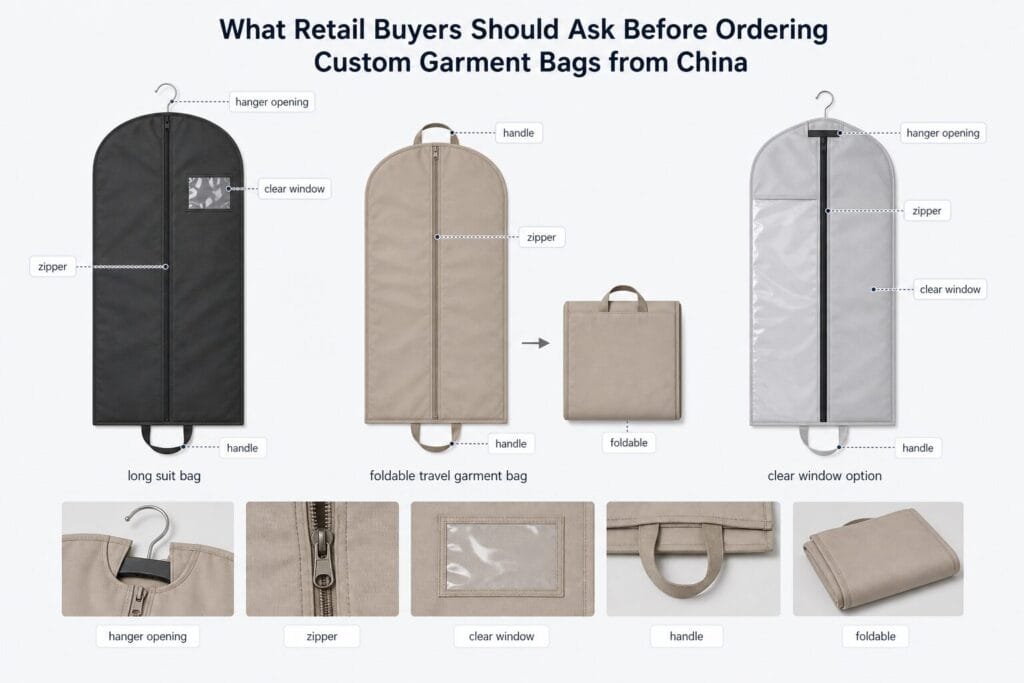
Ordering custom garment bags from China can be a strong sourcing option for apparel brands, retailers, hotels, travel programs, uniform suppliers and private label buyers. The key is not only finding a garment bag manufacturer. Buyers need to define the right material, size, structure, logo method, packaging, sample expectations and quality-control checks before requesting a quote.
For commercial buyers, the best RFQ is specific enough for a supplier to understand the intended product, but flexible enough to allow practical OEM or ODM suggestions. Before contacting a factory, prepare your garment type, target market, quantity range, material preference, logo requirement, packaging style and any inspection standards your company uses. This helps reduce unclear pricing, sample revisions and production delays.
Great Shine supports wholesale and custom garment bag programs for retail, travel and apparel use. Buyers can review the main wholesale garment bags page or contact the team through request a custom quote when the specification is ready.
Why Retail Buyers Source Custom Garment Bags from China
Garment bags are used across several B2B channels. Apparel brands need protective covers for suits, dresses, coats or uniforms. Retailers may need foldable garment bags for seasonal apparel lines. Hotels and travel suppliers may need private label garment covers for guest services or travel kits. Promotional buyers may need logo garment bags for events, uniforms or membership programs.
China remains a common sourcing market because buyers can discuss custom size, fabric, color, logo placement, zipper structure, handles, windows, folding design and retail packaging in one development process. However, a low unit price is not enough. A garment bag that looks acceptable in a product photo may still fail the buyer’s use case if the fabric weight, zipper quality, stitching, gusset size or packaging method is not aligned with the retail program.
A good supplier conversation should therefore focus on function first: What garment will the bag hold? How will it be displayed, shipped, stored or carried? Will the user expect a reusable travel bag, a retail cover, a wardrobe storage bag or a promotional giveaway? These answers shape nearly every specification.
Start with the Intended Garment and Selling Channel
Before comparing materials or logo methods, define the product scenario. A garment bag for suit retail packaging does not need the same structure as a reusable travel garment bag. A hotel laundry cover may require different handling than a private label closet storage bag. A promotional garment bag may prioritize logo visibility and budget control, while a premium retail program may need a better hand feel, stronger zipper and cleaner packaging.
Buyers should prepare these details before requesting prices:
- Garment type: suit, dress, coat, uniform, robe, sample apparel or general clothing storage.
- Selling channel: retail shelf, ecommerce, hotel supply, wholesale distribution, corporate uniform program or promotional campaign.
- Target market: United States, Europe, Japan, South Korea or another region.
- Expected use: dust protection, travel carrying, closet storage, apparel delivery, event giveaway or retail packaging.
- Product positioning: basic, mid-range, premium, promotional or private label.
These details help the supplier recommend whether a simple non-woven cover, foldable garment bag, PEVA garment bag, fabric garment bag or structured travel garment bag is more suitable.
Key Product Specifications to Confirm
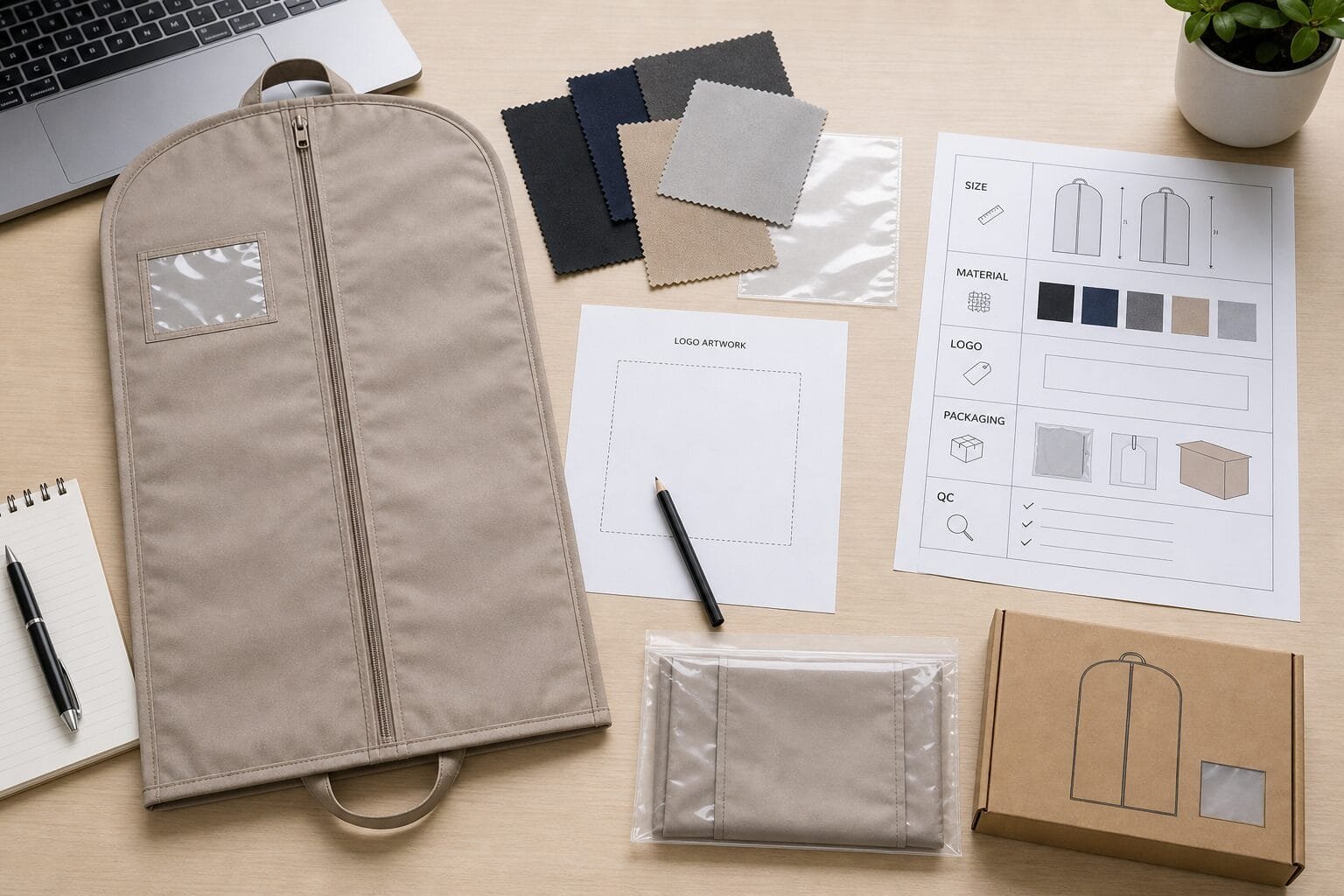
Retail buyers should not send only a reference photo and ask for the cheapest quote. A garment bag has several specification points that affect usability, cost, packaging and perceived quality.
Size and Capacity
Ask the supplier which dimensions are suitable for your garment type. A suit bag, long dress bag and coat bag may require different length, width and gusset depth. If the product must fold, confirm the folded size and whether handles or snaps are needed.
Important questions include:
- What finished size is recommended for this garment type?
- Does the bag need a gusset for thicker coats or multiple garments?
- Should the bag include a hanger opening, zipper, carry handle or foldable snap?
- Is the size based on flat measurement or finished usable space?
- What size tolerance should be expected in bulk production?
Material and Thickness
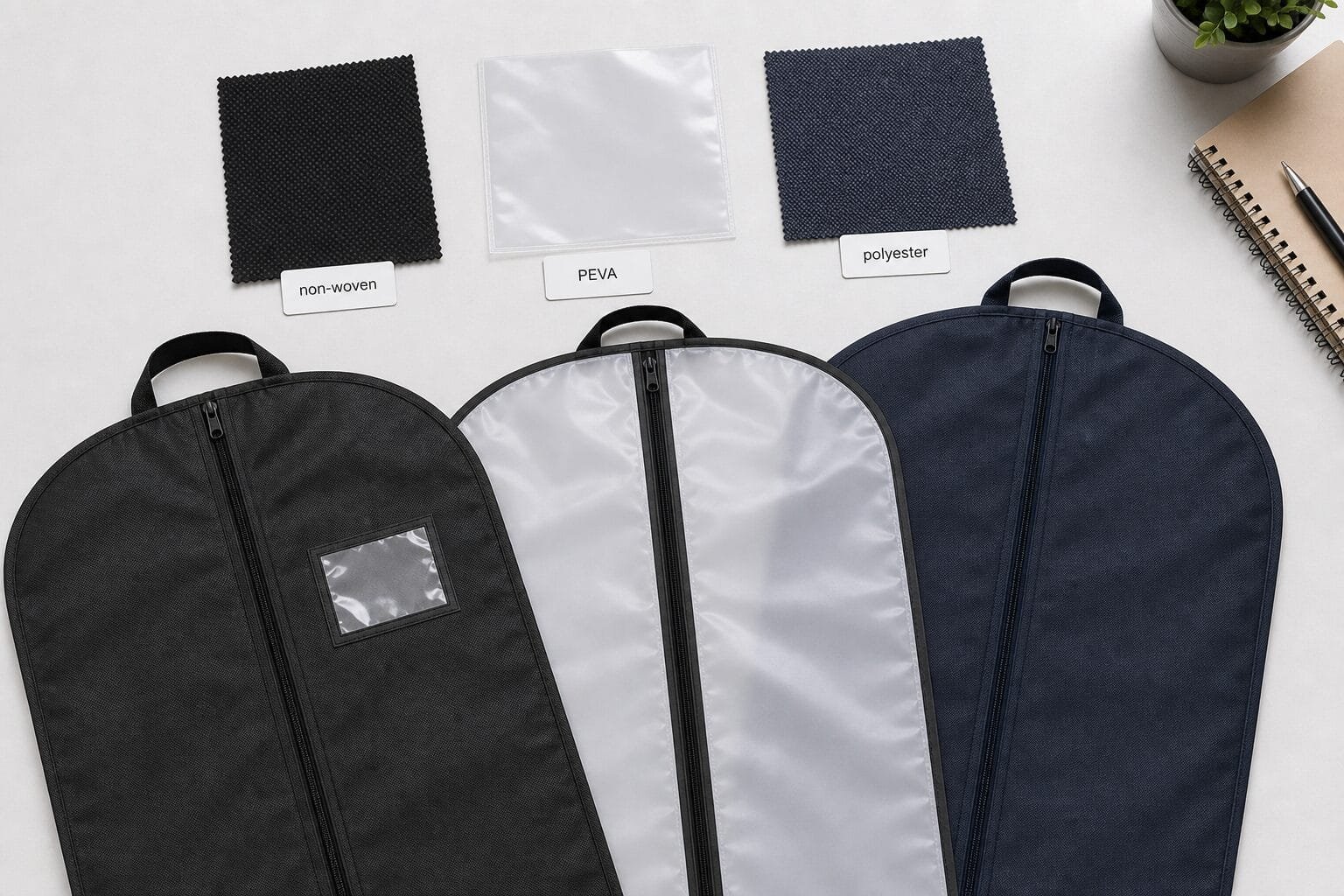
Common garment bag materials may include non-woven fabric, PEVA, PVC, polyester or other fabric options depending on the buyer’s program. Do not assume one material is automatically best. The right choice depends on target price, reuse expectations, visibility, hand feel, structure and packaging.
Non-woven fabric is often used for economical garment covers and promotional programs. PEVA or clear plastic-style options may be selected when visibility is important. Polyester or fabric garment bags can suit reusable travel or retail programs that need better durability and appearance. If a buyer has restricted substance, sustainability or market-specific compliance requirements, those should be provided as formal requirements for supplier confirmation rather than assumed.
Zipper, Opening and Structure
The zipper and opening design affect user experience. A center zipper is common, but some products may need side opening, full-length zipper, reinforced hanger opening, handles, pockets, transparent window or folding features.
Ask whether the zipper length is enough for the garment to be inserted easily. Confirm zipper puller material, stitching around stress points, binding, handle reinforcement and whether the hanger opening is cleanly finished.
Logo and Branding
Custom garment bags can support private label branding through logo printing, woven labels, care labels, hang tags, packaging inserts or printed packaging. The right method depends on material and order requirement.
Ask what logo methods are suitable for your selected material. A supplier should also confirm artwork file format, logo size, color count, placement, print area and whether a pre-production sample or print proof is recommended.
Material, Structure and Buyer Fit Comparison
| Option | Common Buyer Use | Advantages | Points to Confirm Before Ordering |
|---|---|---|---|
| Non-woven garment bag | Apparel packaging, promotional programs, economical retail covers | Lightweight, customizable, practical for bulk programs | Fabric weight, stitching, zipper quality, print method, handle reinforcement |
| PEVA or clear garment bag | Closet storage, visibility-focused retail or travel programs | Garment can be seen easily; suitable for some storage uses | Material thickness, clarity, smell control, folding marks, market requirements |
| Polyester or fabric garment bag | Reusable travel, private label retail, higher perceived value | Better hand feel and stronger reusable positioning | Fabric specification, lining if any, zipper grade, handle strength, packaging cost |
| Foldable garment bag | Travel, business apparel, ecommerce bundles | Easier to carry and store; useful for gift or travel sets | Folded size, snap or handle design, reinforcement at stress points |
| Garment bag with window or pocket | Retail display, uniform management, sample storage | Helps identify garment or documents | Window material, pocket placement, stitching strength, barcode or label needs |
Use this comparison as a starting point. The final choice should match your target consumer, retail price point, packaging plan and inspection expectations.
MOQ, Sampling and Development Questions
MOQ is often one of the first questions buyers ask, but it should not be the only question. Different materials, logo colors, packaging styles and custom sizes may affect the supplier’s minimum order requirements. Instead of asking for one general MOQ, ask for MOQ by specification.
Useful questions include:
- What is the MOQ for an existing ODM style with custom logo?
- What is the MOQ for a fully custom OEM size or structure?
- Does MOQ change by material, logo method, fabric color or packaging style?
- Can the supplier provide a sample before bulk production?
- What details are needed before a sample can be made?
- Are sample charges, mold charges or print setup charges required?
- What should the buyer approve before mass production begins?
If your company has a launch calendar, ask the supplier to explain the typical sequence: specification confirmation, quotation, sample, sample approval, packaging confirmation, bulk production and inspection. Do not rely on estimated lead times unless they are confirmed for your exact project.
Packaging Questions for Retail and Ecommerce Programs
Packaging is not only a final step. It affects product cost, carton size, retail presentation, barcode placement and shipping efficiency. A garment bag for wholesale distribution may need simple bulk packing, while a private label retail product may need insert cards, poly bags, hang tags, printed cartons or ecommerce-ready packaging.
Before ordering, confirm:
- Will each garment bag be packed individually or in bulk?
- Does the buyer need a barcode, SKU sticker, hang tag, insert card or retail sleeve?
- Should the packaging show the product folded or flat?
- Are there carton weight or carton dimension limits?
- Does the packaging need to protect clear windows, zipper pulls or printed logos?
- Will the product ship to a retailer warehouse, Amazon-style warehouse, distributor or local importer?
Buyers working on OEM and private label programs can also review Great Shine’s OEM/ODM private label bag manufacturing service page for related customization considerations.
Quality-Control Questions Before Bulk Production
For garment bags, quality control should focus on practical construction checks instead of unsupported performance claims. Buyers should define what must be checked at sample approval and during production inspection.
Important QC points include material appearance, fabric weight or thickness confirmation, color consistency, odor check where relevant, zipper smoothness, stitching alignment, handle strength, logo position, logo color, window clarity, size measurement, folding function, packaging accuracy and carton labeling.
Ask the supplier:
- What sample will represent the approved production standard?
- How will the supplier check size, stitching, zipper and logo placement?
- Can the supplier provide production photos or inspection records if requested?
- What happens if the bulk product differs from the approved sample?
- Which defects are considered critical, major or minor under the buyer’s inspection plan?
If your company uses third-party inspection, share the checklist with the supplier before production. This avoids disagreement after goods are completed.
Buyer Checklist Before Sending an RFQ
Before requesting a quotation for custom garment bags from China, prepare the following information:
- Product type: suit bag, dress bag, coat bag, foldable travel garment bag, retail cover or closet storage bag.
- Target size: length, width, gusset depth and folded size if applicable.
- Material preference: non-woven, PEVA, PVC, polyester, fabric or supplier recommendation.
- Structure: zipper type, hanger opening, handles, window, pocket, foldable snaps or reinforced binding.
- Logo requirement: print method, logo size, color count, placement and artwork file.
- Packaging: individual packing, hang tag, insert card, barcode label, retail packaging or bulk carton.
- Quantity range: estimated order quantity and repeat-order potential.
- Target market: United States, Europe, Japan, South Korea or other destination.
- Quality expectations: inspection checklist, sample approval standard and any buyer-specific requirements.
- Timeline: desired sample approval date and target delivery window for supplier confirmation.
A complete RFQ makes supplier comparison easier. It also helps identify which garment bag manufacturer is asking practical questions and which supplier is simply quoting without understanding the program.
When to Choose OEM, ODM or a Standard Wholesale Style
Buyers often use the terms OEM and ODM differently, so it helps to clarify the development route.
An ODM garment bag style may be suitable when you want to use an existing structure and customize color, logo or packaging. This can be efficient for buyers who need a practical product quickly, subject to supplier confirmation.
An OEM garment bag is more suitable when the buyer has a specific size, construction, material combination or retail requirement. OEM development may involve more sampling and specification work, but it gives the buyer more control over product fit and brand positioning.
A standard wholesale garment bag may be enough for basic distribution, testing a market or placing an initial commercial order. However, if the product will carry your brand or appear in a retail program, confirm whether logo, label and packaging customization are available.
Great Shine’s custom bag manufacturer page explains broader OEM and private label bag options across travel, storage, cosmetic, cooler and garment bag categories.
How to Compare Garment Bag Suppliers
When comparing suppliers, do not judge only by the first quoted price. Ask whether the supplier understands your target market, can explain material tradeoffs, can support customization, can provide practical sample guidance and can communicate clearly about packaging and QC.
A strong supplier should be able to discuss:
- Which material fits the product’s use case and price level.
- Whether the requested size and structure are practical.
- Which logo method fits the material.
- What packaging options match retail or ecommerce needs.
- What information is needed before accurate pricing.
- What quality checks should be confirmed before bulk production.
For buyers sourcing from overseas, communication quality matters. If a supplier does not ask about material, size, target use, packaging or quality expectations, the quote may be incomplete.
Requesting a Quote from Great Shine
If you are preparing a retail, wholesale or private label garment bag program, send Great Shine your target size, quantity range, material preference, logo artwork, packaging idea and destination market. You can also share reference photos, but the final product should be developed around your own specifications and brand requirements.
Start with the wholesale garment bags page to review garment bag manufacturing options. If you already have a specification, use the contact page to request a custom quote. For one product example, you can also review this foldable customized garment bag supplier page and confirm the exact material, structure and claim wording before using it for your own market.
FAQ
What information should I send when asking for custom garment bags from China?
Send the product type, size, material preference, order quantity range, logo requirement, packaging style, target market and any quality-control checklist. Reference photos are useful, but written specifications are more reliable for accurate pricing.
Can I order private label garment bags with my logo?
Yes, many garment bag programs can be customized with logo printing, labels, hang tags or packaging. The available logo method depends on the selected material, logo colors, print area and order specification.
Which material is best for wholesale garment bags?
There is no single best material. Non-woven fabric may suit economical apparel covers, PEVA or clear materials may suit visibility-focused storage, and polyester or fabric options may suit reusable travel or premium private label programs. Buyers should choose based on use case, retail positioning and quality expectations.
What should I check in a garment bag sample?
Check finished size, material feel, zipper smoothness, stitching, hanger opening, handle reinforcement, logo position, window clarity if applicable, folding function and packaging. The approved sample should become the reference for bulk production.
How do I compare garment bag manufacturers in China?
Compare suppliers by specification understanding, material recommendations, customization ability, sample process, packaging support, QC communication and responsiveness. A very low price may not include the same material, structure or packaging assumptions.
Should I choose OEM or ODM garment bags?
Choose ODM when an existing supplier style fits your needs with minor branding changes. Choose OEM when your retail program requires a specific size, structure, material combination, packaging format or private label design.
Request a Quote
To prepare an accurate quotation, send Great Shine your garment bag type, target size, estimated quantity, logo artwork, preferred material, packaging request and target market. The team can review your specification and suggest practical customization options for wholesale, OEM, ODM or private label garment bag programs.