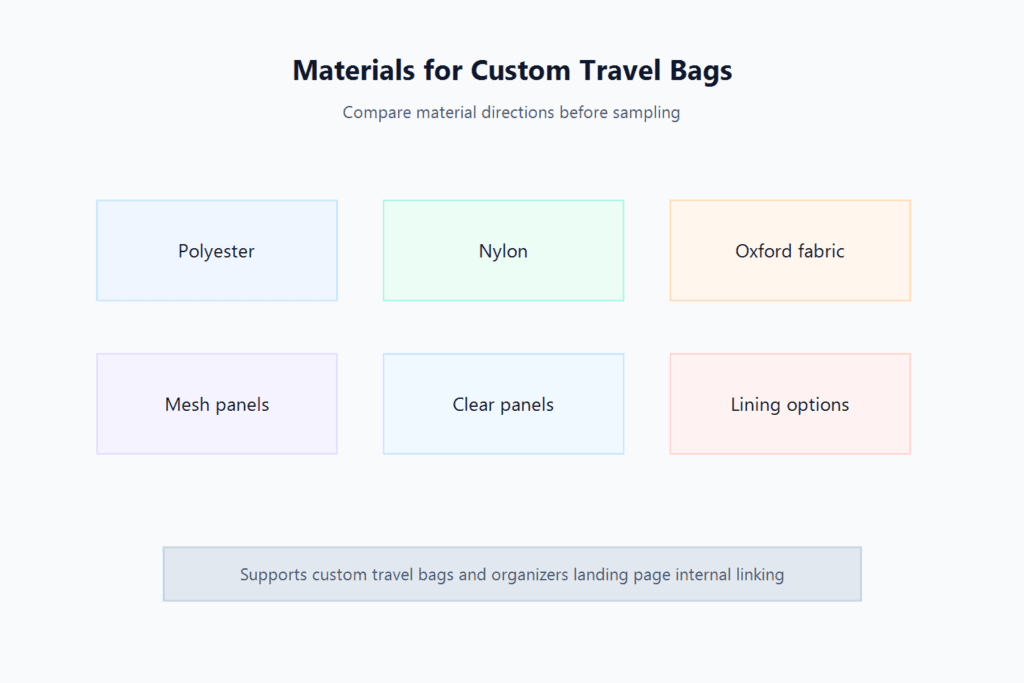
Material choice affects how a travel bag looks, feels, folds, prints, protects contents, and fits a target price band. For custom travel bags and organizer products, there is no single best material for every order. The right material depends on the product type, buyer channel, branding method, packaging plan, and any documentation your retailer requires.
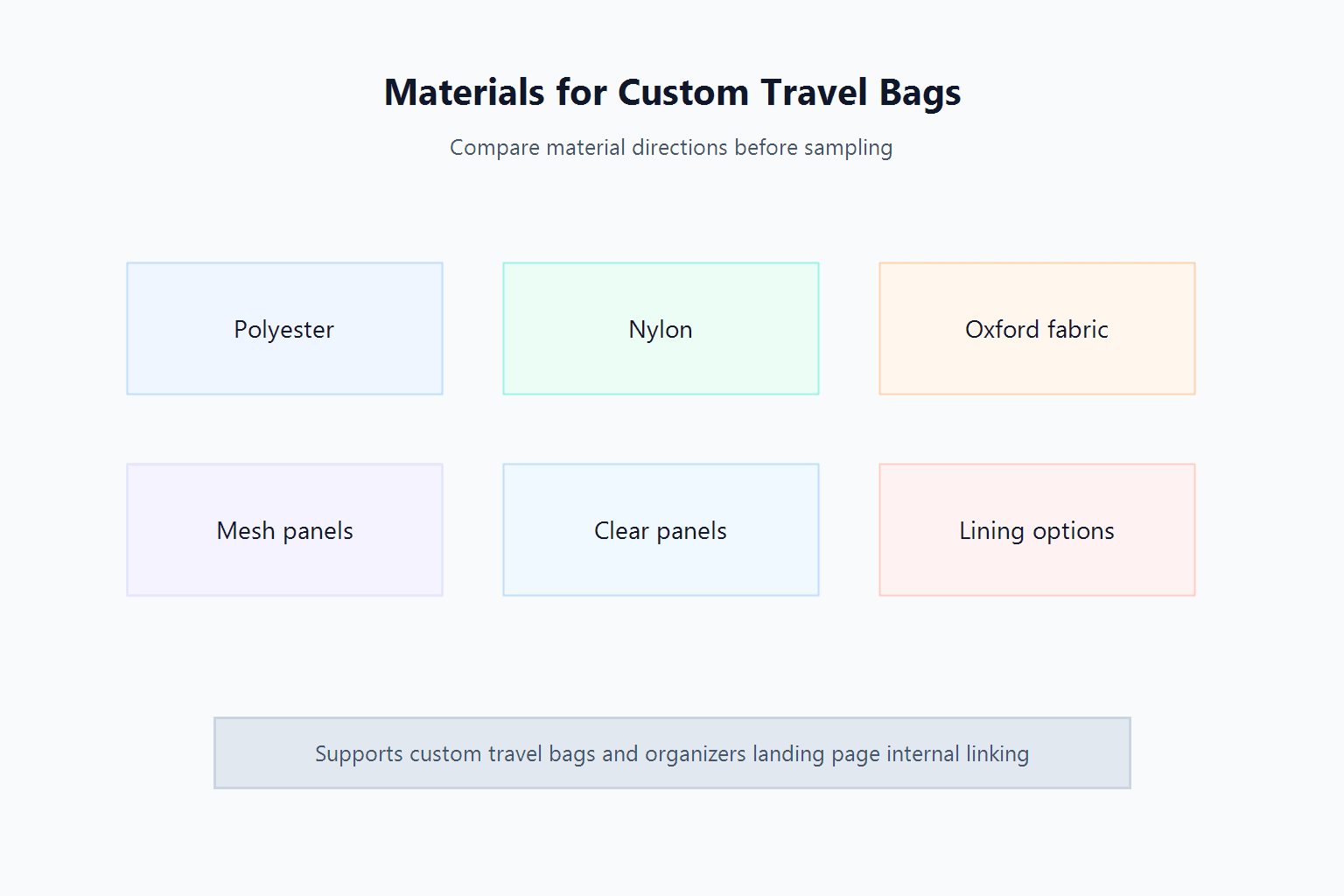
This guide compares common material directions for packing cubes, toiletry bags, cosmetic organizers, shoe bags, laundry pouches, tech organizers, and related travel storage products. For category-level manufacturing support, link your planning back to Great Shine’s custom travel bags and organizers manufacturer page.
Polyester
Polyester is one of the most common material directions for travel bags and organizers. It can work for packing cubes, shoe bags, laundry pouches, toiletry bags, cosmetic bags, and general travel pouches. Buyers choose it because it supports different weights, colors, prints, linings, and cost levels.
When sourcing polyester products, confirm fabric weight, weave, coating if any, hand feel, color standard, and print compatibility. A lightweight polyester may fit value-focused packing cubes. A heavier or textured polyester may suit a more structured pouch or travel organizer. Do not assume performance claims from the word polyester alone. If the product needs water resistance, recycled content, or compliance documents, request confirmation from the supplier.
Nylon
Nylon can be used when buyers want a smoother hand feel, lighter weight direction, or a more travel-oriented appearance. It may be relevant for pouches, organizers, packing accessories, or products where compact folding matters. The final result depends on fabric specification, coating, lining, zipper selection, and construction.
Ask whether nylon is necessary for the target buyer or whether polyester can achieve the same commercial goal. Nylon may change cost and sourcing assumptions. For private label programs, compare real swatches before choosing.
Oxford Fabric
Oxford fabric is often considered when a product needs a more structured appearance. It can be used for travel organizers, shoe bags, toiletry bags, and other storage products where a more substantial feel is desired. The term Oxford can cover different weights and finishes, so buyers should request exact material details.
Useful questions include:
- What denier or material weight is proposed?
- Is the fabric coated or laminated?
- Does the surface support the required logo method?
- Will the material fold cleanly for packaging?
- Does the hand feel match the retail position?
Oxford fabric may look stronger than a lightweight plain weave, but the final quality still depends on stitching, zipper, lining, and QC.
Mesh
Mesh is common in packing cubes because it lets buyers see contents and can reduce the visual weight of the product. It can also be used in pockets, compartments, or breathable panels. Mesh quality matters because loose or weak mesh can affect perceived value.
For packing cubes, confirm mesh density, softness, color match, seam construction, and whether the mesh placement supports the intended use. A full mesh top may be useful for visibility. A partial mesh panel may look cleaner for retail. The right choice depends on product style and target price.
Clear Panels and PEVA
Clear panels can be useful for cosmetic organizers, toiletry bags, document pouches, or products where visibility is important. PEVA and other clear material directions may be considered depending on the product. Buyers should confirm thickness, flexibility, odor expectations, folding behavior, and target market requirements.
Avoid making unsupported claims such as environmental, water-protection, or special compliance claims unless the supplier provides documentation. For travel organizer products, clear material is often a design and visibility choice first. Compliance and performance requirements should be confirmed separately.
Linings and Components
Lining changes how a travel organizer feels and performs in daily use. Toiletry bags, cosmetic bags, and tech pouches often need lining more than simple packing cubes. Ask whether the lining is required, which material is recommended, and how it affects cost, sewing complexity, and sample approval.
Small components can affect product quality as much as the main fabric. Zippers, zipper pulls, webbing handles, elastic loops, hooks, labels, binding, and buckles should be included in the specification. Do not compare quotes unless the component assumptions are the same.
Material Selection Table
| Product Type | Common Material Direction | Key Buyer Check |
|---|---|---|
| Packing cubes | Polyester, nylon, mesh | Fabric weight, mesh quality, zipper, set sizing |
| Toiletry bags | Polyester, Oxford, lining, clear panels | Lining, pockets, zipper, hook, logo placement |
| Cosmetic organizers | Polyester, clear panels, lining | Cleanability expectation, transparency, structure |
| Shoe bags | Polyester, non-woven, Oxford, mesh | Size, ventilation direction, closure, packaging |
| Tech organizers | Polyester, Oxford, lining, elastic | Pocket layout, structure, cable storage, padding direction |
| Laundry pouches | Lightweight polyester or mesh | Folding, closure, print, bundle use |
How to Request Material Samples
Ask for material swatches before approving a private label travel product. A swatch helps compare hand feel, color, surface finish, thickness, and print compatibility. For structured products, request a full sample because fabric behavior changes after cutting, sewing, lining, and packing.
A strong RFQ should include target use, preferred material direction, color, logo method, packaging, estimated order quantity, and required documentation. For broader product planning, reference the custom travel bags and organizers manufacturer page so the supplier understands the category and related products.
FAQ
What is the best material for packing cubes?
There is no universal best material. Polyester with mesh is common, but the right choice depends on target price, size set, zipper quality, color, and packaging.
Should toiletry bags use lining?
Many toiletry bags benefit from lining, but the exact lining depends on structure, cost target, and buyer requirements. Confirm lining material and sample performance before bulk production.
Can travel bag materials be customized for private label programs?
Yes. Material, color, logo, lining, mesh, clear panels, zipper pulls, labels, and packaging can often be customized. Exact options depend on product type, quantity, and supplier capability.