Choose a travel bag by listing the clothes, equipment and documents you need, then checking how they will be carried and where the packed bag must fit. Trip length helps estimate the load, but laundry access, work equipment and special clothing can matter more than the number of nights.

Write a packing list before choosing a size
Group the contents into clothing, footwear, toiletries, electronics and documents. Add anything that needs separate protection, such as formal clothing or equipment. Remove items that can be shared, washed or obtained at the destination where practical. Use the resulting load to compare bags rather than selecting an unsupported universal litre capacity for a trip duration.
Choose a bag you can handle along the route
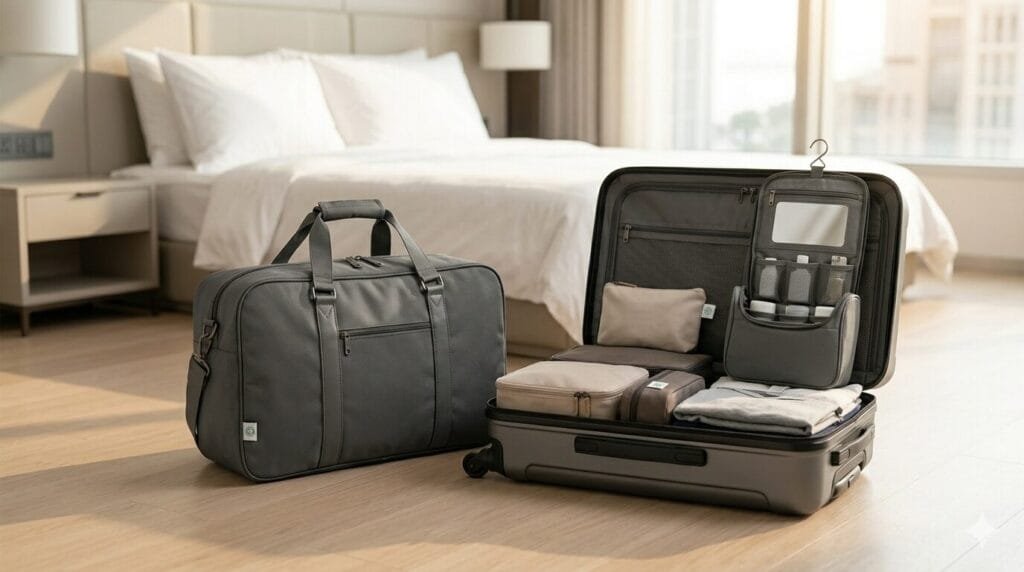
A backpack leaves your hands free but places the load on your body. A duffel has a flexible shape and a wide opening but still needs lifting. Wheeled luggage can be convenient on smooth routes, while steps and uneven ground may require carrying. Try the intended load with the handles, strap or wheels before deciding.
Check the packed dimensions against transport requirements
Check the current size and weight limits for your ticket and operator. Include projecting handles, wheels and any filled outer pockets when measuring. Do not assume a bag described as carry-on is accepted on every airline or fare type.
Plan how to retrieve important items
Keep travel documents, medication and other essentials accessible as appropriate to your journey. Review whether you can reach them without opening the main compartment in a crowded place. Separate items that may leak and follow the relevant transport rules for liquids and restricted contents.
Use organizers around the actual packing layout
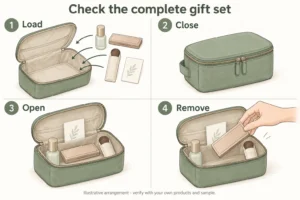
Test packing cubes with representative clothing in the chosen bag. Check opening access and the filled dimensions rather than assuming a cube set will fit every suitcase. A garment bag may be useful for hanging clothing, but its fold and packed shape need a separate check. Compression does not remove weight or guarantee wrinkle-free clothes.
Make a trial pack
Pack the full list, close the bag without force, weigh it and rehearse carrying or pulling it. Remove an item from the middle and repack it to check access. If the load is difficult to control, reducing the contents can be more useful than adding another compartment.
How many bags should you take?
Take only the pieces you can manage together along the route, within the applicable ticket allowance. Consider transfers, stairs and whether a smaller bag attaches securely to the main piece. A combination that works while standing still may become awkward during a transfer.
Planning a travel range for retail
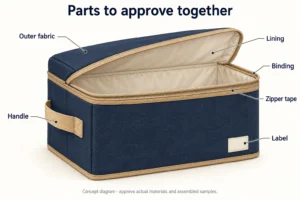
For a brand or retailer, define the customer task and test the proposed assortment together. Compare travel bags and organizer configurations by load, access and packaging. Keep shopper advice separate from claims about factory capability or market growth.