A practical reference for buyers, brand builders, and sourcing managers choosing the right fabric for storage bags.
Fabric choice is the single most consequential decision in storage bag manufacturing. It dictates durability, perceived quality,
cost, weight, and how the finished product photographs and feels in a customer’s hands.
Yet most sourcing conversations skip straight to “send me a quote” without anchoring on the right fabric for the right use case.
That’s how brands end up with a beautiful sample that fails in real-world use — or pay premium prices for fabric that
overspec’d the application.
This guide is a practical reference chart for the seven fabrics most commonly used in storage bag manufacturing, with notes on
weight ranges, durability, cost tier, and best use cases. Bookmark it for your next sourcing conversation.
The Master Comparison Chart
| Fabric | Typical GSM | Denier | Durability | Water Resistance | Cost Tier | Best For | Watch Out For |
|---|---|---|---|---|---|---|---|
| Non-woven | 60-100gsm | — | ★★☆ | ☆☆☆ | Low $ | Light closet storage, promo bags, gift bags, single-use items | Tears under load; not for repeated use |
| Polyester (210D-600D) | 80-200gsm | 210D–600D | ★★★ | High (PU coated) | $$ | Travel organizers, packing cubes, everyday storage | Quality varies wildly – specify denier |
| Oxford (300D-1680D) | 150-400gsm | 300D–1680D | ★★★★ | High (with coating) | $$$ | Under-bed storage, garment bags, heavy-duty storage | Heavier, increases shipping cost |
| Canvas (8–16 oz) | 270-540gsm | — | ★★★ | Low-Medium (untreated) | $$$$ | Premium storage, decorative bins, retail display | Heavy, slow to dry when wet |
| Ripstop Nylon | 40-200gsm | — | ★★★ | ★★★ | $$$ | Ultralight packing cubes, travel sets | Higher material cost |
| PEVA / PVC | Variable | — | ★★★ | Fully Waterproof | $$$ | Toiletry bags, garment bag windows, wet/dirty storage | Some regions restrict PVC; choose PEVA for compliance |
| Recycled Polyester (rPET) | 80-200gsm | Medium | ★★★ | High | $$–$$$ | Eco brands, retail with sustainability positioning | 10–20% cost premium vs virgin polyester |
Fabric Deep-Dive
1. Non-woven Polypropylene – Cheapest, Most Limited
- Strengths: Low cost, lightweight, breathable, recyclable, prints well for promotional graphics
- Weaknesses: Tears under sustained load, not waterproof, looks “cheap” at premium price points
- Best for: Promotional gift bags, lightweight closet storage, one-use shopping bags, Christmas storage where load is light
- Avoid for: Heavy items (clothing weight), repeated daily use, premium positioning
2. Polyester (210D-600D) – The Workhorse
- 210D-300D: Light travel organizers, packing cubes, cosmetic bags
- 420D-600D: Everyday storage bags, shoe bags, garment bags
- Strengths: Excellent customization (printable, dyeable), affordable, durable, water-resistant with PU coating
- Weaknesses: Quality varies enormously by source – always specify denier and request samples
- Best for: Most general-purpose storage and travel categories
3. Oxford (300D-1680D) – Heavy-Duty Choice
- Strengths: Excellent abrasion resistance, holds shape, very durable with coatings
- Weaknesses: Heavier (adds shipping cost), more expensive, can feel “industrial” at lighter weights
- Best for: Under-bed storage, large wardrobe storage, garment bags for daily use, Christmas tree storage, heavy seasonal storage
4. Canvas (8-16 oz) – Premium Look and Feel
- Strengths: Premium hand feel, photographs well, takes printing/embroidery beautifully, “natural” brand positioning
- Weaknesses: Heavy (shipping cost), slow to dry if wet, more expensive, can shrink if washed
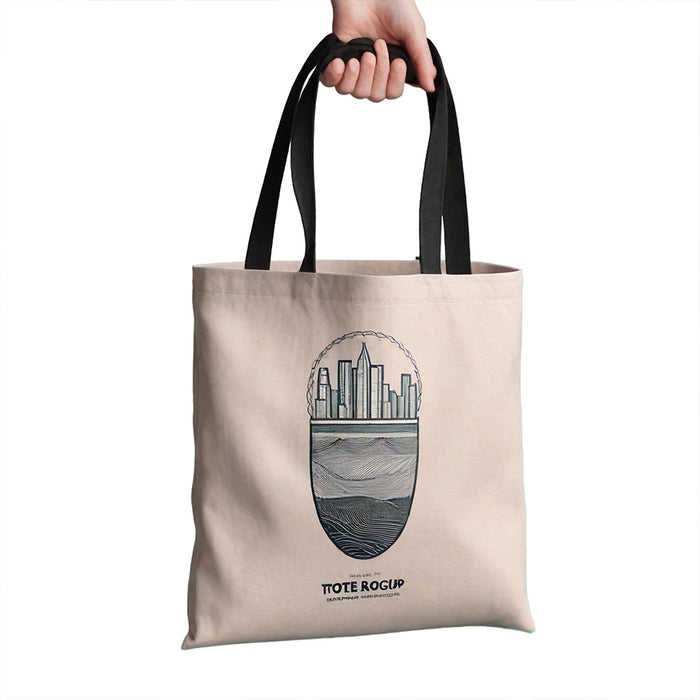
- Best for: Premium retail storage bins, decorative storage, gift sets, beach/market totes
- Tip: Add a poly lining for moisture protection while keeping the canvas exterior look
5. Ripstop Nylon – Ultralight Travel
- Strengths: Very lightweight, tear-resistant, water-resistant with coating, packs compact
- Weaknesses: More expensive than standard polyester, less “premium” feel
- Best for: Travel packing cubes, ultralight compression bags, outdoor storage
6. PEVA / PVC – Water and Wipe Resistance
- Strengths: Fully waterproof, wipe-clean, can be transparent (TSA-friendly toiletry bags, garment bag windows)
- Weaknesses: Some markets restrict PVC (EU REACH, California Prop 65) – PEVA is generally preferred for compliance
- Best for: Toiletry bags, transparent makeup bags, clear under-bed storage windows, wet/dirty separation pouches
7. Recycled Polyester (rPET) – Sustainability Positioning
- Strengths: Comparable performance to virgin polyester, sustainability narrative, GRS certifiable
- Weaknesses: 10-20% cost premium, supply consistency varies
- Best for: Sustainability-positioned brands, retailers with ESG mandates, eco-conscious DTC
Quick Decision Framework
- Closet / under-bed storage that holds clothing weight → 600D Oxford
- Packing cubes for travel → 300D polyester or ripstop nylon
- Cosmetic / toiletry bags → coated polyester or PEVA
- Promo / gift bags → non-woven polypropylene
- Premium retail bins / decorative storage → cotton canvas
- Christmas tree / wreath storage → 600D Oxford (must survive attic conditions)
- Sustainability-positioned line → rPET (any of the above)
What’s Often Missed in Fabric Sourcing
- Coatings matter as much as fabric. A 300D polyester with proper PU coating outperforms an uncoated 600D in water resistance. Always specify coating type and weight.
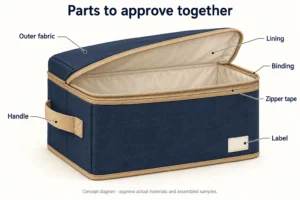
- Lining is its own decision. The interior lining drives wipeability, moisture protection, and perceived quality – especially for cosmetic, toiletry, and travel categories.
- Material certifications. OEKO-TEX (chemical safety), GRS (recycled content), FSC (paper/packaging) – increasingly required by retailers and consumers.