OEM and ODM storage bags can both work for private label, retail, wholesale and import programs, but they solve different sourcing problems. For buyers comparing OEM ODM storage bags, the practical question is how much product control your brand needs before sampling. Choose OEM when your brand already has a clear product design, reference sample or technical specification. Choose ODM when you want to start from supplier-developed storage bag structures and customize material, color, logo, packaging or small structural details.
The right route depends on how much control you need, how quickly you need to validate the product, how different the bag must look from existing market options, and how much specification work your team can provide before sampling. This guide explains how B2B buyers should compare OEM and ODM routes before sending an RFQ for custom storage bags.
For broader bag development, Great Shine’s custom bag manufacturer page shows how different soft-goods categories can be developed across materials, size, logo, packaging and structure. If your main goal is private label development, the OEM/ODM private label bag manufacturing page is the most relevant internal reference.
Quick Answer: When Should Buyers Choose OEM or ODM?
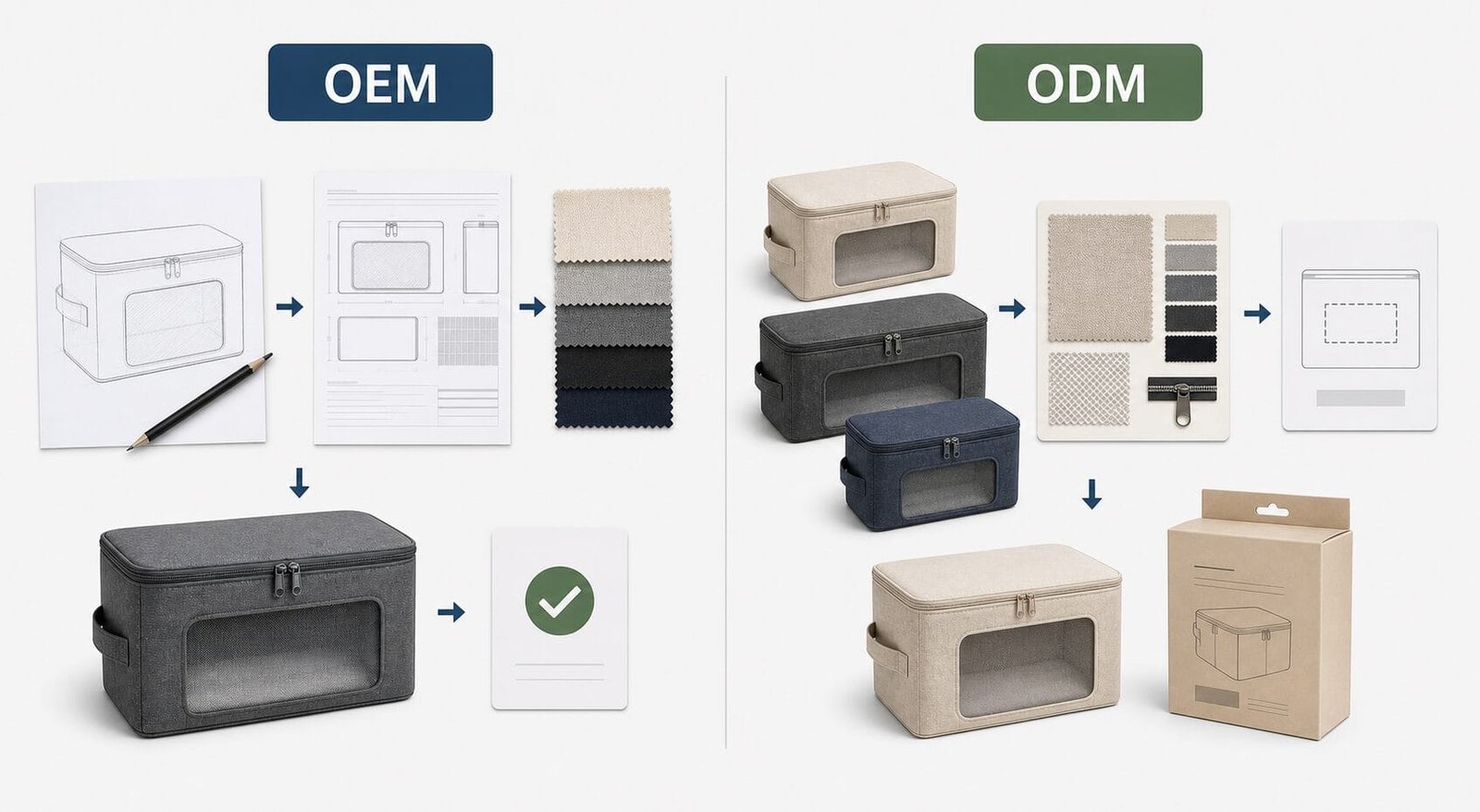
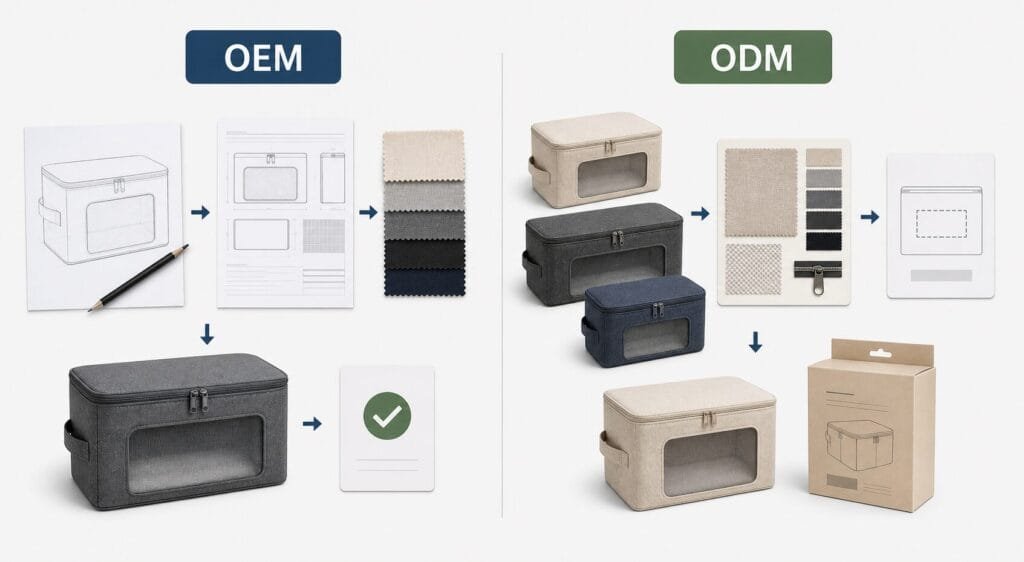
Choose OEM storage bags if your product needs a specific design, shape, construction method, compartment layout, handle position, transparent window, zipper route, folding method or retail packaging format. OEM is better when the buyer owns the product concept and wants the manufacturer to turn that concept into samples and bulk production.
Choose ODM storage bags if your team wants to reduce early development work by reviewing existing supplier styles first. ODM is useful when the buyer needs a practical storage bag line quickly, wants to test a product direction, or can accept an existing structure with changes to material, color, logo and packaging.
Neither route is automatically better. A retailer building a differentiated home organization collection may prefer OEM. A distributor testing several storage categories may prefer ODM first. A private label brand may use ODM for the first launch and move into OEM later after market feedback.
OEM vs ODM Storage Bags: Side-by-Side Comparison
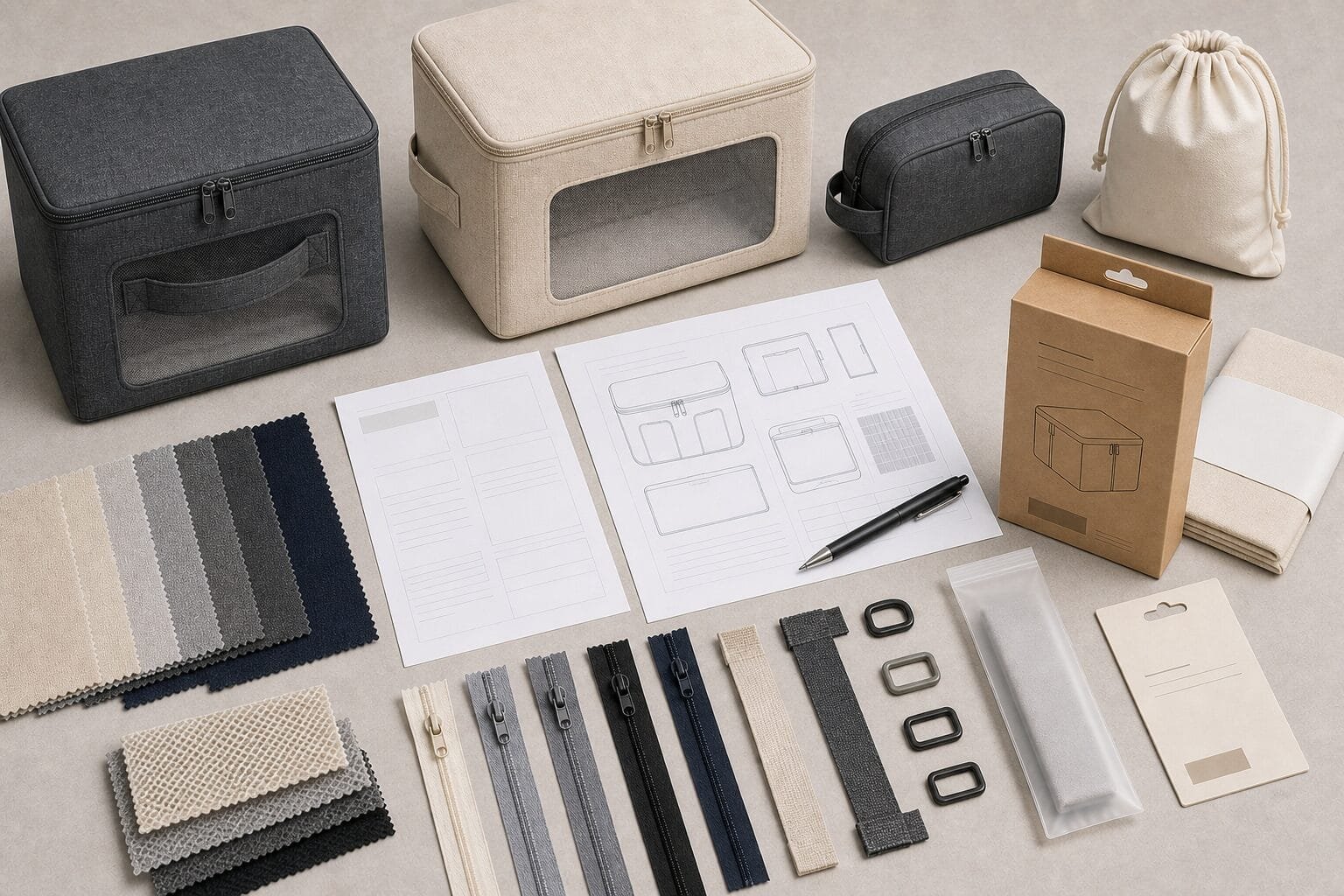
The table below gives a practical sourcing view for buyers comparing custom storage bag development routes.
| Decision Area | OEM Storage Bags | ODM Storage Bags | Buyer Question to Ask |
|---|---|---|---|
| Starting point | Buyer design, drawing, tech pack, reference sample or detailed written specification | Supplier-developed sample, existing pattern or recommended structure | Do we already know the exact product we want to make? |
| Design control | Higher control over dimensions, structure, components and appearance | Moderate control, usually within available structure limits | Is differentiation more important than speed? |
| Sampling work | More confirmation needed before the first approved sample | Often faster to review initial options because samples or patterns may already exist | Can we evaluate supplier samples before changing details? |
| Customization scope | Size, material, color, lining, window, handle, pocket, logo, packaging and construction details | Material, color, logo, label, packaging and selected structure adjustments | Which changes are essential, and which are optional? |
| Cost and MOQ discussion | Depends on material, custom pattern, components, packaging and order split | May be simpler if the supplier already supports the base style | Which choices affect MOQ, material sourcing and sample cost? |
| Best fit | Brands with defined product concepts, retailers with unique programs, buyers replacing an existing SKU | Importers, wholesalers, marketplace sellers and brands testing a new line | Are we building a unique product or validating a category? |
| Main risk | Incomplete specifications can cause sampling revisions | Existing supplier design may not match the buyer’s exact market need | What must be confirmed before bulk approval? |
What Counts as OEM for Storage Bags?
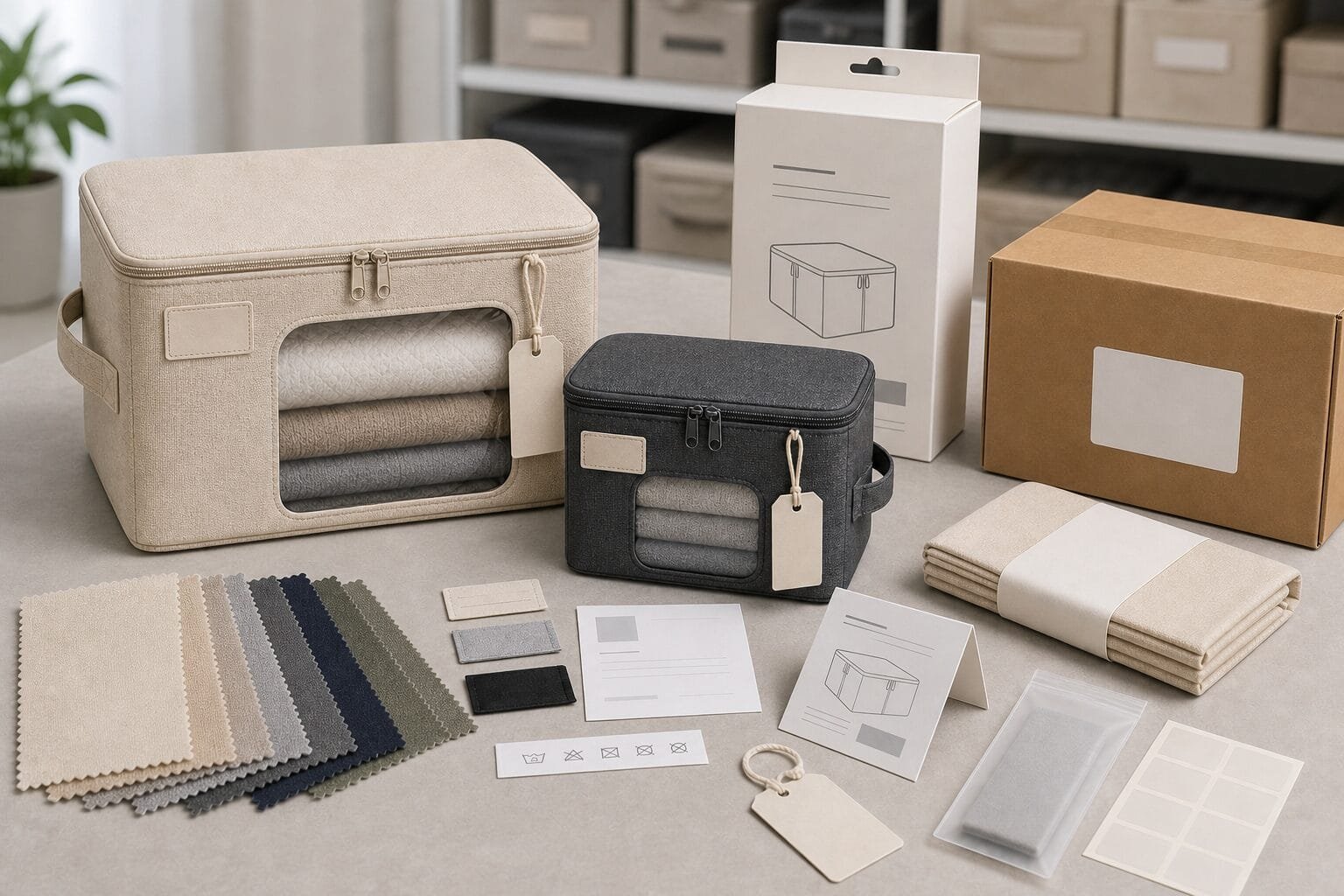
OEM storage bag projects usually begin with the buyer’s direction. That direction may be a physical sample, a competitor-style reference with required changes, a technical drawing, a product photo set, or a written specification. The supplier then evaluates the structure, material, cutting, stitching, zipper, handle, lining, clear window, reinforcement, logo method and packaging route.
OEM is appropriate when the buyer needs control over details such as product size, opening direction, handle position, pocket layout, compartment design, folding shape, carton packing or retail display. It is also useful when a brand needs to keep a consistent design language across related products, such as blanket storage bags, closet organizers, travel packing cubes, toiletry bags and cosmetic pouches.
For OEM work, a vague request like “please quote a storage bag” is not enough. The buyer should prepare product use case, target dimensions, material direction, reference images, logo artwork, packaging requirement, estimated quantity, destination market and inspection expectations. If some details are undecided, mark them as open questions so the supplier can recommend practical options.
What Counts as ODM for Storage Bags?
ODM storage bag projects usually begin with supplier-developed product structures. The buyer reviews available samples or style recommendations, then adjusts the product for the brand or sales channel. Common ODM changes include fabric, color, logo placement, label, zipper pull, hangtag, insert card, polybag, carton label and sometimes size or structural details.
ODM can be useful when the buyer does not yet have a complete design. For example, a retailer may want several storage bag concepts for a seasonal home organization program. A marketplace seller may want to compare fabric storage bags, clear window bags and travel organizers before selecting one route. An importer may want a practical private label product with limited design risk.
The key is to confirm what “ODM” really means with the supplier. Some suppliers may only offer small branding changes to existing styles. Others may support more flexible material and size adjustments. Buyers should ask which parts are fixed, which parts can change, and which changes require a new pattern or different production route.
Which Route Fits Different Buyer Scenarios?
Retail assortment buyers often need a coordinated product family. If the storage bag line must match a specific shelf presentation, color story and packaging system, OEM gives more control. If the buyer is testing several styles across a category, ODM can help shortlist practical options before committing to deeper development.
Private label brands should look at the level of differentiation they need. If the brand promise depends on a unique structure or special user experience, OEM is stronger. If the brand mainly needs reliable basic storage bags with customized label, packaging and visual identity, ODM may be enough for the first order.
Importers and distributors often need clear cost comparison and shipment planning. ODM can provide faster product direction, while OEM may be better when a key customer already has a defined requirement. Promotional buyers may choose ODM when the main requirement is simple branding on a practical bag structure.
Hotel, beauty and travel programs may sit between both routes. A hotel toiletry bag may start from an ODM structure but require custom clear material, logo, zipper, packaging and amenity set fit. A beauty pouch may need OEM-level control if the product must hold a specific kit. Great Shine has related examples for custom cosmetic bags for beauty brands and custom toiletry bags for hotels.
Specifications Buyers Should Prepare for OEM and ODM
Even when using ODM, buyers still need to prepare enough information for a meaningful quote. A supplier cannot judge material, packaging or production route from a product name alone. Clear requirements reduce back-and-forth and prevent a sample that looks acceptable but does not fit the final market.
For OEM storage bags, prepare:
- Product drawing, reference sample or clear reference photos
- Target size, capacity direction and structure requirements
- Material, lining, window, mesh, handle, zipper and reinforcement details
- Logo artwork, color reference, label position and packaging requirement
- Estimated order quantity, SKU split, target market and sales channel
- Sample purpose, inspection points and any buyer-required documents
For ODM storage bags, prepare:
- Product category and target use scenario
- Preferred supplier sample direction or style reference
- Required customization items such as color, logo, label and packaging
- Quantity estimate and whether colors or sizes are split
- Target market and retail, e-commerce, wholesale or promotional use
- Questions about which changes are practical within the existing design
MOQ, Sampling and Cost Questions
MOQ, sample cost and production timing can vary by product type, material, color, logo method, packaging, hardware, SKU split and whether the project requires new development. Buyers should treat these as confirmation points, not assumptions.
For OEM, ask whether the requested structure needs a new pattern, special material, new packaging or extra sample revisions. Ask what information is required before the supplier can quote accurately. If the product has multiple sizes or colorways, ask whether they are counted together or separately.
For ODM, ask whether the base style already has stable material options and what changes are possible without changing the production route. If the supplier’s sample is only a reference, confirm which details will be different in the final sample and bulk order.
Useful questions include:
- Is MOQ calculated by style, color, size, logo method or packaging version?
- Which materials are available for this product route?
- What changes require a new pattern or new sample?
- What artwork files are needed for logo and packaging?
- Which points should be approved on the sample before bulk production?
- How will packaging, carton quantity and label requirements be confirmed?
Quality Control Differences Between OEM and ODM
OEM and ODM projects both need clear QC standards, but the emphasis is different. OEM QC should check whether the bulk product matches the buyer’s approved specification. ODM QC should check whether the selected supplier style and customization changes have been correctly applied.
For storage bags, common QC points include dimensions, fabric appearance, color consistency, stitching, zipper movement, handle reinforcement, clear window quality, logo position, label accuracy, folded size, packaging format, carton marks and quantity per carton. If a buyer needs specific documents or compliance checks for a market, those requirements should be provided before quoting.
Avoid unsupported claims in product communication. Do not describe a storage bag as waterproof, food-safe, recycled, certified or tested to a specific standard unless the supplier provides valid proof for the exact material and order. This matters for product pages, retail packaging and marketplace listings.
How to Choose the Right Route Before Sending an RFQ
Use these questions to decide whether to ask for OEM, ODM or both:
- Do we have a final product design, or do we need supplier suggestions?
- Is the product structure unique, or can an existing supplier style work?
- Is speed to sample more important than differentiation?
- Are we launching one SKU or a coordinated product family?
- Does our sales channel require special packaging or labels?
- Do we need strict control over dimensions, handles, zipper route or compartments?
- What details must be confirmed before we can approve a sample?
If you are unsure, ask the supplier to quote two routes: one based on your ideal OEM specification, and one based on the closest ODM style with required customization. This gives your team a practical comparison instead of choosing a route too early.
When to Request a Quote from Great Shine
Request a quote when you know your target product type, buyer scenario and required customization level. You do not need every detail finalized, but you should be ready to explain whether you prefer an OEM route, an ODM route, or both for comparison.
Great Shine can review storage bag projects together with related soft-goods categories such as cosmetic bags, toiletry bags, packing cubes, garment bags, travel organizers and fabric storage products. Start from the custom bag manufacturer page if your project includes several bag types, or review OEM/ODM private label bag manufacturing if branding, labels and packaging are central to your program.
For direct project discussion, send your product type, reference images, target size, material direction, logo requirement, packaging style, quantity estimate and destination market through the contact page.
FAQ
What is the difference between OEM and ODM storage bags?
OEM storage bags are usually made according to the buyer’s own design, reference sample or technical specification. ODM storage bags usually start from supplier-developed structures that can be customized with material, color, logo, label and packaging choices.
Which route is better for a private label storage bag brand?
OEM is better when the brand needs a unique structure or strict design control. ODM is better when the brand wants to start from existing product concepts, move faster into sampling, and customize visible branding details.
Can ODM storage bags still be customized?
Yes. ODM storage bags can often be customized by material, color, logo position, label, packaging and selected structural details. The buyer should confirm which changes are possible within the supplier’s existing pattern and which changes require new development.
What should buyers prepare before asking for an OEM quote?
Prepare product drawings or reference samples, target size, material direction, structure details, logo artwork, packaging requirements, estimated quantity, target market and any inspection requirements.
Should buyers ask for OEM and ODM quotes at the same time?
If the product direction is not fixed, asking for both can be useful. The OEM quote shows what your ideal specification may require, while the ODM quote shows a practical route based on existing supplier styles.
What QC points matter for OEM and ODM storage bags?
Check dimensions, material, color, stitching, zipper function, handle reinforcement, clear window quality, logo placement, label accuracy, packaging format and carton packing. Add any buyer-specific market or documentation requirements before sampling.
Request a Quote
If you are comparing OEM and ODM routes for custom storage bags, send Great Shine your product type, reference images, target size, material preference, logo and packaging needs, quantity estimate and target market through the contact page. The team can review whether an OEM route, ODM route or side-by-side comparison makes the most sense for your program.