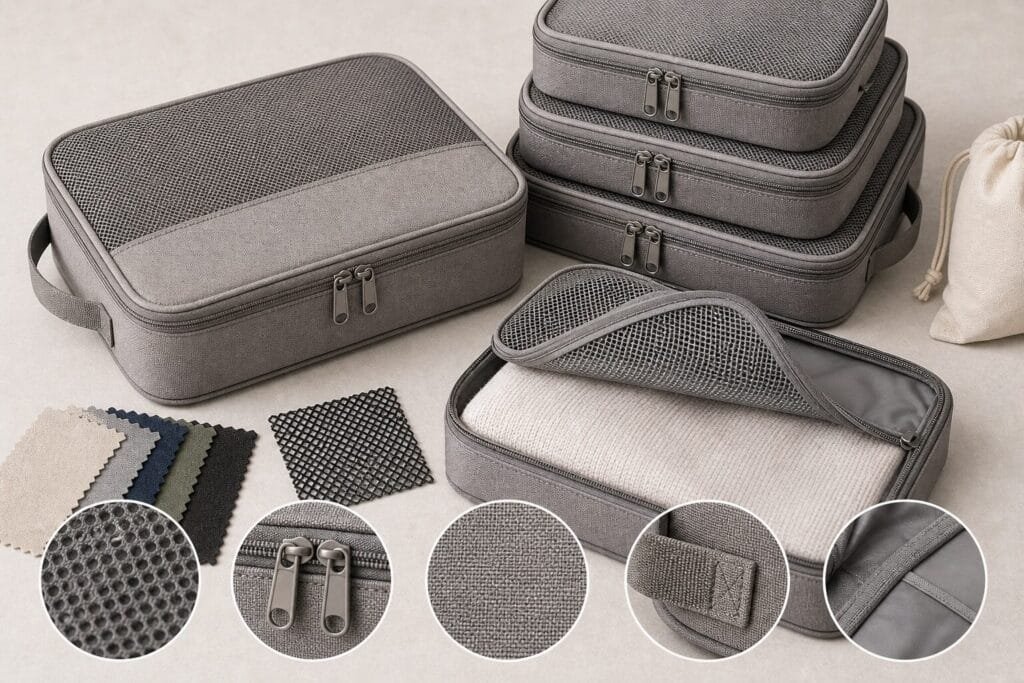
For buyers searching for OEM ODM packing cubes, the real question is not only which supplier can make a travel organizer. It is which development route fits your brand’s product plan, timing, budget, and control requirements. OEM packing cubes usually mean you provide more detailed specifications, artwork, materials, size requirements, and brand direction. ODM packing cubes usually start from a supplier’s existing or semi-existing design that can be adjusted with your logo, colors, packaging, and selected structural changes.
For retail buyers, importers, luggage brands, Amazon sellers, and private label travel brands, this decision affects sampling, material selection, packaging, quality control, and the information needed for an accurate quote. A simple logo order may work well as ODM. A new packing cube set with special dimensions, compression structure, mesh placement, zipper layout, and retail packaging may need an OEM development process.
Great Shine Home Storage Supplier supports custom packing cube projects for travel and wholesale programs. Buyers can review custom packing cubes for travel brands, compare product examples such as this wholesale packing cube for customized travel bags, or contact Great Shine when the project specification is ready.
What OEM and ODM Mean for Packing Cube Buyers
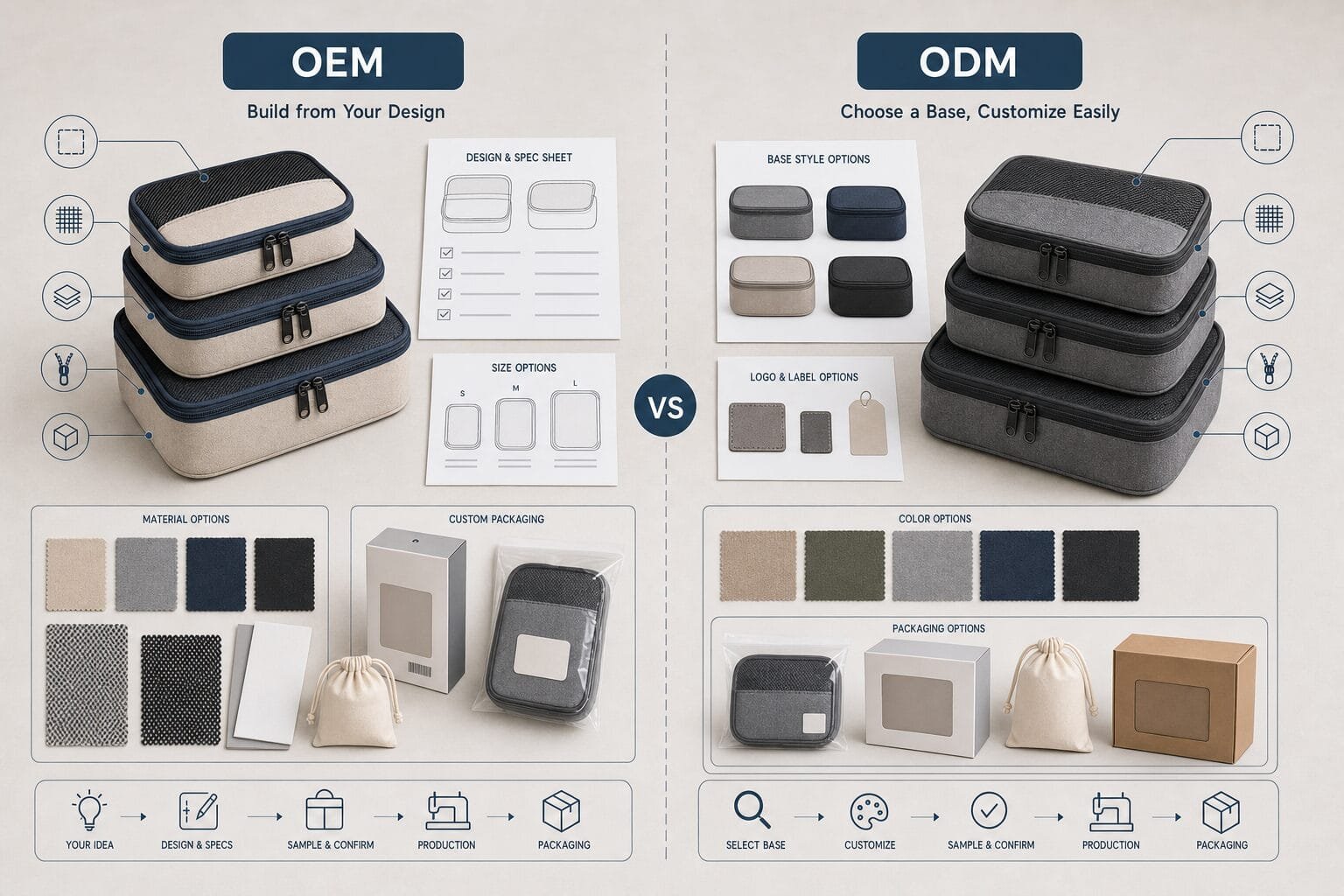
In packing cube sourcing, OEM and ODM are often used loosely, but they should be treated as two different levels of product development.
OEM packing cubes are developed around the buyer’s requested specification. The buyer may define the target size set, fabric weight, mesh panel position, zipper type, puller style, handle construction, compression function, logo placement, color palette, retail packaging, and inspection requirements. OEM is usually the better route when the product must match an existing luggage collection, retailer planogram, private label standard, or brand style guide.
ODM packing cubes start from a supplier’s available design direction. The buyer may customize logo, fabric color, zipper color, packaging, label, and sometimes small structure details. ODM is often more efficient when the buyer needs a practical wholesale product for seasonal travel, promotional programs, marketplace testing, or a lower-risk private label launch.
Neither route is automatically better. The right choice depends on how much control your brand needs and how much development work the supplier must do before sampling.
OEM vs ODM Packing Cubes: Quick Comparison
| Decision Factor | OEM Packing Cubes | ODM Packing Cubes | Buyer Takeaway |
|---|---|---|---|
| Product control | Higher control over size, materials, structure, logo, and packaging | Uses an existing or supplier-led design with selected changes | Choose OEM when brand consistency or special specs matter |
| Development work | Requires more specification, artwork, and sampling discussion | Faster to brief because the base design is already defined | Choose ODM for simpler private label or wholesale programs |
| Sampling focus | Confirms new dimensions, construction, fabric, print, packaging, and usability | Confirms logo, color, packaging, and minor adjustments | Ask what can be changed before approving the sample |
| Cost variables | Influenced by custom material, structure complexity, pattern development, packaging, and order quantity | Influenced mainly by material choice, logo method, packaging, and quantity | Do not compare price until both routes use the same spec basis |
| Brand differentiation | Stronger differentiation potential | Faster but may be less unique | OEM is better for exclusive retail lines; ODM is useful for testing |
| RFQ detail required | High: technical specs, size chart, artwork, packaging, target market, QC points | Medium: model choice, logo, colors, packaging, quantity, market | The clearer the RFQ, the more accurate the supplier response |
When OEM Packing Cubes Fit Better
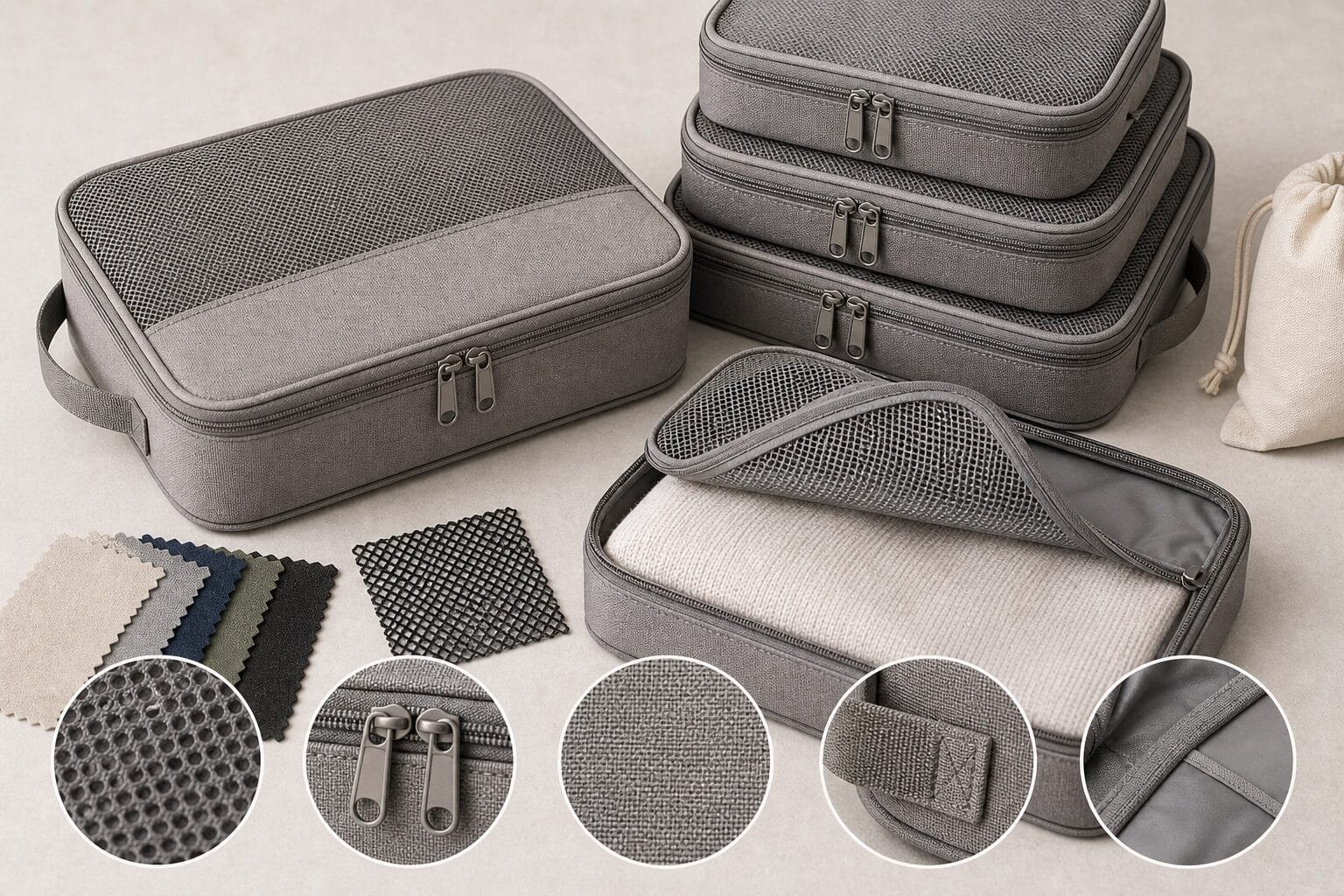
OEM packing cubes are usually the better option when your brand needs a product that cannot be created by changing color and logo only. This is common for travel brands, luggage brands, and retailers building a coordinated product family.
Choose OEM when you need custom size combinations. For example, your set may require one large cube for jackets, one medium cube for shirts, one small cube for accessories, and one slim pouch for underwear or cables. A marketplace seller may need dimensions that fit common carry-on suitcases. A retailer may need shelf-ready packaging dimensions. A luggage brand may need packing cubes that match the internal dimensions of its suitcase line.
OEM also fits projects that require structure changes. These may include compression zippers, double compartments, mesh windows, reinforced handles, side openings, special zipper pullers, label placement, or a more premium fabric handfeel. If your product needs a unique opening method or special panel arrangement, the factory needs more detailed development information.
Packaging is another reason to choose OEM. Retail programs may need hang tags, insert cards, belly bands, box packaging, barcode labels, polybags, or market-specific warning labels. The packaging should be confirmed with the supplier instead of assumed, especially when selling into the United States, Europe, Japan, or South Korea.
When ODM Packing Cubes Fit Better
ODM packing cubes can be a practical route when speed, simplicity, or lower development complexity is more important than full product uniqueness. Many private label buyers start with an ODM base design, then customize logo, color, zipper puller, inner label, outer packaging, and set combination.
This route is useful for brands testing a new travel category. If the goal is to validate demand before investing in a highly customized product, ODM can reduce early development pressure. It also works for promotional buyers, wholesalers, and importers who need a proven packing cube style with brand presentation adjusted for their sales channel.
ODM does not mean the product has no customization. Buyers should still ask what can be changed. Confirm available fabric options, mesh styles, zipper colors, logo methods, packaging options, label placement, and whether the set can be adjusted from three pieces to four pieces or another configuration. The supplier should also explain which changes affect sampling, cost, and production planning.
For ODM projects, the main sourcing risk is assuming that every detail is flexible. Some base designs may have fixed patterns, fixed construction, or limited fabric choices. Ask the supplier to separate standard options from optional changes before you compare quotes.
Key Product Specs to Confirm Before Requesting a Quote
A packing cube RFQ should include more than the phrase custom packing cubes. Suppliers need enough detail to understand the actual product route.
Start with the set structure. Specify whether you want a single cube, a three-piece set, a four-piece set, a compression set, a laundry pouch plus cube set, or a travel organizer bundle. If you do not know the exact size yet, provide target use cases such as carry-on suitcase, checked luggage, weekend travel, family travel, business travel, or retail travel accessory program.
Next, define material direction. Common buyer questions include whether the cube should use lightweight fabric, more structured fabric, mesh panels, smooth lining, reinforced handles, or transparent panels. If exact material is not confirmed, ask the supplier which materials are commonly used for the target price level and market positioning. Avoid making unsupported claims such as waterproof, certified, or tested unless documents and specifications are provided.
Logo and branding should also be clear. Options may include woven labels, printed logos, heat transfer labels, zipper puller branding, hang tags, insert cards, or custom packaging. The best method depends on fabric, order quantity, brand style, and expected durability. Buyers should provide vector artwork when available and confirm logo size, color, position, and Pantone references if needed.
Packaging affects both cost and buyer experience. A wholesale importer may only need practical export packaging, while a retailer may need display-ready packaging. A Japanese or Korean retail buyer may care about compact packaging, clean labeling, and presentation consistency. A European buyer may need packaging information reviewed internally before order confirmation.
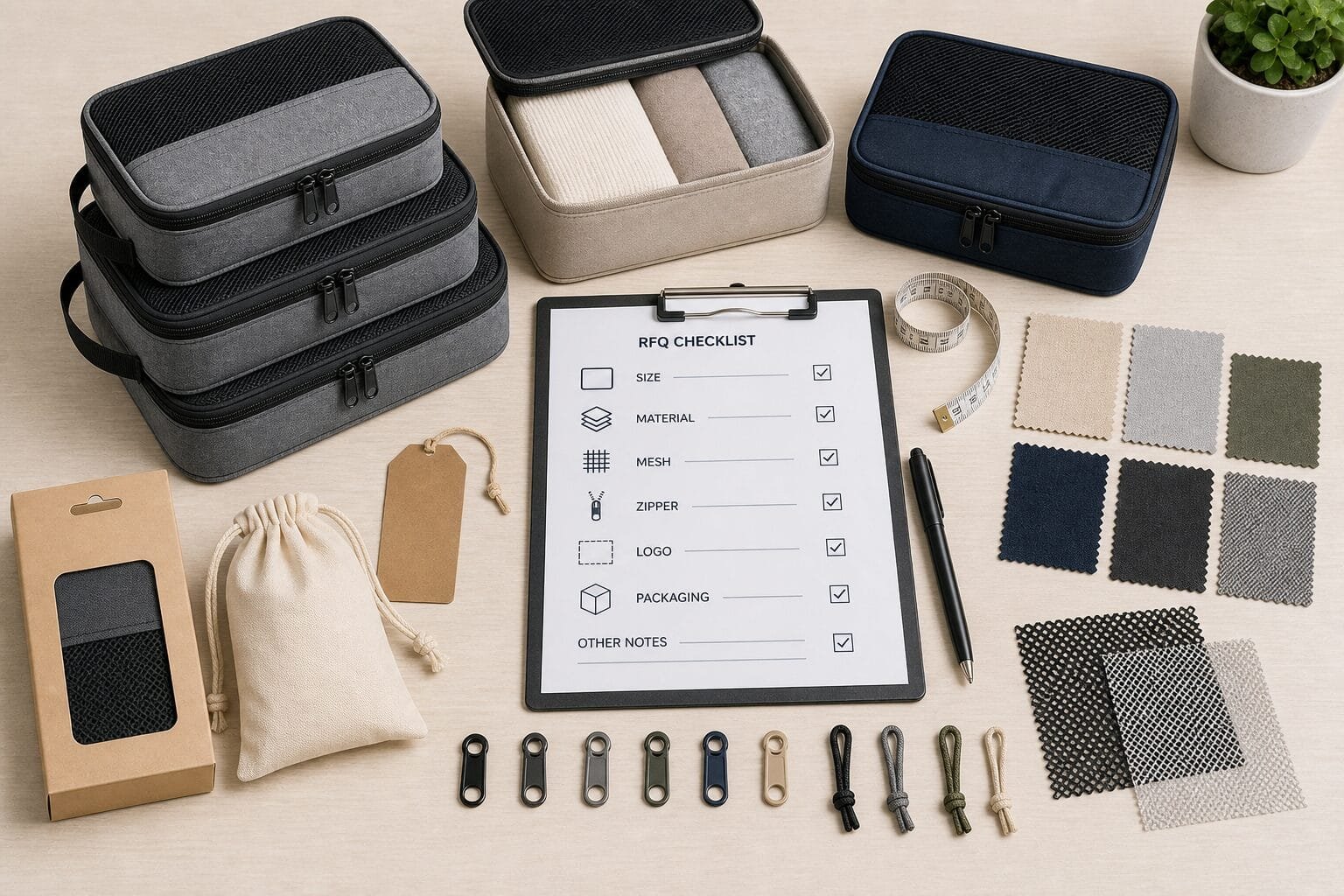
Buyer Checklist: OEM or ODM Packing Cube RFQ
Use this checklist before contacting a packing cube manufacturer or supplier:
- Define whether the project is OEM, ODM, or undecided.
- List the target market: United States, Europe, Japan, South Korea, or another region.
- Describe the sales channel: retail, wholesale, ecommerce, promotional, luggage brand, or private label.
- Provide the desired set configuration: single cube, 3-piece set, 4-piece set, compression set, or bundle.
- Share approximate dimensions or suitcase-fit requirements.
- Confirm material direction or ask for supplier recommendations.
- Specify mesh, zipper, handle, compartment, and compression requirements.
- Prepare logo artwork or explain the planned branding method.
- State packaging expectations: polybag, hang tag, insert card, belly band, box, or custom retail packaging.
- Ask what MOQ, sample timing, bulk lead time, and pricing basis apply to the chosen route.
- Confirm QC points such as stitching, zipper movement, handle strength, measurement tolerance, color matching, and packing method.
- Ask which claims require proof before they are used in product listings or packaging.
Sampling Questions That Prevent Delays
Sampling is where many packing cube projects become clearer. For OEM, the sample should confirm whether the new size, fabric, structure, and packaging work together. For ODM, the sample should confirm whether the selected base design looks and functions as expected after brand changes.
Before sampling, ask your supplier which details are locked and which details are still adjustable. If the sample uses substitute fabric, temporary logo method, or non-final packaging, record that clearly. Otherwise, the buyer and supplier may approve different assumptions.
For OEM projects, request a specification sheet or sample comments that cover dimensions, fabric, mesh, zipper, logo method, color, label, packaging, and visible construction points. For ODM projects, ask the supplier to mark all customized details compared with the original base design.
QC planning should begin before bulk production. Buyers can ask about inspection points, such as seam appearance, zipper function, panel alignment, handle attachment, logo position, packaging count, and carton marking. If your brand has its own inspection standard, share it early.
Packaging and Private Label Decisions
For private label packing cubes, packaging is part of the product experience. A basic wholesale order may use simple packaging, while a retail program may require branded presentation.
Common packaging questions include whether the packing cubes will be sold as a set, folded flat, packed in a pouch, displayed on a shelf, shipped in ecommerce cartons, or bundled with luggage. Buyers should also confirm label placement, barcode requirements, country-specific text, and whether packaging artwork must be reviewed before sampling.
Private label buyers should avoid adding claims to packaging that have not been confirmed. If the product description mentions recycled material, waterproof performance, compliance, special testing, or exact durability results, ask what documents support those claims. If proof is not available, keep the wording factual and product-specific.
Great Shine’s OEM/ODM private label bag manufacturing page explains broader private label bag development options for buyers who need coordinated materials, logo, labels, packaging, samples, and bulk production support.
How to Decide Which Route Fits Your Brand
Choose OEM if your packing cubes need a unique structure, custom size set, special material combination, exclusive retail presentation, or close match with an existing travel product line. OEM is also better when the product will represent your brand for multiple seasons and needs a stronger differentiation point.
Choose ODM if you need a faster, more straightforward private label product based on a supplier’s existing design direction. ODM is suitable for category testing, promotional programs, wholesale orders, and buyers who mainly need logo, color, packaging, and set adjustments.
If you are unsure, send the supplier your target product images, size goals, brand positioning, sales channel, target quantity, packaging expectation, and required launch timing. A practical manufacturer should be able to suggest whether OEM or ODM is more efficient for your project.
For buyers comparing suppliers, Great Shine’s custom bag manufacturer page is a useful reference for broader OEM, ODM, and private label bag manufacturing questions.
When to Request a Quote from Great Shine
Request a quote when you can describe the product route, target market, set configuration, material direction, logo requirement, packaging need, and estimated order quantity. If some details are not confirmed yet, mark them as open questions instead of leaving them out.
Great Shine Home Storage Supplier works with custom packing cube and travel organizer programs for B2B buyers. To begin, review the custom packing cubes wholesale page and send your RFQ through the contact page. Include drawings, reference photos, artwork, packaging files, and any QC requirements available. The clearer the brief, the easier it is to recommend an OEM or ODM route and prepare a practical sourcing response.
FAQ
What is the difference between OEM and ODM packing cubes?
OEM packing cubes are developed around the buyer’s specifications, such as custom size, material, structure, logo, and packaging. ODM packing cubes start from a supplier’s existing or semi-existing design, then add selected brand and packaging changes.
Are ODM packing cubes suitable for private label brands?
Yes. ODM packing cubes can work well for private label brands that need a practical travel product with custom logo, colors, labels, and packaging. Buyers should confirm which parts of the design can be changed before approving samples.
When should a travel brand choose OEM packing cubes?
A travel brand should choose OEM when it needs special dimensions, compression structure, coordinated packaging, exclusive design details, or a product that matches an existing luggage or travel accessory collection.
What information should I send for a packing cube quote?
Send the target market, order quantity estimate, set configuration, size requirements, material direction, logo artwork, packaging expectations, sales channel, and QC requirements. If MOQ, sample time, or lead time are important, ask the supplier to confirm them for your specific route.
Can packaging be customized for wholesale packing cubes?
Packaging can often be customized, but available options depend on the supplier, order quantity, artwork, and product structure. Buyers should confirm polybag, hang tag, insert card, belly band, box, barcode, and label requirements before sampling.
What QC points matter for custom packing cubes?
Important QC points include size tolerance, fabric appearance, mesh alignment, zipper function, stitching, handle attachment, logo placement, packaging count, carton marking, and whether final claims match confirmed product specifications.