Retail buyers comparing OEM ODM closet organizers are usually trying to answer one practical question: should the product be developed from their own specification, or should they adapt an existing supplier structure? The right choice affects sample work, material selection, quotation accuracy, packaging planning and quality control.
OEM is usually the better route when a brand needs a defined closet organizer design, size, compartment layout or packaging format. ODM is often more practical when the buyer wants to start from existing organizer structures and customize material, color, logo, label and packaging details. This guide explains how sourcing teams can compare both routes before sending an RFQ.
For product context, Great Shine’s closet storage organizers and handbag organizers pages show product directions that may be developed under either route depending on buyer requirements.
Quick Answer: Choose OEM for Control, ODM for Speed
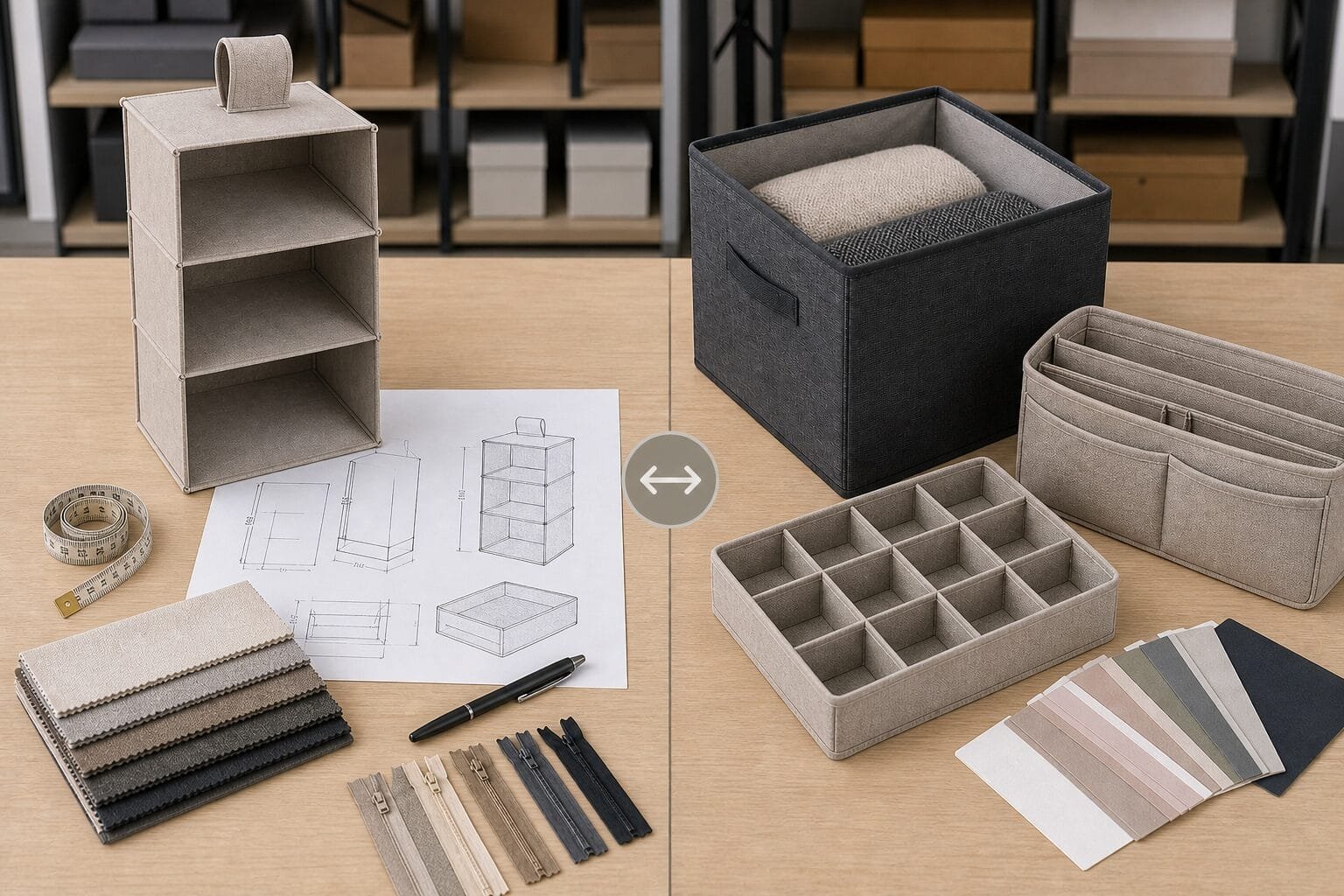
Choose OEM closet organizers when your team already has a product concept, reference sample, drawing, size requirement or retail packaging standard that needs to be followed closely. OEM gives more control over structure, dimensions, compartments, material direction and branding details, but it requires clearer specifications and more sample review.
Choose ODM closet organizers when you want to review existing supplier-developed organizer styles and customize them for your brand. ODM can be useful for testing a product line, building a private label range, or adding supporting SKUs when the existing structure already matches the market need.
The decision is not only about cost. It is about how much control the buyer needs and how much development work the supplier must do before production can be quoted and sampled accurately.
What OEM Means for Closet Organizer Projects
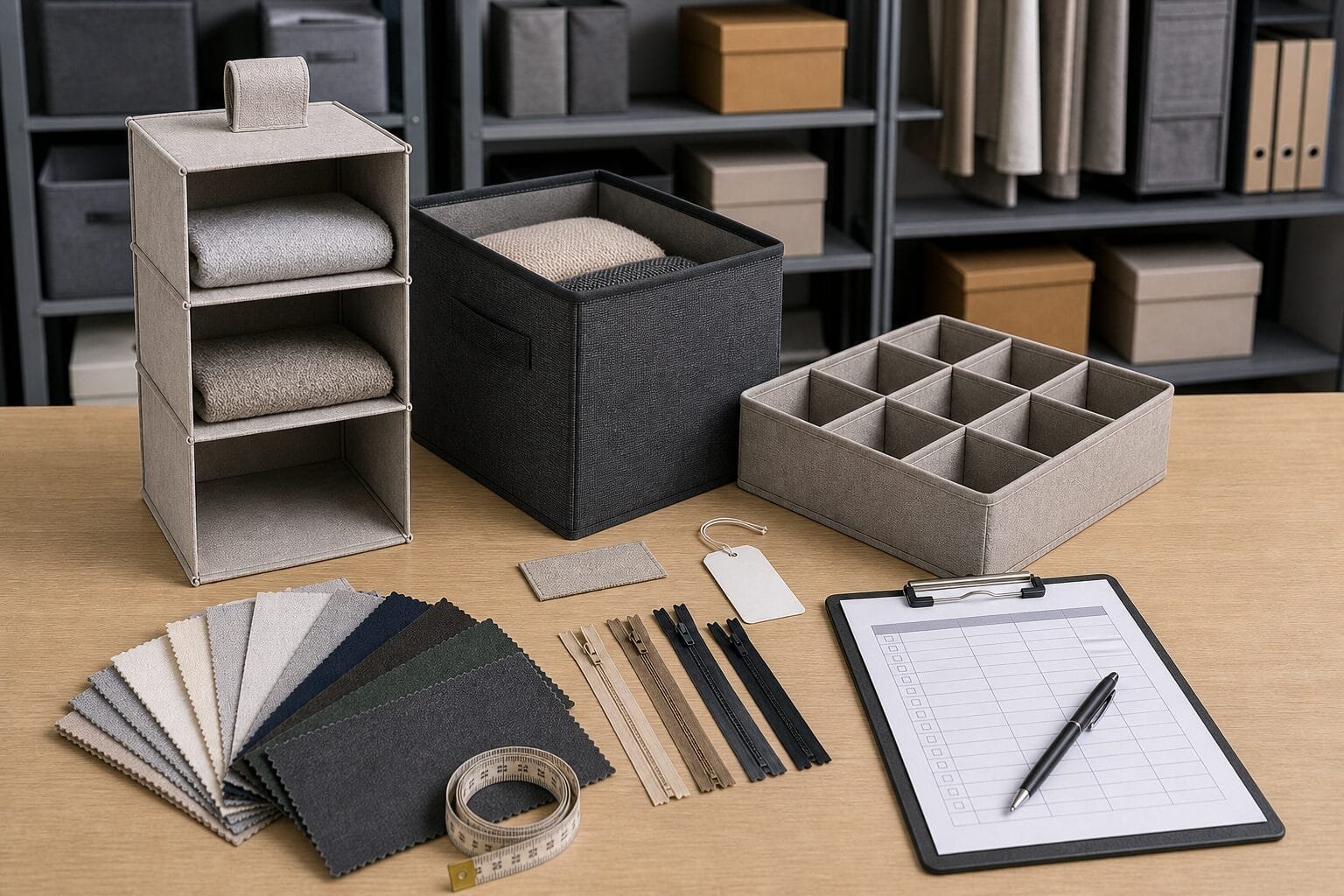
OEM means the buyer provides the product direction and the supplier manufactures according to that requirement. In closet organizer sourcing, this may start from a physical sample, a drawing, a tech pack, a buyer photo with notes, or a detailed RFQ.
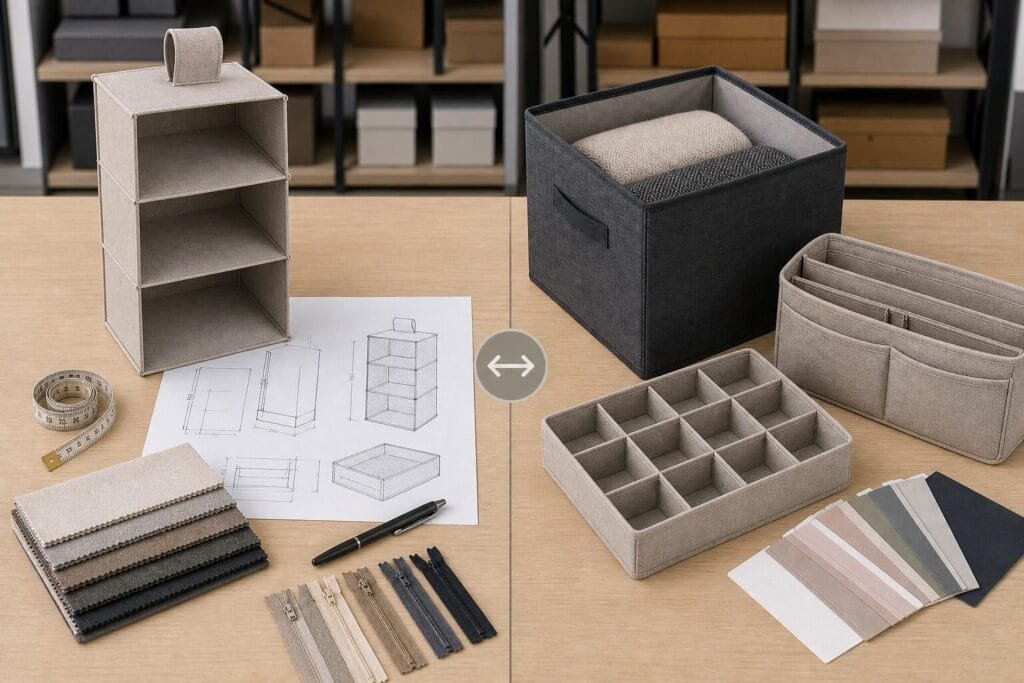
OEM is common when the product has a specific structure, such as a hanging shelf organizer with defined compartment height, a foldable wardrobe bin with a required handle position, a drawer divider set with a fixed cell layout, or a handbag organizer insert with a precise pocket arrangement.
An OEM project should define:
- Product type and intended sales channel
- Target dimensions and acceptable tolerance direction
- Material, lining, mesh, clear panel or reinforcement direction
- Pocket, divider, handle, hook, zipper or hanging details
- Logo, label, hangtag and packaging requirements
- Estimated quantity by size, color and SKU
- Sample approval and QC checkpoints
OEM is stronger when brand differentiation matters. It is also useful when a retailer needs a product to match an existing assortment or packaging standard.
What ODM Means for Closet Organizer Projects
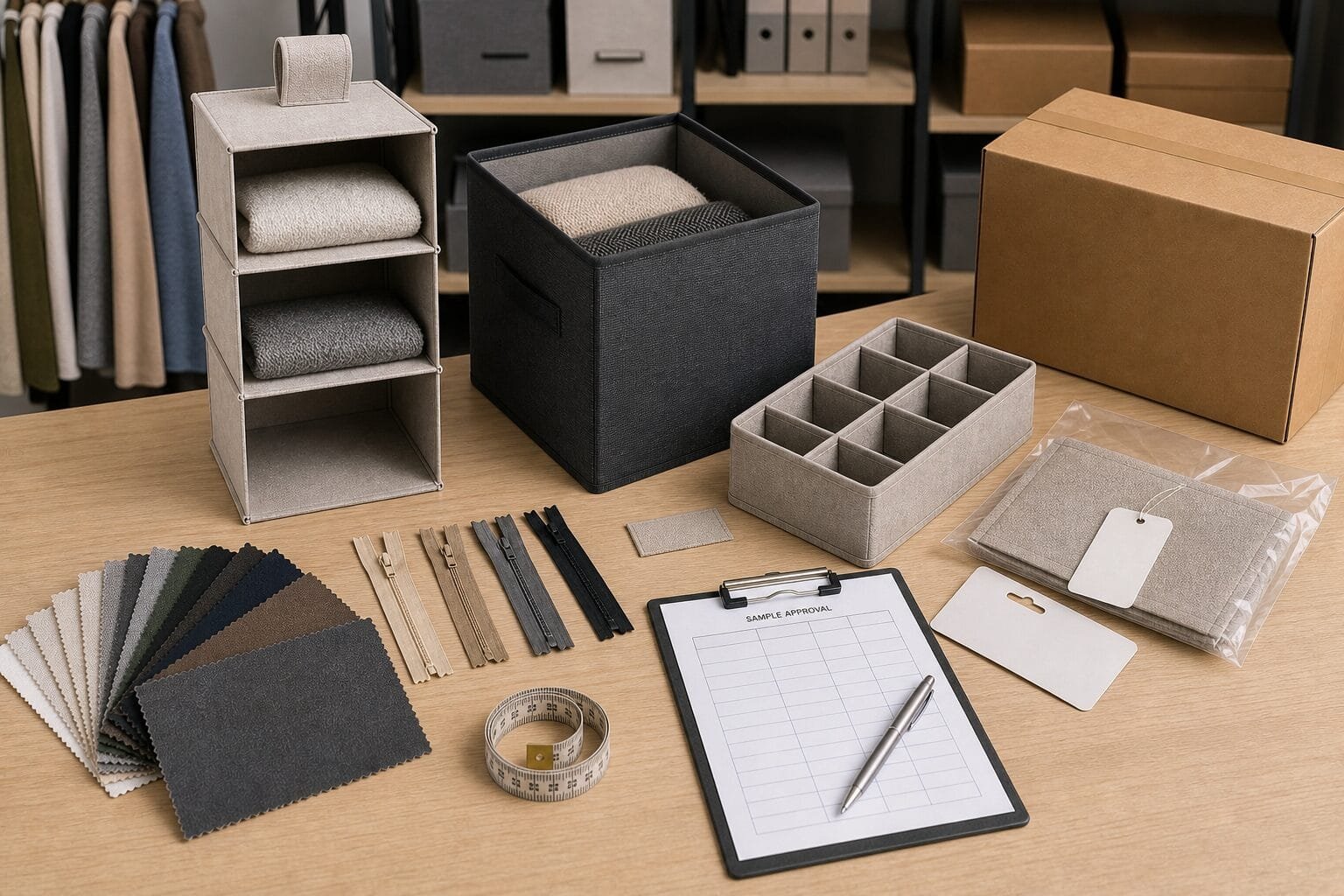
ODM means the supplier provides an existing or supplier-developed structure that the buyer can customize. For closet organizers, this may include ready pattern directions for hanging shelves, foldable bins, drawer organizers, handbag inserts, shoe organizers or accessory storage products.
ODM does not mean the product cannot be customized. Buyers can often adjust material, color, logo, label, hangtag, insert card, packaging and sometimes size or small structure details. The key point is that the starting structure already exists, so the project may require less product development than a fully custom OEM route.
ODM can be useful when:
- The buyer is testing a new category
- The product does not need a unique structural design
- Speed to sample matters more than full structural control
- The buyer wants to compare several organizer styles quickly
- A private label line needs supporting SKUs
However, buyers should still confirm what can and cannot be changed. Some modifications may require a new pattern, different material planning or a separate sampling step.
OEM vs ODM Closet Organizers: Side-by-Side Comparison
| Decision Point | OEM Closet Organizers | ODM Closet Organizers |
|---|---|---|
| Starting point | Buyer design, reference sample, drawing or detailed RFQ | Supplier-developed organizer structure or existing sample direction |
| Best for | Unique product structure, retailer-specific requirements, defined private label concepts | Faster category testing, practical private label customization, supporting SKUs |
| Buyer input needed | High: size, material, structure, logo, packaging and QC details | Medium: preferred structure, material, color, branding, packaging and quantity |
| Sample work | More structure and detail confirmation | More adaptation and approval of existing direction |
| Customization depth | Usually deeper if the specification is clear | Usually practical but limited by existing pattern and construction |
| Risk if RFQ is vague | Wrong pattern, wrong structure or repeated sample revisions | Buyer may assume changes are possible when they are not |
| Best buyer behavior | Provide clear specs and reference notes | Ask what can be customized and what needs a new pattern |
Both routes can work for private label programs. The better choice depends on the product’s role in the range, the buyer’s need for differentiation and the amount of specification detail available.
How Materials Affect the Route
Closet organizer material choices can affect whether OEM or ODM is more practical. A basic fabric drawer organizer may be suitable for ODM if the structure already works. A retail storage bin requiring a specific fabric feel, panel stiffness, handle position and folded packaging may need OEM development.
Common material directions include non-woven fabric, polyester, Oxford fabric, cotton or canvas-style fabric, mesh, clear window panels, lining fabric and reinforcement panels such as PP board or cardboard. The exact option should be confirmed against the product function, sales channel and buyer requirement.
Ask the supplier:
- Which materials are already used on current ODM organizer samples?
- Can the material be changed without changing the pattern?
- Will fabric weight or panel thickness affect folding and carton packing?
- Which logo or label methods fit the selected material?
- Are any buyer-required documents needed for the target market?
Avoid unsupported claims in copy or packaging. Do not describe a closet organizer as waterproof, certified, recycled, flame-retardant or tested unless the exact order material has valid proof.
How Branding and Packaging Affect the Decision
Private label buyers should compare branding and packaging before approving the sourcing route. A product may be structurally simple but packaging-heavy, especially for retail shelf programs or multi-piece closet sets.
OEM may be better when the packaging must match a retailer’s exact layout, folded size, insert card format, barcode location or carton mark rules. ODM may be enough when the buyer can use a supplier’s existing folded structure and apply custom hangtags, woven labels, insert cards or carton marks.
Common branding and packaging points include:
- Sewn label, woven label, printed panel or hangtag
- Insert card, belly band, polybag or retail box
- Barcode label and SKU information
- Carton marks and mixed-SKU packing rules
- Folded size and product presentation
- Packaging artwork approval before bulk production
Great Shine’s OEM/ODM private label bag manufacturing page is relevant for buyers planning labels, packaging and sample approval across soft storage categories.
MOQ, Sampling and Quotation Questions
MOQ should be discussed after the product route is clear. In OEM projects, MOQ may be affected by new material, custom color, pattern development, label method and packaging version. In ODM projects, MOQ may still vary by color, material, logo, packaging and SKU split.
Use these questions before asking for a final quote:
- Is this item quoted as OEM, ODM or both?
- What changes are included in the existing structure?
- Which changes require a new pattern or separate sample?
- Is MOQ calculated by style, size, color, logo or packaging version?
- Can multiple sizes or colors be combined in one program?
- Does custom packaging have a separate requirement?
- What must be approved before bulk production?
For any route, clarify the purpose of each sample. A structure sample, material sample, logo sample, packaging sample and pre-production sample may each answer a different question.
QC Checklist for OEM and ODM Closet Organizers
The QC checklist should match the selected route. OEM projects need close checking against the buyer’s specification. ODM projects need checking against the approved supplier sample and the agreed customization details.
| QC Area | What to Check |
|---|---|
| Dimensions | Overall size, compartment size, folded size and tolerance direction |
| Material | Fabric type, color, surface appearance, mesh, lining and reinforcement panels |
| Structure | Divider fit, pocket position, handle placement, hanging loop, zipper and folding behavior |
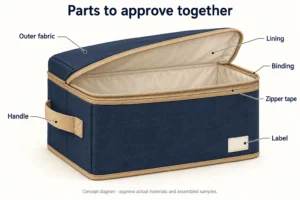
| Sewing | Seam alignment, binding, loose threads, edge finish and stress points |
| Branding | Label size, logo position, hangtag, insert card and color match |
| Packaging | Polybag, retail card, barcode, carton marks, SKU separation and packing quantity |
| Approval match | Bulk production compared with approved sample and signed-off packaging |
For broader supplier evaluation, the custom bag manufacturer page explains the general development logic for custom soft goods and storage products.
RFQ Checklist: What to Send the Supplier
A clear RFQ helps the supplier recommend the right route. If you are not sure whether OEM or ODM fits, ask the supplier to compare both options.
| RFQ Field | What to Include |
|---|---|
| Product type | Hanging shelf, foldable bin, drawer divider, handbag insert, shoe organizer or set |
| Route preference | OEM, ODM or request both options |
| Reference material | Photos, sample notes, drawings or target product description |
| Size and structure | Dimensions, compartments, handles, hooks, dividers, zippers, windows or panels |
| Material direction | Fabric, mesh, lining, clear panel, reinforcement or open to suggestion |
| Branding | Logo artwork, label type, color and position |
| Packaging | Polybag, insert card, hangtag, retail box, barcode and carton mark needs |
| Quantity | Estimated order quantity and size/color/SKU breakdown |
| Market notes | Sales channel, destination market and any buyer inspection requirements |
When to Request a Quote from Great Shine
Request a quote when you have a product direction, reference images, target dimensions, material ideas, branding needs, packaging preference and estimated quantity. If you are still deciding between OEM and ODM, send both possibilities so the team can compare practical routes.
Great Shine can review closet organizers together with related soft storage products, including closet storage organizers, handbag organizers, fabric storage bins, travel organizers, toiletry bags and cosmetic bags. Send your requirements through the contact page and include any reference photos, size notes and packaging requirements.
FAQ
What is the difference between OEM and ODM closet organizers?
OEM projects usually start from a buyer’s design, drawing or reference sample, while ODM projects usually start from supplier-developed organizer structures that can be customized with material, color, logo and packaging.
When should a buyer choose OEM closet organizers?
OEM is better when the buyer needs a specific size, compartment layout, pocket position, hanging method, fabric direction or packaging format that must match an existing concept.
When is ODM better for closet organizer sourcing?
ODM is useful when the buyer wants to review existing supplier structures, customize practical details and move faster into sampling without building every pattern from scratch.
Can private label buyers use both OEM and ODM in one program?
Yes. Buyers may use OEM for core products that need unique structure and ODM for supporting SKUs where existing organizer patterns are suitable.
What should be included in an OEM or ODM closet organizer RFQ?
Include product type, dimensions, material direction, reference photos, logo method, packaging style, estimated quantity, size and color split, target market and QC requirements.
Request a Quote
If you are comparing OEM ODM closet organizers for a retail, wholesale or private label program, send Great Shine your product type, reference photos, target size, material direction, logo and packaging needs, estimated quantity and destination market through the contact page. A clear RFQ makes it easier to recommend the right development route before sampling.