First: Understand Garment Bag Types & Airline Carry-On Rules
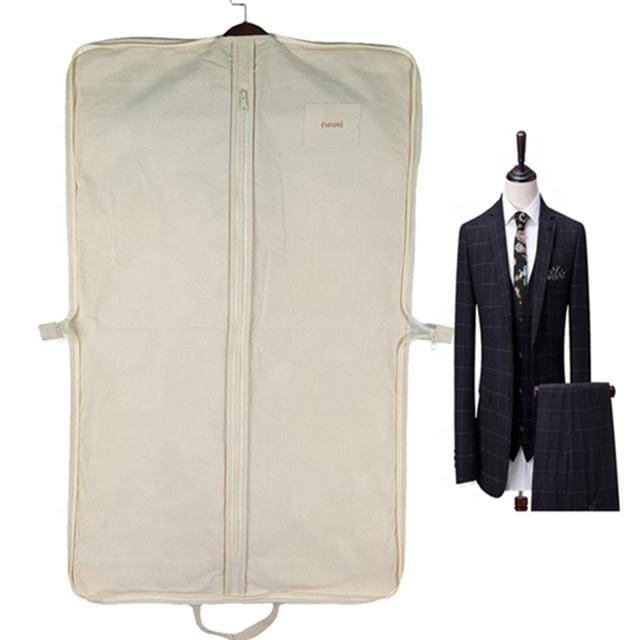
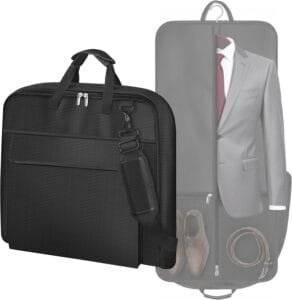
The 4 Main Garment Bag Styles
| Style | Reference size; confirm the actual model | Best Trip Length | Best Use Case |
|---|---|---|---|
| Tri-fold carry-on garment bag | 22 x 14 x 4 inches | 1–3 days | Short business trips, weekend weddings |
| Bi-fold shoulder garment bag | 40 x 22 x 3 inches (unfolded) | 2–5 days | Mid-length trips, business class travel |
| Rolling wheeled garment bag | 22 x 14 x 9 inches | 5+ days | Long-haul travel, multi-city trips |
| Garment sleeve / suit cover | Variable | 1 outfit | Event-day transport, luggage add-on |
2026 Airline Carry-On Compliance Rules
- Check the operating airline: there is no single carry-on size that covers every airline. For example, British Airways lists a cabin-bag limit of 56 x 45 x 25 cm including wheels and handles. Check your booking for the permitted number, weight and size of bags, and measure the garment bag when filled and folded.
- Do not assume that a garment bag is a free extra item or that a cabin closet will be available. Confirm how the operating airline counts it within your booking’s baggage allowance.
- Follow the security authority’s current screening instructions for your departure and transfer airports. Choose hangers that support the garments and fit the bag; changing hanger material does not establish faster clearance.
- Checked luggage warning: Never check a soft garment bag as standalone luggage. It will be crushed under heavier bags and develop permanent creases. If you must check formal wear, use a rigid wheeled garment bag with internal support panels.
Packing different fabrics with fewer hard folds
1. Wool & Wool-Blend Suits
- Use a wide-shoulder travel hanger to support the suit jacket shoulders — narrow hangers cause permanent dimples in the shoulder pads.
- Fold the jacket shoulder-to-shoulder, lining side out: tuck one shoulder inside the other, align the lapels, and smooth the fabric. This reduces surface friction and hides minor wrinkles on the inside.
- Place a thin cotton t-shirt or tissue paper between the jacket and trousers to prevent fabric-on-fabric creasing.
- Fold the bag no more than 2–3 times. Every additional fold creates a new potential crease line.
- Never stuff the bag tight. Leave 10% empty space — pressure is the #1 cause of permanent wool creases.
2. Cotton & Linen Shirts
- Button the top collar button and cuffs to hold the shirt’s shape.
- Fold sleeves across the back following the natural shoulder seam, then fold the shirt in half lengthwise.
- Roll lightly from the bottom up instead of folding flat — rolling creates fewer sharp crease lines than tight folds.
- Pack linen only when it is dry. Use its care instructions to decide whether any treatment is appropriate after arrival.
3. Silk, Satin & Formal Dresses
- Always keep silk and satin inside its original dust bag inside the garment bag — do not let it rub directly against zippers or hardware.
- Use acid-free tissue paper between layers to prevent color transfer and snagging.
- Hang long gowns in a full-length bi-fold garment bag whenever possible. Folding long formal gowns creates deep hem creases that are hard to remove without professional steaming.
- Avoid spraying water or wrinkle release spray directly on silk — it can cause water spots.
4. Cashmere, Wool Coats & Thick Knits
- Do not hang heavy knits for long trips — hanging stretches the shoulder fibers and distorts the shape. Fold them flat and place them at the bottom of the garment bag for support.
- For wool overcoats, fold once at the waist and place on top of lighter items. Use the coat’s own weight to hold smoother fabrics flat underneath.
- Add a cedar sachet inside the bag to repel moths and absorb moisture during long trips.
Scenario-by-Scenario Travel Strategies
1–2 Day Business Trip (Most Common)
- Use a slim tri-fold carry-on garment bag.
- Pack: 1 suit jacket, 2 dress shirts, 1 pair of trousers, 2 ties, 1 pair of dress shoes (in a shoe pouch at the bottom of the bag).
- Pro hack: Roll underwear and socks inside the shoe pouches to save space and help the shoes hold their shape.
- On the plane: Store the bag flat in the overhead bin, on top of other luggage. Never place heavy bags on top of it.
3–5 Day Mixed Business + Leisure Trip
- Pair a wheeled garment bag with a carry-on suitcase.
- Hang all formal and wrinkle-prone items in the garment bag.
- Stuff casual clothes, jeans, and knitwear in the gaps inside the garment bag to act as cushioning — they protect the formal clothes and save space in your main suitcase.
- Use the external pockets of the garment bag for laptops, documents, and toiletries to maximize your carry-on allowance.
Wedding / Black-Tie Event Travel
- For floor-length gowns or tuxedos, book a seat with extra legroom or travel business class if possible — most cabins have coat closets for long garments.
- Use a full-length bi-fold garment bag with rigid corner stays to prevent crushing.
- Allow time after arrival to unpack and check the garments. Use hanging, ironing or steaming only as permitted by each garment’s care label; do not rely on a fixed percentage of wrinkle removal.
Long-Haul International / Multi-City Travel
- Use a 4-wheel rolling garment bag that stands upright on its own.
- Pack heavier items (shoes, toiletries) at the wheeled base to keep the bag balanced and reduce pressure on hanging clothes.
- Unpack and hang garments at every overnight stop. Even 2–3 hours of hanging time helps wrinkles relax naturally.
7 Common Garment Bag Mistakes (And How to Avoid Them)
-
Overstuffing the bag
Cramming in extra outfits compresses fabric and creates deep, permanent creases. Rule of thumb: if you have to force the zipper closed, it’s too full.
-
Using cheap wire hangers
Thin wire hangers dig into shoulder pads, leave permanent marks, and can bend and tear fabric. Always use wide, curved travel hangers designed for garment bags.
-
Packing damp clothes
Even slightly damp items will mildew and develop odors during travel. Ensure everything is fully dry before packing, and add a small desiccant packet for humid climates.
-
Folding on the same lines every time
If you always fold your suit at the exact same point, that crease will become permanent over time. Shift the fold position slightly on every trip.
-
Storing the bag zipped closed long-term
After a trip, unzip the garment bag fully and air out the clothes before putting them away. Trapped moisture causes fabric yellowing and mildew.
-
Ignoring the shoe barrier
Shoe soles carry dirt and bacteria that can stain formal clothing. Always use a separate shoe pouch or plastic bag, and place shoes at the very bottom of the garment bag.
-
Buying an ultra-thin bag to save space
Thin, unlined garment bags offer zero protection from crushing, spills, or rough handling. A mid-weight 600D Oxford fabric with PEVA lining is the sweet spot for durability, water resistance, and portability.
Handling creases after arrival
- Unpack and inspect the garment in a dry, suitable place.
- Read the care label for ironing, steaming and moisture restrictions.
- Use a hanger or flat support appropriate for that garment while deciding how to treat creases.
- For a delicate garment or persistent creases, ask a professional cleaner instead of applying unapproved heat or water.
How to Choose the Right Garment Bag for Your Needs
- Fabric: 600D Oxford polyester with water-resistant coating balances durability and weight. Avoid thin non-woven fabric — it tears easily and offers no protection.
- Internal structure: Reinforced edge strips and a hanger locking system prevent the bag from collapsing and crushing clothes.
- Pockets: External pockets for shoes, ties, and accessories keep dirty items separate from formal wear.
- Hardware: Heavy-duty #5 zippers and metal (not plastic) hanger hooks stand up to frequent travel.
Frequently Asked Questions
- Can you bring a garment bag on a plane as a personal item? Check the operating airline’s size and item-count rules for your booking. A garment bag is not automatically exempt from the allowance, and a cabin closet is not guaranteed.
-
How do you keep suits from wrinkling in a garment bag?
Use a wide shoulder hanger, fold shoulder-to-shoulder with the lining out, place tissue paper between layers, and avoid overpacking. Pressure and friction are the two biggest causes of wrinkles — minimizing both is the key.
- How many suits can fit in a carry-on garment bag? Check the usable hanging length, shoulder width, depth and hanger arrangement against your actual garments. For a suit and a dress, check the dress length and layers, then close the loaded bag without forcing the zipper. Measure the filled, folded bag against your airline allowance.
-
Can you put a garment bag in checked luggage?
Soft garment bags are not designed for checked luggage — they will be crushed and creased. If you must check formal wear, use a rigid wheeled garment bag with internal support panels, and add a fragile luggage tag.
-
How do you clean a fabric garment bag?
Most polyester garment bags can be wiped clean with a damp cloth and mild soap. Never machine-wash structured garment bags — it can break the internal reinforcement and cause the bag to lose its shape.