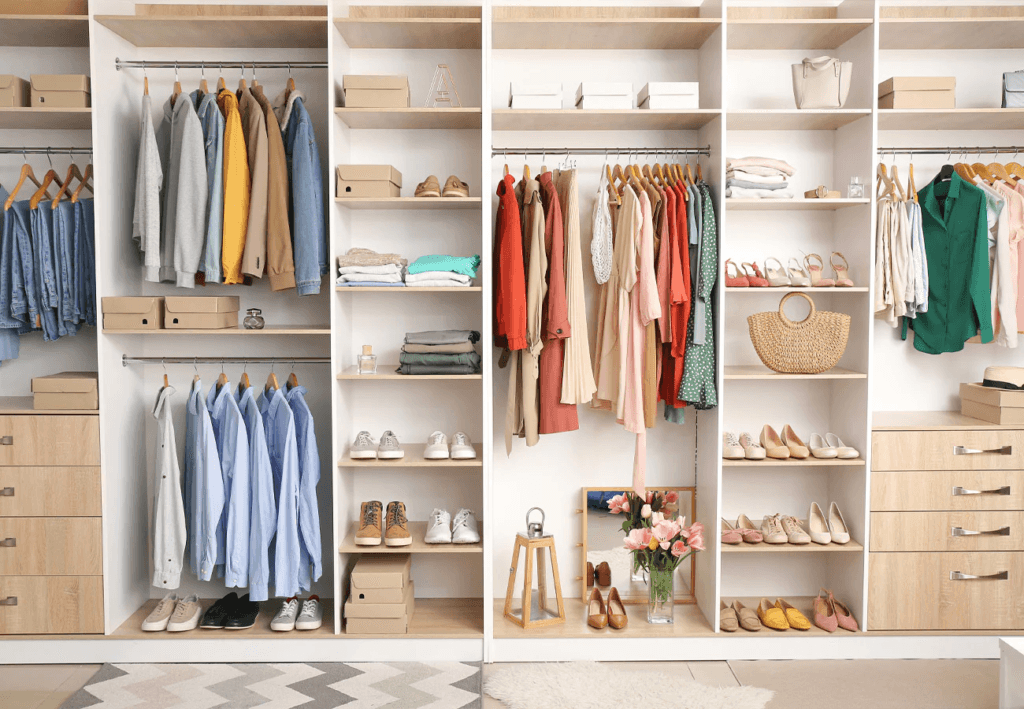
To organize a small closet with lots of clothes, measure the usable space, separate hanging garments from folded items, and give everyday clothing the easiest places to reach. Test each organizer with the clothes you intend to store before filling the whole closet.
1. Measure the space you can actually use
Measure clear shelf width and depth, the space below the hanging rod, and the opening left when the doors are open. Hinges, sliding doors and a projecting handle can reduce access even when a box fits inside. Write these measurements down before choosing storage.
2. Sort clothes by how they need to hang
Group long coats and dresses separately from shorter shirts and jackets. Hang one representative garment from each group and check where its hem falls. A second hanging level only works when the clothes below it remain clear of the lower garments or shelf. Follow the rod and fitting supplier’s load instructions.
3. Match folded clothes to shelf containers
Fold a small group of the clothes you actually wear and place it in a sample bin. Check that you can remove one item without pulling out the whole stack. Compare the bin’s usable interior with the folded clothes and its external dimensions with the shelf opening. Leave enough room to grip the handle.
4. Check access before adding shelves
Before adding a shelf or divider, rehearse taking out the largest item. A narrow gap may hold a stack but leave too little space for your hands. Keep frequently used clothing in a compartment you can reach comfortably, and use less convenient positions for lighter, low-use items.
5. Check the door with an organizer installed
Place a loaded door organizer where it will be used and slowly open and close the door. Check hinge clearance, latch operation and whether pockets brush against hanging clothes. Choose fittings intended for that door and avoid a layout that prevents it closing normally.


6. Move low-use clothing out of the daily area
Clean and fully dry seasonal clothing before putting it away. Label a container with its contents and place it somewhere you can retrieve it. Follow garment care guidance before compressing delicate, structured or filled items; a vacuum bag is not suitable for every garment.
7. Arrange clothes in the order you reach for them
Put work clothes, sportswear or other frequently used groups together according to your routine. Label the visible face of bins rather than a side hidden against the wall. Leave a clear place for clothes being returned so the system remains usable after the first tidy-up.
8. Test one hanging organizer before filling it
Load one compartment with a typical folded item and check the opening, sagging and clearance underneath. Make sure the hanger fits the intended rod and stays secure during retrieval. Compare hanging closet organizer options by compartment size and attachment method, not just the number of shelves.
9. Check supports and carrying points
Check the shelf, rod, fasteners and organizer together. A strong fabric bin does not establish the capacity of the shelf beneath it. Avoid pulling a loaded container from a height where you cannot control it, and move heavy items to a position that is easier to handle.
10. Keep a workable amount of clothing
Return clothing to its assigned position and check whether the door still closes and each container can be removed. If clothes must be forced in, reduce the contents or change the arrangement. Review seasonal items when your routine changes rather than relying on extra organizers to solve every space problem.
Use a single bin or hanging compartment as a trial. If its contents fit, remain visible and can be retrieved without moving several other items, repeat that arrangement where the closet dimensions allow it.