How to Find a Reliable Packing Cubes Manufacturer — Insights From a 16-Year Factory Owner

If you’ve ever scrolled through pages of B2B supplier listings, comparing packing cube quotes and wondering who you can actually trust, you’re not alone. It looks like there are hundreds of manufacturers out there — but the truth is, most are trading companies, small workshops, or suppliers that will cut every possible corner to hit a low price.
I’ve been in this industry for 16 years. I started out in sales, walking factory floors at 6 a.m., sitting through production meetings, and learning every detail of how storage products get made — from fabric selection and structural design to final packaging. Over the years, I’ve led the end-to-end development of over 100 new storage products, and partnered with dozens of global brands on custom orders. Eventually, I founded my own manufacturing brand, GreatShine, with an in-house R&D and production team focused entirely on high-quality custom home storage solutions.
I’ve seen it all: trading companies posing as factories, low-ball quotes that turn into expensive quality disasters, and buyers wasting months working with suppliers who can’t actually deliver what they promise. I’ve also worked with dozens of brands who found us after getting burned by bad suppliers, and I know exactly what separates a reliable manufacturer from one that will cost you time, money, and brand reputation.
This isn’t another generic “10 tips for finding a supplier” post. I’m going to give you the inside, factory-level framework I’d use if I were sourcing packing cubes today. You’ll learn how to spot a trading company posing as a factory, what quality metrics actually matter, and the red flags you should never ignore. No fluff — just what 16 years on the production floor has taught me.

The 3 Biggest Mistakes Most Sourcers Make First

Before we get into how to find a good manufacturer, let’s talk about the mistakes that lead buyers to bad ones in the first place. I see these over and over.

1. Chasing the lowest possible price

This is the #1 mistake. If one quote is 20–30% lower than every other supplier, it is not a good deal. It means corners are being cut — thinner fabric, cheaper zippers, no quality control, or all three.
I’ve had clients come to us after placing a 10,000-piece order with a low-cost supplier, only to receive units where zippers broke after a handful of uses and seams pulled apart. They had to write off the entire shipment, and ended up paying twice to redo the order with us. Saving $0.20 per unit cost them tens of thousands in lost inventory and damaged customer trust.
There is a baseline cost for a well-made packing cube. Any quote well below that baseline comes with hidden costs.

2. Assuming “factory photos” = real factory

Anyone can download factory photos from the internet and put them on a website. Trading companies do this every day. They’ll even take you on a “factory tour” of a partner facility and act like it’s theirs.
A lot of buyers don’t realize: most of the suppliers you find on mainstream B2B platforms are not manufacturers. They are middlemen. They mark up the price, add communication delays, and have zero control over production quality or lead times.

3. Judging only by MOQ and lead time

A low MOQ and fast lead time sound great on paper. But if the factory can’t maintain consistent quality at that volume, none of it matters. I’ve seen factories promise 7-day lead times and then ship half the order with defective stitching, because they rushed production and skipped QC to hit the date.
Reliable factories give realistic lead times. They build in buffer for QC and potential issues. Unrealistically fast promises are almost always a red flag.

Step 1: Screen First — How to Tell Real Factories From Trading Companies

The first filter is separating actual manufacturers from trading companies and middlemen. Here are the tests I’d use, every time.

1. Ask for a detailed, line-item quote

A real factory can break down your quote into individual cost components: fabric cost per unit, zipper cost, webbing, sewing labor, packaging, overhead. They can tell you the exact fabric denier, zipper size, and stitch count they’re quoting for.
A trading company will give you a single lump-sum price. If you ask them to break it down or specify material standards, they’ll hesitate, give vague answers, or take days to get back to you — because they have to ask the actual factory first.
At GreatShine, we provide a full BOM (Bill of Materials) for every custom quote. We want you to know exactly what you’re paying for. That level of transparency is something a trading company can’t match.

2. Test their product development expertise

Ask a specific, technical question about design or manufacturing. For example:
  • “If I want to reinforce the handle to hold 12kg, what changes would you recommend?”
  • “My design has a curved mesh panel — what production challenges might that cause?”
A real factory will give you a direct, detailed answer, and probably point out issues you hadn’t thought of. A trading company will say “we can do that” and then disappear to ask someone else.
Real manufacturers don’t just execute your design — they improve it. We’ll often tell clients, “This structure will cause puckering at the zipper in mass production; we can adjust the pattern to fix it.” That’s the value of working directly with the people who actually make the product.

3. Verify certifications under the company name

Ask for BSCI, Sedex, GRS, or any other certification you need. Then check the certificate holder name.
Trading companies will often show you certificates from a partner factory, with a completely different company name on them. If the certificate doesn’t match the supplier you’re talking to, they don’t own that factory.
Also, for eco-friendly lines like rPET packing cubes, ask for full traceability documents. Real factories with valid GRS certification can show you the full supply chain trail from recycled plastic flakes to finished fabric. Trading companies will just say “yes it’s recycled” with no proof.

4. Do a live video factory tour — on your terms

Don’t accept a pre-recorded promo video. Ask for a live video call, and tell them exactly what you want to see:
  • The cutting room, with current production rolls on the table
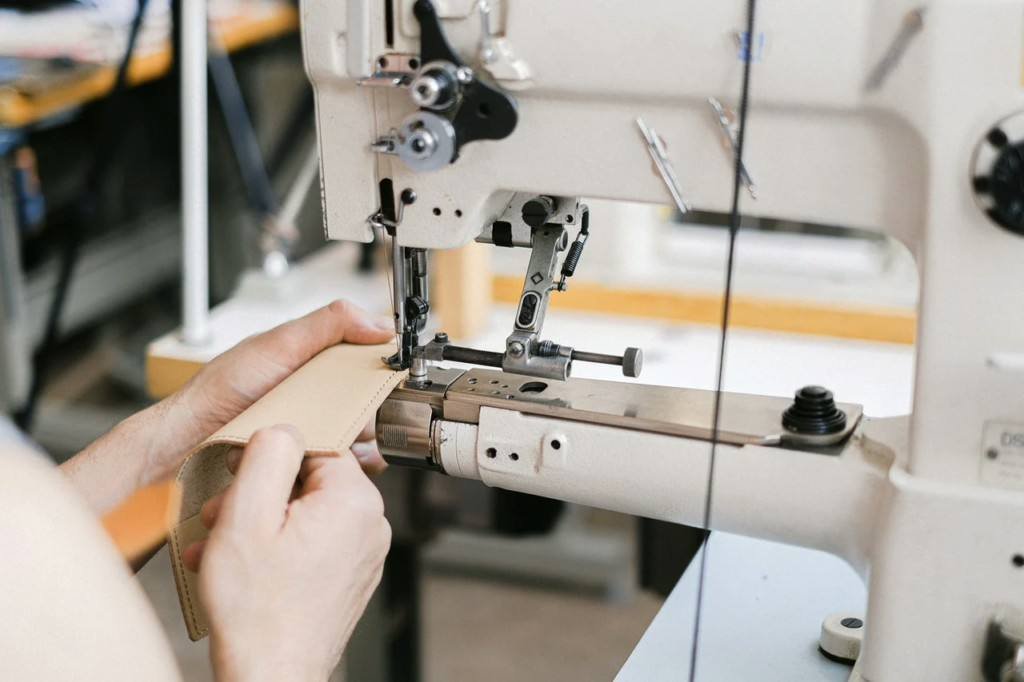
  • The sewing lines, with workers actively producing packing cubes
  • The QC station and physical inspection checklists
  • The raw material warehouse and finished goods area
Tell them to walk you through the factory in real time, and ask them to stop and show you specific details. A real factory will do this without hesitation. A trading company will make excuses, or take you on a very scripted tour of someone else’s facility.

Step 2: Dig Deeper — How to Evaluate a Factory’s Actual Quality Capability

Plenty of factories can make one nice sample. The real test is consistent quality across 5,000 or 50,000 units. This is where you separate professional factories from small workshops.
Here are the four things I would audit before placing a large order.

1. Incoming material quality control

The quality of the finished product starts with raw materials. A reliable factory doesn’t just take fabric rolls from the supplier and start cutting — they test them first.
Ask:
  • Do you test fabric weight, tear strength, and color fastness on incoming rolls?
  • What is your acceptance standard for fabric defects?
  • Do you pre-test fabric shrinkage before cutting?
Bad factories skip all of this. They use whatever fabric is cheapest, and you find out about quality issues after the product is in customers’ hands.
At GreatShine, every fabric roll is weighed and tested against ASTM standards when it arrives. If the weight is off by more than ±5%, we send it back. We also run shrinkage tests on every new fabric batch — a lesson we learned the hard way in 2014, when an untested fabric shrank 5% after washing and made an entire 10,000-piece order undersized. We remade the whole batch at our cost. Any factory that’s been around long enough has similar stories — and they’ve put systems in place to prevent it from happening again.

2. In-process quality control (not just final inspection)

Quality isn’t inspected in at the end — it’s built in during production.
Ask the supplier: Do you have in-process QC (IPQC) inspectors on the production line? How often do they check? What do they do when they find a recurring defect?
If the answer is “we do a final check before packing,” that’s a red flag. By the time you catch a defect at final inspection, thousands of units might already be sewn wrong. You’re looking at massive rework costs, or worse, defective units being shipped anyway.
Reliable factories have hourly in-line inspections. If an inspector finds a consistent issue — say, uneven zipper stitching — they stop the line immediately, retrain the operator, and rework all units produced since the last check. That’s how you keep defect rates low.
We run three layers of QC at GreatShine: in-process inspection, 100% final inspection, and outgoing AQL 1.0 sampling. It adds cost, but it keeps our defect rates well below industry average, and saves our clients from expensive returns.

3. Clear, documented sewing and construction standards

A good factory has written, measurable standards for every part of the production process. A bad factory lets workers do whatever is fastest.
Ask specific questions:
  • What is your standard stitches per inch (SPI) for packing cubes?
  • Are stress points (handles, zipper ends) bar-tacked? How many bar tacks per handle?
  • How are internal raw edges finished?
The answers will tell you everything.
Budget workshops run 6–8 SPI with no reinforcement. Our standard is 10–12 SPI, with double bar tacks on every handle and zipper stop. Internal seams are fully overlocked; premium lines get full binding. These are measurable, objective standards — not vague claims of “high quality.”
If a supplier can’t give you straight numbers for these basics, they don’t have real quality control.

4. Defect handling and accountability

No factory has a 0% defect rate. What matters is how they handle it.
Ask: What is your typical defect rate for packing cubes? What do you do with defective units? What happens if we receive units that don’t pass inspection?
A reliable factory will be transparent about their defect rate, have a clear rework/scrap process, and take responsibility for mistakes. They’ll offer to remake defective units at their cost, or discount the order appropriately.
Factories that blame everything on the customer, refuse to take responsibility, or claim “that’s normal for mass production” will cause you endless headaches.

Step 3: Validate With a Trial Order

You’ve screened them, asked all the questions, and they check out. Now it’s time to test them with real work.
A trial order doesn’t have to be huge — 500 to 1,000 units is enough to see how they actually operate. Here’s what to pay attention to.

1. Sample quality and iteration speed first

Before the trial order, go through 1–2 rounds of samples. Pay attention to:
  • Do they give honest feedback on your design, or just say yes to everything?
  • How fast do they turn around revised samples?
  • Do the details match your specs exactly?
Great factories will proactively point out design flaws and suggest improvements. They don’t just execute — they act as your product development partner. That’s the “sourcing advisor” value I always talk about.

2. Test communication during production

During the trial order, ask for production updates: photos of the cutting stage, sewing stage, QC process.
A reliable factory will send you updates without you having to chase them. A bad one will go radio silent until the order is ready, and you won’t know there’s a problem until it’s too late.
Also pay attention to who you’re talking to. If your contact can answer technical questions directly, you’re probably talking to someone with real factory experience. If every question gets a “let me check and get back to you,” you’re talking to a middleman.

3. Run a third-party inspection before shipment

For the trial order, hire a third-party inspection company to check the goods before they ship. This is the ultimate test.
A good factory will welcome this. A bad one will make excuses, delay, or argue about inspection standards.
If they pass third-party inspection with a low defect rate on your trial order, you can feel confident moving forward with larger volumes.

Quick Reference: Reliable vs. Unreliable Supplier

To make it simple, here’s the side-by-side comparison I’d use to evaluate any packing cube supplier:
CategoryUnreliable / Trading CompanyReliable Real Factory
QuoteSingle lump-sum price, vague specsDetailed line-item BOM with clear material standards
Technical knowledgeCan’t answer production questions directly; passes messagesGives direct, expert feedback; suggests design improvements
Quality controlOnly final visual check at the endIn-process QC + final inspection + outgoing AQL testing
Lead timesUnrealistically fast promisesRealistic, consistent lead times with buffer for QC
Problem handlingBlames others, makes excusesTakes ownership, offers solutions
PriceSuspiciously lowFair, transparent pricing that matches build quality

Final Advice From a Factory Owner

After 16 years in this business, here’s what I wish more buyers understood:
The cheapest supplier almost always costs you more in the long run. Returns, bad reviews, lost customers, and rework costs will wipe out any per-unit savings.

You don’t want the cheapest factory. You want the one that gives you consistent quality, on-time delivery, and honest advice — so you can build a product line that sells and retains customers.

And one more thing: a good manufacturing relationship is a partnership, not a transaction.

When you work with a reliable factory, they don’t just make your product. They help you optimize costs without sacrificing quality. They warn you about upcoming material price changes. They fix issues before they become your problem. That’s the value you can’t put a price on.

At GreatShine, we built our entire business on this approach. I’d rather be your sourcing advisor and help you make the best possible product, than be the cheapest supplier and ship you something that hurts your brand.
If you’re working on a packing cube project, or you’re not sure if your current supplier is cutting corners, feel free to drop a comment or reach out. I’m always happy to talk shop — and maybe save you from some of the expensive mistakes I’ve seen so many brands make.
Thanks for reading,

Grace

Founder, GreatShine

Table of Contents

Buyer FAQs: All You Need to Know

Q1.Do you offer OEM or logo customization?

Yes, we provide full OEM and ODM services, including custom logo printing, packaging, materials, and sizing.

Our MOQ is based on design complexity. Most orders start from 500 pcs.

Absolutely. Samples are available and can be customized if needed. Sample fees are refundable once bulk order is confirmed.

Standard lead time: 30–45 days after deposit and sample approval.

We support sea freight, air freight, and express delivery (e.g., DHL, FedEx). We’ll recommend the most cost-effective option based on your location and order size.

Great Shine OEM/ODM storage bags and organizers manufacturer logo
Great Shine contact QR code for storage product wholesale inquiries

REQUEST A FREE QUOTE

contact us to get latest product catalog