Quick answer
Use a portable wardrobe on a suitable level surface, assemble and secure it according to its own instructions, and keep each rail and shelf within the stated load limits. Store clean, dry clothing, close the cover without forcing it, and inspect connections when the unit is empty. Remove the contents before moving or dismantling it.
Before filling the wardrobe, identify the parts intended to carry weight. A fabric roof may cover the contents without supporting objects on top, and a cover support may be different from the hanging rail. Use the product diagram to distinguish them.
Identify the parts that support weight
Before filling the wardrobe, look at the manual and identify the hanging rail, supported shelves, feet, braces, and cover supports. Similar-looking tubes may perform different functions.
Check whether load limits apply to the whole unit, each rail, each shelf, or a combination. A total capacity does not mean that the same weight can be concentrated in one compartment.
Also identify any wall attachment or anti-tip provisions. “Portable” and “freestanding” describe aspects of the design; they do not cancel the manufacturer’s securing requirements.
If instructions or essential parts are missing, ask the supplier for the correct information before loading the wardrobe. A photograph of a similar product may show a different frame or assembly order.
Check the assembled unit before adding clothes
Place the empty wardrobe in its intended location and check that the required connections are fully seated or tightened according to the instructions. Do not substitute extra force for the specified assembly method.
Check that the frame sits as intended and that the cover is not pulling a component out of position. A connector that will not align may indicate a wrong part, an incorrect orientation, or an earlier assembly step that needs attention.
Operate the zipper or opening while the wardrobe is still empty. If the cover will not close at this stage, adding clothing will not solve the problem.
Avoid improvised modifications to load-bearing parts. Drilling holes, shortening tubes, or replacing connectors changes the construction and may make the stated limits inapplicable.
Load one section at a time
Add clothing gradually so you can see how each area behaves. Follow any instructions about load distribution rather than placing all heavy items together for convenience.
Use suitable hangers for the garments and rail. A hanger should support the clothing without requiring an awkward position that catches the cover or neighboring items.
Leave enough space to slide hangers apart. If removing one shirt pulls several other garments with it, reduce the crowding before the daily routine becomes frustrating.
For shelves, keep folded groups manageable and check for sagging. Do not use a container’s capacity as a guide to the shelf’s capacity. The filled container and its contents together form the shelf load.
Keep clothing ready for storage
Put away clothing only when it is clean and fully dry according to its care needs. A fabric cover does not dry damp laundry or replace suitable room conditions.
Check pockets before storing occasional clothing. Remove items that could leak, mark fabric, or distort the garment. Keep accessories with rough edges from rubbing delicate materials.
Use the garment’s own care guidance to decide whether hanging or folding is appropriate. Some items need support when folded because hanging can change their shape.
Keep dirty laundry in a suitable separate collection area. Mixing it into clean storage makes it harder to maintain both the wardrobe and the clothing.
Use the cover without straining it
Close the cover along its intended path. Hold loose fabric clear of the zipper and stop if the closure catches.
When a zipper becomes difficult to close, first check the contents. A bulging shelf, a sleeve caught in the track, or a hanger pressing against the side can create resistance. Forcing the pull may damage a closure that was otherwise working.
If the problem remains after unloading the affected area, check the cover’s alignment and the frame assembly. Follow the manufacturer’s advice for cleaning or maintaining the zipper rather than applying an unapproved lubricant that could stain clothing.
A cover can help shield stored items from ordinary dust when used properly. Openings and material construction mean it should not be treated as an airtight, waterproof, or pest-proof enclosure without specific supporting information.
Keep daily access simple
Put the clothing you use most where you can reach it without leaning on the frame. Keep occasional items in less convenient positions, provided their weight and storage needs suit those locations.
Avoid hanging a handbag or other heavy item from an exposed frame corner simply because it is easy to reach. Use only the supports intended for that load.
Small containers can make shelves easier to use, but choose sizes that pass through the opening. A box that fits inside yet cannot be removed without twisting the frame is a poor match.
For a shared wardrobe, assign a visible area to each person and keep each person’s frequently worn items together. That makes the groups easier to restore when clean laundry returns.
Clean the cover and frame separately
Check care instructions for each component. A removable cover is not automatically machine washable, and a wipeable shelf may contain an insert that should not be soaked.
Empty the unit before cleaning areas that support clothing. Use the specified cleaning method and avoid letting water collect in connectors or enclosed panels.
For a cover that permits surface cleaning, use the recommended products and method. Test any permitted cleaner as directed and allow the material to dry fully before it touches clothing again.
Clean the floor beneath and around the wardrobe without dragging a loaded frame out of the way. If you must move it for access, unload it first and follow its moving instructions.
Inspect wear when the wardrobe is empty
Look at connectors, joints, shelf supports, and carrying or opening components during routine cleaning. Early signs of a problem may be easier to see without clothing covering them.
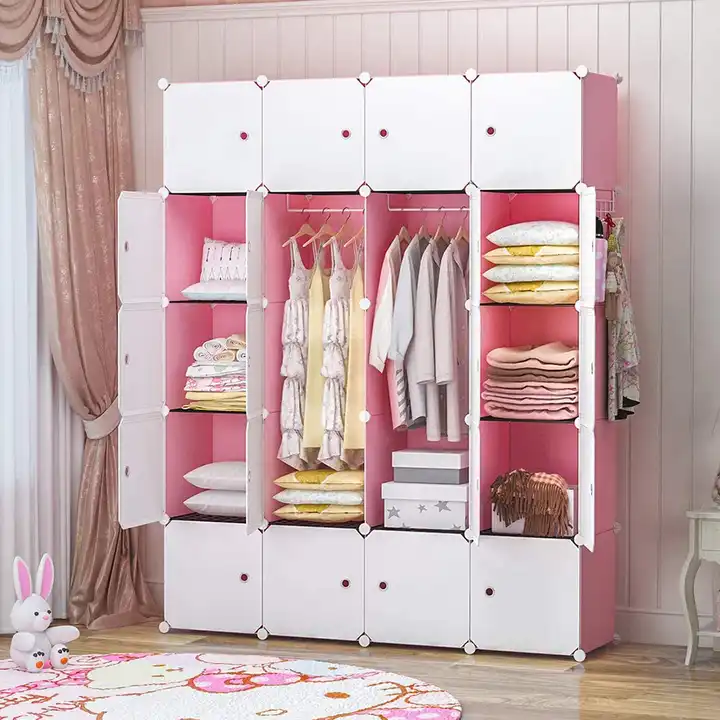
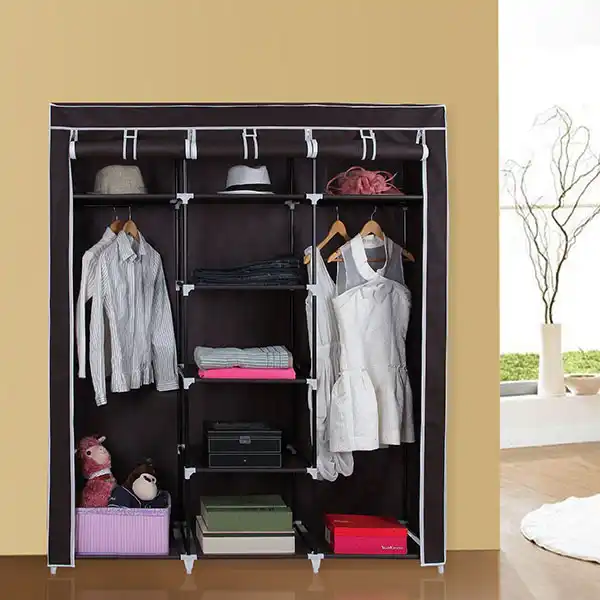
Stop using an affected area if you find a cracked connector, bent support, separating seam, or unstable frame. Remove the load safely and contact the supplier about a compatible replacement or appropriate next step.
Do not hide sagging with an extra board unless that change is approved for the design. A board can spread some contact pressure while adding weight and leaving the original structural problem unresolved.
Keep spare parts and the instructions together. The correct part for a particular model is more useful than a visually similar connector with uncertain dimensions or material.
Move the wardrobe without using the contents as ballast
Remove clothing, loose organizers, and shelf contents before moving the unit. A loaded wardrobe can shift unexpectedly, and its frame may not be designed to handle the forces created by dragging or lifting it full.
Check whether the manufacturer allows the assembled unit to be moved at all. Some designs are easier to relocate after partial or full disassembly.
Clear the route and make sure the empty wardrobe can pass through doors and around corners. If you need to dismantle it, label parts in a way that does not damage their surfaces and follow the reverse sequence recommended by the maker.
Keep small connectors in a closed container. Protect tubes and panels from bending during transport, then inspect and reassemble the wardrobe before loading it again.
Store a dismantled wardrobe properly
Clean and dry every component before packing it away. Moisture trapped inside a folded cover or between panels can create problems during storage.
Fold the cover as instructed, without forcing sharp creases into rigid trim or closures. Keep hardware contained so it cannot rub through the fabric.
Store the packed unit in a suitable dry indoor location where heavy objects will not bend the frame components. Keep the manual and a record of the model with the parts.
When you bring it out again, check the components before assembly. A stored wardrobe still needs a condition check; time out of use does not establish that every part remains sound.
Address common problems at their source
When the wardrobe becomes difficult to use, check whether the problem remains after you remove the affected load. This helps distinguish crowding from an assembly or wear problem. Stop using damaged parts while you arrange a suitable repair or replacement.
The cover catches on clothing
Move garments clear of the closure and check hanger orientation. If the opening is consistently obstructed, reduce the clothing in that section or adjust the storage layout within the unit’s design.
A shelf sags
Unload it and check the shelf material, support placement, and stated limit. Do not assume sagging is harmless because the frame has not collapsed. Follow the supplier’s advice about repair or replacement.
The frame leans
Remove the load safely and check the floor, assembly, required braces, and securing method. Do not level an unstable loaded unit by pushing items under a foot without confirming an appropriate solution.
Clothing is difficult to find
Reduce mixed stacks and group items by the way you use them. A smaller accessible group may work better than adding more compartments to an already crowded wardrobe.
Frequently asked questions
Can a portable wardrobe replace a built-in closet?
It can provide useful clothing storage when its size, construction, and load limits meet your needs. It may not offer the same structure, lifespan, or features as another type of wardrobe. Compare the actual products and intended use.
Can I wash the fabric cover?
Follow the care label or manual. Some covers permit washing, while others require surface cleaning. Remove or protect structural parts as instructed and let the cover dry fully before reassembly.
Why is the zipper harder to close after loading?
The contents may be pushing against the cover, or clothing may be caught in the closure. Reduce the pressure and check alignment before trying again. Persistent resistance can also indicate damage or an assembly issue.
Can I move a portable wardrobe while it is full?
Do not assume it is designed for that. Empty it first and follow the maker’s moving or dismantling instructions. The load can shift and place different forces on the frame during movement.
Can I add hanging shelves to the rail?
Only when the attachment method and total load suit the rail and organizer instructions. Include the organizer’s own weight and avoid blocking the cover or crowding adjacent garments.
What should I do if a connector cracks?
Unload the affected area and stop using it until the problem is resolved. Obtain a suitable replacement or the manufacturer’s advice. Tape or an unrelated connector should not be assumed to restore the original strength.
Keep the routine manageable
Store clean, dry clothing, maintain access space, and address changes in the frame or closure before they become bigger problems. Emptying the wardrobe for cleaning or moving also gives you a chance to inspect the parts that usually stay hidden.
If you need smaller compartments, explore Great Shine’s closet organizers and compare their dimensions and attachment requirements with your wardrobe. Accessories should fit the existing structure and its limits.