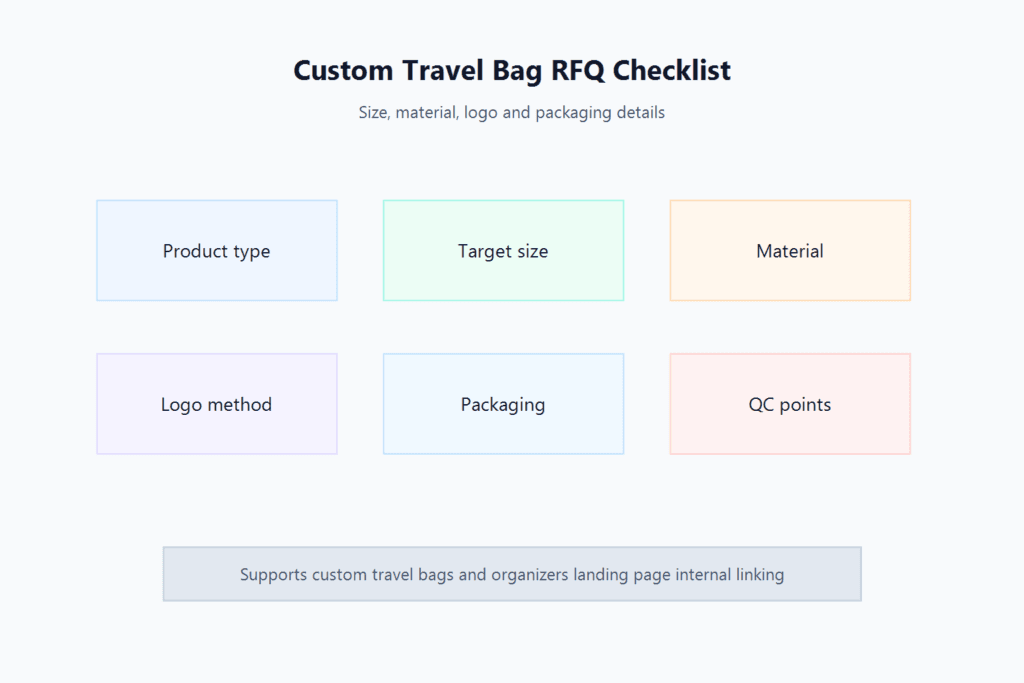
A clear RFQ helps a custom travel bag supplier quote the product you actually want. A vague request such as “please quote travel organizer” forces the supplier to guess size, fabric, logo method, packaging, and quality level. The result is usually an unreliable price comparison. A stronger RFQ gives enough detail for the manufacturer to confirm material, structure, sample scope, and production assumptions.
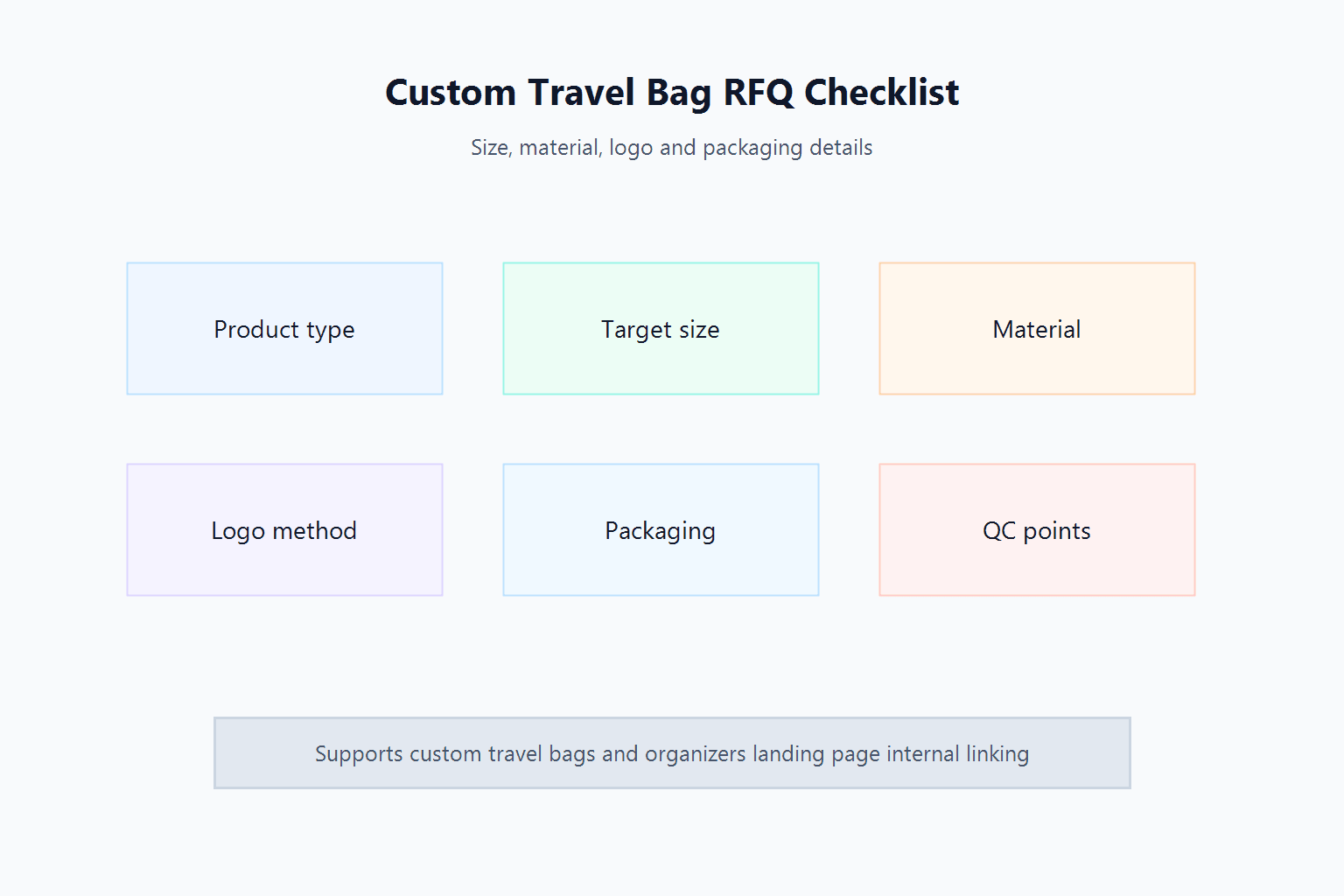
This checklist is designed for buyers sourcing packing cubes, toiletry bags, cosmetic organizers, shoe bags, laundry pouches, tech organizers, garment travel pouches, and related private label products. If your project belongs to this category, include Great Shine’s custom travel bags and organizers manufacturer page as the main internal product reference.
1. Define the Product Type
Start by naming the exact product. “Travel bag” is too broad. A packing cube, hanging toiletry bag, cosmetic organizer, shoe pouch, laundry bag, tech pouch, cable organizer, and foldable travel tote all require different structures and materials.
Include the intended use case. For example, say whether the item is for luggage organization, hotel amenities, outdoor travel, beauty storage, electronics, family travel, business travel, or promotional gifts. The use case helps the supplier recommend a practical material and structure.
2. Provide Target Size and Structure
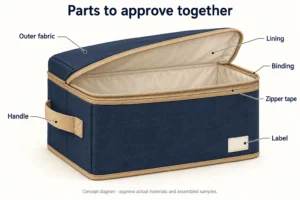
Size is one of the first details needed for quotation. Provide finished dimensions and indicate whether the product needs a gusset, handle, pocket, divider, mesh panel, lining, hook, zipper, drawstring, snap, buckle, or clear window.
If you are sourcing a set, list each size separately. For packing cubes, define small, medium, large, and any special pouch. For organizers, provide compartment requirements and pocket layout. If the product must fit a suitcase, carton, shelf, or retail display, include that constraint.
3. Choose a Material Direction
You do not need to know every technical detail before contacting a supplier, but you should provide a starting material direction. Common options include polyester, nylon, Oxford fabric, mesh, clear panels, PEVA, lining materials, and non-woven fabric for some lightweight storage products.
If you are unsure, say so clearly and ask the supplier to recommend options for your target price and use case. Do not request unsupported claims without documentation. If your buyer needs recycled content, water resistance, chemical compliance, or specific testing, list it as a required confirmation point.
4. Prepare Logo and Branding Details
Logo requirements affect material choice, cost, and sample process. Include logo artwork if available and state the preferred method if known. Options may include screen printing, heat transfer, woven label, rubber patch, embroidery, zipper pull branding, hangtag, insert card, or packaging print.
Also confirm logo placement. A logo that looks good in a mockup may be hidden after folding or blocked by a pocket, zipper, or handle. Ask the supplier to confirm whether the logo location is practical for bulk production.
5. Define Packaging Requirements
Packaging is often missed in early RFQs, but it affects cost, retail presentation, shipping volume, and barcode work. Tell the supplier whether the product needs individual polybag, insert card, belly band, hangtag, color box, retail display packaging, master carton marks, barcode labels, or language versions.
If you sell through ecommerce, ask how the product will be folded and protected in shipping. If you sell through retail stores, ask whether the packaging supports shelf display and scanning requirements. For multi-SKU programs, keep packaging rules consistent.
6. Share Quantity and Market Information
Quantity affects quotation, production planning, packaging, and material sourcing. Instead of asking only for the lowest MOQ, provide an estimated order quantity or launch range. If you need several colors or sizes, state whether the quantity is total or per color.
Target market also matters. Buyers selling in the United States, Europe, Japan, South Korea, Australia, or other regions may have different packaging, labeling, documentation, or inspection expectations. If your retailer has specific requirements, share them before sampling.
7. Clarify Sample Expectations
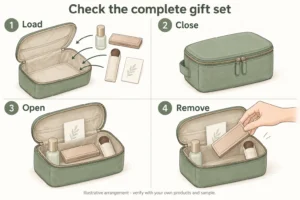
A sample can confirm structure only, or it can confirm final material, logo, packaging, and color. Make sure both sides understand the sample goal. If the first sample uses substitute material, it should not be treated as final approval for bulk production.
Ask whether the sample will use final material, whether it can include logo and packaging, what details should be checked before bulk production, and which changes may affect cost or production planning.
8. Add QC Checkpoints
Quality checks should be tied to the product. A packing cube may need checks for size, zipper, mesh, stitching, handle, set count, color, and packaging. A toiletry organizer may also need pocket layout, lining, hook, closure, and compartment checks. A tech organizer may need elastic loops, panel structure, and zipper movement.
Include your expected inspection points in the RFQ. This makes the quotation more realistic and reduces disputes later.
RFQ Checklist Table
| RFQ Item | Details to Provide |
|---|---|
| Product type | Packing cube, toiletry bag, cosmetic organizer, shoe bag, laundry pouch, tech pouch, or other item |
| Size | Finished dimensions, gusset, set sizes, compartment layout |
| Material | Polyester, nylon, Oxford, mesh, clear panel, lining, or supplier recommendation |
| Logo | Artwork, method, size, color, and placement |
| Packaging | Polybag, insert card, hangtag, barcode, carton mark, retail packaging |
| Quantity | Estimated order quantity, colors, sizes, and launch plan |
| Sample | Structure sample, material sample, logo sample, packaging mockup |
| QC | Size, stitching, zipper, logo, function, packing, labels, carton marks |
Send a Better First Inquiry
A good first inquiry does not need to be long, but it should be specific. State the product type, target use, dimensions, material direction, logo need, packaging route, estimated quantity, and target market. Attach reference images or sketches if available, but do not rely on a photo alone.
For category support, direct the supplier to the custom travel bags and organizers manufacturer page and explain which products in the travel organizer range you want to develop first.
FAQ
What should be included in a custom travel bag RFQ?
Include product type, size, material direction, logo method, packaging, estimated quantity, target market, sample expectations, and QC points.
Can I request a quote without final material?
Yes, but explain the target use and price band. Ask the supplier to recommend material options and confirm details during sampling.
Should packaging be quoted separately?
For private label and retail programs, yes. Separate packaging details make price comparison clearer and helps prevent missing barcode, insert card, carton, or retail display requirements.