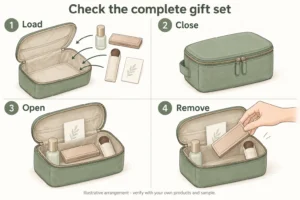
Choosing a custom storage bags manufacturer is not only about finding the lowest unit price. For retail buyers, importers, wholesalers, and private label brands, the right supplier should understand your product category, target market, material requirements, packaging expectations, and quality-control checkpoints before bulk production begins. A good manufacturer helps turn your RFQ into a clear product specification, sample plan, and production route.
If you are sourcing OEM or ODM storage bags, start by checking whether the supplier can support your required bag type, custom size, material, logo method, packaging format, and inspection expectations. Then confirm what information they need from you before quoting. This guide explains how to evaluate a supplier before you send a purchase order.
For buyers who need broader OEM/ODM bag development, Great Shine’s custom bag manufacturer page shows the product categories and customization directions that can support storage, travel, cosmetic, toiletry, cooler, garment, and organizer programs.
Why Manufacturer Selection Matters for Storage Bag Programs
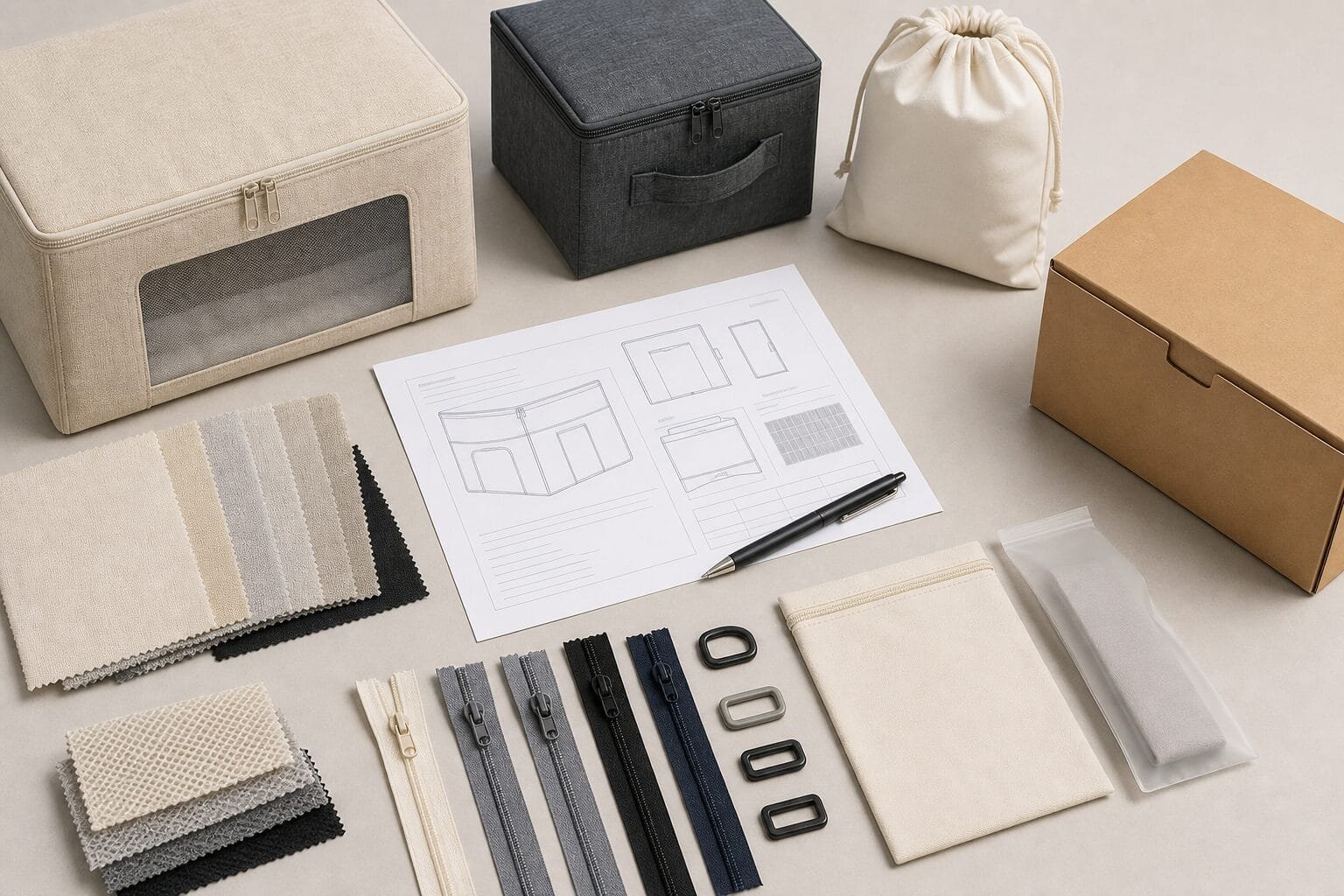
Storage bags look simple, but sourcing decisions can affect appearance, durability, shelf presentation, packing efficiency, and customer experience. A blanket storage bag, clear PVC storage bag, foldable fabric organizer, cosmetic pouch, or travel toiletry bag may use different materials, zipper structures, handles, stitching methods, window panels, inserts, and retail packaging.
For B2B buyers, the manufacturer must translate commercial requirements into production details. A retailer may need a coordinated storage collection across multiple sizes. An importer may need carton efficiency and packaging compliance documents from its own market. A private label brand may focus on logo placement, hangtags, color consistency, and product photography requirements. A promotional buyer may prioritize simple construction and consistent branding across bulk orders.
The supplier selection process should therefore answer three questions:
- Can this manufacturer make the product type correctly?
- Can they customize it for your market, packaging, and brand position?
- Can they communicate the risks, tradeoffs, and confirmation points before sampling and bulk production?
Define the Product Type Before Contacting Suppliers
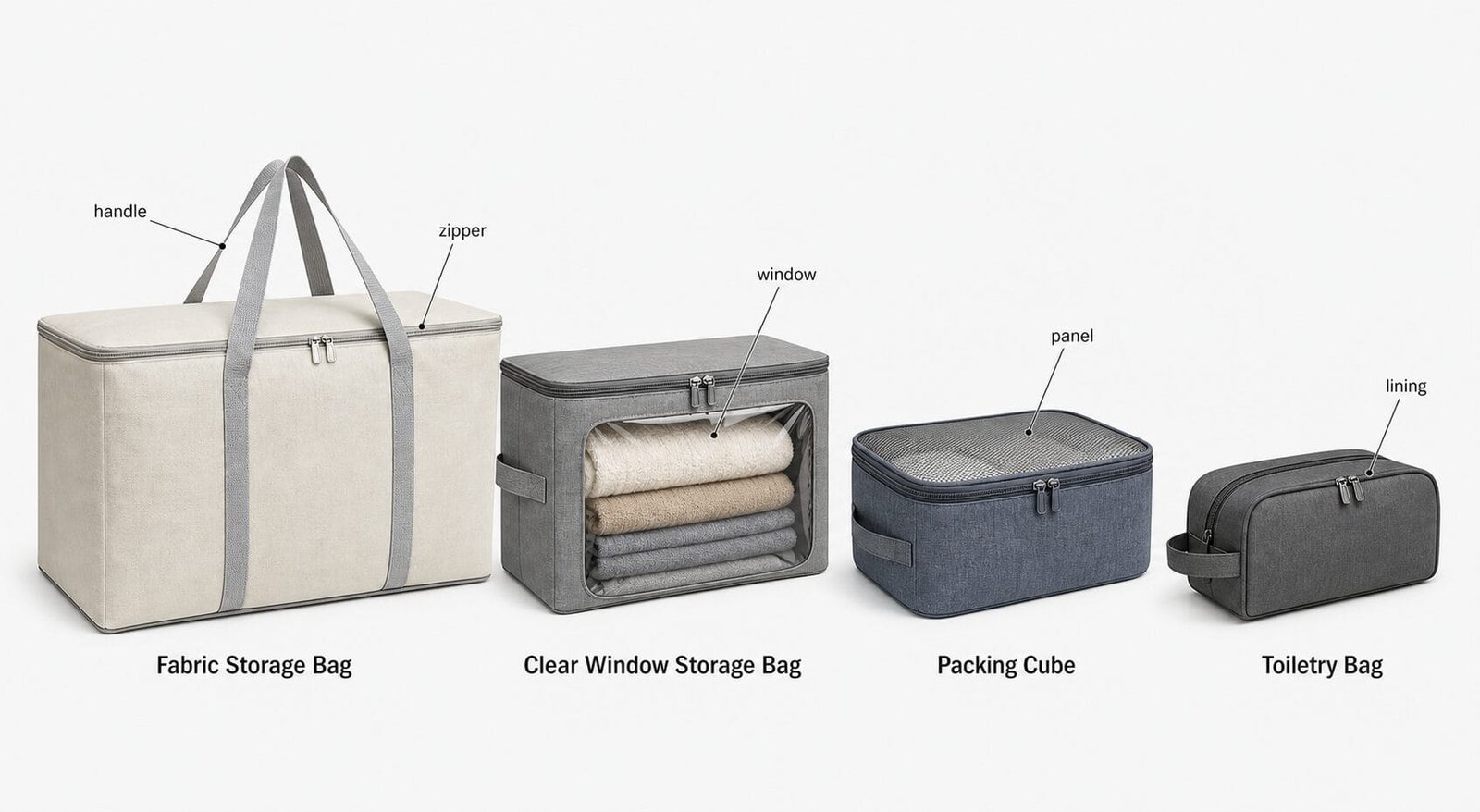
Before comparing manufacturers, define the storage bag category as clearly as possible. “Custom storage bags” can mean many product families, and each has different sourcing details.
Common product directions include fabric storage bags for clothes or bedding, clear PVC storage bags, closet organizers, storage boxes and bins, packing cubes, garment bags, cosmetic bags, toiletry bags, laundry bags, and seasonal storage organizers. Some products are soft and foldable. Others require stronger panels, clear windows, handles, dividers, wheels, hooks, or structured frames.
A useful RFQ should include the product use case, approximate size, preferred material, target retail price level if available, branding requirements, expected order quantity, packaging requirement, and target market. If some details are not confirmed, list them as questions. A serious supplier should be able to suggest options instead of forcing you to choose every detail at the first email stage.
For wider OEM and private label programs, you can also review Great Shine’s OEM/ODM private label bag manufacturing service page to understand which decisions normally belong in the development process.
Key Capabilities to Check in a Custom Storage Bags Manufacturer
A manufacturer should be evaluated by product fit, customization support, communication quality, sampling process, and QC control. The table below gives a practical comparison framework for sourcing managers.
| Evaluation Area | What to Check | Why It Matters for Buyers | Questions to Ask |
|---|---|---|---|
| Product category fit | Storage bags, organizers, cosmetic bags, toiletry bags, garment bags, packing cubes, or related soft goods | A supplier familiar with your category can advise on structure, material, stitching, zipper, and packing details | Have you made similar storage bag styles before? Which materials and structures are common for this type? |
| Customization ability | Custom size, fabric, color, lining, window, handle, logo, label, packaging | Private label and retail programs usually need product differentiation | Which parts can be customized, and which require new patterns or tooling? |
| OEM/ODM support | Buyer design, supplier-developed options, pattern adjustment, sample revision | Different buyers need different levels of development support | Can you work from drawings, reference samples, photos, or a written spec sheet? |
| Sampling process | Sample type, sample revision, artwork confirmation, packaging mockup | Sampling reduces misunderstanding before bulk production | What information do you need before making a sample? What should be confirmed after sample approval? |
| MOQ and production planning | Quantity requirement, color split, size split, packaging version | MOQ affects assortment planning and retail launch strategy | What MOQ applies to this material, logo method, or packaging choice? |
| Quality control | Material check, stitching, zipper, handle, measurement, packing inspection | Storage bags must match buyer expectations for use, display, and shipment | What QC points should be checked for this product type? |
| Export communication | English documentation, packing details, carton marks, shipping coordination | Importers need organized order communication | Can you provide product specs, packing information, and order details for buyer approval? |
Material and Structure Questions to Confirm
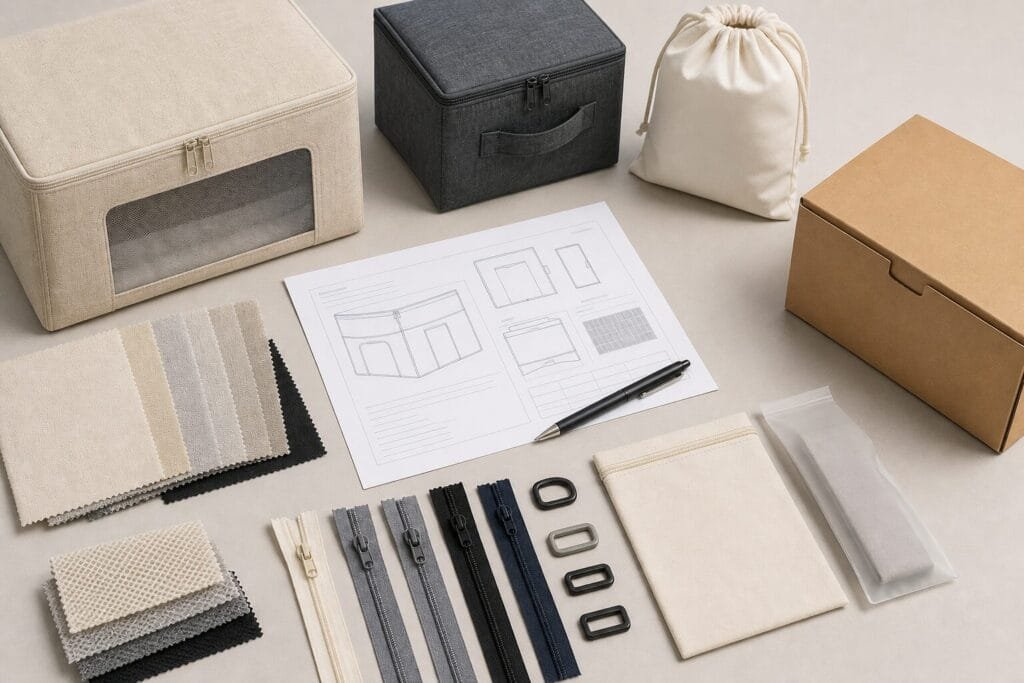
Material choice is one of the first sourcing decisions. It affects product feel, strength, foldability, appearance, printing effect, and cost. For storage bags and related organizers, buyers may consider non-woven fabric, polyester, cotton-like fabric, Oxford fabric, PVC, TPU, PEVA, mesh, lining fabric, cardboard or PP board reinforcement, and clear window material, depending on the product type.
Do not choose material only by name. The same material category can vary by thickness, coating, finish, hand feel, transparency, print effect, and suitability for the final use. Ask the supplier what material options are common for the product and what tradeoffs buyers usually compare.
For example, a clear PVC storage bag may be chosen for product visibility, while a fabric storage bag may be preferred for a softer home-storage look. A packing cube may need lightweight fabric and mesh panels. A toiletry bag may need a different structure from a bedding storage organizer. If your program includes beauty, travel, or hotel products, Great Shine also has dedicated examples for custom cosmetic bags for beauty brands and custom toiletry bags for hotels.
When discussing materials, ask these questions:
- What materials are practical for this product use case and target price level?
- Which material options support the required logo method?
- Does the product need lining, clear windows, mesh, handles, dividers, or reinforcement?
- What should be confirmed for fabric color, print color, transparency, thickness, and hand feel?
- Are there any buyer-provided market requirements the supplier needs to review before quoting?
Custom Logo, Label, and Packaging Support
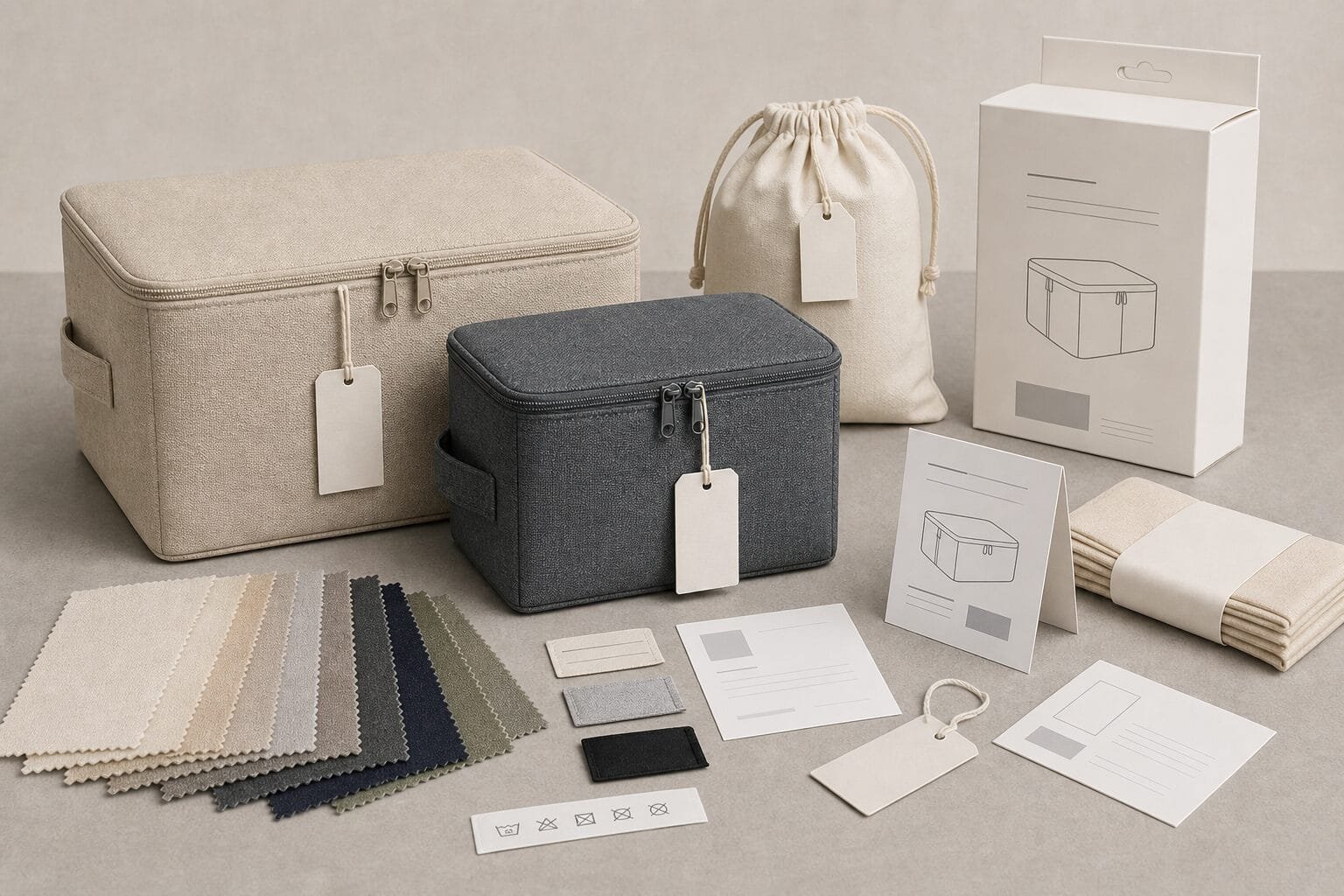
Private label buyers often need more than a plain storage bag. The manufacturer may need to support logo printing, woven labels, care labels, hangtags, color cards, insert cards, polybags, retail boxes, carton marks, and barcode placement. The exact options depend on product type and buyer requirements.
Before requesting a quote, prepare artwork files if available, or at least define the approximate logo size and position. If you do not know the best logo method, ask the supplier which methods fit the material and order quantity. Some logo methods are better for flat fabric panels, while others may be more practical for labels, zipper pulls, packaging, or hangtags.
Packaging should also be discussed early. Retailers may need shelf-ready packaging or product labeling. Importers may focus on carton quantity and shipping efficiency. E-commerce sellers may need compact packing and clear product identification. Avoid approving only the product sample if packaging is also part of the final retail experience.
MOQ, Sampling, and Lead-Time Questions to Ask Without Guessing
MOQ, sample timing, and production timing vary by product type, material, logo method, packaging format, and order complexity. Because exact figures are not provided here, buyers should treat them as confirmation points instead of assumptions.
Ask the manufacturer:
- What MOQ applies to the selected product, material, color, and logo method?
- Can different sizes or colors be combined, or are they counted separately?
- What information is required before sample development?
- How many sample revisions are reasonable before bulk approval?
- What affects production lead time after sample approval?
- What packaging details must be confirmed before production starts?
A reliable supplier should explain what drives MOQ and timing rather than giving one number for every project. Custom printing, special fabric sourcing, new patterns, retail packaging, or multiple colorways may all affect the project route.
Quality Control Points for Storage Bags
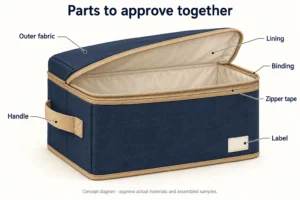
Quality control should match the actual product structure. For a soft storage bag, buyers may check stitching, zipper operation, handle strength, measurement tolerance, fabric appearance, color consistency, window clarity, edge binding, and packing. For a structured organizer, buyers may also check panel stability, divider placement, folding function, and product shape after packing.
Avoid asking only whether the product is “high quality.” Instead, define what should be inspected. The manufacturer should help identify realistic checkpoints before mass production.
Common QC confirmation points include:
- Material, color, and surface appearance against approved sample
- Product dimensions and shape after assembly
- Zipper, slider, puller, hook, handle, and closure function
- Stitching line, seam strength direction, binding, and loose thread checks
- Logo position, print clarity, label placement, and packaging accuracy
- Carton packing, quantity per carton, carton marks, and buyer label requirements
If your market requires specific compliance documents, testing, or restricted substance confirmation, provide those requirements directly to the supplier. Do not assume a product has certifications or test results unless the manufacturer provides valid proof for your exact order and material.
Buyer Checklist Before Sending an RFQ
Use this checklist to make your RFQ clear enough for a manufacturer to respond with useful guidance.
- Product type: storage bag, fabric bin, packing cube, garment bag, cosmetic bag, toiletry bag, laundry bag, or other organizer
- Target use: retail shelf, e-commerce, hotel program, promotional gift, travel accessory, home organization, seasonal storage, or private label collection
- Size: length, width, height, capacity target, or reference sample dimensions
- Material direction: fabric, non-woven, PVC, PEVA, mesh, lining, reinforcement, or open to supplier recommendation
- Structure: zipper, handle, window, pocket, divider, hook, foldable design, compression feature, or reinforced panel
- Branding: logo method, label, hangtag, color, pattern, and artwork format
- Packaging: polybag, insert card, retail box, barcode, carton mark, or buyer-specified packing
- Quantity: estimated order quantity and whether sizes or colors are split
- Market: United States, Europe, Japan, South Korea, or other destination with buyer requirements
- QC needs: inspection points, measurement tolerance, packaging checks, and any required documents
- Timeline: target sample approval date and expected delivery window, to be confirmed by the supplier
Warning Signs When Comparing Suppliers
A low quote is not always a better sourcing result. Be careful when a supplier does not ask about material, size, logo, packaging, or quantity before quoting. A vague price may change later once details become clear.
Other warning signs include unclear sample approval steps, reluctance to discuss material alternatives, no explanation of MOQ differences, weak communication about packaging, or pressure to approve production before confirming artwork and specifications. For private label programs, unclear logo and packaging confirmation can create costly revisions.
You should also be careful with unsupported claims. If a supplier says a product is certified, waterproof, food-safe, recycled, flame-retardant, or tested to a specific standard, ask for documents that match your product, material, and order. If proof is not available, treat the claim as unconfirmed.
When comparing offers, use our guide to why storage bag quotes differ between factories to check the specification, price unit and included charges. It includes a quotation comparison table and a packaging example from a Great Shine quote.
When to Request a Quote from Great Shine
If you are sourcing custom storage bags or related soft goods for retail, wholesale, import, or private label programs, prepare your product type, target size, material direction, logo requirement, packaging needs, quantity, and destination market. Great Shine can then review the project direction and discuss practical OEM/ODM options.
You can start with the custom bag manufacturer page if your project covers multiple bag types, or the OEM/ODM private label bag manufacturing page if your priority is branding, labels, packaging, and product development. For direct project communication, send your requirements through the contact page.
A clear RFQ helps both sides move faster. The more specific you are about product use, size, material, branding, packaging, and quantity, the easier it is for the manufacturer to suggest the right production route.
FAQ
What should I ask a custom storage bags manufacturer first?
Start with product capability, material options, custom size support, logo methods, packaging options, MOQ rules, sampling requirements, and QC checkpoints. Share your target use, quantity, and market so the supplier can recommend practical options.
Can one supplier make different types of storage bags?
Some suppliers support multiple soft-goods categories, such as fabric storage bags, packing cubes, garment bags, cosmetic bags, toiletry bags, laundry bags, and organizers. Confirm category experience before assuming one supplier fits every product.
How do I compare OEM and ODM support?
OEM usually means the supplier develops according to your design or specification. ODM may include supplier-developed styles or structure suggestions. In both cases, confirm what files, samples, artwork, and approval steps are needed.
What information is needed for a storage bag quotation?
A useful RFQ normally includes product type, size, material direction, structure, logo, packaging, quantity, target market, and any inspection or document requirements. If some points are undecided, ask the supplier to recommend options.
Should I choose the lowest-price storage bag supplier?
Not automatically. Compare product fit, material clarity, customization support, sampling process, packaging communication, and QC planning. A low price without clear specifications can create revisions or quality problems later.
Can Great Shine support private label storage bag programs?
Great Shine provides OEM/ODM and private label support for storage bags and related bag categories. Buyers should confirm product type, size, material, logo, packaging, quantity, and market requirements when requesting a quote.
Request a Quote
Ready to develop custom storage bags for a retail, wholesale, import, or private label program? Send your product type, target size, material direction, logo and packaging requirements, quantity estimate, and destination market through Great Shine’s contact page. The team can review your RFQ details and discuss practical OEM/ODM options for your project.