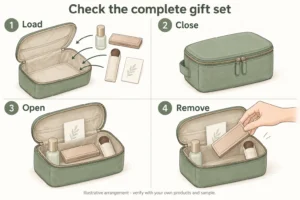
Retail buyers should not order custom storage bags from China based only on a product photo and a unit price. Before sampling or bulk production, confirm the product type, material, size, structure, logo method, packaging, MOQ rules, sample approval process and QC checkpoints. A clear RFQ helps the supplier quote the right product and reduces avoidable revisions.
This checklist is written for retail buyers, importers, wholesalers and private label brands that need custom storage bags for home organization, travel, beauty, hotel, promotional or e-commerce programs. The goal is to turn a rough sourcing idea into a practical supplier conversation.
For broader product development, Great Shine’s custom bag manufacturer page shows how different bag categories can be customized by material, size, structure, logo and packaging. If your program is mainly private label, the OEM/ODM private label bag manufacturing page is also relevant.
Start With the Product Use Case
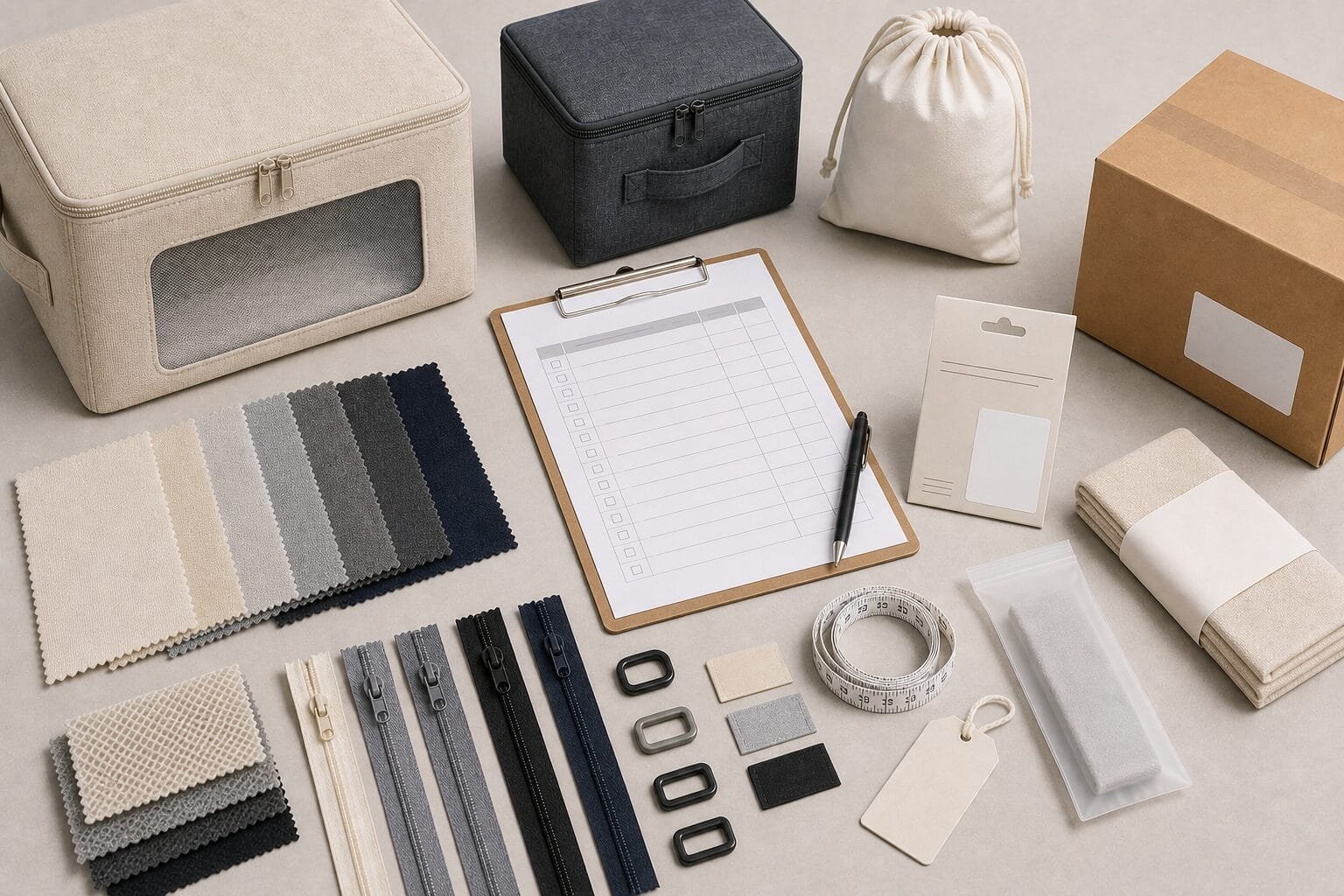
The first question is not “how much is a storage bag?” It is “what job does this storage bag need to do for the buyer and end user?” A fabric blanket storage bag, a clear window storage bag, a travel packing cube, a cosmetic pouch and a toiletry organizer may all sit under a wider storage category, but they need different materials, structures and packaging.
Retail shelf products usually need stronger visual presentation, clear packaging information and consistent SKU details. E-commerce products may need compact packing, product identification and carton efficiency. Hotel or travel programs may need specific pouch sizes, transparent panels, hanging features or amenity kit compatibility. Promotional programs may prioritize simple structure and reliable logo placement.
Before contacting a supplier, define the product’s sales channel and end-use scenario. This helps the manufacturer suggest the right material, construction and packaging route instead of quoting a generic bag that later needs several rounds of changes.
Confirm the Product Category and Structure
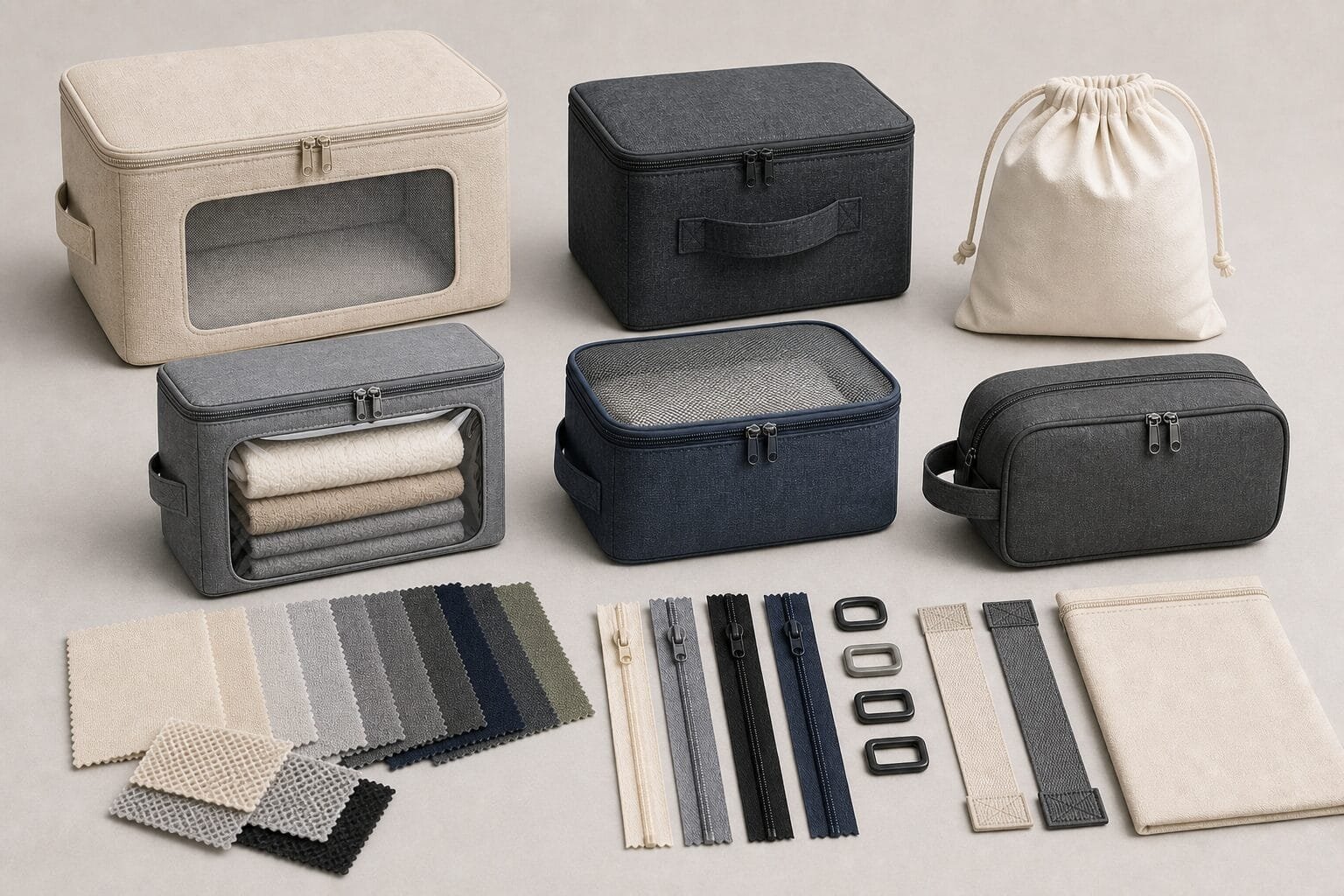
Custom storage bags from China can cover many product families. Buyers should describe the exact product direction rather than using only a broad category name. If you need a fabric storage box, say whether it needs handles, a zipper, a clear window, cardboard reinforcement or a foldable structure. If you need a travel organizer, define compartments, mesh panels, zipper route and packing style.
Use reference photos when possible, but explain what you want to keep and what you want to change. A supplier may not know whether a photo is meant to show size, material, shape, color, logo placement or packaging. Clear notes prevent wrong assumptions.
Key structure questions include:
- What is the intended product type: storage bag, organizer, packing cube, toiletry bag, cosmetic pouch, garment bag or laundry bag?
- Does the product need a zipper, drawstring, handle, hook, pocket, divider, clear window or mesh panel?
- Should the bag be soft and foldable, or should it hold shape on shelf?
- What size and usable capacity are needed?
- Will the bag be sold individually, bundled as a set or packed with another product?
Ask About Material Options and Tradeoffs
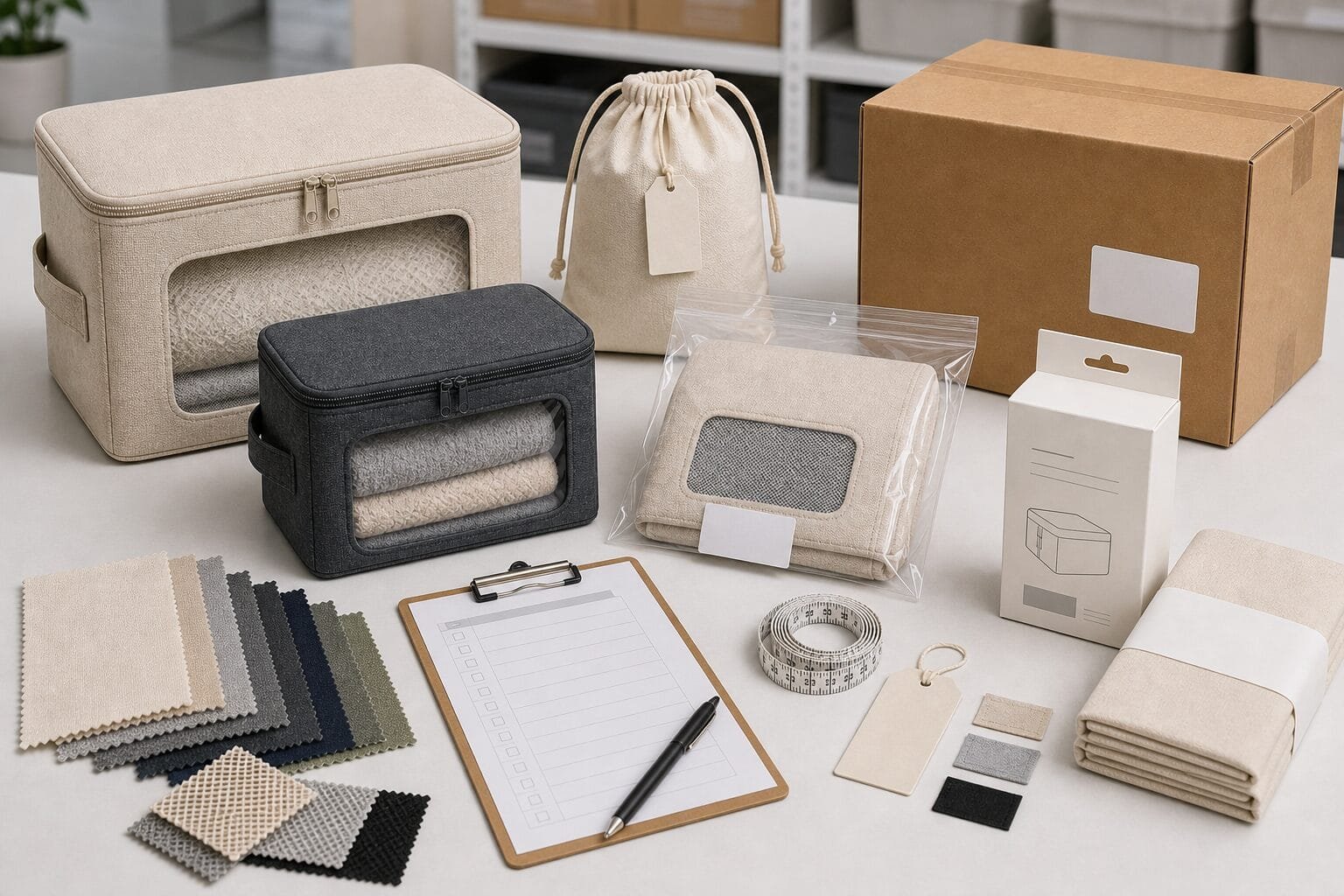
Material choice affects cost, appearance, printing, folding, durability expectations and packaging. Buyers should ask the supplier which materials are practical for the product type and market, instead of choosing by material name alone.
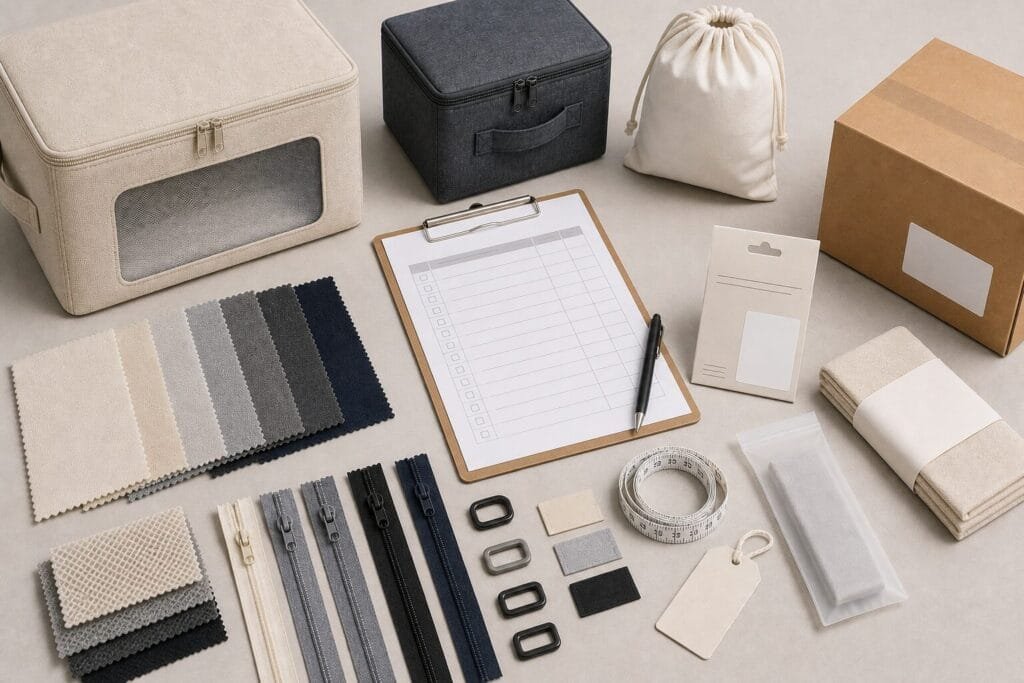
Common storage bag material directions include non-woven fabric, polyester, Oxford fabric, cotton or canvas-style fabric, PVC-style clear material, TPU-style clear material, PEVA-style material, mesh, lining fabric and reinforcement panels. Each option has tradeoffs. For example, a clear window can improve visibility but may require careful edge finishing. A structured fabric bag may look better on shelf but can affect carton volume. A mesh panel may help visibility and ventilation but needs stitching and snag checks.
Do not claim a product is waterproof, food-safe, eco-friendly, recycled, certified or tested unless the supplier provides valid proof for the exact material and order. If these claims matter for your market, include them as buyer-required confirmation points in the RFQ.
| Material or Component | Why Buyers Use It | Questions to Confirm |
|---|---|---|
| Non-woven fabric | Cost-conscious home storage and promotional storage bags | Fabric weight, handle reinforcement, printing method and folded packing size |
| Polyester or Oxford fabric | Travel organizers, reusable storage bags and stronger fabric programs | Fabric weight, color matching, lining, zipper quality and logo method |
| Cotton or canvas-style fabric | Lifestyle, gift and premium-feel storage products | Shrinkage risk, color consistency, label method and packaging style |
| Clear PVC/TPU-style panels | Visible storage, toiletry bags and retail display | Thickness, softness, clarity, edge finishing and market requirements |
| Mesh | Packing cubes, breathable storage and organizer panels | Mesh strength, snag risk, stitching and zipper compatibility |
| Reinforcement panel | Bags that need shape or shelf presentation | Panel material, folding behavior, carton compression and sample approval |
Decide Whether You Need OEM or ODM
Buyers ordering custom storage bags from China should clarify whether they need OEM, ODM or both for comparison. OEM usually starts from the buyer’s design, reference sample or detailed specification. ODM usually starts from supplier-developed structures that can be adjusted with material, color, size, logo and packaging changes.
OEM is better when the product needs a specific size, shape, compartment layout, handle position, window design or packaging format. ODM is better when the buyer wants to review existing supplier options and move faster into sampling. A retailer building a unique collection may prefer OEM. A distributor testing a new category may start with ODM.
Ask the supplier:
- Can you quote based on my reference sample or drawing?
- Do you have existing structures close to this product?
- Which changes are possible without a new pattern?
- Which changes affect sample cost, MOQ or production route?
- Can you show material and packaging options for both routes?
Prepare Logo, Label and Packaging Details
Private label storage bags often need more than a logo on the product. Buyers may need woven labels, sewn labels, rubber patches, zipper pull customization, printed insert cards, hangtags, barcode labels, carton marks, retail boxes or polybags. The right choice depends on the product material, sales channel and order plan.
Send vector artwork if available. If artwork is not ready, give the supplier a placeholder size, color direction and position. Ask which logo methods work best for the selected material. Some surfaces support printing well, while others may be better with a woven label, sewn label, hangtag or packaging card.
Packaging should be discussed before sample approval, not after bulk production starts. A storage bag can look correct as a loose sample but fail the retail requirement if the packaging format, barcode position or carton packing is not confirmed.
For beauty and hotel-related storage categories, review Great Shine’s pages for custom cosmetic bags for beauty brands and custom toiletry bags for hotels to see how product category, branding and packaging needs can differ by market.
Ask MOQ, Sampling and Production Planning Questions Clearly
MOQ is not one fixed number for every project. It can vary by material, color, printing method, label, packaging, hardware, SKU split and whether the project uses an existing pattern or new development. Buyers should ask how MOQ is calculated.
Useful questions include:
- Is MOQ calculated by style, size, color, logo or packaging version?
- Can several sizes or colors be combined in one program?
- Does custom packaging have a separate MOQ?
- What information is needed before a sample can be made?
- What should be approved on the first sample?
- Which details must be confirmed before bulk production?
For sampling, clarify whether the sample is for structure, material, logo, packaging or final pre-production approval. If a sample uses substitute material or temporary packaging, document that clearly so the final production standard is not misunderstood.
Build a Practical QC Checklist
Quality control for custom storage bags should match the actual product structure. A soft drawstring pouch does not need the same checks as a reinforced clear window storage bag. Define inspection points before the supplier quotes and samples.
Common QC points include:
- Material type, color, surface appearance and approved sample match
- Product dimensions, usable capacity and shape after filling
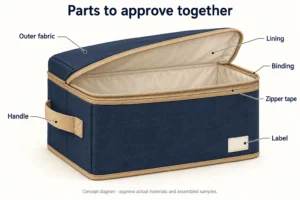
- Stitching, seam alignment, binding, loose threads and edge finish
- Zipper, slider, puller, drawstring, hook, handle and closure function
- Clear window clarity, scratches, wrinkles and edge sealing
- Logo size, position, color and label placement
- Packaging format, insert card, barcode label, carton mark and SKU separation
- Carton quantity, folded size and packing method
If your market requires restricted substance documents, special material declarations or testing, provide the requirement before sampling. The supplier cannot safely assume which documents your buyer or retailer will require.
RFQ Checklist for Retail Buyers
Use this checklist before sending an inquiry:
| RFQ Field | What to Send | Why It Matters |
|---|---|---|
| Product type | Storage bag, organizer, packing cube, toiletry bag, cosmetic pouch or other category | Helps supplier judge material and construction |
| Use scenario | Retail shelf, e-commerce, hotel, travel, promotional, wholesale or private label | Affects packaging, durability and presentation |
| Size and structure | Dimensions, compartments, handles, zipper, window, mesh, hook or reinforcement | Drives sample pattern and quotation accuracy |
| Material direction | Fabric, clear material, mesh, lining, reinforcement or open to suggestion | Controls cost, appearance and production route |
| Branding | Logo file, label type, color, size and position | Prevents wrong logo method or placement |
| Packaging | Polybag, hangtag, insert card, retail box, barcode, carton marks | Impacts cost, carton planning and retail readiness |
| Quantity | Estimated order quantity, color split and SKU split | Helps supplier discuss MOQ and pricing structure |
| Market requirements | Destination market, retailer rules and document needs | Prevents unsupported claims or missing documents |
Warning Signs Before You Place an Order
Be careful if a supplier quotes without asking about material, size, structure, logo, packaging or quantity. A quick price may look convenient, but it can change once the real specification is clear. Also be careful with unsupported claims about certification, waterproof performance, recycled material, food-safe material or exact test results.
Other warning signs include unclear sample approval steps, vague material descriptions, no explanation of MOQ differences, weak packaging communication and pressure to start bulk production before artwork and specifications are approved. A reliable supplier should help clarify tradeoffs before the order moves forward.
When to Request a Quote from Great Shine
Request a quote when you have a product direction, reference images, target market and approximate quantity, even if some details still need supplier input. Great Shine can review custom storage bags alongside related soft-goods categories such as travel organizers, cosmetic bags, toiletry bags, packing cubes, garment bags and fabric storage products.
Send your product type, target size, material direction, logo requirement, packaging style, quantity estimate and destination market through the contact page. If you are still deciding between OEM and ODM, include both options in the RFQ so the team can compare practical development routes.
FAQ
What should retail buyers ask before ordering custom storage bags from China?
Ask about product category experience, material options, custom size support, structure choices, logo methods, packaging options, MOQ rules, sampling process, QC checks and any required export or market documents.
What information should be included in a storage bag RFQ?
Include product type, use scenario, dimensions, material direction, structure details, logo artwork, packaging style, estimated quantity, target market, reference photos and inspection requirements.
How can buyers compare OEM and ODM storage bag options?
Use OEM when your team has a defined product design or reference sample. Use ODM when you want to start from existing supplier structures and customize color, material, logo, label and packaging details.
What QC points matter for storage bags?
Check dimensions, fabric appearance, stitching, zipper function, handle reinforcement, clear window quality, logo placement, label accuracy, packaging format, carton marks and overall appearance against the approved sample.
Can storage bags be customized for private label programs?
Yes. Buyers can usually customize material, size, color, logo, labels, hangtags, insert cards, retail packaging and carton markings depending on the product structure and order requirements.
Request a Quote
If you are preparing to order custom storage bags from China, send Great Shine your product type, reference photos, target size, material preference, logo and packaging needs, estimated quantity and target market through the contact page. A clearer RFQ helps the team recommend a more practical OEM or ODM route before sampling.