Choosing a custom packing cubes manufacturer is not only about finding a low unit price. For retail buyers, importers, luggage brands, travel accessory companies, and private label sellers, the better question is whether the supplier can turn your required size set, material, mesh, zipper, logo, packaging, and quality expectations into a repeatable wholesale product.
A good manufacturer should help you confirm the product structure before sampling, explain what can be customized, ask practical RFQ questions, and show a clear process for sample review, production approval, packaging, inspection, and shipment preparation. If you are developing custom packing cubes for a travel brand or retail program, your supplier decision should be based on product capability, communication quality, quality-control discipline, and fit with your target market.
Great Shine Home Storage Supplier supports buyers sourcing custom packing cubes for travel brands and related OEM/ODM bag programs. This guide explains how to compare manufacturers before you request samples or send a formal quote inquiry.
Understand Your Sourcing Scenario First
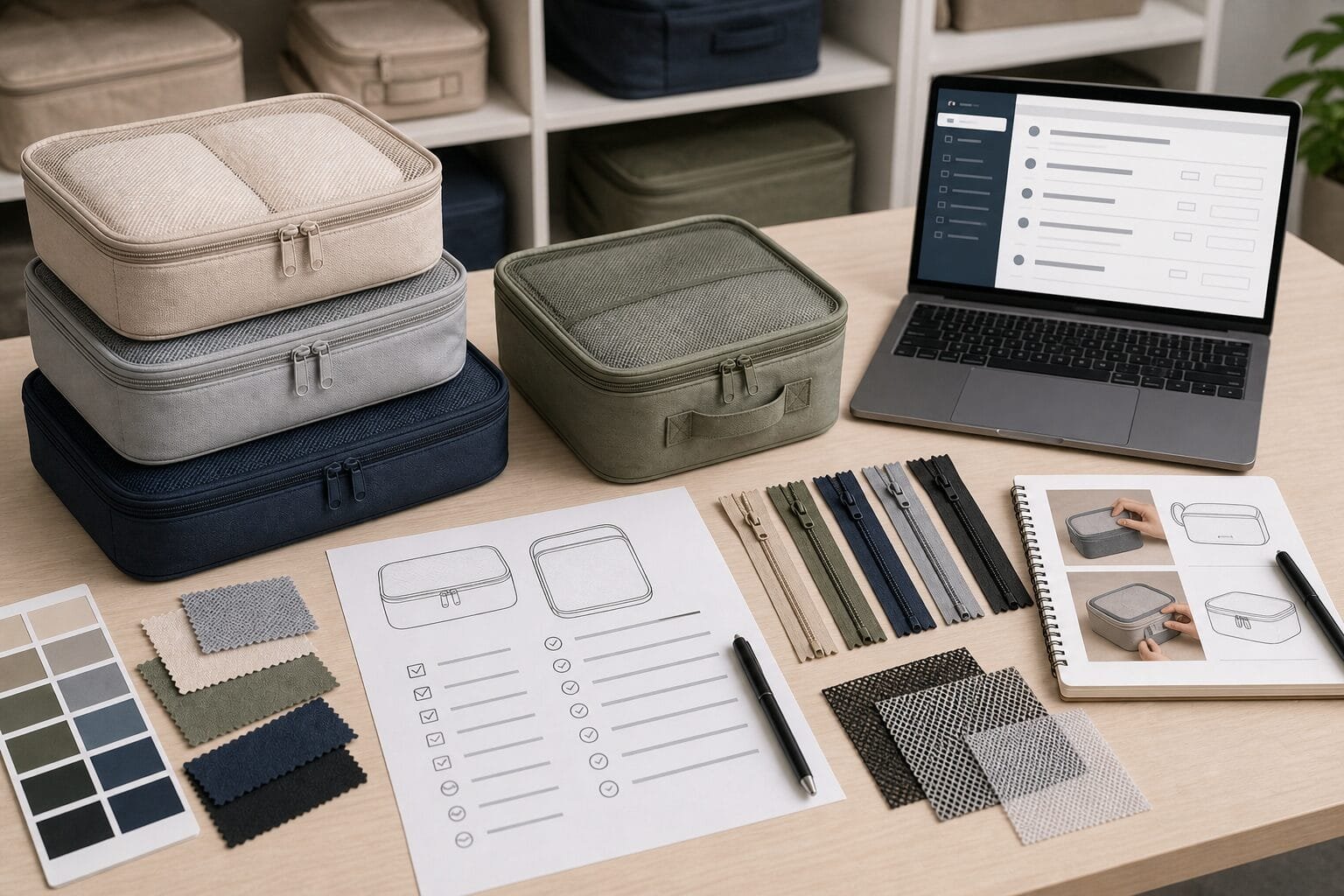
Before contacting manufacturers, define the commercial purpose of the packing cube program. A buyer sourcing for a luggage brand may need a cube set that matches suitcase dimensions and brand colors. A retailer may need an entry-level set with simple packaging and reliable repeat orders. A promotional buyer may focus on logo placement, lightweight materials, and gift-ready presentation. A premium travel brand may care more about fabric feel, zipper quality, compression panels, and visual consistency across SKUs.
This sourcing context changes what you should ask the manufacturer. The same packing cube design may not fit every channel. For example, Amazon sellers often need clear product variation planning and packaging information. Importers and distributors may need wholesale packing cubes that can work across several retail customers. Japanese and South Korean buyers may place more emphasis on compact structure, neat stitching, and packaging presentation. European and US retail buyers often need clear product specs, private label support, and stable communication before bulk order approval.
A manufacturer who understands these differences can help you avoid vague samples and incomplete quotations.
Confirm the Manufacturer’s Product Range
A custom packing cubes manufacturer should be able to discuss more than one basic pouch shape. Ask whether the supplier has experience with different packing cube structures, such as standard mesh packing cubes, compression packing cubes, shoe bags, laundry pouches, toiletry pouches, garment organizers, and coordinated travel organizer sets.
The goal is not to buy every style at once. The goal is to know whether the supplier can support future product expansion. If your first order is a three-piece packing cube set, you may later need a private label travel organizer collection that includes laundry bags, drawstring pouches, hanging organizers, or cosmetic bags. Working with a broader custom bag manufacturer can make that product roadmap easier to manage.
When reviewing a supplier, ask for similar product examples, available structure options, and whether they can develop custom size combinations from your own spec sheet. If you do not have finished drawings, ask what information they need to prepare a practical quotation.
Key Product Specs to Define Before RFQ
Packing cubes look simple, but many sourcing problems start with unclear specifications. Before you compare quotations, prepare the main product details.
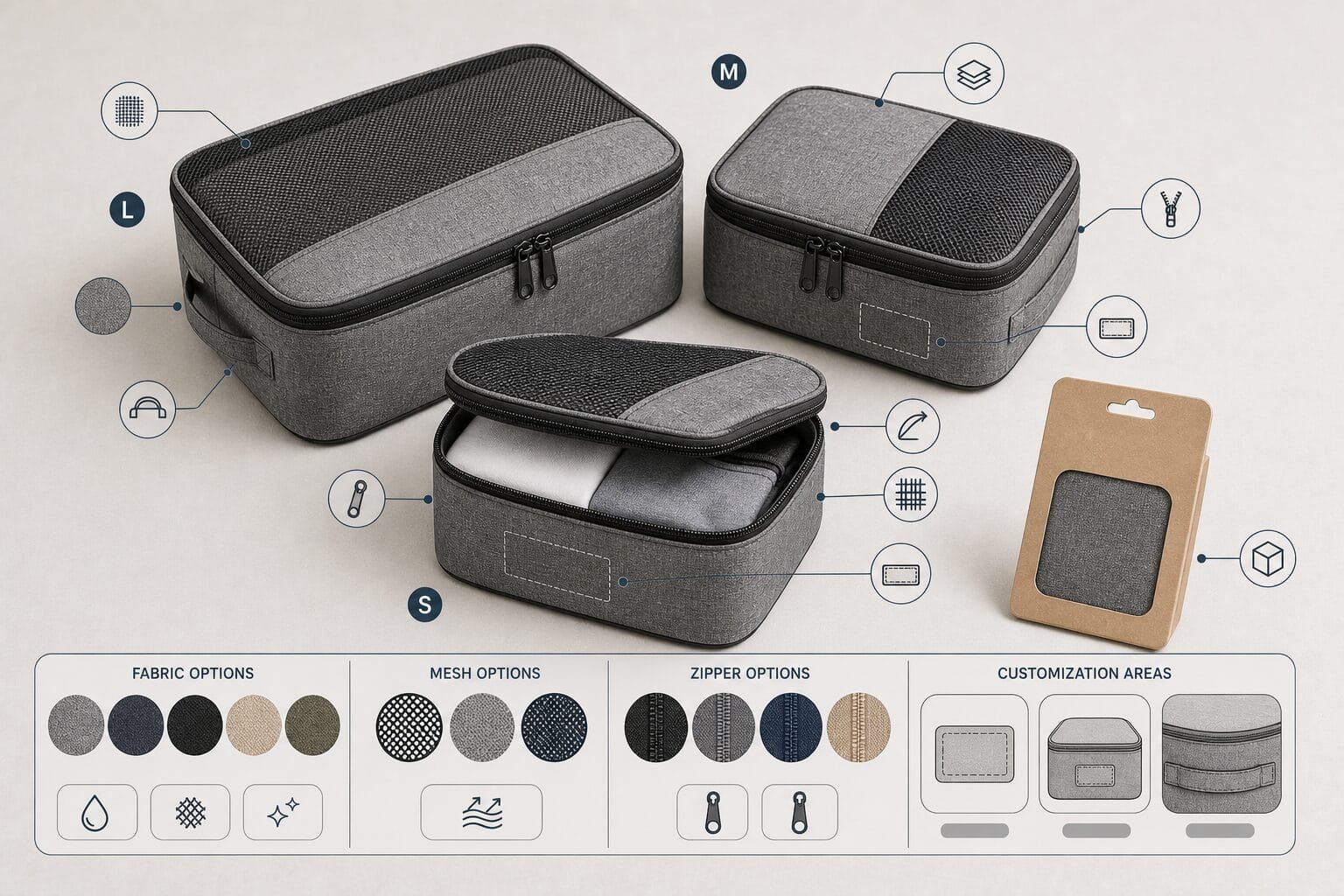
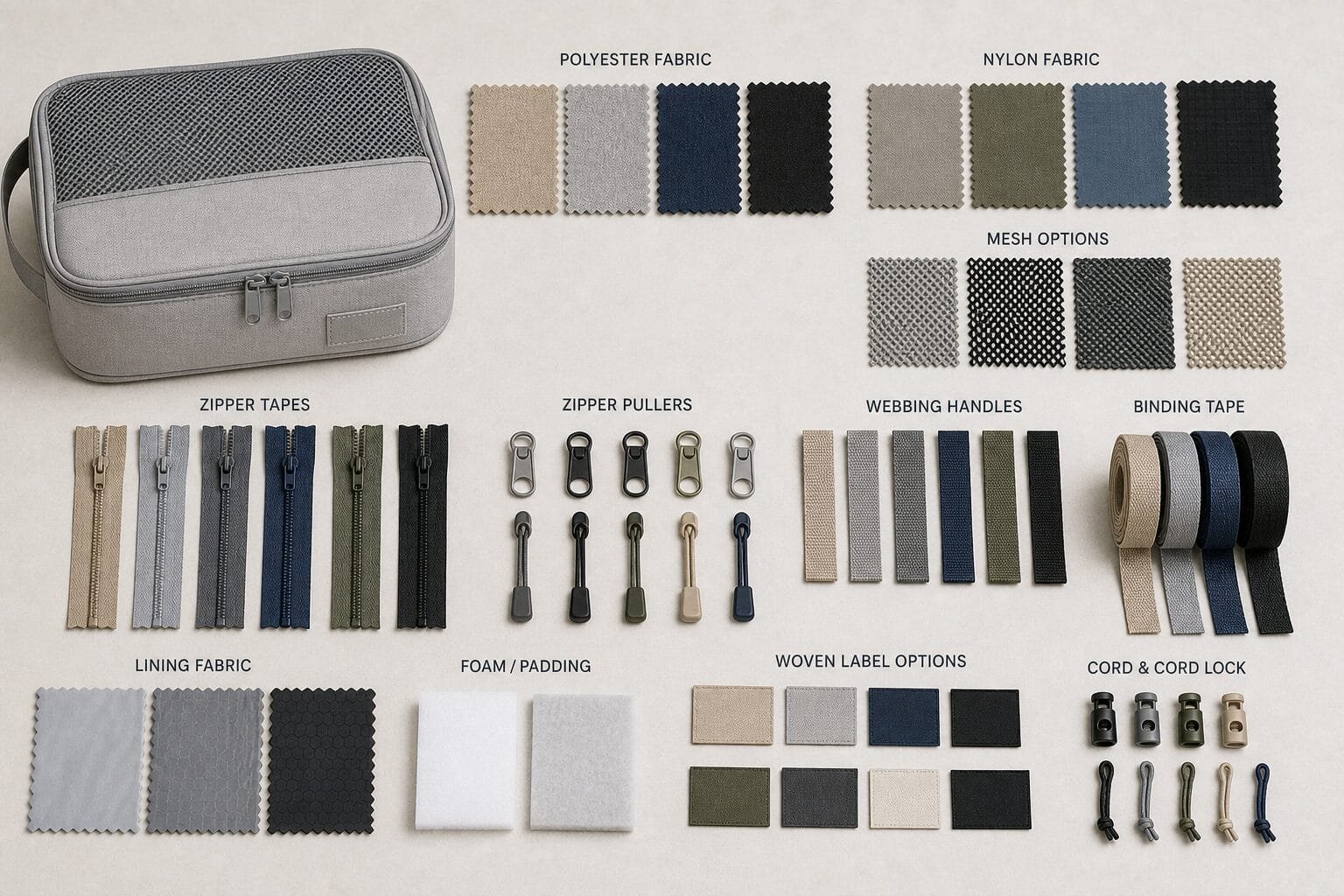
The most important specs include size, material, mesh type, zipper style, handle design, panel structure, logo method, color, packaging, set configuration, and any special function such as compression. For OEM and ODM programs, also clarify whether you need a standard factory style with custom branding or a new structure developed around your own target dimensions.
Common Specification Points
- Product type: standard packing cube, compression packing cube, shoe bag, laundry pouch, travel organizer set, or mixed set.
- Size set: one-piece, three-piece, four-piece, six-piece, or custom size combination.
- Fabric: polyester, nylon, non-woven fabric, or other material to be confirmed with the supplier.
- Mesh: full mesh panel, partial mesh, fine mesh, or no mesh depending on privacy and visibility needs.
- Closure: regular zipper, double zipper, compression zipper, or other zipper structure.
- Handle: webbing handle, fabric handle, side handle, or no handle.
- Logo: woven label, printed logo, heat transfer, embroidery, rubber patch, or other method based on material.
- Packaging: polybag, insert card, belly band, paper box, retail display packaging, or buyer-specified packaging.
If you are unsure which option fits your market, ask the supplier to explain the tradeoffs rather than simply quoting the cheapest version.
Compare Manufacturers by Capability, Not Price Alone
A low quotation can become expensive if the supplier misunderstood the size, material, logo, packaging, or inspection requirement. When comparing manufacturers, build a comparison around sourcing risk and order execution, not only unit cost.
| Evaluation Area | What to Check | Why It Matters for Buyers |
|---|---|---|
| Product experience | Similar packing cubes, travel organizers, and private label bag programs | Reduces development confusion and helps the supplier understand buyer requirements |
| Customization ability | Custom size, material, color, logo, zipper, mesh, packaging, and set configuration | Supports branded retail programs instead of only generic wholesale stock |
| Sampling communication | Clear questions before sample making and practical feedback after review | Prevents repeated sample revisions caused by missing specs |
| Material guidance | Ability to explain fabric, mesh, zipper, and structure options | Helps buyers balance cost, durability, appearance, and target retail positioning |
| Packaging support | Options for retail packaging, barcode placement, inserts, or buyer-supplied packaging specs | Important for importers, Amazon sellers, and retail buyers |
| QC process | Inspection points for measurements, stitching, zipper function, logo placement, and packaging | Helps reduce avoidable bulk order disputes |
| RFQ clarity | Detailed quote based on confirmed specs, quantity, packaging, and artwork | Makes supplier comparison more accurate |
| Communication | Fast, specific, and commercially aware replies | Saves time during development and order follow-up |
If a supplier quotes without asking about size, material, logo method, packaging, and quantity, the quote may not be reliable enough for purchasing decisions.
Ask About OEM and ODM Customization Options
For private label buyers, customization is often the main reason to choose a manufacturer instead of buying generic packing cubes wholesale. However, customization should be discussed in practical layers.
OEM usually means the buyer has clear specifications, artwork, branding, and packaging requirements. The manufacturer produces according to those requirements after sample approval. ODM usually means the buyer may start from existing factory structures and adjust material, color, size, logo, or packaging for a branded program.
Great Shine’s OEM/ODM private label bag manufacturing page outlines broader customization support for bag programs. For packing cubes, buyers should ask which details can be adjusted and which changes require new sampling, tooling, or additional confirmation.
Important customization questions include:
- Can the size set be changed to match our luggage or retail package dimensions?
- Which materials are suitable for our target price range and market positioning?
- Can we customize mesh color, zipper color, puller style, and handle placement?
- Which logo method works best on the selected fabric?
- Can packaging include our insert card, barcode, label, or retail carton requirements?
- What artwork files and color references are needed before sampling?
Avoid assuming every design detail can be changed at the same cost or schedule. Ask the manufacturer to identify which details affect quotation, sample preparation, and bulk production planning.
Review Material and Structure Choices Carefully
Material selection affects appearance, hand feel, weight, durability, folding performance, and cost. Many packing cubes use polyester or nylon fabrics, often combined with mesh panels for visibility and ventilation. Some programs use lighter materials for promotional or value retail channels, while premium travel brands may prefer stronger fabric, smoother zippers, and cleaner finishing.
For compression packing cubes, structure matters even more. Compression designs usually involve an additional zipper or panel structure that helps reduce bulk. The supplier should explain how the compression design affects sewing, zipper selection, and sample review. Do not rely on broad claims. Instead, ask for product samples, structure photos, and clear confirmation of your required material and zipper options.
Also consider whether your target market prefers visible mesh panels or more private solid panels. Retail buyers may choose mesh because customers can see contents quickly. Business travel or premium brands may prefer partial mesh or cleaner solid panels for a more refined appearance.
Clarify MOQ, Sampling, and Lead-Time Questions Without Guessing
MOQ, sample time, and production lead time depend on product design, material availability, logo method, packaging, order quantity, and factory schedule. Because these details can change by project, buyers should treat them as questions to confirm, not assumptions.
A professional RFQ should ask:
- What is the MOQ for this exact size set and material?
- Does the MOQ change if we use custom-dyed fabric, custom zipper color, or special packaging?
- What sample cost and sample timing apply after specs and artwork are confirmed?
- What information is needed before the supplier can estimate bulk production timing?
- How does packaging complexity affect the production schedule?
- Are there any material or accessory constraints we should know before finalizing design?
This approach helps both sides avoid unrealistic expectations. It also gives the manufacturer a fair basis for a specific quotation.
Check Packaging Support for Retail and E-Commerce Channels
Packaging is a major difference between generic wholesale packing cubes and a private label retail program. A travel brand may need clean retail packaging that matches luggage collections. An Amazon seller may need barcode placement, product inserts, and carton labeling. A distributor may prefer simple packaging that can be adapted for several customers.
Ask the manufacturer what packaging formats they can support and what files are required. For example, your supplier may need dielines, artwork, barcode information, carton mark details, and packing instructions. If you are still developing the concept, ask which packaging options are commonly used for packing cube sets and which details will affect cost.
Good packaging discussion should include unit packaging, master carton packing, labeling, and any market-specific buyer requirements. Do not wait until bulk production is nearly finished to discuss packaging details.
Evaluate Quality-Control Questions Before Order Approval
Quality control for custom packing cubes should focus on measurable and visual details that matter in retail use. The manufacturer should be able to inspect size tolerance, stitching, zipper function, mesh alignment, handle strength, logo position, color consistency, packaging accuracy, and general workmanship.
Avoid asking for unsupported performance claims unless you have a defined test method and acceptance criteria. Instead, ask what inspection points can be checked during production and before shipment. If your company has its own QC checklist, share it early.
Useful QC confirmation points include:
- Are finished dimensions checked against the approved sample?
- Are zipper opening and closing functions inspected?
- Are seams, handles, binding, and mesh panels checked visually?
- Is logo placement compared with approved artwork?
- Is packaging checked against buyer instructions?
- Can pre-production samples or approval samples be used as the reference for bulk inspection?
A supplier’s answer to these questions often reveals how disciplined their production communication will be.
Buyer Checklist: What to Send Before Requesting a Quote
Use this checklist before contacting a custom packing cubes manufacturer. It will help you receive a more accurate quotation and reduce unnecessary back-and-forth.
- Product type: standard packing cubes, compression packing cubes, shoe bags, laundry pouches, or travel organizer set.
- Size requirements: exact dimensions or target suitcase/retail package fit.
- Set configuration: number of pieces per set and size breakdown.
- Material direction: preferred fabric, mesh style, zipper type, and color requirements.
- Branding: logo method, logo size, placement, and artwork files if available.
- Packaging: polybag, insert card, belly band, box, barcode, labels, or custom retail packaging.
- Quantity: estimated order quantity by style, color, and set.
- Target market: United States, Europe, Japan, South Korea, or other market.
- Sales channel: retail, Amazon, luggage brand, wholesale distribution, promotional program, or private label collection.
- Quality expectations: inspection checklist, approved sample requirements, or special buyer standards.
- Timeline question: requested sample review timing and target delivery schedule for supplier confirmation.
If you do not have all details ready, send the missing items as questions. A capable supplier can often help you turn a concept into a workable RFQ.
Warning Signs When Choosing a Supplier
Not every packing cube supplier is a good fit for OEM/ODM programs. Be careful if the supplier gives only generic replies, avoids material questions, cannot explain logo methods, or quotes without confirming packaging and size. Also be cautious if the sample looks acceptable but the supplier cannot explain how bulk production will be controlled.
Other warning signs include unclear communication about customization limits, no practical questions about your target market, and no discussion of sample approval. For private label products, the supplier should understand that packaging, logo, color, and retail presentation are part of the product, not afterthoughts.
The best manufacturer is not always the one with the longest product list. It is the one that can understand your sourcing goal, translate it into clear specifications, and support the order through sampling, production, QC, and shipment preparation.
When to Request a Quote From Great Shine
You should request a quote when you have a target product type, estimated quantity, size direction, material preference, logo requirement, and packaging direction. You can also contact Great Shine earlier if you need help comparing standard packing cubes, compression packing cubes, and private label travel organizer options.
Great Shine supports custom packing cubes for travel brands, including wholesale and OEM/ODM development for retail buyers, importers, luggage brands, and private label programs. Buyers can also review a sample product style such as the wholesale packing cube for customized travel bags to start discussing material, structure, logo, and packaging direction.
To start a project, send your product requirements through the contact page. Include your target market, estimated quantity, preferred size set, material direction, logo artwork if available, packaging expectations, and any QC or inspection requirements. The more specific your RFQ, the easier it is for the supplier to recommend a practical manufacturing route.
FAQ
What should I ask a custom packing cubes manufacturer first?
Start with product type, size set, material, mesh, zipper, logo method, packaging, quantity, and target market. Then ask what information the supplier needs to quote accurately and prepare samples.
Can packing cubes be customized for private label brands?
Yes, packing cubes can usually be customized by size, fabric, mesh style, zipper color, logo placement, set configuration, and packaging. Exact options should be confirmed with the manufacturer based on your design and order requirements.
What is the difference between OEM and ODM packing cubes?
OEM packing cubes are usually made according to the buyer’s defined specifications and branding. ODM packing cubes often start from an existing supplier structure that can be adjusted for material, color, logo, packaging, or size.
How do I compare packing cube suppliers?
Compare product experience, customization ability, sampling communication, material guidance, packaging support, QC process, RFQ clarity, and communication quality. Do not compare only by unit price.
What information is needed for a packing cube RFQ?
A strong RFQ includes dimensions, quantity, material preference, mesh and zipper details, logo method, packaging requirements, target market, sales channel, and any inspection or quality expectations.
Should I choose standard or compression packing cubes?
Choose standard packing cubes for simple organization, lighter structure, and broader retail use. Consider compression packing cubes if your target buyers value space-saving features and your supplier can explain the structure, zipper, and sample requirements clearly.
Compare suppliers using the same loaded set
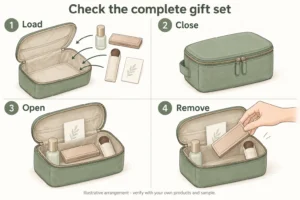
Give each supplier the same size list and construction brief. Review the complete set with representative clothing: check opening access, zipper travel, the handle attachment and how the cubes fit together. On a compression version, check the gusset and closing sequence separately from the main opening.
Keep material references, sample revisions and the retail pack count in one approval record. A lower quotation may use a different mesh, lining, zipper or pack format; ask the supplier to identify those differences before comparing price. Use the supplier verification checklist to check identity and supporting documents alongside the product sample.