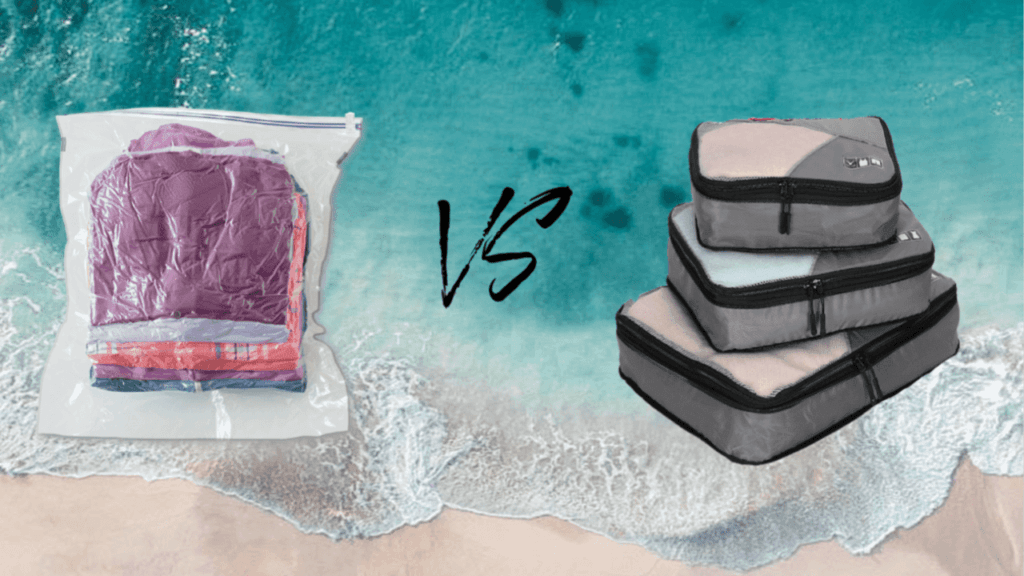
Choose regular packing cubes when you mainly want to separate clothing and find it quickly. Choose compression packing cubes when soft clothing takes up too much room and you are willing to unzip and recompress it each time you pack. Both organize a suitcase; a compression cube adds a second zipper that reduces the depth of the packed cube.
The useful question is whether compression improves the fit of your actual packing list. A flatter cube can free up space, but it does not make clothing lighter or guarantee that your bag meets an airline’s limits. For travel brands and retailers, that distinction also matters when choosing a set and writing its product claims.
How do packing cubes and compression cubes differ?
A regular packing cube is a zippered fabric organizer. It keeps clothing grouped so you can lift a whole category out of your bag. Size, opening shape and the placement of mesh panels affect how easy it is to pack and use.
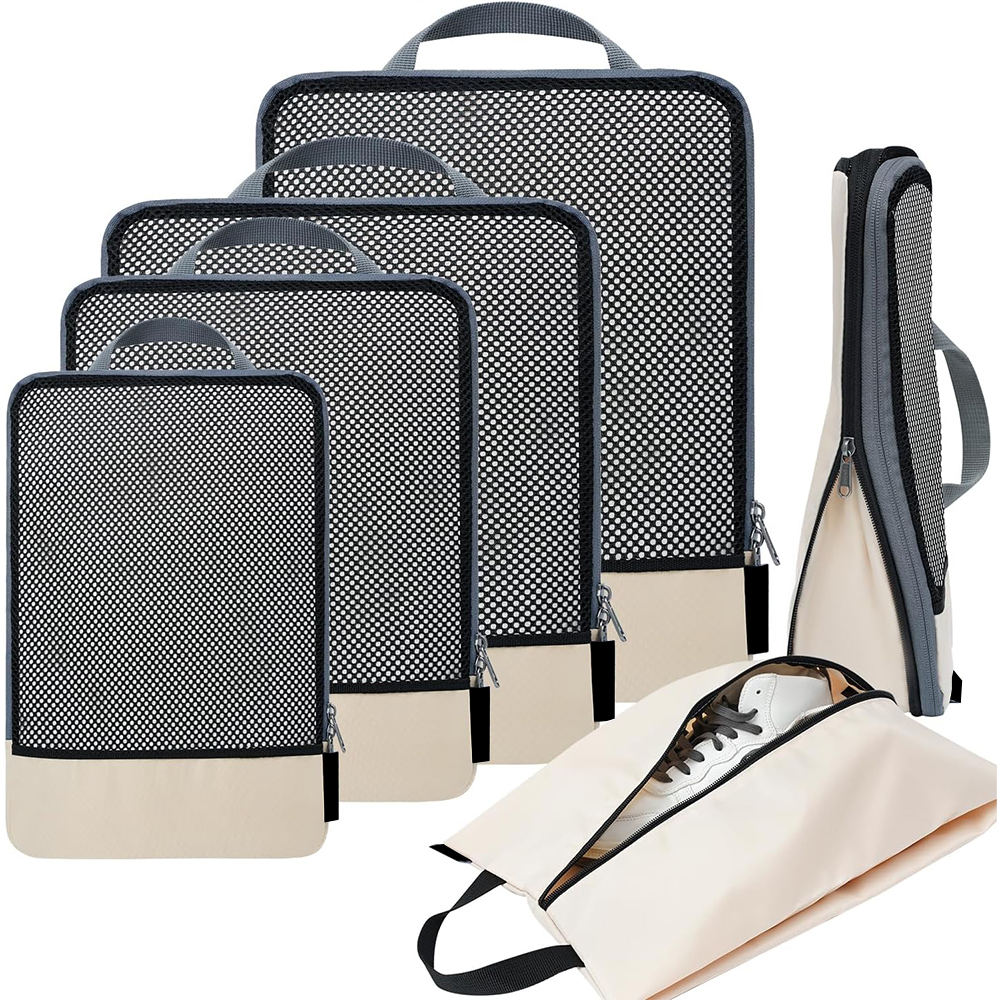
A zipper compression cube has an expandable side panel. You open the compression zipper, load the cube and close its main opening, then close the outer zipper to pull the sides together. Eagle Creek’s packing cube guide describes this two-zipper sequence. Peak Design’s packing cube also uses an expansion and compression zipper.
This article compares those fabric cubes. Vacuum storage bags use a different system: an airtight closure and a way to remove air. Ordinary zipper compression cubes do not require a pump and should not be assumed to be airtight or waterproof.
When regular packing cubes are the better choice
If your clothes already fit comfortably, regular cubes may solve the problem you actually have: finding socks without disturbing shirts or unpacking one person’s clothes from a shared suitcase. They are also convenient for items you need to reach repeatedly during a trip.
For shirts that need to arrive presentable, leave room for the folds instead of packing the cube tightly. Neither cube type guarantees wrinkle-free clothing. Fabric, folding and pressure inside the suitcase all matter; structured garments may be better carried in a garment folder or bag.
Compare the empty weight and price of specific products. A small compression cube can weigh less than a large regular cube, and fabric or trim choices can outweigh the cost of an extra zipper. Category names alone will not tell you which set is lighter or cheaper.
When compression packing cubes are worth considering
Compression is useful when the load has room to become flatter, such as loosely packed knitwear or other soft clothing. Dense, tightly folded items offer less room for reduction. Shoes and rigid accessories do not gain the same benefit; use a separate shoe bag if your aim is to keep dirt away from clothing.
Check the loaded shape inside your luggage. Closing a perimeter zipper pulls down the edges, but an overfilled cube may still bulge in the middle. A shallow edge measurement does not tell you how much space the whole packed cube occupies.
There is no single space-saving percentage that applies to every cube and every load. Before relying on a claim, ask which items were packed and how the comparison was measured. For everyday use, a mixed setup can work well: compress clothing you will unpack at your destination and keep frequently used items in a regular cube.

What brands and retailers should check in samples
Durability depends on construction and use. A compression label or a named zipper brand alone does not establish how long a cube will last. Review the finished sample with the clothing load the product is intended to hold.
- Record length, width and depth, including expanded and compressed dimensions. Specify whether measurements describe an empty cube or a defined packed load.
- Close the main and compression zippers separately. Check whether the lining catches, corners are difficult to turn or the zipper needs excessive force.
- Inspect seams beside the zipper and handle, along with mesh edges. Repeat opening and closing with the agreed load, then check for separation, loose stitching or distortion.
- Confirm the exact fabric, lining and zipper specification in the approved sample. Agree on a test method and acceptance criteria before production.
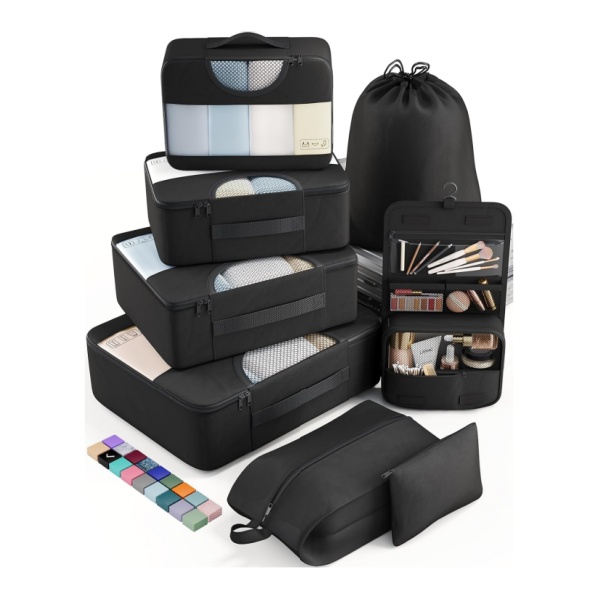
Compare quotations for the same size mix and construction. Logo treatment and retail packaging also need to match before prices are comparable. If the set includes a laundry pouch or shoe bag, identify those pieces separately so buyers know how many clothing cubes they receive.
How to compare both types with the same packing list
Use this sample-review procedure before choosing a set. It is a way to make a comparison, not a claim that Great Shine has tested every configuration.
- Choose the suitcase or backpack the set should fit. Measure its usable interior, including space taken up by the handle housing.
- Prepare one fixed clothing list. Pack the same items, using the same folding method, in each sample.
- Record the empty cube weight and the packed dimensions. For a compression cube, measure its fullest point after closing the outer zipper.
- Place each configuration in the luggage. Check whether the case closes normally and whether the remaining space is useful for other items.
- Remove an item you expect to need during travel, then repack. Note any fabric catching or difficult zipper movement.
Weigh the complete bag before travel. Compression changes volume, while the clothes retain their weight and the organizers add their own. If the bag becomes too heavy, reduce the load.
Common questions before choosing a set
Do compression cubes always save more space?
No. The result depends on the clothing, how tightly it was packed to begin with and how the loaded cube fits the bag. Compare the same load in the luggage you plan to use.
Can compression cubes cause wrinkles?
Tight packing can press folds into clothing. Avoid forcing delicate or structured garments into a heavily compressed bundle, and follow the garment’s care instructions.
Can you use a compression cube without compressing it?
With designs that have separate access and compression zippers, you can leave the expansion panel open while keeping the main compartment closed. Check the construction of the specific product.
Should every piece in a set be a compression cube?
No. Choose each piece for what it will hold. A brand can evaluate a mixed set with compression cubes for clothing and a regular organizer for items customers need to reach often.
Developing a packing cube range? Review our custom packing cube set options, then send your target luggage dimensions, preferred size mix and expected order quantity through the inquiry form below. Include whether you want regular cubes, compression cubes or a mixed set so the sample discussion starts with a clear specification.