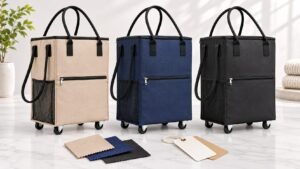
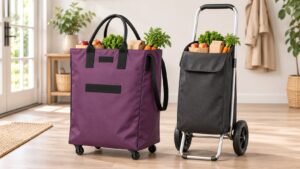
Quick answer: To launch private label cooler bags, choose one clear retail use case, define the bag’s capacity and carrying requirements, approve the insulation and closure construction, test the zipper and handles under realistic use, and confirm every logo and packaging detail on a production-ready sample. Only then compare bulk quotations and authorize manufacturing.
For a retailer or e-commerce brand, a cooler bag is more than an insulated container. It is a product customers carry, open, clean, store and sometimes overload. A compelling color and a well-placed logo may attract the first order, but weak handles, awkward openings and inconsistent bulk quality can damage the customer experience.
This guide explains how to develop private label cooler bags that fit your sales channel, from the first product brief to the approved sample and repeat orders. It focuses on practical buying decisions rather than a long list of fabrics or unsupported cooling claims.
1. Decide what your customers will actually use the cooler bag for
Start with the use case, not the logo. A lunch bag for office commuters, a reusable insulated grocery tote and a soft cooler for a day outdoors do not need the same opening, capacity or carrying system.
| Retail program | What the end user needs | What the buyer should confirm |
|---|---|---|
| Lunch and work bags | Easy opening, compact carrying and straightforward cleaning | Container fit, opening clearance, handle comfort and wipe-clean access |
| Insulated grocery totes | Room for common grocery shapes and a comfortable carry | Loaded shape, reinforced handle attachment, base stability and folding size |
| Picnic and day-trip coolers | Practical access to food, drinks and cooling packs | Packed-weight handling, zipper path, pocket layout and insulation performance under agreed conditions |
| Promotional or corporate programs | Visible branding and predictable delivery | Logo placement, artwork proofs, sample approval and branded packing schedule |
Buyer tip: Put two or three representative items inside a sample. A nominal capacity figure may not tell you whether lunch containers fit flat, whether the lid closes comfortably or whether the bag stands upright when loaded.
2. Choose a customization route without paying for unnecessary development
There are three common starting points:
- Brand an existing design. Suitable when the basic structure already fits your market and you mainly need logo or packaging changes.
- Adapt an existing design. Keep a familiar bag format while changing color, lining direction, dimensions, carrying details or pocket layout, subject to feasibility.
- Develop a new OEM/ODM design. Useful when the opening, shape, base, handle arrangement or other structural details must change significantly.
A completely new construction can be worthwhile, but it adds decisions to the sample-approval process. If your key selling point is better carrying comfort or a cleaner retail presentation, ask whether those improvements can be made to an existing construction first.
For a broader explanation of the terminology, see white label vs. private label vs. OEM.
3. Customize the features customers notice — not just the materials
A product brief should explain how the cooler bag will be used. It does not need to begin with a long specification sheet of fabric weights.
Opening and zipper
Ask whether the customer needs to open the bag with one hand, load wide containers or access the full interior. A small opening can make an otherwise spacious bag frustrating to use. Check the zipper path, corners, puller grip and whether the lining catches during opening and closing.
Handles and carrying comfort
For a fully loaded bag, the handle attachment can matter more than the appearance of the outer fabric. Review webbing width, attachment position, stitching construction and the way the bag hangs under load. Shoulder straps, where included, should be evaluated with the expected packed weight.
Lining and cleaning
Discuss how spills or condensation will be handled. A wipe-clean lining and an accessible interior can make everyday care easier. However, wipe-clean, water-resistant and leakproof are not interchangeable claims. Whether a finished bag can contain liquid depends on the entire construction, including seams, corners and closures.
Brand identity
Decide which details will remain consistent across your product range: logo method, color reference, woven label, zipper pull appearance, hangtag and retail packaging. Branding must be checked on an actual sample because color and print appearance can change with the substrate and application method.
4. Make two practical quality checks part of sample approval
Buyers regularly ask whether a cooler bag is durable. A more useful question is: What exactly was tested, how was it tested and which result was accepted?
Test A: Handle strength under a realistic load
Agree on a representative load based on the intended contents. Fill the sample, distribute the weight as the user would and inspect the attachment points before and after the agreed handling procedure.
Record:
- Sample ID and production construction;
- Actual test load and whether it was static or repeatedly lifted;
- Number of lifts or holding duration, if used;
- Any broken thread, fabric tearing, distortion or handle movement;
- Photos or video of the tested sample and the result.
A demonstration video without its test conditions is useful visual evidence, but it is not a certified load rating. Do not advertise a weight capacity unless the claim has been validated for that exact design.
Test B: Zipper operation after repeated use
Open and close the zipper with the bag empty, then under a representative packed condition. Agree in advance on the number of cycles and how failures will be recorded. Inspect the slider, teeth, zipper tape and nearby stitching, especially around curved corners.
Check for catching, separation, skipped teeth, seam stress and changing ease of operation. If a buyer requires a particular industry test, agree on the method, laboratory and acceptance criteria before claiming compliance.
Important: These checks help evaluate durability. They do not replace a separate cooling-performance assessment or a leak-resistance test when those claims are important to the product listing.
5. Verify insulation performance without inventing a “keeps cold for X hours” claim
Cooling performance depends on more than the inner lining. Contents, cooling packs, ambient temperature, starting temperature, opening frequency, bag size and insulation construction can all change the result.
Before making a marketing claim, agree on a reproducible test plan. For example, document the bag model, loading arrangement, starting temperature, ambient conditions, number of openings, measurement positions and test duration. Compare samples using the same procedure.
A bag that limits condensation leakage in ordinary use is not necessarily suitable for transporting loose water or melted ice. State the intended use accurately and validate any stronger claim separately. Requirements for materials in contact with food also depend on how the product is used and the destination market; an insulated bag is not automatically certified for direct food contact.
6. Design packaging for the channel you sell through
Packaging is not merely a design expense. It affects product presentation, handling and logistics.
For chain retailers, discuss whether the bag will hang, stand on a shelf or sit inside a display carton. Confirm barcode position, hangtag visibility, folded appearance and the information required by the retailer.
For e-commerce sellers, review individual packed dimensions, carton dimensions, unit count, gross weight, labeling and protection against compression damage. Check the current requirements of the marketplace or fulfillment provider that will receive the stock.
A compact fold can reduce shipping volume, but only if the product recovers its shape and presentation after unpacking. Ask the supplier to show a packed sample and a reopened sample before approving the final pack-out method.
| Packaging detail | Why it matters | What to request |
|---|---|---|
| Individual packed size | Storage and fulfillment planning | Measured length × width × height |
| Units per carton | Purchase and warehouse handling | Proposed quantity and packing orientation |
| Carton size and gross weight | Freight estimates | Measured carton specification |
| Labels and inserts | Retail or fulfillment acceptance | Artwork proof and placement photo |
| Post-unpacking appearance | Customer experience | Photo or video after unpacking |
Actual freight savings should be calculated from measured packing data; do not assume a percentage in advance.
7. Lock the approved sample before bulk production
A photo approved over email is not always enough to prevent later misunderstandings. Build a single approved specification that identifies the product, artwork, construction and packaging version.
The approval package should cover:
- Product reference: model, dimensions, use case and expected contents;
- Appearance: exterior color reference, branding method, logo size and position;
- Construction: opening, zipper, handles, lining, insulation and base where applicable;
- Quality expectations: inspection points and any agreed test methods;
- Packaging: individual packing, labels, carton details and shipment marks;
- Commercial terms: quantity by color, confirmed MOQ, price basis and agreed timing.
After sample approval, ask how the manufacturer controls substitutions and changes during bulk production. A change to lining, zipper or handle webbing should not be treated as a minor aesthetic adjustment if it affects performance.
For repeat orders, keep the approved specifications, reference samples and packaging artwork available so subsequent production can be checked against the same documented version.
8. Compare wholesale quotations on the same basis
When sourcing custom cooler bags in bulk, two prices are only comparable if the product and services behind them are comparable.
Request a quotation using the same quantity, construction, logo method, packaging, incoterm and delivery assumptions from each supplier. Identify whether sampling, printing setup, testing, special labels and shipping are included or quoted separately.
Rather than asking only for the lowest unit price, ask what would change if you adjust one cost driver: bag size, closure construction, insulation design, number of colors or packaging format. That gives your team a practical way to protect margin without making untested compromises to the customer experience.
The minimum order quantity and lead time for private-label cooler bags depend on the design, materials, color splits and branding requirements. Confirm them for your specific project; do not assume one universal figure applies to every style.
9. Copy this cooler bag RFQ checklist
You can paste the following into your supplier inquiry:
| Information | Your project brief |
|---|---|
| Product format | Lunch bag / grocery tote / picnic cooler / other |
| Intended buyer and use | Retail / e-commerce / promotional; how it will be carried |
| Target dimensions or contents | Measurements, example items, or reference photos |
| Construction requirements | Opening, zipper, handles, lining, base, insulation needs |
| Branding | Artwork file, logo placement, labels and colors |
| Required validation | Handle, zipper, cooling and leak checks as applicable |
| Packing | Individual pack, labels, carton requirements, destination |
| Estimated order volume | Units per design and per color |
| Requested quote terms | Price basis, sampling, production timing and delivery market |
The more clearly you distinguish must-have features from optional upgrades, the easier it is for a manufacturer to propose a workable construction and quotation.
Frequently asked questions
Can I put my own logo on an existing cooler bag design?
Often, yes. Logo placement and application depend on the material, bag construction and artwork. Ask for a branded sample or proof and confirm whether the selected design and color are available for your order quantity.
What is the MOQ for private label cooler bags?
There is no responsible universal MOQ. Minimums vary with the design, material and color availability, logo method and packaging. Request an item-specific quotation and ask whether quantities can be grouped across colors or designs.
How do I know whether a cooler bag is leakproof?
Do not rely on a lining material name alone. Ask for the intended liquid-exposure conditions, seam and closure construction, and a relevant test result. Many insulated bags are designed for everyday spill resistance rather than carrying loose liquids.
Should I test handles and zippers before a bulk order?
Yes, when those parts affect customer use. Agree on realistic loads and handling cycles, document the procedure and record results on the final approved construction. A new component or structural change may require fresh verification.
What should an Amazon or online brand check before placing an order?
Review packed size, packaging condition after transit, correct labeling, product claims, sample consistency and the receiving requirements of your chosen fulfillment channel. Verify those requirements directly before confirming cartons.
Can one factory help develop a coordinated cooler bag collection?
A suitable OEM/ODM partner can review shared colors, branding and packaging across several bag formats. However, each design still needs its own approved specifications, sample checks and commercial terms.
Ready to plan a private-label cooler bag collection?
Great Shine Houseware supports custom cooler and insulated bag projects for brands, retailers and e-commerce sellers, including product development, branding, sampling and bulk-order coordination. Explore our custom cooler bags manufacturer page or contact our team with your reference photos, target use, estimated quantity and packaging requirements.
Request a custom cooler bag quote: Discuss your project with Great Shine.