Packing clothes is the part of a move that looks easy and goes wrong quietly: hangers tangled into a knot, suit jackets crushed under shoe boxes, winter coats taking up a third of the truck. The methods that work divide cleanly by garment type, and choosing the right one for each category saves more space and more wrinkles than any single trick. This guide compares the five standard methods, pairs them with garment categories, and covers the box and material choices that decide whether clothes arrive ready to wear.
Who asks this and what they need
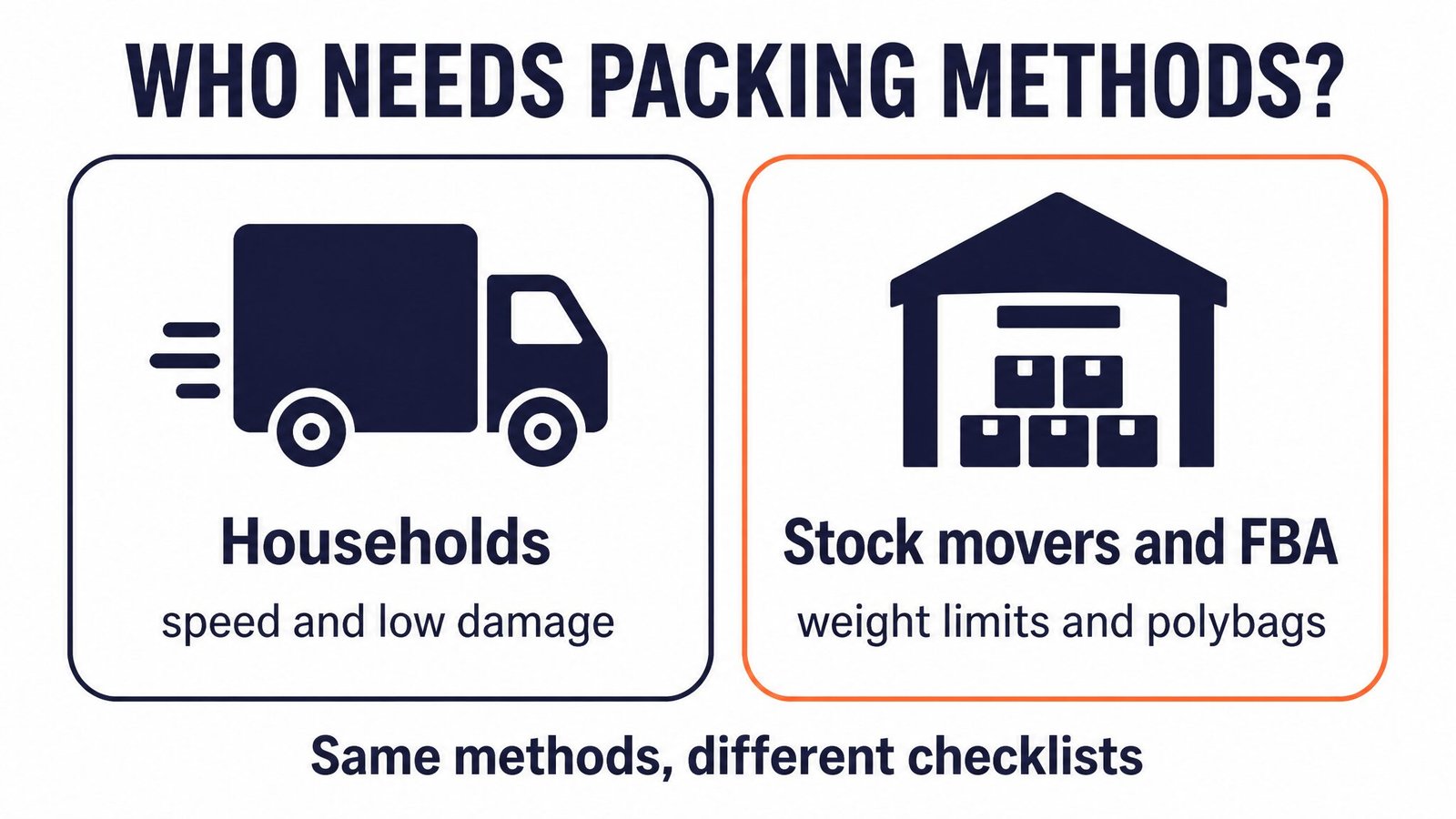
Households planning a move want speed and low damage. The professionals they hire already have an answer: wardrobe boxes for anything on hangers and soft goods bagged in volume. Retailers relocating stock, and FBA sellers moving inventory between prep centers, face the same decisions at scale, where the added questions are weight limits per carton and whether polybagged units can ride together with loose apparel.
The five methods compared
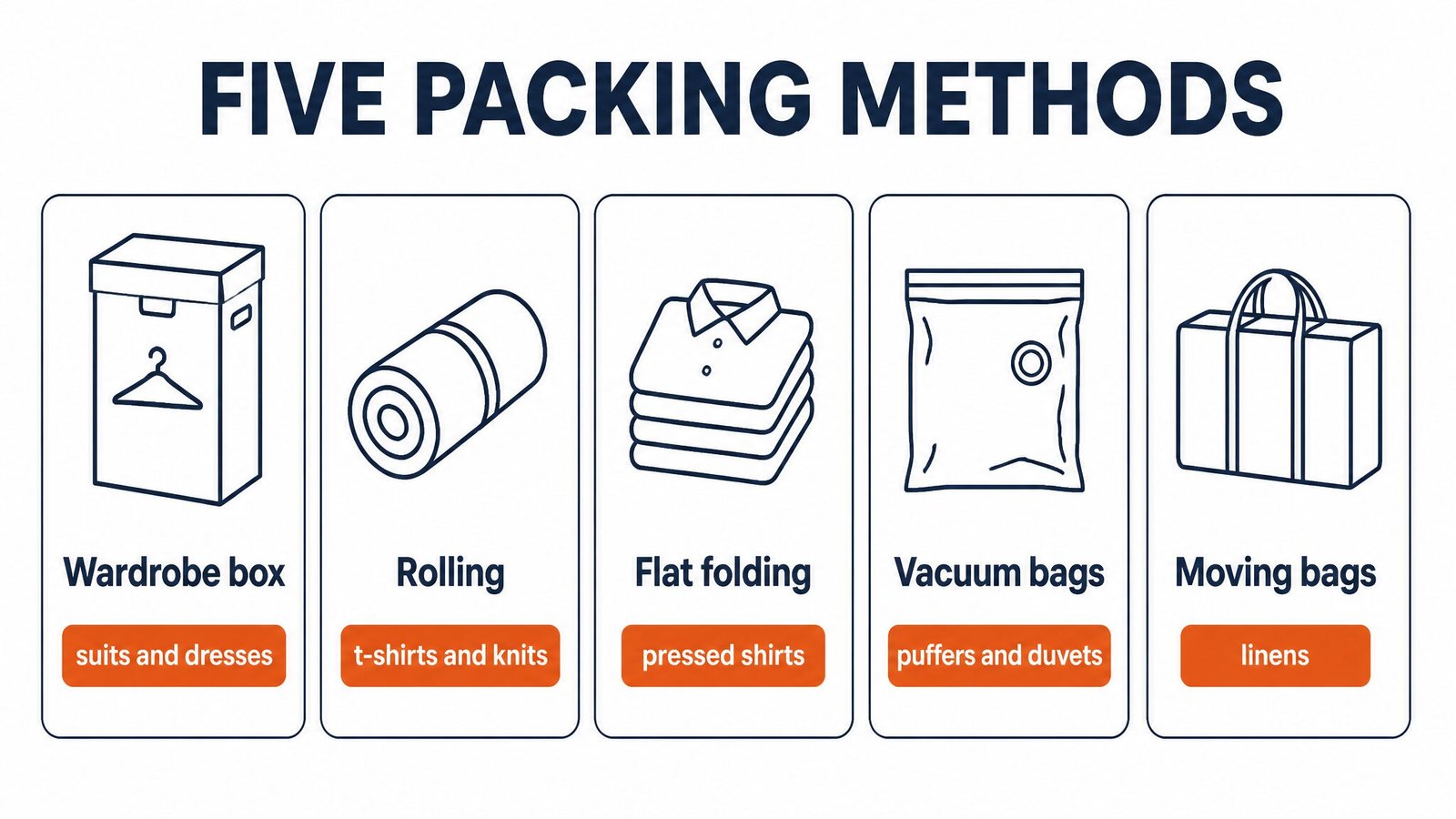
| Method | Best for | Trade-off |
|---|---|---|
| Wardrobe box | Suits, dresses, coats, shirts on hangers | Bulkiest box in the load; worth it for structured garments |
| Rolling | T-shirts, knitwear, jeans, activewear | Fast and compact; some fabrics spring back and lose the gain |
| Flat folding | Dress shirts, trousers with creases, structured items | Keeps creases only if packed tight and flat with nothing sliding |
| Vacuum bags | Bulky synthetics: fleece, puffers, duvets, pillows | Shrinks volume dramatically; not for wool, silk or down lofts |
| Trash bags / moving bags | Linens, soft odds, donate-bound clothes | Cheap and fast; zero protection from water and tearing |
Pairing methods to a real closet
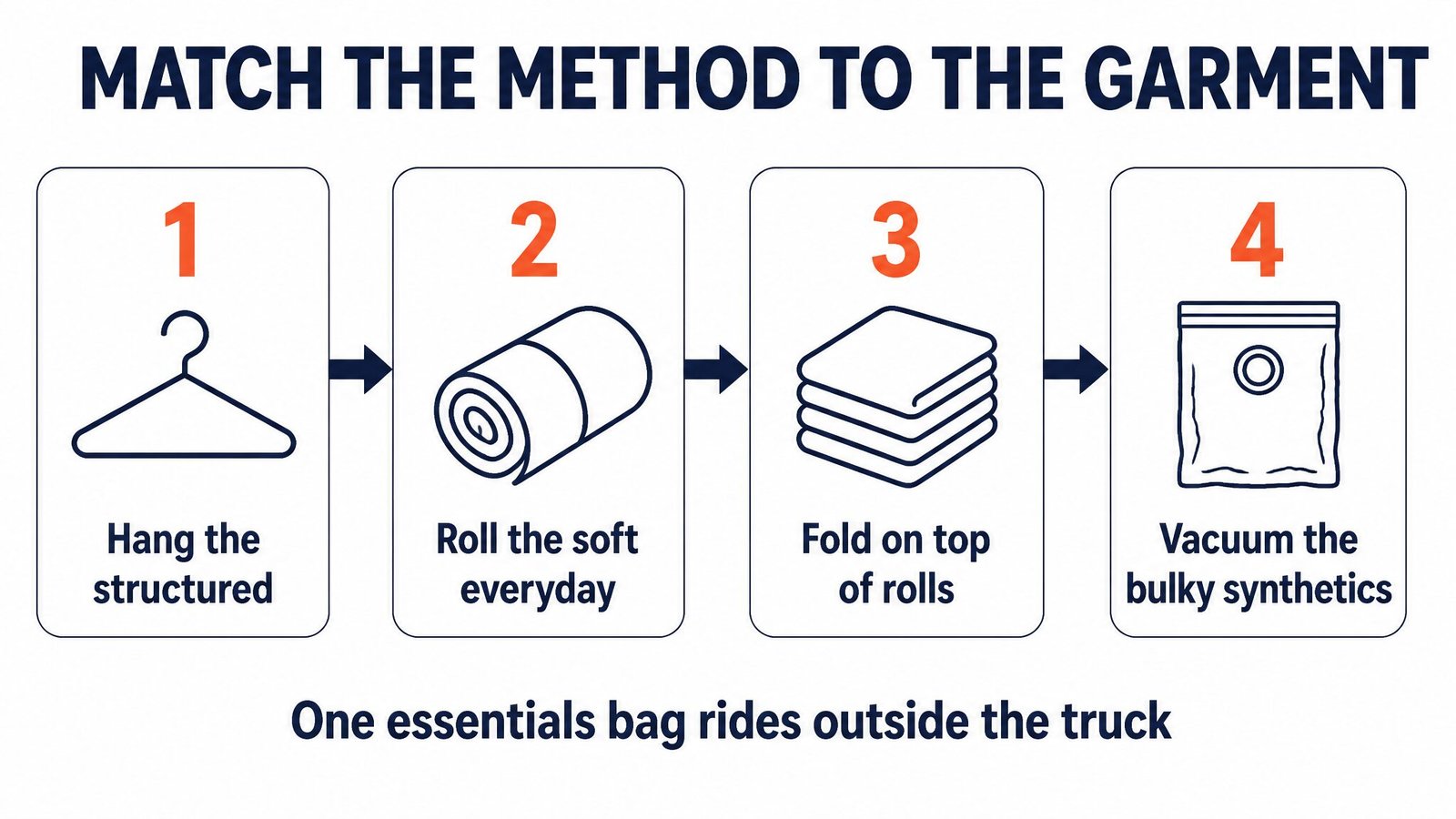
The working sequence movers use: pull everything off hangers that does not truly need one, roll the soft everyday items into medium boxes, fold the structured items flat on top so weight holds them in place, send coats and suits to the wardrobe box, and vacuum-bag only the bulky synthetics. One essentials bag with a few days of clothes rides separately from the truck, because arrival-day delays are a habit of trucks, not an exception.
Box and material choices that matter
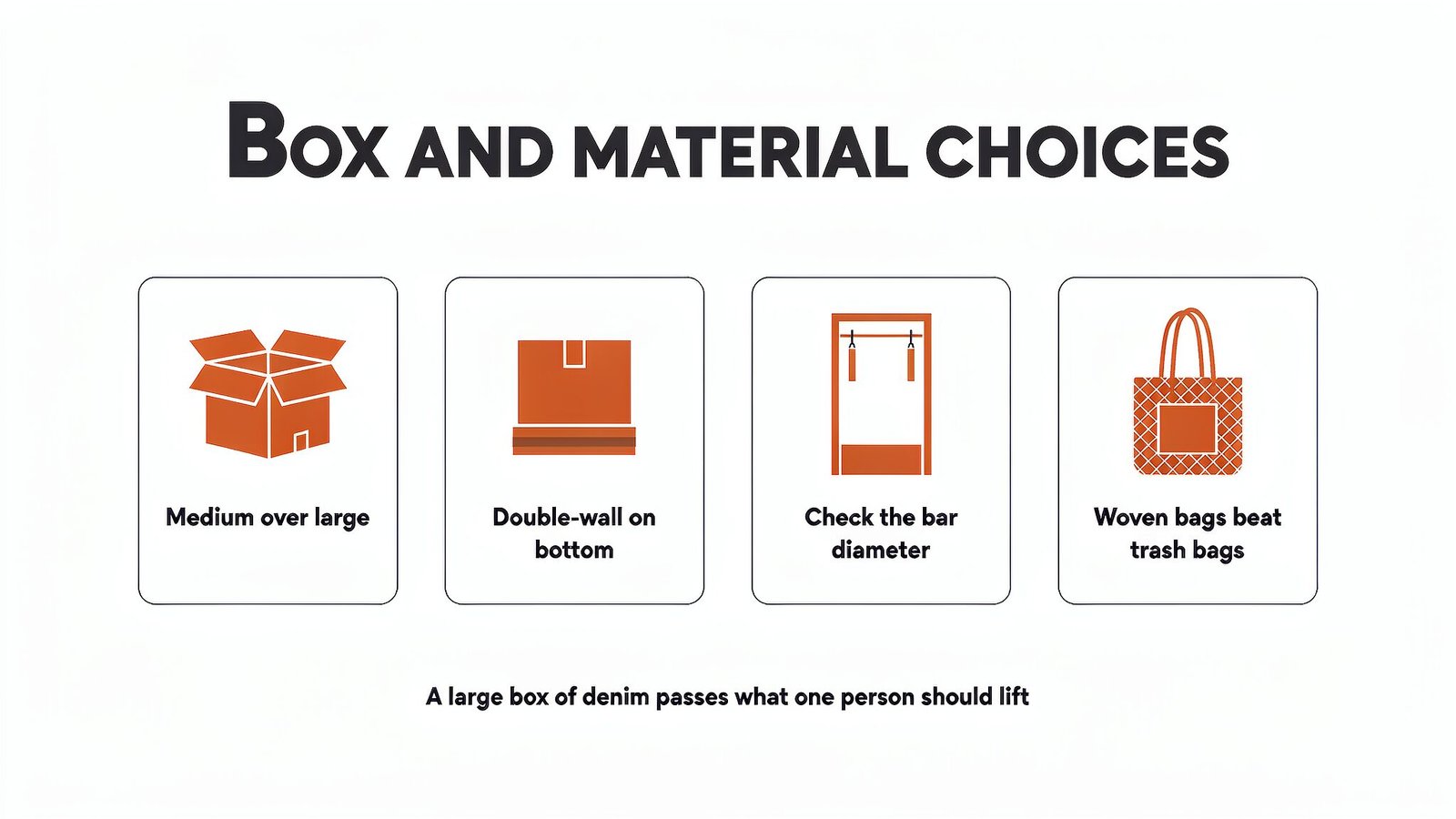
Medium boxes beat large ones for clothes, because a large box filled with denim passes what one person should lift. Double-wall boxes earn their cost on the bottom layer of any stack. Wardrobe boxes come with a metal or plastic bar; check the bar diameter against your hanger hooks before buying in quantity. For bagged soft goods, woven moving bags with handles and zippers outperform trash bags on every move after their first, which is why they have become the default for repeat moves and for resale channels.
Mistakes that cost the most
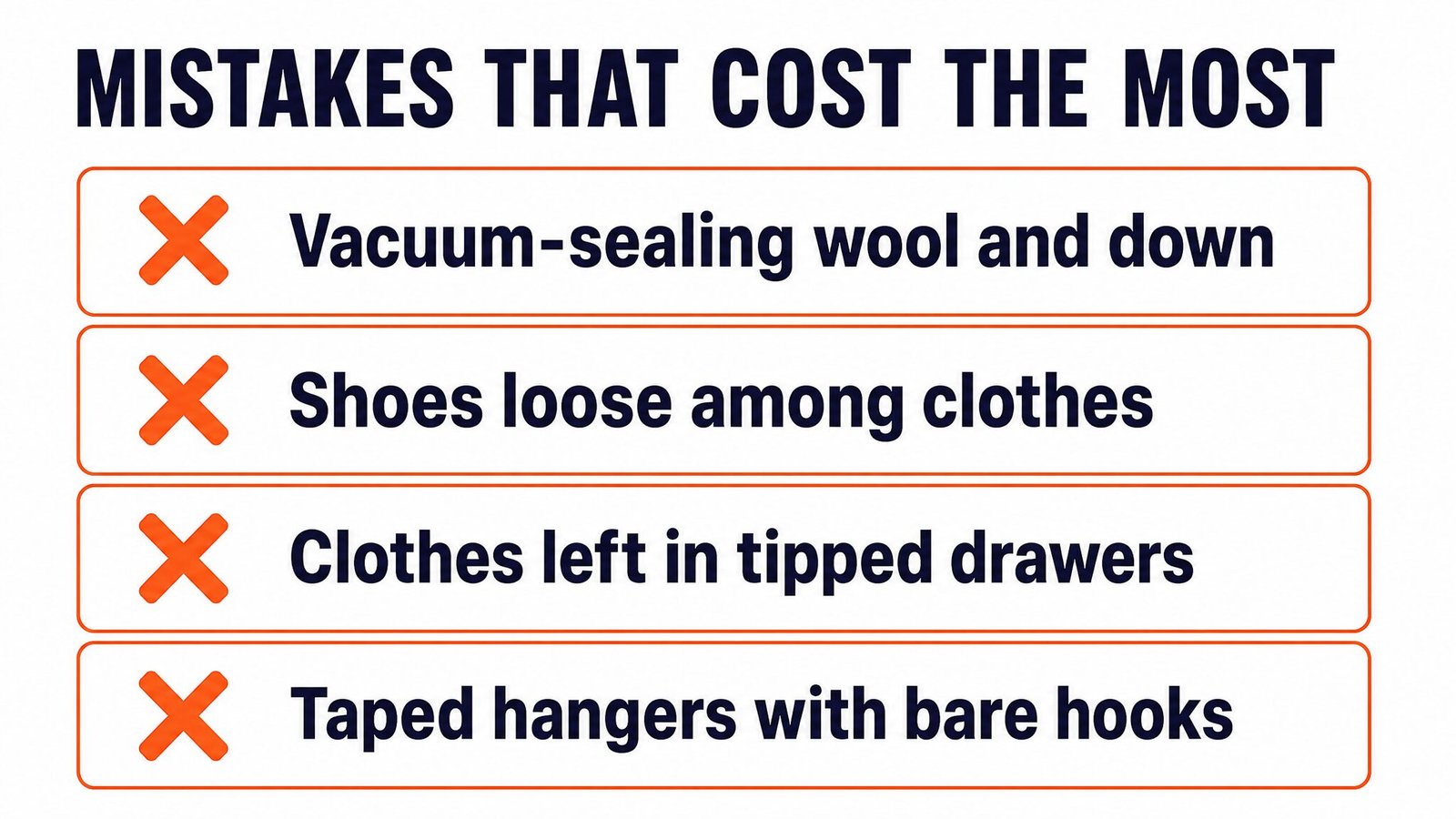
The recurring ones: vacuum-sealing wool and down, which takes weeks off the loft recovery; packing shoes loose among clothes, which transfers dirt and pressure marks; leaving clothes in drawers for a move where the dresser will be tipped; and taping hangers into bundles without covering the hooks, which guarantees a half hour of untangling at the other end.

Questions that come with the topic
Is rolling or folding better for moving?
Rolling wins for soft casual clothes packed into tight boxes, folding wins for structured garments where creases matter. Wirecutter’s testing summary and mover guides agree on the same split: roll the cotton, fold the tailoring, hang the structured.
Should clothes stay on hangers?
Only the garments that visibly suffer off-hanger: suits, dresses, tailored coats and pressed shirts. Everything else travels better flat or rolled, and hangers add surprising volume and tangle risk.
Do wardrobe boxes hold enough to be worth it?
A standard wardrobe box holds roughly two feet of hanging garments. For a move with more than a closet’s worth of structured clothing, they pay for themselves in garment condition and unpack speed.
Related reading
Moving bags vs cardboard boxes (the container decision) · Which moving bag material lasts (material detail) · How to store clothes long term (the storage end of the same problem)